Plot Explained Spoilers guaranteed!
Plot Explained

Browse by genre

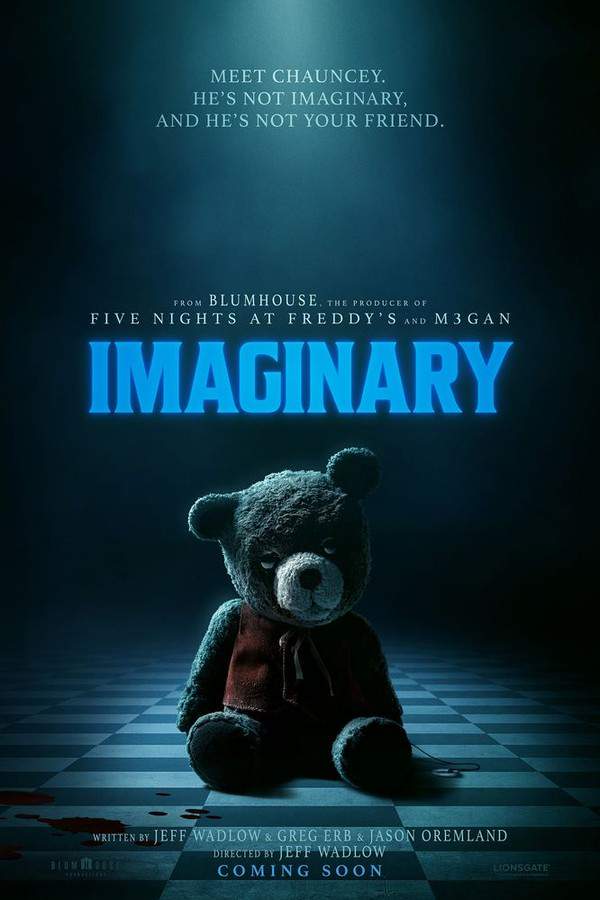
Imaginary (2024) movie poster

Plot Summary

Imaginary (2024) Plot Summary & Ending Explained

Release, runtime and language
2024 · 1 h 44 m · English
Echo score 30
Loading streaming availability…
Directed by
Jeff Wadlow
Starring
DeWanda Wise, Veronica Falcón, Tom Payne, Betty Buckley, Dane DiLiegro, Taegen Burns
Budget
$13M

A family’s return to their childhood home stirs up a dark past when a young girl becomes captivated by an antique teddy bear named Chauncey. As she spends more time playing with him, playtime takes a sinister turn, blurring the lines between reality and nightmare. The family finds themselves facing a descent into madness as the boundaries of what is real become increasingly unclear.

On this page (7)
  1. 1 Where to watch
  2. 2 What happens: full plot
  3. 3 Plot questions answered
  4. 4 How it ends
  5. 5 Movie threads
  6. 6 Movies like Imaginary
  7. 7 Every angle
Loading streaming availability…

Full plot summary · contains spoilers

What Happens in Imaginary: Full Plot Summary

The whole story of Imaginary (2024) explained, from the opening scene to the final frame: every key event, every twist and what it all adds up to. Read it as a quick recap before the sequel, to check a scene you missed, or to finally understand what really happened.

Children's book author Jessica is married to musician Max, who has two daughters from a previous relationship: the younger Alice and the teenage Taylor. While Alice quickly bonds with Jessica, Taylor remains distant, keeping her at arm's length. Jessica struggles with recurring nightmares that feature her mentally ill father Ben and a character from her stories, the ominous Simon the spider. The family's move to Jessica's childhood home stirs up old memories when Alice unearths a teddy bear in the basement named Chauncey, forming an immediate attachment.

The family is joined by an elderly neighbor, Gloria, portrayed by Betty Buckley, who has nostalgic recollections of Jessica's past, often bringing forth memories that Jessica herself cannot grasp. However, trouble brews when Samantha, the troubled biological mother of Alice and Taylor, sneaks into their lives and violently confronts Jessica. After confronting the police about Samantha's behavior, Taylor admits to having contacted her mother, which leads to a fraught atmosphere at home.

While Max is away on tour, Alice grows fixated on a scavenger hunt she claims Chauncey devised. This obsession disturbs Jessica, especially as Chauncey's influence manifests more powerfully in their lives. An incident occurs when Liam, a friend of Taylor's, accidentally shatters a bottle, only to be confronted by a transformed version of Chauncey, aggravating tensions further. Jessica's attempts to safeguard Alice lead her to consult Dr. Soto, who observes Alice communicating with the bear while it threatens Jessica's safety, causing further distress to both mother and daughter.

As the narrative unfolds, Jessica learns that only she and Alice can perceive Chauncey, and finds unsettling footage of a past patient that echoes Alice's words: > "Never Ever." Alice vanishes after another interaction with Chauncey, prompting Taylor to place the blame on Jessica. In a remarkable twist, Gloria reveals to Taylor that Chauncey was once Jessica’s imaginary friend. She explains the dark possibilities of imaginary friends when abandoned, leading Jessica to confront her past. By sifting through old memorabilia, Jessica discovers drawings of Chauncey and the haunting phrase "Never Ever," setting the stage for an eerie scavenger hunt that ultimately opens a portal to the dark realm known as Never Ever.

Inside the Never Ever realm, the trio is faced with Jessica's hidden memories, exposing a time when she was lured by Chauncey. In a moment of horror, Ben had rescued her but succumbed to madness due to Chauncey’s influence. Following this traumatic experience, Jessica's life changed forever. As the story reaches its climax, Jessica and Taylor must avoid Chauncey’s lethal grasp and, in a desperate encounter, Jessica manages to stab him in the eye, thwarting his pursuit.

With Ben and Max reunited at the mental institution, Jessica faces the stark realization that she is still ensnared in the clutches of the Never Ever. As Chauncey seeks revenge by using Alice as bait, Taylor intervenes, bringing the family together once more. Ultimately, Alice plays a crucial role in vanquishing the creature, setting the house ablaze as they flee from the horrific memories embedded within its walls.

Following their harrowing experience, the family seeks refuge in a hotel, but their peace is interrupted when they encounter a child and his teddy bear, eerily resembling Chauncey. Feeling unsafe, they decide to relocate to another hotel, striving for safety and normalcy in the wake of their traumatic experience.
Last updated: October 24, 2024 at 08:50

Was this helpful?

Plot questions answered

Imaginary Plot Explained: Your Questions Answered

The questions people ask most about Imaginary (2024): what happens in the confusing scenes, why the characters do what they do, the twists, hidden details and what the ending means. Each answer contains spoilers.

Q1

Why does Chauncey become dangerous in the movie

Chauncey becomes dangerous because he was Jessica's imaginary friend from childhood who turned malevolent after being abandoned. When imaginary friends are neglected or left behind, they become dark entities. In the Never Ever realm, Chauncey lures children and transforms into a sinister force that threatens the family.

Foreshadowing: Earlier in the film, Gloria warns Taylor about the dangers of imaginary friends when abandoned, hinting at Chauncey's true nature.

  • chauncey bear
  • dangerous imaginary friend
  • never ever realm
  • supernatural threat
Q2

What is the Never Ever realm in the film

Never Ever is a dark supernatural dimension that exists between reality and imagination. It serves as Chauncey's domain, where he traps children who become his victims. Jessica discovers this realm through a portal triggered by a scavenger hunt, and it contains her repressed memories of childhood trauma.

Foreshadowing: The phrase "Never Ever" appears repeatedly in Alice's drawings and the unsettling patient footage, foreshadowing this dimension's existence.

  • never ever dimension
  • supernatural realm
  • chauncey world
  • dark fantasy
Q3

Why can only Jessica and Alice see Chauncey

Only Jessica and Alice can see Chauncey because they share a psychic connection to the imaginary realm. Jessica created Chauncey as her imaginary friend as a child, and Alice has inherited this sensitivity. The film establishes that this bond allows them to perceive entities from Never Ever that others cannot see.

Foreshadowing: Dr. Soto observes Alice communicating with Chauncey while Jessica senses the bear's threats, confirming their unique perception.

  • psychic connection
  • imaginary friend perception
  • supernatural sight
  • clairvoyance
Q4

What happened to Jessica's father Ben in the movie

Jessica's father Ben descended into madness trying to protect her from Chauncey when she was a child. He rescued her from the Never Ever realm but became permanently institutionalized as a result of Chauncey's psychological influence. At the film's end, Jessica visits him still confined at the mental institution.

Foreshadowing: Jessica's recurring nightmares featuring Ben and her story character Simon the spider hint at her suppressed memories of this trauma.

  • ben mental illness
  • father madness
  • institutionalized
  • childhood trauma
Q5

Why does the ending show another child with a bear

The ending shows another child with a bear that resembles Chauncey to imply the cycle of horror is not broken. The family escapes Never Ever, but the appearance of another child bonding with a similar teddy bear suggests Chauncey's influence continues or that other malevolent imaginary friends exist, leaving the threat unresolved.

Foreshadowing: This ending mirrors Alice's initial attachment to Chauncey, creating a cyclical pattern that echoes the film's theme of abandoned imaginary friends becoming dangerous.

  • ending meaning
  • cycle continues
  • horror movie ending
  • imaginary friend pattern
Q6

How does Jessica defeat Chauncey

Jessica defeats Chauncey by stabbing him in the eye during a desperate encounter in the Never Ever realm. This act of violent resistance thwarts his pursuit and allows the family to escape. However, Alice ultimately plays the crucial role in vanquishing the creature by setting the house ablaze as they flee.

Foreshadowing: Earlier, Jessica's nightmares feature her fighting Simon the spider, foreshadowing her confrontational role against the supernatural threat.

  • chauncey death
  • defeat monster
  • final battle
  • escape never ever
Q7

Why does Taylor blame Jessica for Alice disappearing

Taylor blames Jessica for Alice's disappearance because Alice vanished after interacting with Chauncey, and Taylor views Jessica as an outsider who brought this curse upon the family. The tension between them stems from Taylor's resentment toward Jessica and her secret contact with her biological mother Samantha.

Foreshadowing: Taylor's distant behavior toward Jessica throughout the film builds to this accusation, reflecting her underlying resentment.

  • taylor jessica conflict
  • family tension
  • alice disappearance blame
Q8

What is the significance of Never Ever written in the movie

"Never Ever" is a phrase written by young Jessica in her childhood drawings, representing the dark realm where Chauncey resides. It appears repeatedly in Alice's belongings and in footage of a past patient, serving as a symbolic gateway between the living world and the imaginary dimension where abandoned friends become monsters.

Foreshadowing: The phrase "Never Ever" echoes Alice's words during her interactions with Chauncey, connecting her to Jessica's suppressed childhood memories.

  • never ever phrase
  • childhood drawings
  • hidden message
  • repressed memory
Q9

How does Samantha's confrontation affect the family

Samantha's violent intrusion into the family's life creates chaos and exposes Taylor's secret contact with her biological mother. This confrontation strains the already fragile family dynamic and contributes to the atmosphere of tension that Chauncey exploits to intensify his influence over Alice.

Foreshadowing: The confrontation occurs shortly before Alice's obsession with Chauncey's scavenger hunt intensifies, suggesting Samantha's intrusion destabilizes the family.

  • samantha threat
  • family conflict
  • biological mother
  • strained relationships
Q10

Why does Chauncey target Alice specifically

Chauncey targets Alice because she is vulnerable and has inherited the same psychic sensitivity her stepmother Jessica possesses. As Alice becomes increasingly attached to Chauncey through play, he gains power over her, using her as bait to lure the entire family into Never Ever.

Foreshadowing: Alice forms an immediate bond with Chauncey upon finding him in the basement, foreshadowing her role as his primary target.

  • alice vulnerability
  • child target
  • chauncey lure
  • prey selection

Ending explained

What Happens at the End of Imaginary?

How Imaginary (2024) ends, in short: the final scene, the last twist and what it means for the characters. The full ending explained, with every spoiler, lives on its own page.

Read the full ending explained

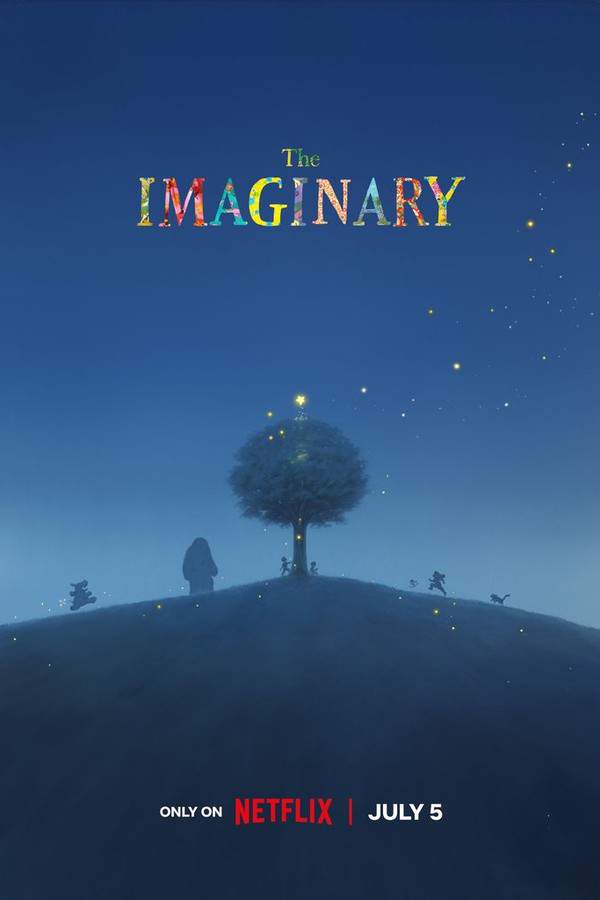
At the end of The Imaginary, Amanda and Rudger share a heartfelt reunion, knowing that their bond is strong, even if it is fragile and temporary. Throughout the story, Rudger, an imaginary friend born from Amanda’s loneliness and sadness, fights to stay with her as she begins to forget him. When Amanda wakes up in the hospital and starts to remember her friend, she gradually reclaims her imagination. Rudger, empowered by her renewed memories, confronts Mr. Bunting—an evil Imaginary hunter—who has been trying to capture and eliminate Imaginaires like Rudger. As Amanda’s mind opens up to her imagination once more, she uses her vivid creativity to fight Bunting, who, in turn, tries to trap them both in his dark, imagination-consuming world. In the final moments, Elizabeth, Amanda’s mother, joins the battle, recalling her own childhood Imaginary friend, Fridge, with whom she had lost contact. Elizabeth calls upon Fridge for help, and together with Rudger, they manage to weaken Bunting’s grip. Fridge’s intervention causes him to turn to dust, symbolizing the destruction of Bunting’s corrupted power over imagination. The film concludes with Amanda and Rudger reconnecting emotionally, their bond still alive despite the knowledge that Rudger will eventually disappear as Amanda’s memories fade. Yet, they promise to cherish the time they have left, knowing that their love and friendship will remain forever in their hearts, even if Rudger’s form eventually dissolves. It’s a touching reminder of the transient yet timeless nature of imagination and the importance of holding onto what truly matters in the moment.

Imaginary ending explained in full

Movie threads

More Movies Like Imaginary, by Mood & Story

Curated lists built around what makes Imaginary tick: the same mood, the same kind of story or the same emotional payoff. Each list explains why these movies belong together.

Movies with evil toys like Imaginary

Stories where an innocent childhood toy or object becomes a conduit for sinister evil. If you liked Imaginary and its sinister teddy bear Chauncey, you'll find more chills here. This list features movies where childhood toys and objects become sources of supernatural horror, creating an unsettling blend of innocence and evil. Discover similar stories of haunted dolls, malevolent games, and playthings that turn deadly.

  • sinister
  • unsettling
  • paranoid
  • childlike horror
  • supernatural threat
  • oppressive
  • Tone: dark, sinister, unsettling
  • Pacing: steady, escalating
Why these movies?

The story pattern: These narratives typically center on a family, often with a child at the heart of the mystery. The plot unfolds as a seemingly benign object reveals its dark nature, leading to a investigation into a haunted past or a malevolent entity. The conflict often tests the sanity of the adults while the child remains dangerously enthralled.

Why they belong together: Movies in this thread are grouped by their core premise: a childhood object as the antagonist. They share a specific kind of dread that comes from the corruption of innocence, a steady pacing that builds paranoia, and a tone that is dark, sinister, and psychologically unsettling.

Psychological horror movies about blurred reality like Imaginary

Character-driven horror where the boundaries between nightmare and reality completely dissolve. Fans of Imaginary's descent into madness and its ambiguous nightmare sequences will appreciate this selection. These films explore similar themes of fractured sanity, where reality becomes unreliable and characters face supernatural or psychological threats that are difficult to define. Find more movies that challenge perception and create deep, lingering unease.

  • psychological
  • unsettling
  • paranoid
  • nightmarish
  • anxious
  • claustrophobic
  • Tone: dark, tense, ambiguous
  • Pacing: steady, methodical
Why these movies?

The story pattern: The narrative follows a protagonist or family group as they confront a phenomenon that challenges their grasp on reality. The story methodically dismantles the character's sense of security, often involving repressed memories, mental illness, or a subtle supernatural influence. The journey is inward, focusing on the psychological degradation of the characters as much as the external threat.

Why they belong together: These films are united by their core thematic focus on the fragility of reality. They share a high-tension, heavy emotional weight, and a dark tone that prioritizes psychological dread over visceral horror. The pacing is typically steady, building a profound sense of anxiety and paranoia that leaves a lasting impact.

If you liked this

Movies Like Imaginary

Similar movies to Imaginary: the same genre, themes or kind of story. Each one comes with its own plot summary, timeline and ending explained.

Browse all movie summaries

Every angle

Imaginary (2024) Explained: Plot, Ending, Timeline & Characters

Everything about Imaginary in one place: what happens in the plot summary, the timeline in chronological order, the characters and meaning, the ending explained and a spoiler-free summary. What's After the Movie adds the cast, box office and post-credit scenes.

Coming soon on iOS and Android

The Plot Explained Movie Summary App

Plot summaries, endings explained and timelines on your phone. Catch up on any movie in minutes, save your favorites and never miss a twist again.

Be the first to know when we launch. Your email stays private, always.

Learn more about the app