Plot Explained Spoilers guaranteed!
Plot Explained

Browse by genre

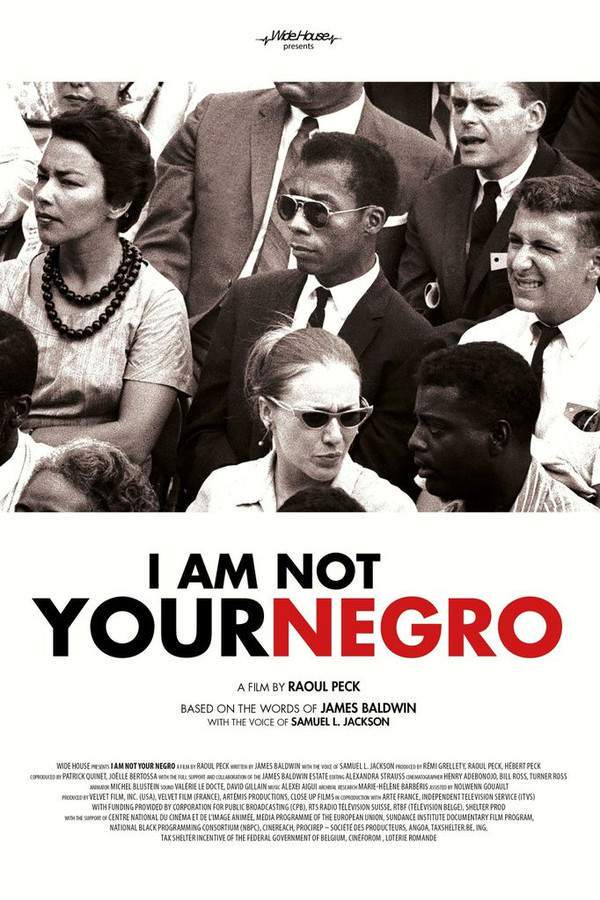
I Am Not Your Negro (2016) movie poster

Characters & Themes

I Am Not Your Negro (2016) Characters, Setting & Themes Explained

Release, runtime and language
2016 · 93 min · English
Loading streaming availability…
Directed by
Raoul Peck

This powerful documentary brings James Baldwin's unfinished manuscript to life, exploring his reflections on race in America. Director Raoul Peck combines Baldwin's words with archival footage and insightful interviews, focusing on the lives and legacies of civil rights icons Medgar Evers, Malcolm X, and Martin Luther King Jr. The film offers a searing and timely examination of racial injustice and the ongoing fight for equality.

On this page (7)
  1. 1 Where to watch
  2. 2 Where & when it takes place
  3. 3 Themes & meaning (3)
  4. 4 Character & meaning questions
  5. 5 Movie threads
  6. 6 Movies like I Am Not Your Negro
  7. 7 Every angle
Loading streaming availability…

Setting

Where and When Does I Am Not Your Negro Take Place?

The setting of I Am Not Your Negro (2016): the year and time period, the places and locations, and how they shape the characters, the mood and the tension of the story.

Time period

1960s

The film takes place in the 1960s, a pivotal decade marked by the Civil Rights Movement in the United States. During this period, significant events unfolded as people fought for the recognition of their rights and freedoms. This era is characterized by both resistance against societal norms and a push for equality, heavily influencing the cultural and political landscape of America.

Location

United States

The film is set in the United States, a country grappling with its complex history of racial inequality and injustice. Throughout the documentary, key events such as school integration and the struggles of Black Americans are examined. The narrative highlights the contrasting experiences between racial groups and calls attention to the urgent need for reform in societal attitudes and policies.

  • 🇺🇸 America
  • 🎓 Education
  • ✊ Racial Justice

Last updated: October 28, 2026 at 06:16

Was this helpful?

3 major themes

I Am Not Your Negro Meaning: Themes & Message Explained

What is I Am Not Your Negro (2016) really about? The emotional, social and philosophical themes the film keeps returning to, its symbolism and the message beneath the surface.

  • Racial Justice

    Racial justice is a central theme in the film, as it delves into the systemic oppression faced by Black Americans. The documentary challenges viewers to confront the uncomfortable truths about racism and its ingrained presence in American society. It emphasizes that the fight for equality is not solely a Black issue, but a fundamental American one that impacts everyone.

  • Representation

    The theme of representation is critically examined, particularly in the context of cinema and media portrayal of Black individuals. The film discusses how Black actors have historically been marginalized and misrepresented, often forced to conform to stereotypes that distort their true identities. This theme underscores the necessity for authentic representation in all facets of culture.

  • Identity

    Identity is a profound theme explored through Baldwin's reflections on race, power, and individuality. The film interrogates how societal perceptions shape the identities of Black Americans, as well as the psychological implications of these perceptions. Baldwin’s discussion invites a reshaping of the narrative surrounding identity in America.

Last updated: October 28, 2026 at 06:16

Was this helpful?

Character & theme questions

I Am Not Your Negro Characters & Meaning: Your Questions Answered

The questions people ask about I Am Not Your Negro (2016): who the characters really are, their relationships, what the symbols mean, where it takes place and what the movie is really about. Each answer contains spoilers.

Q1

What is the documentary mainly about?

I Am Not Your Negro uses James Baldwin's unfinished manuscript to examine race, racism, and the continuing struggle for equality in America. Baldwin's reflections are paired with archival footage and interviews about civil rights figures such as Medgar Evers, Malcolm X, and Martin Luther King Jr., connecting individual lives to systemic injustice.

  • james baldwin
  • racial injustice
  • civil rights
  • racial equality
  • documentary
Q2

What does the documentary say about racial justice?

The documentary argues that racism is a systemic problem rather than a collection of isolated prejudices. Baldwin presents equality as a fundamental American responsibility, not an issue limited to Black people, and connects personal suffering to the institutions and attitudes that sustain racial inequality.

Foreshadowing: The early archival focus on resistance to school integration establishes the institutional conflict that Baldwin later broadens into a question of national responsibility.

  • racial justice
  • systemic racism
  • equality in america
  • civil rights
  • black americans
Q3

Where is the documentary set?

The documentary is set against the United States as a whole, particularly a society shaped by racial inequality and the struggle over school integration. Its focus is American social and political history rather than one fictional location.

Foreshadowing: The school integration material introduces the film's broader contrast between American ideals and the institutions enforcing racial hierarchy.

  • united states
  • american history
  • school integration
  • racial inequality
  • setting
Q4

What time period does it focus on?

The documentary's central historical lens is the 1960s in the United States, when the Civil Rights Movement was transforming the country's political and cultural landscape. Archival material expands the historical frame, but the decade's campaigns for rights, freedom, and equality remain the main focus.

Foreshadowing: References to civil rights activism and school integration place the decade's political struggles at the center of the later archival analysis.

  • 1960s
  • civil rights movement
  • united states
  • historical context
  • racial equality
Q5

How does Baldwin's unfinished manuscript shape the film?

James Baldwin's unfinished manuscript is the central organizing device of I Am Not Your Negro. His written reflections connect archival footage and interviews into five thematic chapters, producing an essay-driven analysis rather than a conventional chronological biography. The manuscript's incompleteness also reinforces the argument that America's racial reckoning remains unfinished.

  • james baldwin
  • unfinished manuscript
  • documentary structure
  • archival footage
  • nonfiction
Q6

What does the documentary say about the representation of Black people?

The film argues that cinema has often marginalized Black actors and forced them into stereotypes that distort their identities. Representation is therefore treated as a question of authenticity and cultural power, not merely the number or appearance of Black performers on screen.

Foreshadowing: The transition from civil-rights history to images of Black performers anticipates the film's broader argument about cultural power.

  • black representation
  • media portrayal
  • stereotypes
  • black actors
  • cinema
Q8

How does the theme of identity connect to race and power?

Baldwin examines how society's perceptions shape both how Black Americans are treated and how they understand themselves. Identity is presented as more than a private concern because racial hierarchies influence who is allowed to define others. The documentary consequently calls for reshaping the dominant narrative surrounding Black identity.

Foreshadowing: Baldwin's recurring reflections on self-perception connect the earlier representation material to the later discussion of economic and political power.

  • black identity
  • race and power
  • social perception
  • individuality
  • american identity
Q9

Why does the documentary connect the 1960s to the present?

I Am Not Your Negro uses archival evidence of segregation, resistance, and political struggle to make the Civil Rights era relevant to the present. Rather than presenting the 1960s as a completed chapter, it argues that racial reform remains unfinished and that the country still bears responsibility for systemic inequality. Baldwin's urgent voice connects the historical evidence to contemporary concerns.

  • civil rights legacy
  • racial inequality
  • modern america
  • historical archive
  • social reform
Q10

What kind of documentary is it?

I Am Not Your Negro is an essay documentary rather than a conventional plot-driven film. It combines Baldwin's unfinished manuscript, archival footage, interviews, and historical figures across five thematic chapters, using a nonlinear structure to connect the Civil Rights era with broader questions of representation, exploitation, identity, and power.

  • essay documentary
  • archival footage
  • interviews
  • nonlinear structure
  • documentary form
Q11

Why does the documentary remain hopeful despite its dark subject?

Baldwin's insistence that he must remain optimistic counterbalances the footage of racial violence and institutional injustice. His hope is cautious rather than celebratory: it leaves the possibility of progress tied to continued responsibility and action rather than presenting history as already resolved.

  • optimism
  • racial violence
  • hope
  • baldwin's perspective
  • social change

Movie threads

More Movies Like I Am Not Your Negro, by Mood & Story

Curated lists built around what makes I Am Not Your Negro tick: the same mood, the same kind of story or the same emotional payoff. Each list explains why these movies belong together.

Archival documentary storytelling like I Am Not Your Negro

Unfinished voices and archival fragments turn history into an urgent moral reckoning. Explore movies like I Am Not Your Negro that blend archival footage, interviews, and literary fragments into nonlinear arguments about history. These demanding, high-intensity stories appeal to viewers who value essays, cultural memory, and unresolved questions over conventional plotting and predictable character arcs.

  • archival
  • essayistic
  • historically urgent
  • reflective
  • fierce
  • unresolved
  • Tone: dark, sober, intellectually urgent
  • Pacing: variable, reflective, montage driven
Why these movies?

The story pattern: Rather than following a conventional plot, these works assemble voices, images, and historical fragments around a central moral question. Measured commentary alternates with dense montages that reveal broader systems of power. The narrative ultimately arrives at no easy solution, leaving an urgent demand for reflection, responsibility, and possible action.

Why they belong together: These films share an essayistic structure, archival texture, and nonlinear way of examining history. Their measured reflections are repeatedly interrupted by emotionally forceful montages, while their incomplete arguments preserve complexity instead of delivering a conventional conclusion.

Movies about racial injustice like I Am Not Your Negro

Stories confront entrenched violence while preserving a fierce, cautious belief in change. Find movies like I Am Not Your Negro that expose racial violence, institutional power, and the human cost of systemic oppression. These dark, heavy works pair moral urgency with resistance and cautious optimism, ideal for viewers seeking serious stories about equality, identity, and national accountability.

  • fierce
  • sobering
  • oppressive
  • defiant
  • haunting
  • cautiously hopeful
  • Tone: dark, fierce, cautiously hopeful
  • Pacing: variable, reflective, escalating
Why these movies?

The story pattern: The emotional journey in these stories moves from exposure and moral confrontation toward collective resistance. Individual lives and historical evidence reveal the reach of oppressive systems, while resistance figures provide force and direction. The future remains conditional, balancing grief and anger with a cautious belief that meaningful change is still possible.

Why they belong together: These films are united by their unflinching treatment of racial and institutional oppression, high emotional weight, and defiant tone. Even when their endings leave the future unresolved, they sustain a tension between harm already inflicted and the persistent possibility of resistance.

If you liked this

Movies Like I Am Not Your Negro

Similar movies to I Am Not Your Negro: the same genre, themes or kind of story. Each one comes with its own plot summary, timeline and ending explained.

Browse all movie summaries

Every angle

I Am Not Your Negro (2016) Explained: Plot, Timeline & Characters

Everything about I Am Not Your Negro in one place: what happens in the plot summary, the timeline in chronological order, the characters and meaning and a spoiler-free summary. What's After the Movie adds the cast, box office and post-credit scenes.

Coming soon on iOS and Android

The Plot Explained Movie Summary App

Plot summaries, endings explained and timelines on your phone. Catch up on any movie in minutes, save your favorites and never miss a twist again.

Be the first to know when we launch. Your email stays private, always.

Learn more about the app