Plot Explained Spoilers guaranteed!
Plot Explained

Browse by genre

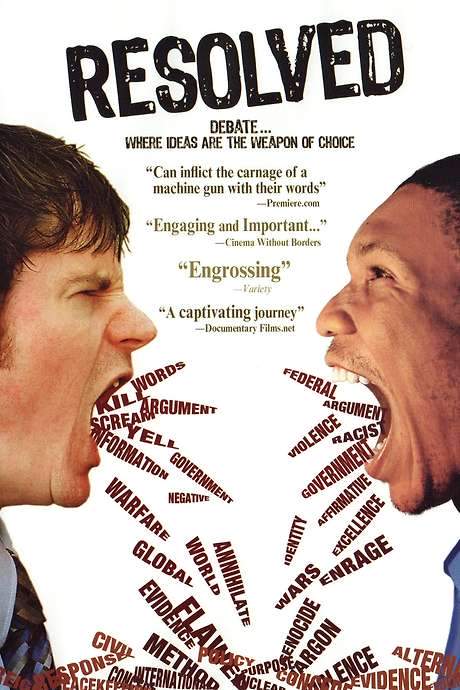
Resolved (2007) movie poster

Plot Summary

Resolved (2007) Plot Summary Explained

Release, runtime and language
2007 · 91 mins · English
Loading streaming availability…
Directed by
Greg Whiteley
Starring
Josh Lucas, Jane Pauley, Karl Rove, Samuel Alito, Juan Williams

The film follows the intense world of high‑school debate, using that arena to expose how racial and class inequities permeate American schools. Greg Whiteley’s documentary weaves personal stories of participants with a broader look at systemic bias, delivering a compelling, thought‑provoking portrait.

On this page (5)
  1. 1 Where to watch
  2. 2 What happens: full plot
  3. 3 Plot questions answered
  4. 4 Movie threads
  5. 5 Every angle
Loading streaming availability…

Full plot summary · contains spoilers

What Happens in Resolved: Full Plot Summary

The whole story of Resolved (2007) explained, from the opening scene to the final frame: every key event, every twist and what it all adds up to. Read it as a quick recap before the sequel, to check a scene you missed, or to finally understand what really happened.

Resolved follows the intimate, sometimes tense world of high school policy debate, tracing two pairs of young debaters as they push through contrasting environments and ideals to test the power and politics of argument itself.

The film opens by tracking the careers of Matt Andrews and Sam Iola, two standout competitors at Highland Park High School in Texas—an institution renowned for its policy debate prowess and the expectation that students will continue to college after graduation. The Highland Park team appears as a product of a wealthy, resource-rich community where the pathway to higher education feels almost inevitable, shaping their ambitions and their approach to debate from a young age. By contrast, the documentary shifts its lens to Louis Blackwell and Richard Funches of Jordan High School in Long Beach, California. This public school operates with far fewer resources, and its student body includes a smaller share who go on to a four-year college, a statistic that underscores the uphill battle faced by the Jordan High team.

Against the odds, Blackwell and Funches win the California state championship in an underdog victory that becomes a focal point of the film. Their triumph stakes a claim for Jordan High on the state stage and invites discussion about what it means to succeed within a system that can feel stacked against underfunded schools. The victory also sets the stage for a deeper philosophical turn in the narrative, as their coach Dave Wiltz introduces Paulo Freire’s Pedagogy of the Oppressed, inviting the team to rethink not only their strategy but the very framework of modern policy debate.

From Freire’s ideas, the Jordan High duo rethinks their approach. They begin to argue against the reigning method of high school debate by foregrounding pedagogy, oppression, and social justice. Their strategy shifts toward reading more slowly and prioritizing persuasion over rapid-fire argumentation. The documentary highlights how they weave hip-hop elements into their presentations and challenge the notion that policy debate inherently disadvantages minority students. This shift is presented as part of a broader critique inspired by The Louisville Project, which informs their challenge to the structure of the debate itself.

As the film unfolds, the Jordan High team faces a crucial test: competing under a transformed approach against a tradition-bound field. They ultimately face defeat against a more conventional, “traditional” team. The judge explains his decision by noting that while the Jordan High debaters had laid bare flaws in the overarching structure of policy debate, they also relied on that very structure to defend their points. In other words, their critique exposed inconsistencies within the framework, yet their use of it to advance their arguments undermined the coherence of their critique. The result is a bittersweet moment in which the triumph of critical theory collides with the practical demands of competition.

The loss has real consequences for the Jordan High team’s dreams: they had hoped to qualify for the Tournament of Champions, but the setback significantly curtails that path. The film thus balances a social-justice message with the realities of competitive debate, presenting a nuanced portrait of how ideas intersect with power, opportunity, and the pressures of performance.

Alongside the tournament narrative, Resolved features commentary that anchors its social message in broader public discourse. Throughout the film, esteemed voices weigh in on the issues at hand, including Samuel Alito, Jane Pauley, and Juan Williams. Their perspectives frame the documentary’s exploration of how debate, rhetoric, and policy intersect with concepts of fairness, influence, and equality in American civic life.

Overall, the documentary presents a thoughtful, balanced look at a high school debate scene that becomes a microcosm of larger societal questions. It tracks how a gifted, advantaged team from a well-resourced school navigates the expectations and pressures of competition, while a less affluent team from Long Beach navigates scarcity, systemic critique, and a desire to change the rules themselves. The film invites viewers to consider not only who wins or loses, but why the structure of debate matters, how power shapes opportunity, and what it means to use words to illuminate, challenge, or reinforce the social order.
Last updated: October 09, 2025 at 15:07

Was this helpful?

Plot questions answered

Resolved Plot Explained: Your Questions Answered

The questions people ask most about Resolved (2007): what happens in the confusing scenes, why the characters do what they do, the twists, hidden details and what the ending means. Each answer contains spoilers.

Q1

Why did the Jordan High debate team start using Paulo Freire's ideas?

Coach Dave Wiltz introduced Paulo Freire's 'Pedagogy of the Oppressed' to the Jordan High team after their state championship win. Freire's work provided a philosophical framework for questioning the power structures embedded in policy debate. The team saw an opportunity to challenge how traditional debate privileged certain voices and speaking styles, using the text to justify their shift toward more conscious, socially-aware argumentation that addressed oppression and marginalization directly.

Foreshadowing: Their earlier victory against wealthier schools had already demonstrated that alternative approaches could succeed, making them open to deeper philosophical questioning.

  • freire
  • pedagogy of the oppressed
  • jordan high
  • debate strategy
  • social justice
  • critical theory
Q2

How did Blackwell and Funches win the California state championship?

Blackwell and Funches won the California state championship by pushing a fundamentally different kind of argument that emphasized substance over speed. Coming from an underfunded program at Jordan High School, they defied expectations by using an unconventional approach that highlighted systemic issues rather than relying on the rapid-fire technical style typical of elite policy debate. Their victory was considered an upset because they competed against better-resourced teams with a message-focused strategy.

Foreshadowing: The film establishes early on that Jordan High operates with far fewer resources than schools like Highland Park, making their success an underdog story.

  • california state championship
  • blackwell
  • funches
  • underdog victory
  • jordan high
Q3

Why did the Jordan High team lose their crucial tournament despite their powerful message?

The Jordan High team lost because while they critiqued the structure of policy debate, they still relied on that same structure to defend their positions. The judge explained that their approach exposed inconsistencies: they condemned the debate framework yet used it to advance their arguments. This fundamental contradiction undermined the coherence of their critique, and the more traditional team executed their arguments more effectively within the established rules.

Foreshadowing: The tension between challenging the system while operating within it was foreshadowed when they first introduced Freire's ideas.

  • tournament loss
  • debate critique
  • structural inconsistency
  • judge feedback
  • jordan high
Q4

What was the Louisville Project and how did it influence the team?

The Louisville Project served as an inspiration for Jordan High's new debate methodology. It framed debate as a site of power, voice, and marginalization, encouraging students to examine how the structure of policy debate could disadvantage minority participants. The project informed their challenge to the assumption that winning required only quick, technical rebuttal, helping them develop a more socially-conscious approach that integrated themes of oppression and pedagogy into their rounds.

Foreshadowing: The Louisville Project preceded their formal adoption of Freire's Pedagogy, representing an earlier step in their ideological evolution.

  • louisville project
  • debate reform
  • marginalization
  • critical pedagogy
  • strategy shift
Q5

Why did the Jordan High debate team shift to a slower, more persuasive style?

The team shifted to a slower, more persuasive style to prioritize clarity and argument quality over speed. Drawing from Freire's ideas, they believed that rapid-fire debate favored already-advantaged students and silenced marginalized voices. By reading arguments more slowly and focusing on cadence and explanation, they aimed to make complex ideas about systemic oppression accessible to judges and audiences, essentially using debate as a tool for social consciousness rather than purely competitive victory.

Foreshadowing: This strategic shift directly followed their engagement with Freire's critique of traditional education systems.

  • debate style
  • slower pace
  • persuasion
  • clarity
  • strategy change
  • hip-hop elements
Q6

Why didn't Blackwell and Funches qualify for the Tournament of Champions?

Blackwell and Funches failed to qualify for the Tournament of Champions because of their loss in the crucial competition where they debuted their Freire-inspired approach. That defeat significantly curtailed their path to the national tournament. The loss had real consequences for their competitive future, as the Tournament of Champions is one of the most prestigious high school debate tournaments and their early exit prevented them from advancing.

Foreshadowing: The film builds tension toward this qualification attempt as the culmination of their philosophical journey.

  • tournament of champions
  • qualification
  • loss
  • competitive future
  • national debate
Q7

How did Jordan High's debate program differ from Highland Park's?

Jordan High and Highland Park represented opposite ends of the resources spectrum in American high school debate. Highland Park in Texas was a national policy debate powerhouse with abundant resources, where students were expected to continue to college after graduation. Jordan High in Long Beach, California operated with far fewer resources, where only 12-18% of students went on to four-year colleges. These contrasting environments shaped not just their competitive advantages but also their philosophical approaches to debate itself.

Foreshadowing: The film opens by establishing this stark contrast, setting up the thematic tension between privilege and opportunity.

  • jordan high
  • highland park
  • resource disparity
  • underfunded school
  • wealthy school
  • debate program
Q8

Why did the Jordan High team incorporate hip-hop elements into their debates?

The Jordan High team incorporated hip-hop elements as part of their broader strategy to challenge traditional debate conventions and make their arguments more accessible. They believed that hip-hop culture represented a voice often marginalized in traditional policy debate, which favored a specific, often more affluent speaking style. By weaving hip-hop elements into their presentations, they aimed to connect with judges through cultural resonance while simultaneously critiquing who the debate format was designed to favor.

Foreshadowing: This cultural integration was part of their larger rejection of mainstream debate norms.

  • hip-hop
  • cultural expression
  • debate innovation
  • marginalized voice
  • accessibility
Q9

What was the judge's specific criticism of Jordan High's debate approach?

The judge's specific criticism was that Jordan High's team had exposed real flaws in the structure of policy debate but simultaneously relied on that very structure to defend their arguments. In essence, they were using the system they claimed to critique, creating an internal contradiction. The judge acknowledged the power of their message but questioned how they could effectively challenge a framework while simultaneously operating within it to win.

Foreshadowing: This criticism emerged during the finals where their philosophy was most directly tested against traditional competitors.

  • judge criticism
  • structural critique
  • inconsistency
  • debate philosophy
  • finals
Q10

What role did coach Dave Wiltz play in Jordan High's debate transformation?

Coach Dave Wiltz served as the intellectual catalyst for Jordan High's transformation. After their state championship win, he introduced Paulo Freire's 'Pedagogy of the Oppressed' to his team, providing them with the theoretical foundation to rethink not just their strategy but the entire framework of modern policy debate. Wiltz guided his students toward using debate as a vehicle for social critique, encouraging them to question power structures rather than simply compete within them.

Foreshadowing: Wiltz's introduction of Freire directly preceded the team's strategic and philosophical shift.

  • dave wiltz
  • coach
  • freire
  • mentorship
  • intellectual guidance
  • transformation
Q11

Why does the documentary include commentary from Samuel Alito, Jane Pauley, and Juan Williams?

The documentary includes commentary from Supreme Court Justice Samuel Alito, journalist Jane Pauley, and political commentator Juan Williams to anchor the debate scene within broader societal conversations about power, voice, and inequality. Their perspectives connect the microcosm of high school policy debate to larger national discussions about how rhetorical skill intersects with fairness, influence, and equality in American civic life. This framing positions the film as more than a sports documentary, it becomes a commentary on democratic discourse itself.

Foreshadowing: These commentators appear throughout the film, reinforcing its themes at key narrative moments.

  • samuel alito
  • jane pauley
  • juan williams
  • commentary
  • expert voices
  • social commentary
Q12

What does the documentary's ending mean for the Jordan High team's future?

The documentary's ending is bittersweet: Jordan High's dream to reach the national championships remains unfulfilled due to their tournament loss, closing the door on their most immediate competitive aspirations. However, their intellectual and moral victory in challenging the debate establishment provides a counterweight of hope. The film suggests their true legacy lies not in trophies but in demonstrating that the structure of debate itself can be questioned and that using words to illuminate systemic injustice matters, even when it doesn't result in tournament wins.

Foreshadowing: This resolution was foreshadowed by the judge's criticism of their internal contradiction.

  • documentary ending
  • bittersweet resolution
  • future
  • legacy
  • social justice
  • tournament loss

Movie threads

More Movies Like Resolved, by Mood & Story

Curated lists built around what makes Resolved tick: the same mood, the same kind of story or the same emotional payoff. Each list explains why these movies belong together.

Intense Underdog Competition Documentaries like Resolved

Stories where intense competition exposes deeper personal and systemic struggles. If you enjoyed the high-stakes tension of Resolved, explore more movies like it. This collection features intense competition documentaries and dramas where the pressure to win reveals powerful stories about underdog spirit, personal sacrifice, and challenging systemic barriers.

  • competitive
  • underdog
  • pressure
  • intense
  • bittersweet
  • thought-provoking
  • Tone: tense, critical, bittersweet
  • Pacing: variable, strategic build to fast-paced climax
Why these movies?

The story pattern: Narratives in this thread typically follow an underdog or team striving for victory against overwhelming odds in a structured competition. The journey is as much about exposing unfair systems or personal demons as it is about the final score, often culminating in a result that is bittersweet but morally resonant.

Why they belong together: Movies are grouped here for their shared atmosphere of high-stakes tension, the central role of a competitive framework, and the exploration of weighty themes like inequality and justice through the lens of an underdog's struggle. The pacing often alternates between strategic, slow-build preparation and frenetic, high-intensity competition sequences.

Documentaries Exposing Systemic Issues Like Resolved

Documentaries that use individual journeys to expose larger societal flaws. For viewers who appreciated how Resolved used personal debate stories to critique education and racial inequity. These movies like Resolved are thought-provoking documentaries that connect individual human experiences to a broader, critical analysis of social and institutional systems.

  • thought-provoking
  • critical
  • systemic
  • reflection
  • heavy
  • bittersweet
  • Tone: thought-provoking, critical, heavy
  • Pacing: variable, mixing reflection with revelation
Why these movies?

The story pattern: The narrative pattern involves following a small group of individuals or a community, using their specific experiences as a case study to illuminate a widespread systemic problem. The story unfolds on two parallel tracks: the personal emotional arc and the intellectual unfolding of the critique, often leading to a reflective and unresolved conclusion.

Why they belong together: These films are united by their complex structure, balancing heavy emotional weight with intellectual rigor. They share a tense or serious tone, as the personal stakes are heightened by the confrontation with powerful, often immovable, systems. The pacing is often variable, moving between contemplative analysis and moments of personal crisis.

Every angle

Resolved (2007) Explained: Plot, Timeline & Characters

Everything about Resolved in one place: what happens in the plot summary, the timeline in chronological order, the characters and meaning and a spoiler-free summary. What's After the Movie adds the cast, box office and post-credit scenes.

Coming soon on iOS and Android

The Plot Explained Movie Summary App

Plot summaries, endings explained and timelines on your phone. Catch up on any movie in minutes, save your favorites and never miss a twist again.

Be the first to know when we launch. Your email stays private, always.

Learn more about the app