Plot Explained Spoilers guaranteed!
Plot Explained

Browse by genre

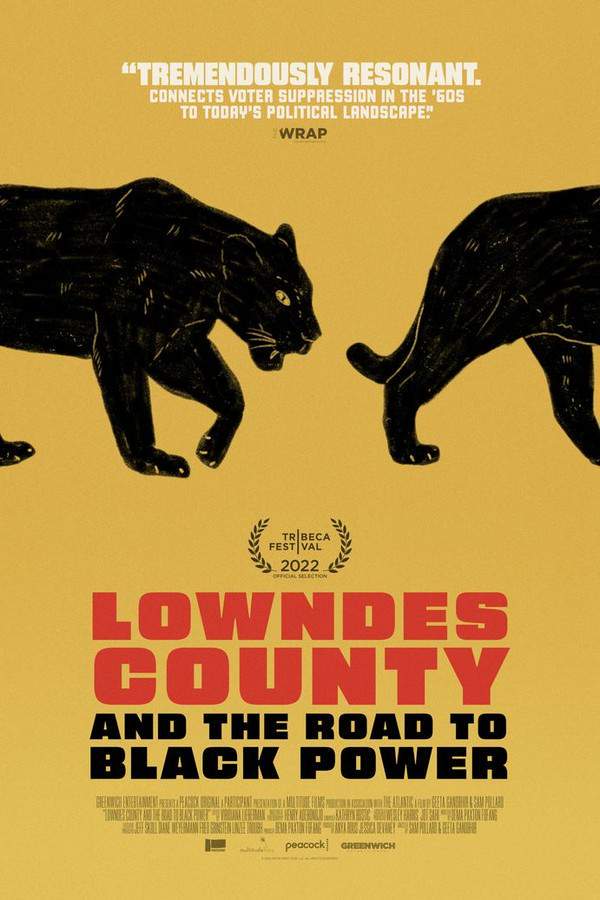
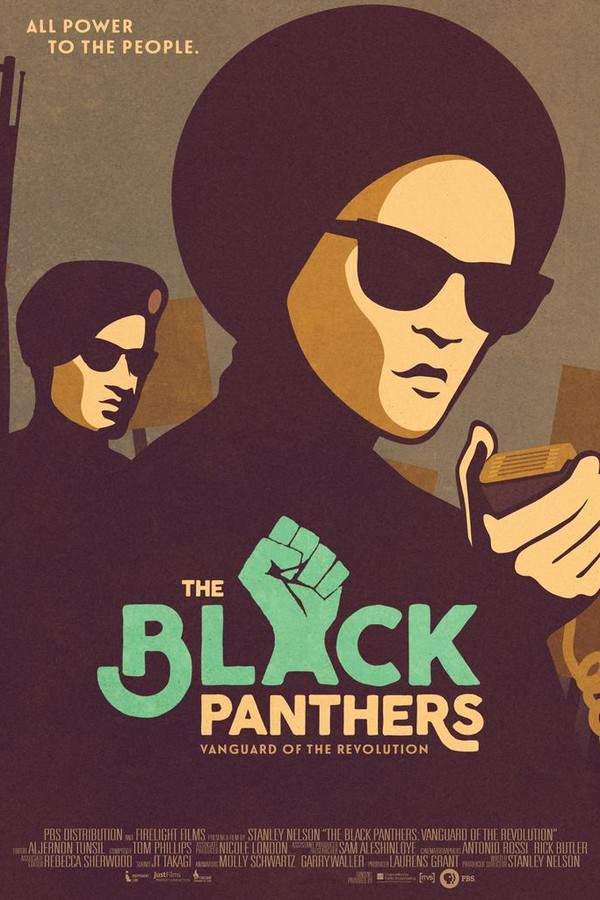
Black Panthers (1968) movie poster

Plot Summary

Black Panthers (1968) Plot Summary Explained

Release, runtime and language
1968 · 28 mins · English
Directed by
Agnès Varda
Starring
Kathleen Cleaver, Eldridge Cleaver, H. Rap Brown, Bobby Seale, Kwame Ture, James Forman

Boldly celebrating Black pride, the documentary captures the summer of 1968 in Oakland, California, as the Black Panther Party organized rallies demanding the release of leader Huey Newton and transforming his trial into a national political debate. The film records how their efforts captured America’s attention.

On this page (5)
  1. 1 What happens: full plot
  2. 2 Plot questions answered
  3. 3 Movie threads
  4. 4 Movies like Black Panthers
  5. 5 Every angle

Full plot summary · contains spoilers

What Happens in Black Panthers: Full Plot Summary

The whole story of Black Panthers (1968) explained, from the opening scene to the final frame: every key event, every twist and what it all adds up to. Read it as a quick recap before the sequel, to check a scene you missed, or to finally understand what really happened.

The movie begins with a powerful story told by a man to his son, recounting the ancient origins of their people. According to this tale, a meteorite filled with vibranium crash-landed in Africa long ago. This rare and valuable mineral sparked fierce disputes among five tribes who fought over its control. Eventually, a wise shaman communicated with the panther goddess Bast and ingested an enchanted herb, granting him extraordinary strength and the ability to become the first Black Panther. This shaman united the tribes under his leadership, founding the mighty nation of Wakanda. Over time, Wakanda flourished, developing advanced technology using vibranium, and chose to remain hidden from the rest of the world by creating an invisible force field that shielded them from outside view. Among the tribes was the Jabari, who preferred to retreat into the remote mountains, distancing themselves from Wakanda’s centralized society.

Jumping forward in time to 1992 in Oakland, California, the story introduces two men: N’Jobu, played by [Sterling K. Brown], and James, portrayed by [Denzel Whitaker]. They are engaged in a clandestine effort to transport weapons across the city. Suddenly, two Dora Milaje warriors arrive at their door. N’Jobu recognizes them and reveals himself as a Wakandan, which shocks James. The warriors escort in [Atandwa Kani] as King T’Chaka, N’Jobu’s brother, who came to California on a secret mission to catch a notorious arms dealer named Ulysses Klaue, played by Andy Serkis. The scene reveals that T’Chaka is disappointed to find N’Jobu harboring vibranium for personal gain; N’Jobu had stolen vibranium, intending to share it with others of African descent to ignite rebellion against oppressors. They also discover that James is actually Zuri, another Wakandan spy embedded in the city. As tension rises, it’s made clear that N’Jobu will face justice for his actions, and outside, children look up as T’Chaka’s ship soars across the sky.

In the present day, T’Challa, played by [Chadwick Boseman], is preparing to inherit the throne after the death of his father, King T’Chaka. He flies with [Danai Gurira] as Okoye, the formidable Dora Milaje general, over Nigeria on a mission to extract his former lover, Nakia, played by [Lupita Nyong’o], who is undercover with mercenaries trafficking women and child soldiers. T’Challa, as the Black Panther, leaps from the aircraft and uses Wakandan technology to disable the mercenaries’ vehicles. He engages in a fierce fight, overcoming them all until he locates Nakia. She joins him as they return to Wakanda.

Back in Wakanda, T’Challa reunites with his mother, Ramonda, played by [Angela Bassett], and his younger sister Shuri, played by [Letitia Wright]. As part of the sacred ceremony to crown him king, all tribes assemble by a waterfall. During the ceremony, Zuri, portrayed by [Forest Whitaker], gives T’Challa a special drink that temporarily strips him of his Black Panther powers. With this vulnerability, T’Challa faces a challenge from M’Baku, leader of the Jabari tribe, who steps forward to contest his right to the throne. T’Challa and M’Baku engage in a brutal fight, with T’Challa nearly losing, but ultimately gaining the upper hand and forcing M’Baku to surrender, affirming T’Challa’s claim to be Wakanda’s ruler.

Following his coronation, T’Challa receives another dose of the herb to restore his powers and is then buried in sand to enter the ancestral plane, where he reunites with his father. They share a meaningful moment, with T’Challa expressing fears about ruling justly. His father, T’Chaka, reflecting on his own mistakes, advises that being a good man makes ruling difficult. In London, a different scene unfolds involving Erik “Killmonger” Stevens, played by [Michael B. Jordan], who admires artifacts with vibranium origins. He destabilizes the situation by slipping a drug into a guide’s coffee before stealing a vibranium weapon from a museum, revealing his intent to take revenge and claim Wakanda’s power.

In Wakanda, W’Kabi, played by [Daniel Kaluuya], and others express frustration over T’Challa’s failure to capture Klaue, who had previously stolen vibranium. Meanwhile, Shuri uses vibranium to heal injuries, demonstrating her impressive technological innovations. T’Challa then embarks on an undercover operation in Busan, South Korea, with Nakia and Okoye to track Klaue and his buyer. During the mission, they encounter Everett Ross, played by [Martin Freeman], and engage in a fierce chase. Klaue, realizing he’s being set up, attempts to escape but is captured after a dynamic pursuit. However, the situation turns chaotic when Killmonger’s mercenaries attack, blowing open a wall and killing Ross’s guards. Killmonger, revealed to be N’Jadaka, the son of N’Jobu, kills Klaue and escapes with his crew, bearing the distinctive tattoo on his lip, indicating his Wakandan heritage.

Back in Wakanda, W’Kabi confronts T’Challa with disappointment, and Ross is treated with vibranium-based healing techniques. T’Challa learns from Zuri that his uncle, N’Jobu, had recently stolen vibranium to help African-descended peoples fight oppression, which led to his brother T’Chaka killing N’Jobu to prevent a larger rebellion. It’s revealed that N’Jobu’s son, Erik, grew up resentful, becoming a formidable Black Ops soldier known as Killmonger, whose body bears the scars of numerous kills.

Killmonger arrives in Wakanda with Klaue’s body, boldly declaring his identity as N’Jadaka and claiming the throne through a challenge. At the ritual site, their fierce fight nearly topples T’Challa, but the intervention of Zuri results in the latter’s death, and Killmonger throws T’Challa over the waterfall, seizing power. His victory is short-lived as T’Challa falls into a coma and awakens in the ancestral plane, where he confronts past regrets, including T’Chaka’s decision to leave Killmonger behind as a child. T’Challa’s return to consciousness prompts him to rally Wakanda’s forces against Killmonger, who has begun to distribute vibranium weapons globally to revolutionaries and mercenaries.

The final battle erupts with T’Challa returning as the Black Panther, leading Wakandan fighters—wielding armored rhinos and aided by the Jabari tribe—to face Killmonger’s forces. The fight is fierce and intense, with W’Kabi struggling to hold his ground before eventually surrendering. Amidst the chaos, Okoye and Shuri play vital roles in the fight, with advanced technology and combat prowess turning the tide. In a climactic duel in the vibranium mines, T’Challa and Killmonger clash physically, culminating in T’Challa trapping him and ending his life. As Killmonger dies, he admits regret for never having seen Wakanda’s true beauty and asks to be buried at sea with his ancestors, believing death to be a release from bondage.

With Killmonger gone, T’Challa reclaims his throne with renewed resolve. He invites Nakia to stay and help lead Wakanda’s future initiatives. In a heartfelt moment, they share a kiss. T’Challa later reveals plans to expand Wakanda’s outreach by purchasing a building in Oakland, establishing a program for global Wakandan support, and opening up Wakanda to the world. The film concludes with T’Challa and his allies looking toward a future of cooperation, as he addresses the United Nations about the importance of unity and collaboration.

The mid-credits scene hints at future challenges as T’Challa, Nakia, Shuri, and Okoye meet at the United Nations to discuss Wakanda’s opening to the world, while the post-credits scene introduces Bucky Barnes, in a humble village hut, indicating new paths and alliances for Wakanda’s journey ahead.

Last updated: August 19, 2025 at 05:13

Was this helpful?

Plot questions answered

Black Panthers Plot Explained: Your Questions Answered

The questions people ask most about Black Panthers (1968): what happens in the confusing scenes, why the characters do what they do, the twists, hidden details and what the ending means. Each answer contains spoilers.

Q1

Who is Killmonger really and what is his connection to Wakanda?

Killmonger is Erik Stevens, revealed to be N'Jadaka, the son of N'Jobu (T'Chaka's brother). N'Jobu was a Wakandan spy who stole vibranium to help African-descended peoples fight oppression. When T'Chaka discovered this, he killed N'Jobu to prevent a larger rebellion, leaving behind his young son in Oakland. Killmonger grew up resenting Wakanda for abandoning him and his father, eventually becoming a highly trained Black Ops soldier seeking revenge and claiming the throne.

Foreshadowing: The opening scene in 1992 shows T'Chaka confronting N'Jobu, establishing the family tragedy that drives the antagonist.

  • killmonger
  • n'jadaka
  • n'jobu
  • erik stevens
  • wakanda
  • son
Q2

Why did King T'Chaka kill his own brother N'Jobu?

T'Chaka discovered that N'Jobu had stolen vibranium from Wakanda with the intent to share it with people of African descent around the world to ignite rebellion against oppressors. While T'Chaka understood his brother's motivations, he believed N'Jobu's actions would expose Wakanda to the world and potentially start a war. To prevent this and maintain Wakanda's secrecy, T'Chaka killed his brother, an act he later regretted but considered necessary for protecting his nation.

Foreshadowing: The 1992 Oakland scene shows the confrontation that leads to N'Jobu's death and explains why Killmonger was left behind.

  • t'chaka
  • n'jobu
  • death
  • killing
  • brother
  • vibranium
Q3

Why does Killmonger want to become king of Wakanda?

Killmonger wants the throne primarily to fulfill his father's unfinished mission and to use Wakanda's resources to arm oppressed people worldwide. He believes Wakanda has a moral obligation to share its vibranium wealth and technology with Black communities facing oppression globally. Rather than waiting for gradual change, Killmonger intends to violently overthrow colonizers and oppressive systems by distributing advanced weapons to revolutionaries.

Foreshadowing: Killmonger's childhood trauma and his father's vision of using vibranium to help others foreshadow his extreme methods.

  • killmonger
  • king
  • throne
  • motivation
  • vibranium
  • revolution
Q4

Why does M'Baku challenge T'Challa for the throne?

M'Baku, leader of the Jabari tribe, challenges T'Challa because he believes T'Challa is unworthy of the throne after his father's death. During the ritual ceremony, when T'Challa drinks the herb that temporarily strips his powers, M'Baku sees an opportunity to contest the lineage claim. His challenge is both political and philosophical, he disagrees with the centralization of Wakandan power and questions whether T'Challa has the strength and wisdom to lead.

Foreshadowing: The earlier mention of the Jabari tribe's decision to distance themselves from Wakanda's centralized society establishes their opposition.

  • m'baku
  • challenge
  • throne
  • jabari
  • t'challa
  • wrestling
Q5

How does Zuri die and why does Killmonger kill him?

Zuri is killed during Killmonger's challenge for the throne when he attempts to intervene in the fight between T'Challa and Killmonger. Killmonger fatally wounds Zuri because Zuri had previously helped T'Chaka in the 1992 confrontation that led to N'Jobu's death. Killmonger views Zuri as complicit in his father's murder and the abandonment of his family, making his death personal retaliation rather than just a tactical move.

Foreshadowing: The 1992 scene shows Zuri accompanying T'Chaka, establishing his role in the family tragedy.

  • zuri
  • death
  • killmonger
  • killed
  • challenge
  • throne
Q6

How does T'Challa survive after being thrown over the waterfall?

After Killmonger throws T'Challa over the waterfall, T'Challa falls into a coma. In this state, he enters the ancestral plane, a spiritual realm where Wakandan kings commune with their predecessors. There, he confronts his father T'Chaka about the decision to leave Killmonger behind. This spiritual journey gives T'Challa clarity and purpose. He eventually awakens from the coma, heal ed by his sister Shuri's vibranium technology, and returns to fight Killmonger.

Foreshadowing: Earlier, T'Challa enters the ancestral plane during his coronation, establishing how this realm functions.

  • t'challa
  • coma
  • ancestral plane
  • waterfall
  • survive
  • killmonger
Q7

Why does Killmonger burn the heart-shaped herbs?

Killmonger burns the remaining heart-shaped herbs because he believes the Black Panther ritual and the hereditary monarchy are corrupt systems that have allowed Wakanda to remain isolated while Black people worldwide suffered oppression. By destroying the herbs, he intends to end the traditional path to power and reshape Wakanda under his own leadership with his revolutionary ideology. This act also prevents any future challenger from using the same ritual to dethrone him.

Foreshadowing: The herbs were central to T'Challa's coronation, showing their importance to Wakandan tradition.

  • killmonger
  • heart-shaped herbs
  • burn
  • black panther
  • tradition
Q8

Why does W'Kabi side with Killmonger against T'Challa?

W'Kabi, a close friend of T'Challa and leader of Wakanda's border tribe, betrays him because of deep disappointment over T'Challa's failure to capture Ulysses Klaue. W'Kabi had personal reasons to want Klaue captured, Klaue had previously killed his parents during a vibranium theft. When T'Challa let Klaue escape in Busan, W'Kabi lost faith in his friend's leadership and became vulnerable to Killmonger's recruitment, viewing the radical Killmonger as more decisive and willing to act.

Foreshadowing: W'Kabi's anger about Klaue is shown early in the film, building toward his eventual betrayal.

  • w'kaabi
  • betrayal
  • killmonger
  • klaue
  • border tribe
Q9

What does Killmonger mean when he asks to be buried at sea?

When dying, Killmonger asks T'Challa to bury him at sea with his ancestors, saying 'bury me in the ocean with my ancestors who jumped from ships, because they knew death was better than bondage.' This reflects his understanding of the Middle Passage, the journey of enslaved Africans across the Atlantic. He views death as liberation from the 'bondage' of his traumatic life and wants to be reunited with those who died resisting captivity, finding peace in that ancestral connection.

Foreshadowing: Killmonger's childhood memories show his father teaching him about their heritage and resistance.

  • killmonger
  • burial
  • sea
  • ancestors
  • bondage
  • death
Q10

Why does T'Challa decide to open Wakanda to the world?

T'Challa decides to open Wakanda after witnessing Killmonger's destructive path and realizing that Wakanda's isolationism, while protective, had been selfish. He acknowledges that sharing Wakanda's resources and technology could help oppressed people globally while still protecting their nation. By establishing an outreach center in Oakland (where Killmonger grew up) and speaking at the United Nations, T'Challa chooses collaboration over secrecy, believing Wakanda has a responsibility to use its wealth for the greater good.

Foreshadowing: Killmonger's argument about Wakanda's obligation to help others resonates with T'Challa's eventual decision.

  • t'challa
  • wakanda
  • open
  • world
  • outreach
  • united nations
Q11

How did Wakanda become so technologically advanced?

Wakanda's advancement comes from vibranium, a rare meteorite mineral that crashed in Africa thousands of years ago. The five tribes fought over it until a shaman communed with the panther goddess Bast, gaining extraordinary powers to become the first Black Panther and uniting the tribes. Wakanda used vibranium to develop technology far beyond the rest of the world while remaining hidden through an invisible force field. This combination of a unique resource, spiritual guardianship, and isolation allowed centuries of uninterrupted technological progress.

Foreshadowing: The opening narration and ancient flashbacks establish vibranium as the source of Wakandan power.

  • vibranium
  • wakanda
  • technology
  • advanced
  • meteor
  • origin
Q12

What does T'Chaka tell T'Challa about being a good king?

In the ancestral plane, T'Chaka tells T'Challa that being a good man makes ruling difficult. He admits to his own mistakes, including leaving Killmonger behind as a child, a decision he regrets but made out of fear. This conversation helps T'Challa understand that leadership requires balancing moral decisions with the weight of power, and that even good kings make choices that haunt them. The advice guides T'Challa toward his eventual decision to open Wakanda.

Foreshadowing: T'Challa's doubts about ruling justly appear during his coronation conversation with his father.

  • t'chaka
  • advice
  • t'challa
  • king
  • good man
  • ancestral plane

Movie threads

More Movies Like Black Panthers, by Mood & Story

Curated lists built around what makes Black Panthers tick: the same mood, the same kind of story or the same emotional payoff. Each list explains why these movies belong together.

Urgent political documentaries like Black Panthers

In-the-moment films capturing the raw energy of social movements and political upheaval. Explore movies like Black Panthers that capture pivotal political and social movements with raw immediacy. If you liked the gripping, on-the-ground feel of this documentary, you'll find similar films about revolution, protest, and the fight for justice.

  • urgent
  • gripping
  • hopeful
  • tense
  • historical
  • revolutionary
  • Tone: tense, urgent, hopeful
  • Pacing: fast, immersive
Why these movies?

The story pattern: The narrative pattern follows real-world events as they unfold, often centered on a specific movement, leader, or conflict. The journey is one of momentum, documenting the strategies, speeches, and confrontations that define a struggle for power or rights.

Why they belong together: These movies are grouped by their immersive, high-intensity approach to nonfiction filmmaking. They share a fast pacing, heavy emotional weight from real-world stakes, and a tense, gripping tone that makes history feel immediate and consequential.

Movies about nation-shaking revolutions like Black Panthers

Stories of radical movements that forced a country to confront its own identity. Find films similar to Black Panthers that explore how political movements and revolutionary groups capture the national spotlight. If you were fascinated by how the Black Panther Party's actions became a national debate, you'll enjoy these stories of ideological upheaval.

  • tense
  • grandiose
  • tragic
  • suspenseful
  • urgent
  • hopeful
  • Tone: tense, grandiose, tragic
  • Pacing: fast, driven
Why these movies?

The story pattern: Narratives typically follow the rise of a revolutionary group, detailing their organizing principles, key figures, and the specific events that propel them into the national consciousness. The central conflict is between the movement's ideals and the established power structures it seeks to change.

Why they belong together: These films share a focus on the mechanics and impact of revolution. They are connected by themes of cultural identity, political legacy, and betrayal, often featuring high intensity, fast pacing, and a heavy emotional weight due to the high stakes of the conflict.

If you liked this

Movies Like Black Panthers

Similar movies to Black Panthers: the same genre, themes or kind of story. Each one comes with its own plot summary, timeline and ending explained.

Browse all movie summaries

Every angle

Black Panthers (1968) Explained: Plot, Timeline & Characters

Everything about Black Panthers in one place: what happens in the plot summary, the timeline in chronological order, the characters and meaning and a spoiler-free summary. What's After the Movie adds the cast, box office and post-credit scenes.

Coming soon on iOS and Android

The Plot Explained Movie Summary App

Plot summaries, endings explained and timelines on your phone. Catch up on any movie in minutes, save your favorites and never miss a twist again.

Be the first to know when we launch. Your email stays private, always.

Learn more about the app