






Plot Explained Spoilers guaranteed!
Plot Explained

Browse by genre

Hunger (2008) movie poster

Timeline

Hunger (2008) Timeline Explained – Every Event in Order

Release, runtime and language
2008 · 96 min · Thai
JustWatch #9,453 23

A young woman strives to balance her family's traditional noodle shop with an opportunity to join Chef Paul’s prestigious “Hunger” team in Bangkok. Drawn to the excitement of Thailand’s high-end culinary scene, she faces a challenging choice between honoring her heritage and pursuing her ambitions. Navigating the competitive world of haute cuisine, she must discover if her passion can endure the intense pressure and demanding environment.

On this page (6)
  1. 1 Where to watch
  2. 2 Events in order (13)
  3. 3 Timeline questions answered
  4. 4 Movie threads
  5. 5 Movies like Hunger
  6. 6 Every angle

Where to watch

Where to Watch Hunger (2008)

Where can you watch Hunger? Stream, rent or buy it in the US, including on AMC+, Philo and Sundance Now: current JustWatch availability with up-to-date prices.

Streaming availability powered by JustWatch

13 events in order · contains spoilers

Hunger Timeline: Events in Chronological Order

Every key event of Hunger (2008) in order, scene by scene, with when and where it takes place. Use it to untangle flashbacks, time jumps and parallel storylines, to refresh your memory before the sequel or to find the exact scene you are thinking of.

  1. Raymond Lohan's Daily Routine

    The film begins with prison guard Raymond Lohan preparing for his workday, reflecting a sense of dread in his meticulous actions. He checks under his car for bombs and dons his uniform, symbolizing the tension of his environment as he chooses to remain disconnected from his coworkers.

    Where
    Prison
  2. Davey Arrives

    A new IRA prisoner named Davey arrives at the prison and immediately refuses to wear the issued uniform, marking him as 'non-cooperative.' His defiance sets the stage for his tough journey as he is sent to his cell with only a blanket for comfort.

    Where
    Prison
  3. Gerry's Grueling Cell Transformation

    Upon entering the cell, Davey meets Gerry, who has transformed their shared living space into a grotesque display by covering the walls with feces. This act of rebellion highlights their shared defiance against the harsh prison environment.

    Where
    Prison Cell
  4. Visiting Day Disguise

    On visiting day, Gerry's girlfriend audaciously smuggles a small radio into the prison, concealing it within her body. This act of subversion provides a brief escape from the grim reality for the inmates, symbolizing hope amidst despair.

    Where
    Prison
  5. Violent Removal of Inmates

    Chaos ensues as prison officers violently remove inmates from their cells, brutally beating them in the process. This moment of sheer brutality culminates when Bobby Sands defiantly spits in Lohan's face, provoking an intense hand injury as Lohan retaliates.

    Where
    Prison
  6. Ripping Through the Clothes

    Following the violent treatment, Sands and his fellow inmates are forced into second-hand civilian clothing, which sparks outrage. Sands tears apart his clothes, igniting a chain reaction among the other prisoners as they collectively rebel against their humiliation.

    Where
    Prison
  7. Confrontation with Riot Police

    Tensions escalate further with the arrival of riot police, who rudely beat their batons against shields while threatening the prisoners. This intimidating display reinforces the power imbalance and danger that the inmates face from authorities.

    Where
    Prison
  8. Lohan's Visit to His Mother

    In a contrasting moment, Raymond Lohan visits his elderly mother at a nursing home, showcasing both his vulnerability and the weight of his job. Tragically, this moment is cut short when he is shot in the back of the head by a mysterious IRA assassin.

    Where
    Nursing Home
  9. Sands's Dedication to Politics

    Following Lohan's tragic death, the focus shifts primarily to Bobby Sands, who is deeply committed to his political cause. Sands firmly believes in the nobility of suffering for political recognition, setting the stage for his forthcoming hunger strike.

    Where
    Prison
  10. Moral Debate with Father Dominic Moran

    Sands engages in an emotionally charged debate with Father Dominic Moran over the implications of his hunger strike. Reflecting on a past decision where he chose to end the life of an injured foal, Sands draws a parallel to his own situation, revealing the depths of his conviction.

    Where
    Prison
  11. Physical Deterioration of Sands

    As the days progress, Bobby Sands’ condition deteriorates dramatically due to the hunger strike. Months of refusal to eat manifest through severe physical ailments including sores, kidney failure, and debilitating stomach ulcers, showcasing the toll of his protest.

    Where
    Prison
  12. Confrontation with the New Guard

    Amidst his suffering, Sands confronts a new guard who exhibits his tattooed knuckles reading 'UDA'. Despite his weakened state, Sands musters the strength to stand and defiantly face the guard, emphasizing his unwavering spirit in the face of oppression.

    Where
    Prison
  13. Sands' Final Moments

    In the final throes of his hunger strike, Bobby Sands is surrounded by his parents as he loses consciousness. On the 66th day of his protest, he passes away, leaving behind a powerful legacy of sacrificial resistance against the injustices faced by prisoners.

    Where
    Prison

Last updated: November 15, 2024 at 19:55

Was this helpful?

Timeline questions answered

Hunger Timeline Explained: Your Questions Answered

When does it happen, and why in that order? The questions people ask about the chronology of Hunger (2008): time jumps, flashbacks, cause and effect between scenes and the correct order of events, each answered with spoilers.

Q1

Why does Bobby Sands start a hunger strike?

Bobby Sands begins his hunger strike to protest the British government's decision to remove special category status for IRA prisoners. This status had previously allowed prisoners to be treated as prisoners of war rather than criminals. Sands believes that by willingly suffering and dying, he can draw international attention to the Irish republican cause and force negotiations around prisoner rights.

Foreshadowing: Earlier scenes show the prisoners' collective rebellion against prison conditions, establishing the mounting tension that leads to Sands's drastic decision.

  • bobby sands
  • ira
  • hunger strike
  • prisoner of war
  • special category status
  • protest
Q2

Why is Raymond Lohan shot by the IRA?

Raymond Lohan is shot by an unidentified IRA assassin while visiting his elderly mother at a nursing home. The IRA views prison guards as part of the British oppressive system, and targeting them is meant as retaliation for the brutal treatment of IRA prisoners in the Maze Prison. His death occurs suddenly and without explanation, highlighting the randomness of sectarian violence.

Foreshadowing: The film opens with Lohan checking his car for bombs, establishing that his role as a prison guard makes him a target.

  • raymond lohan
  • ira assassin
  • nursing home
  • prison guard
  • retaliation
Q3

Why do the IRA prisoners refuse to wear prison uniforms?

The prisoners refuse to wear prison-issued uniforms as a political statement. By wearing their own clothes or nothing at all, they assert that they are prisoners of war, not criminals. This protest, known as the "blanket protest" and later the "dirty protest," is intended to force the British government to recognize their political status.

Foreshadowing: Davey's arrival establishes the practice when he immediately refuses the uniform and is labeled "non-cooperative."

  • prison uniforms
  • blanket protest
  • dirty protest
  • political status
  • ira prisoners
Q4

What is the significance of Bobby Sands drowning the foal?

Sands recounts to Father Dominic Moran how he once drowned an injured foal in Donegal, believing it was a merciful act to end its suffering despite facing community backlash. He draws a direct parallel between this act and his hunger strike, choosing to end his own life to make a meaningful political statement, accepting the physical destruction of his body as a form of sacrifice.

Foreshadowing: This story foreshadows Sands's willingness to endure slow death for his cause.

  • foal
  • mercy killing
  • donegal
  • sacrifice
  • political statement
  • bobby sands
Q5

Why does Bobby Sands spit in Raymond Lohan's face?

Sands spits in Lohan's face as an act of defiance during the brutal forced shaving of inmates. This deliberate provocation is meant to assert his dignity and resistance against the humiliation of having his hair and beard forcibly removed by prison authorities. The act enrages Lohan, who punches Sands but misses, injuring his hand on the wall.

Foreshadowing: The film establishes the escalating tensions between prisoners and guards from the opening scenes.

  • bobby sands
  • raymond lohan
  • spit
  • defiance
  • shaving
  • humiliation
Q6

What does the new guard's "UDA" tattoo mean?

The new guard who replaces Lohan shows Sands his knuckles, which are tattooed with "UDA", the Ulster Defence Association, a Loyalist paramilitary organization. This symbolizes the sectarian nature of the prison system and the political divisions running through even the prison staff. Sands, despite his extreme weakness, defiantly rises to confront the guard.

Foreshadowing: This detail reinforces the film's portrayal of the prison as a microcosm of the broader political conflict.

  • uda
  • loyalist
  • tattoo
  • prison guard
  • sectarian
Q7

Why do the prisoners tear apart their clothes?

After being forced into second-hand civilian clothing, a humiliation designed to strip them of their identity, Sands tears apart his clothes in a fit of rage. This act sparks a collective rebellion as other prisoners follow suit, turning their nakedness into a statement of defiance against the authorities' attempts to degrade them.

Foreshadowing: The scene follows the forced shaving, escalating the prisoners' resistance.

  • clothes
  • rebellion
  • defiance
  • nakedness
  • humiliation
Q8

How long does Bobby Sands survive on hunger strike?

Bobby Sands survives for 66 days on hunger strike before dying. During this time, his body deteriorates severely, suffering from sores, kidney failure, low blood pressure, and debilitating stomach ulcers. His death becomes a pivotal moment in the Troubles, making him a martyr for the Irish republican cause.

Foreshadowing: The film progressively shows his physical decline throughout the second half.

  • 66 days
  • hunger strike
  • deterioration
  • kidney failure
  • death
Q9

Why does the film focus on Raymond Lohan before Bobby Sands?

The film opens with Lohan to establish the brutal prison environment and the human cost of the conflict from both sides. By showing a prison guard's daily routine and eventual assassination, the film demonstrates that the Troubles victimizes everyone involved. This perspective shifts to Sands as he becomes the focal point of the hunger strike.

Foreshadowing: Lohan's assassination marks the transition to focusing entirely on Sands.

  • raymond lohan
  • perspective
  • brutality
  • both sides
  • troubles
Q10

What is the dirty protest in the film?

The dirty protest refers to Gerry smearing his cell with feces from floor to ceiling, a form of nonviolent resistance against the removal of prisoner privileges. This extreme act of rebellion is meant to degrade the prison authorities and draw attention to their demands. The film shows this grim reality to illustrate the escalating desperation of the prisoners.

Foreshadowing: This sets up the brutal response from prison guards that follows.

  • dirty protest
  • feces
  • cell
  • nonviolent resistance
  • escalation

Movie threads

More Movies Like Hunger, by Mood & Story

Curated lists built around what makes Hunger tick: the same mood, the same kind of story or the same emotional payoff. Each list explains why these movies belong together.

Movies about political martyrdom like Hunger

Stories of unwavering resistance that end in tragic, deliberate sacrifice. If you were moved by the tragic sacrifice in Hunger, this collection features similar films about principled resistance. These movies explore stories of characters who make a ultimate stand against oppression, often leading to a bleak but powerful conclusion. Find other heavy dramas about political martyrdom and the high personal cost of defiance.

  • somber
  • defiant
  • tragic
  • brutal
  • desperate
  • unflinching
  • Tone: bleak, tragic, defiant
  • Pacing: slow, methodical
Why these movies?

The story pattern: These narratives typically follow a linear, focused path toward an inevitable tragic ending. The protagonist's commitment to a cause is tested through escalating physical and psychological hardship, culminating in a act of sacrifice that serves as a powerful political statement. The journey is one of gradual deterioration and unwavering resolve.

Why they belong together: Movies are grouped here because they share a specific, heavy narrative pattern centered on sacrifice for a cause. They possess a bleak tone, high emotional intensity, and a slow, deliberate pacing that makes the protagonist's suffering palpable. The collective experience is one of profound sadness and admiration for human resilience in the face of certain loss.

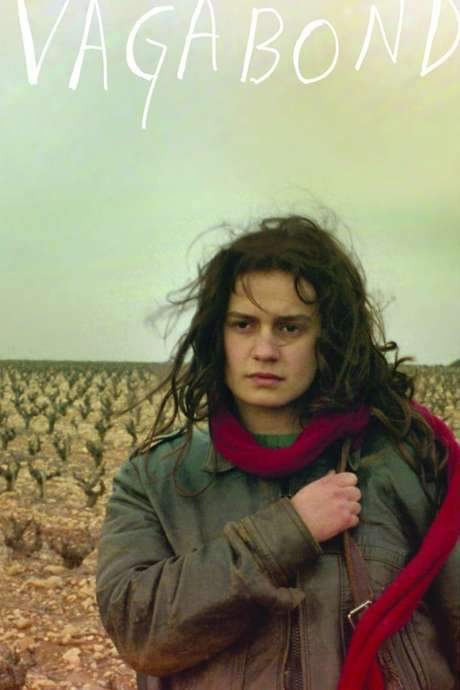
Claustrophobic prison movies like Hunger

Unflinching looks at individuals crushed by oppressive systems. For viewers who appreciated the oppressive atmosphere of Hunger, this section features films with similar claustrophobic settings. These movies are set within brutal institutions like prisons, where characters face dehumanizing conditions and relentless systemic violence. Discover other slow, heavy dramas that create a powerful sense of confinement and institutional dread.

  • claustrophobic
  • oppressive
  • brutal
  • somber
  • institutional
  • violent
  • Tone: bleak, oppressive, brutal
  • Pacing: slow, immersive
Why these movies?

The story pattern: The narrative is often straightforward, observing the daily rituals of violence and survival within a closed system. Conflict arises from the inherent power imbalance between the individual and the institution. Character arcs frequently involve either broken spirits or defiant last stands, with the setting itself acting as the primary antagonist.

Why they belong together: These films are united by their immersive, oppressive worlds and a shared mood of claustrophobic dread. They utilize a slow pace and high intensity to make the viewer feel the weight of the institution. The similarity lies in the visceral experience of confinement and the detailed depiction of systemic cruelty.

If you liked this

Movies Like Hunger

Similar movies to Hunger: the same genre, themes or kind of story. Each one comes with its own plot summary, timeline and ending explained.

Browse all movie summaries

Every angle

Hunger (2008) Explained: Plot, Timeline & Characters

Everything about Hunger in one place: what happens in the plot summary, the timeline in chronological order, the characters and meaning and a spoiler-free summary. What's After the Movie adds the cast, box office and post-credit scenes.

Coming soon on iOS and Android

The Plot Explained Movie Summary App

Plot summaries, endings explained and timelines on your phone. Catch up on any movie in minutes, save your favorites and never miss a twist again.

Be the first to know when we launch. Your email stays private, always.

Learn more about the app