






Plot Explained Spoilers guaranteed!
Plot Explained

Browse by genre

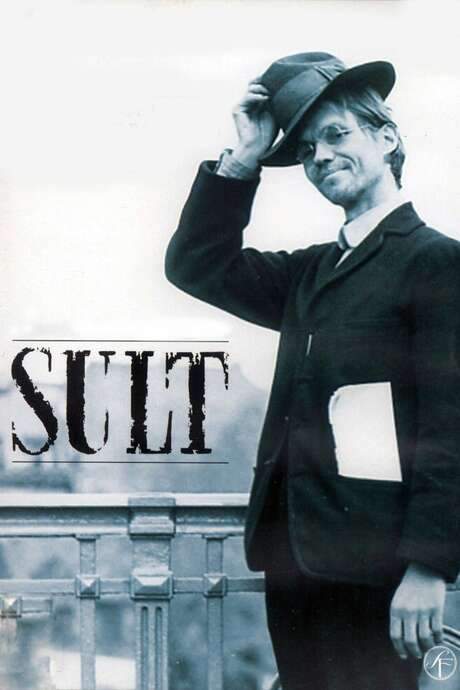
Hunger (1966) movie poster

Plot Summary

Hunger (1966) Plot Summary Explained

Release, runtime and language
1966 · 112 mins · Danish
JustWatch #9,377 27
Directed by
Henning Carlsen
Starring
Gunnel Lindblom, Birgitte Federspiel, Per Oscarsson, Lise Fjeldstad, Roy Bjørnstad, Sverre Hansen

In 1890, starving writer Pontus roams the streets of Christiania, hoping to find love and a publisher for his work, yet he clings to hope. He encounters relentless defeat and suffering, his grip on reality slowly slipping and withering. Though his moods swing from fleeting joy to bitter curses, he never abandons his dignity and pride.

On this page (7)
  1. 1 Where to watch
  2. 2 What happens: full plot
  3. 3 Plot questions answered
  4. 4 The book behind the movie
  5. 5 Movie threads
  6. 6 Movies like Hunger
  7. 7 Every angle

Where to watch

Where to Watch Hunger (1966)

Where can you watch Hunger? Stream, rent or buy it in the US, including on AMC+, Philo and Sundance Now: current JustWatch availability with up-to-date prices.

Streaming availability powered by JustWatch

Full plot summary · contains spoilers

What Happens in Hunger: Full Plot Summary

The whole story of Hunger (1966) explained, from the opening scene to the final frame: every key event, every twist and what it all adds up to. Read it as a quick recap before the sequel, to check a scene you missed, or to finally understand what really happened.

In 1890 Kristiania (Oslo), Pontus Per Oscarsson, an impoverished and lonely writer, arrives from the countryside. He stands on a bridge, overlooking running water, writing, yet he is clearly starving. He visits a pawnbroker Osvald Helmuth several times, pawning his waistcoat for a few coins and giving the money to a beggar. Money that falls into his hands he also gives away, a quiet testament to a self-imposed poverty that defines his days. He has written an article that a newspaper editor Henki Kolstad agrees to publish if he makes some corrections, but Pontus is too proud to accept an advance, so he leaves elated but still hungry.

He begs a bone for his fictitious dog, gnawing on it secretly in an alley. He often has chances to improve his situation, but his pride usurps his need, such as when he declines the much-needed help of a worried friend. When he is unable to pay his rent, the landlady Else Heiberg evicts him. Another landlady shortly does the same, underscoring a life that seems to shrink around him.

Hunger is a constant weight as Pontus drifts between hallucination and reality while struggling to survive. He endures humiliations that push him toward the edge of insanity, his days punctuated by small acts of defiance and stubborn pride. He applies for an accounting job but is rejected, and even a hopeful shot at becoming a fireman falls apart when he fails a physical exam because he wears glasses. One vivid hallucination centers on Ylajali Gunnel Lindblom, a refined woman he has encountered on the street. Despite their mutual flirtations, nothing ever develops between them in the waking world.

In a sudden impulse, Pontus takes a job as a crew member on an outbound freighter, stepping onto the deck with a mix of resolve and uncertainty. His destination remains unknown, and so the journey begins, carrying the weight of a man who clings to dignity even as the city swallows more of him.

Last updated: March 05, 2026 at 18:40

Was this helpful?

Plot questions answered

Hunger Plot Explained: Your Questions Answered

The questions people ask most about Hunger (1966): what happens in the confusing scenes, why the characters do what they do, the twists, hidden details and what the ending means. Each answer contains spoilers.

Q1

Why does Pontus give money to beggars when he is starving himself?

Pontus gives away money despite his extreme hunger because he has made a conscious choice to live in self-imposed poverty. His dignity and moral principles are more important to him than physical survival. He would rather endure hunger than keep money that could help others in need, viewing his suffering as a form of artistic integrity and spiritual commitment.

Foreshadowing: Earlier, he sells his waistcoat to the pawnbroker specifically to give the money to a beggar, establishing this pattern of prioritizing others over himself.

  • pontus
  • beggars
  • poverty
  • dignity
  • generosity
  • self-imposed poverty
Q2

Why does Pontus refuse the advance offered by the newspaper editor?

Pontus refuses the advance because he views accepting money before his work is published as compromising his integrity as a writer. He wants his article to stand on its own merits rather than be perceived as pandering or desperate. This pride ultimately leaves him still hungry, but he believes accepting charity would diminish the value of his artistic vision.

Foreshadowing: His refusal establishes the recurring pattern throughout the film where his pride prevents him from accepting practical help.

  • pontus
  • newspaper editor
  • advance
  • pride
  • article
  • integrity
Q3

What causes Pontus to start hallucinating?

Pontus's hallucinations are caused by severe starvation. As his body lacks food, his mind begins to blur the line between reality and fantasy. The hallucinations represent both his desperate longing for something beautiful in his life and the psychological breakdown that extreme hunger induces.

Foreshadowing: The film explicitly shows his hunger worsening after he gives away money and refuses help, pushing him closer to mental dissolution.

  • pontus
  • hallucinations
  • hunger
  • starvation
  • mental breakdown
  • reality
Q4

Why does Pontus reject help when his friend offers it?

Pontus rejects help from his worried friend because accepting charity would feel like an admission of defeat. His pride cannot tolerate being dependent on others, even when he desperately needs assistance. He would rather continue suffering than owe someone gratitude for basic survival.

Foreshadowing: This moment reinforces the pattern established when he refused the newspaper advance, showing how his pride has become a destructive force.

  • pontus
  • friend
  • help
  • pride
  • rejection
  • dependence
Q5

Who is Ylajali and what does she represent to Pontus?

Ylajali is a refined woman Pontus encounters on the streets of Kristiania. She exists only as a hallucination in his mind, representing his longing for social status, romantic connection, and a life of dignity that he can never attain in his waking reality. Their imagined relationship is a mental escape from his grueling poverty.

Foreshadowing: The hallucination of Ylajali appears during his deepest periods of hunger, showing how his mind creates fantasies to cope with his miserable existence.

  • ylajali
  • hallucination
  • romance
  • longing
  • escape
  • fantasy
Q6

Why is Pontus rejected from the fireman job?

Pontus fails the physical exam to become a fireman because he wears glasses, which is considered a disqualifying medical condition for the job. This rejection illustrates how even small physical imperfections become insurmountable barriers for someone in his desperate position, closing yet another avenue to stability.

Foreshadowing: Earlier he was rejected from an accounting job, and this second rejection reinforces the pattern of society closing doors on him.

  • pontus
  • fireman
  • job rejection
  • glasses
  • physical exam
  • employment
Q7

Why does Pontus pretend to have a dog to get a bone?

Pontus invents a fictitious dog so he can beg for a bone from a butcher. He then secretly gnaws on the bone himself in an alley, a moment that reveals the depth of his desperation and the lies he must tell to survive. The scene also shows how hunger makes him resourceful, though his pride still drives him to maintain the pretense of dignity by attributing the bone to his non-existent pet.

Foreshadowing: This moment occurs after his pride has already cost him the newspaper advance and help from his friend, showing how his humiliation compounds.

  • pontus
  • bone
  • dog
  • begging
  • hunger
  • desperation
  • dignity
Q8

Why does Pontus decide to join the freighter at the end?

Pontus joins the outbound freighter on a sudden impulse because he has exhausted all options in Kristiania. His pride has prevented him from accepting help, his job applications have been rejected, and he has been evicted multiple times. The freighter represents one last attempt at escape, a desperate move toward an unknown destination rather than continued stagnation in a city that has systematically destroyed him.

Foreshadowing: His decision comes after the cumulative failures of the entire film, representing the final breaking point where staying in one place feels impossible.

  • pontus
  • freighter
  • departure
  • escape
  • ending
  • unknown destination
  • kristiania
Q9

Why does Pontus get evicted from his lodgings?

Pontus gets evicted because he cannot pay his rent. The first landlady throws him out when he fails to pay, and a second landlady does the same shortly after. These evictions demonstrate how his inability to earn or keep money leaves him with no stability, constantly moving as his living situations collapse around him.

Foreshadowing: The evictions follow directly from his refusal to accept practical help and his inability to secure employment, showing the cascading consequences of his circumstances.

  • pontus
  • eviction
  • rent
  • landlady
  • homelessness
  • poverty
Q10

Does Pontus ever get his writing published?

A newspaper editor agrees to publish Pontus's article, but only if he makes certain corrections first. However, Pontus is too proud to accept an advance payment and leaves the office without taking the money. Whether he ever made the corrections or if the article was ultimately published remains unclear, as the film focuses on his continued decline rather than his literary success.

Foreshadowing: The potential publication represents one of his few realistic chances at financial relief, making his refusal to accept an advance all the more devastating.

  • pontus
  • publishing
  • article
  • newspaper editor
  • writing
  • career
Q11

What does the ending of Hunger mean?

The ending is deliberately ambiguous. Pontus boards a freighter to an unknown destination, leaving Kristiania behind. The film offers no clear indication of hope or tragedy, instead, it suggests he has simply traded one uncertain existence for another. His perpetual struggle continues, neither resolved nor concluded, leaving viewers with the question of whether escape is possible or if his dignity will forever keep him trapped in desperation.

Foreshadowing: The ending mirrors the film's overall tone: Pontus is never truly freed from his circumstances, only moves from one challenge to the next.

  • pontus
  • ending
  • ambiguous
  • freighter
  • hope
  • escape
  • conclusion

Movie threads

More Movies Like Hunger, by Mood & Story

Curated lists built around what makes Hunger tick: the same mood, the same kind of story or the same emotional payoff. Each list explains why these movies belong together.

Films about psychological collapse like Hunger

Intimate portraits of a mind unraveling under extreme pressure. A selection of movies that explore a slow descent into psychological desolation, much like Hunger. If you were captivated by the unflinching look at a mind deteriorating under pressure, these films offer a similarly intense and immersive experience of characters grappling with their sanity.

  • psychological
  • desolate
  • hallucinatory
  • oppressive
  • somber
  • gritty
  • Tone: melancholic, oppressive, somber
  • Pacing: slow, deliberate
Why these movies?

The story pattern: Stories in this thread typically follow a linear, downward trajectory. A character, often isolated or under immense duress, experiences a gradual loss of grip on reality. The narrative structure mirrors their mental state, becoming more fragmented or dreamlike as their psychological decline accelerates.

Why they belong together: These films are grouped by their shared focus on the internal landscape of a character undergoing a profound psychological crisis. They share a heavy emotional weight, a melancholic tone, and a slow, deliberate pacing that allows the audience to feel the full weight of the character's suffering and mental unraveling.

Stories of pride amid suffering like Hunger

Characters clinging to their pride while facing overwhelming hardship. Explore films centered on characters fighting to maintain their dignity against impossible odds, similar to the protagonist in Hunger. These movies capture the gritty reality of survival where the greatest battle is not just for food or shelter, but for self-respect.

  • gritty
  • prideful
  • desolate
  • somber
  • dignity
  • survival
  • Tone: melancholic, gritty, somber
  • Pacing: slow, steady
Why these movies?

The story pattern: The narrative pattern revolves around a character being systematically stripped of their material comforts and social standing. The primary arc is their internal resistance; even as they are defeated externally, they find strength in their unwavering pride, making their struggle profoundly human and tragic.

Why they belong together: These films share a potent mix of gritty realism and heavy emotional themes. They are united by a focus on the human spirit's resilience, a melancholic or bleak tone, and a straightforward narrative that highlights the stark contrast between external defeat and internal fortitude.

If you liked this

Movies Like Hunger

Similar movies to Hunger: the same genre, themes or kind of story. Each one comes with its own plot summary, timeline and ending explained.

Browse all movie summaries

Every angle

Hunger (1966) Explained: Plot, Timeline & Characters

Everything about Hunger in one place: what happens in the plot summary, the timeline in chronological order, the characters and meaning and a spoiler-free summary. What's After the Movie adds the cast, box office and post-credit scenes.

Coming soon on iOS and Android

The Plot Explained Movie Summary App

Plot summaries, endings explained and timelines on your phone. Catch up on any movie in minutes, save your favorites and never miss a twist again.

Be the first to know when we launch. Your email stays private, always.

Learn more about the app