Year: 2008
Runtime: 96 min
Language: Thai
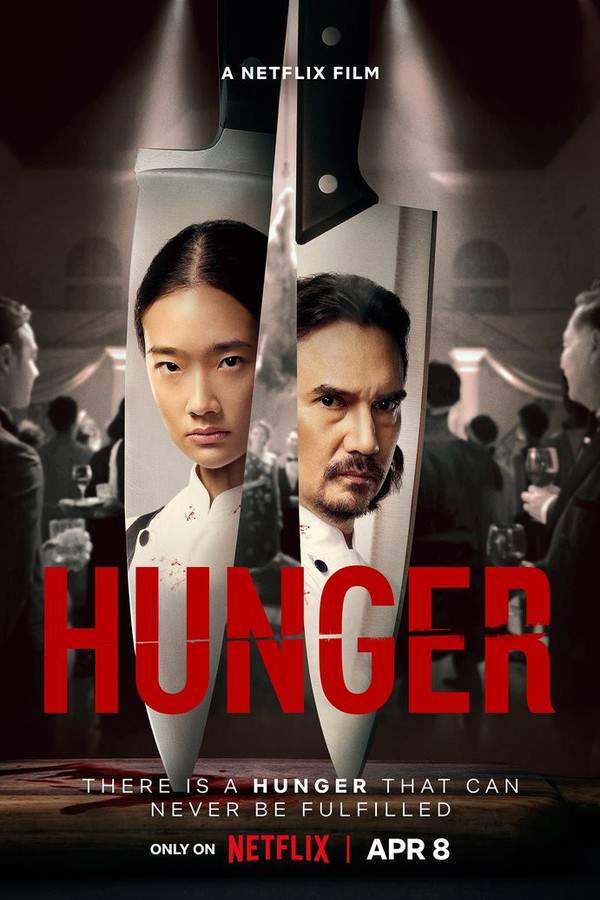
A young woman strives to balance her family's traditional noodle shop with an opportunity to join Chef Paul’s prestigious “Hunger” team in Bangkok. Drawn to the excitement of Thailand’s high-end culinary scene, she faces a challenging choice between honoring her heritage and pursuing her ambitions. Navigating the competitive world of haute cuisine, she must discover if her passion can endure the intense pressure and demanding environment.
Warning: spoilers below!
Haven’t seen Hunger yet? This summary contains major spoilers. Bookmark the page, watch the movie, and come back for the full breakdown. If you're ready, scroll on and relive the story!
Read the complete plot breakdown of Hunger (2008), including all key story events, major twists, and the ending explained in detail. Discover what really happened—and what it all means.
The film opens with prison guard Raymond Lohan getting ready for his workday; he methodically checks under his car for any bombs, dons his uniform in the locker room, and chooses to ignore the socializing of his coworkers. Meanwhile, a new IRA prisoner, Davey, arrives at the prison. His adamant refusal to wear the prison-issued uniform leads to him being labeled as “non-cooperative.” Consequently, he is sent to his cell with nothing but a blanket to keep warm, where he meets his new roommate, Gerry, who has transformed their cell into a grotesque display, smearing it with feces from floor to ceiling. The audience witnesses the defiance that both men embody against the unforgiving prison regime as they start to bond in their bleak surroundings.
On visiting day, Gerry’s girlfriend pulls off a daring act by smuggling in a small radio, discreetly esconding it within her body. The narrative takes a darker turn when the prison officers, in an alarming show of force, brutally remove the inmates from their cells, mercilessly beating them before restraining them to shave off their long hair and beards—symbols of their protest. During this chaotic moment, Bobby Sands, another prominent inmate, defiantly spits in Lohan’s face. In retaliation, Lohan punches Sands, only to miss and strike the wall, injuring his hand in the process. He proceeds to drag Sands away after the humiliating shaving, washing his bloodied hands afterward, echoing the violent atmosphere from the film’s beginning.
As the men are forced into second-hand civilian clothing, the laughter of guards echoes in the background at the sight. In a fit of outrage, Sands tears apart his clothes, prompting others to follow suit in a collective act of rebellion. Tension escalates further with the arrival of riot police; a fearful display unfolds as the officers line up, beating their batons against shields while screaming threats to the prisoners being yanked from their cells. The brutality intensifies as inmates are subjected to an alarming routine of searches that involve invasive probing, while the violence continues unabated on both sides of the prison.
In a poignant contrast, Lohan visits his elderly mother in a nursing home. Tragedy strikes when he is shot in the back of the head by an unidentified IRA assassin, collapsing onto his mother’s lap in a heartbreaking moment. The narrative then shifts to focus primarily on Sands, a man fiercely dedicated to his cause, convinced of the nobility in suffering for political recognition as a prisoner. One standout scene occurs as Sands engages in a moral debate about the hunger strike with Father Dominic Moran. In an emotional exchange, Sands recounts a moment from his past in Donegal, where he made a painful decision to drown an injured foal, believing it to be an act of mercy despite the consequences. He parallels this experience to his impending hunger strike, fully aware of the physical toll it would take on him.
As the film progresses, viewers see Sands nearing the end of his endurance, weakened by his months-long hunger strike, displaying severe physical deterioration: sores, kidney failure, low blood pressure, and debilitating stomach ulcers have ravaged his body. One of his final encounters features a new guard who replaces Lohan, casually showing Sands his tattooed knuckles that read “UDA.” With what little strength remains, Sands struggles to rise and defiantly stare at the guard, refusing assistance. Yet, this small act exhausts his frail body, leading to his collapse. In his last moments, Sands is surrounded by his parents as he passes away, 66 days into the hunger strike, with his mother holding his hand in a heart-wrenching farewell.
Last Updated: November 15, 2024 at 19:55
Discover curated groups of movies connected by mood, themes, and story style. Browse collections built around emotion, atmosphere, and narrative focus to easily find films that match what you feel like watching right now.
Stories of unwavering resistance that end in tragic, deliberate sacrifice.If you were moved by the tragic sacrifice in Hunger, this collection features similar films about principled resistance. These movies explore stories of characters who make a ultimate stand against oppression, often leading to a bleak but powerful conclusion. Find other heavy dramas about political martyrdom and the high personal cost of defiance.
These narratives typically follow a linear, focused path toward an inevitable tragic ending. The protagonist's commitment to a cause is tested through escalating physical and psychological hardship, culminating in a act of sacrifice that serves as a powerful political statement. The journey is one of gradual deterioration and unwavering resolve.
Movies are grouped here because they share a specific, heavy narrative pattern centered on sacrifice for a cause. They possess a bleak tone, high emotional intensity, and a slow, deliberate pacing that makes the protagonist's suffering palpable. The collective experience is one of profound sadness and admiration for human resilience in the face of certain loss.
Unflinching looks at individuals crushed by oppressive systems.For viewers who appreciated the oppressive atmosphere of Hunger, this section features films with similar claustrophobic settings. These movies are set within brutal institutions like prisons, where characters face dehumanizing conditions and relentless systemic violence. Discover other slow, heavy dramas that create a powerful sense of confinement and institutional dread.
The narrative is often straightforward, observing the daily rituals of violence and survival within a closed system. Conflict arises from the inherent power imbalance between the individual and the institution. Character arcs frequently involve either broken spirits or defiant last stands, with the setting itself acting as the primary antagonist.
These films are united by their immersive, oppressive worlds and a shared mood of claustrophobic dread. They utilize a slow pace and high intensity to make the viewer feel the weight of the institution. The similarity lies in the visceral experience of confinement and the detailed depiction of systemic cruelty.
Don't stop at just watching — explore Hunger in full detail. From the complete plot summary and scene-by-scene timeline to character breakdowns, thematic analysis, and a deep dive into the ending — every page helps you truly understand what Hunger is all about. Plus, discover what's next after the movie.
Track the full timeline of Hunger with every major event arranged chronologically. Perfect for decoding non-linear storytelling, flashbacks, or parallel narratives with a clear scene-by-scene breakdown.
Discover the characters, locations, and core themes that shape Hunger. Get insights into symbolic elements, setting significance, and deeper narrative meaning — ideal for thematic analysis and movie breakdowns.
Get a quick, spoiler-free overview of Hunger that covers the main plot points and key details without revealing any major twists or spoilers. Perfect for those who want to know what to expect before diving in.
Visit What's After the Movie to explore more about Hunger: box office results, cast and crew info, production details, post-credit scenes, and external links — all in one place for movie fans and researchers.
Discover movies like Hunger that share similar genres, themes, and storytelling elements. Whether you’re drawn to the atmosphere, character arcs, or plot structure, these curated recommendations will help you explore more films you’ll love.
Hunger (2008) Scene-by-Scene Movie Timeline
Hunger (2008) Movie Characters, Themes & Settings
Hunger (2008) Spoiler-Free Summary & Key Flow
Movies Like Hunger – Similar Titles You’ll Enjoy
A History of Violence (2005) Full Summary & Key Details
Hannah (2018) Full Movie Breakdown
The Hunger (1983) Full Movie Breakdown
Thirst Street (2017) Ending Explained & Film Insights
Eating (1990) Movie Recap & Themes
Eat Me (2018) Plot Summary & Ending Explained
The Platform (2019) Ending Explained & Film Insights
Hunger Point (2003) Full Summary & Key Details
The Hunger Years: In a Land of Plenty (1980) Movie Recap & Themes
Hangry (2021) Movie Recap & Themes
Hunger for Love (1968) Full Summary & Key Details
Thirst (1949) Detailed Story Recap
Hunger (1966) Full Summary & Key Details
Tenderness (1992) Full Movie Breakdown
Hungry Hill (1947) Story Summary & Characters