Plot Explained Spoilers guaranteed!
Plot Explained

Browse by genre

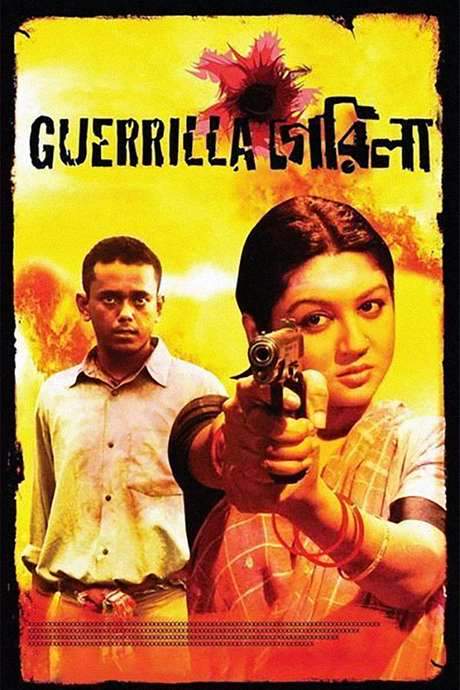
Guerrilla (2011) movie poster

Timeline

Guerrilla (2011) Timeline Explained – Every Event in Order

Release, runtime and language
2011 · 142 mins · Bengali, Bangla
Loading streaming availability…
Directed by
Nasiruddin Yousuff
Starring
Ferdous Ahmed, Azad Abul Kalam, Shatabdi Wadud, Kochi Khondokar, Jaya Ahsan, Shampa Reza

Set during the 1971 Liberation War, Bilkis Banu's husband Hasan is killed on the night of March 25. Determined to move forward, she joins Dhaka’s guerrilla network alongside Altaf Mahmud, Shahadat, Mrs. Khan and others. When informants and Razakars expose the group, many are arrested and Bilkis must flee for her life, racing back to her village.

On this page (5)
  1. 1 Where to watch
  2. 2 Events in order (12)
  3. 3 Timeline questions answered
  4. 4 Movie threads
  5. 5 Every angle
Loading streaming availability…

12 events in order · contains spoilers

Guerrilla Timeline: Events in Chronological Order

Every key event of Guerrilla (2011) in order, scene by scene, with when and where it takes place. Use it to untangle flashbacks, time jumps and parallel storylines, to refresh your memory before the sequel or to find the exact scene you are thinking of.

  1. Operation Searchlight erupts in Dhaka

    On the ominous night of 25 March 1971, the Pakistan Army launches Operation Searchlight to kill indiscriminately. Hasan Ahmed, a veteran journalist, vanishes on his way to the newspaper office. Bilkis begins a desperate search for him as the crackdown tightens around the city.

    When
    25 March 1971
    Where
    Dhaka
  2. Bilkis joins guerrilla resistance

    Bilkis turns to the guerrilla fighters in Dhaka, choosing resistance over despair. She stays in touch with Altaf Mahmud and helps coordinate underground efforts, including the publication of a secret bulletin called The Guerrilla. Her evolution into a central figure heightens the danger she faces.

    When
    early 1971
    Where
    Dhaka
  3. Taslim Ali Sardar shelters Bilkis; pays with his life

    Taslim Ali Sardar, a traditional Moholla chief, shelters Bilkis from the pursuing army. He is brutally killed by Pakistani forces and their Rajakar allies, illustrating the personal costs of aiding the resistance. Bilkis witnesses the violence and steels herself for the dangerous path ahead.

    When
    early 1971
    Where
    Old Dhaka (Moholla)
  4. Altaf Mahmud and comrades captured

    Altaf Mahmud, along with Rumi, Bodi and others, is captured by the occupiers. Some never return, their fates left unknown to the resistance and the people. The loss deepens Bilkis's resolve as the crackdown tightens around Dhaka.

    When
    mid-1971
    Where
    Dhaka
  5. Escape and train toward Rangpur

    Evading the labyrinth of occupation, Bilkis slips into a train bound for Joleswari, Rangpur. The train becomes a moving symbol of a catastrophic journey and of home and freedom pursued against the odds. The journey foreshadows the brutal path the resistance will follow through the countryside.

    When
    mid-1971
    Where
    Dhaka to Rangpur
  6. Longing to meet her brother Khokon

    Bilkis reaches toward her brother Khokon, a commander of local freedom fighters, hoping for a reunion that would renew the fight from within. Her longing gives the mission a deeply personal stake amid a wider struggle. She presses toward Joleswari where his unit operates.

    When
    mid-1971
    Where
    Joleswari
  7. Khokon dynamites a vital railway bridge

    Khokon leads the sabotage of a vital railway bridge near Joleswari, interrupting train movements and hindering the occupiers. The act demonstrates continuing local resistance despite the danger. Bilkis witnesses the consequences as she moves closer to her brother.

    When
    mid-1971
    Where
    Near Joleswari
  8. Khokon captured and killed

    Pakistan Army and Rajakars capture Khokon during the intensified crackdown. He and other fighters are slaughtered, a brutal reminder of the costs of resistance. Bilkis's hope for a reunion is crushed as the violence closes in.

    When
    mid-1971
    Where
    Khokon's area
  9. Bilkis is captured but refuses to surrender

    Bilkis is captured by the occupying forces, but she refuses to surrender. She endures interrogation and brutality, embodying the unwavering spirit of resistance. Her defiance keeps the flame of freedom alive in the face of overwhelming odds.

    When
    mid-1971
    Where
    Dhaka region
  10. Self-sacrificial act: Bilkis blows herself up

    In a climactic act of defiance, Bilkis detonates explosives to destroy the surrounding enemy forces. She sacrifices herself to protect others and advance the liberation cause. Her death seals her transformation from journalist to freedom fighter.

    When
    late 1971
    Where
    Killing fields / battlefield near Dhaka
  11. The Guerrilla underground press

    Bilkis and her circle publish The Guerrilla, an underground English bulletin that informs, inspires, and endangers those involved. The publication helps coordinate actions and spread the resistance's message beyond Dhaka. It highlights information as a weapon in a war of survival.

    When
    1971
    Where
    Dhaka (underground)
  12. The train as a moving symbol of the journey

    The metallic train Bilkis rides becomes a living metaphor for a catastrophic journey—carrying hope, danger, and the fight for a homeland. It weaves through danger as a constant companion to the freedom fighters. The sequence reinforces the fusion of ordinary life and extraordinary sacrifice.

    When
    mid-1971
    Where
    Dhaka to Rangpur railway

Last updated: November 22, 2025 at 15:59

Was this helpful?

Timeline questions answered

Guerrilla Timeline Explained: Your Questions Answered

When does it happen, and why in that order? The questions people ask about the chronology of Guerrilla (2011): time jumps, flashbacks, cause and effect between scenes and the correct order of events, each answered with spoilers.

Q1

Why did Hasan Ahmed disappear on March 25, 1971?

Hasan Ahmed, a veteran journalist and Bilkis Banu's husband, disappeared while traveling to his newspaper office on the night of March 25, 1971, during Operation Searchlight. This was the night the Pakistan Army launched its planned assault on Dhaka, targeting democracy-loving civilians and intellectuals. Hasan became one of the many who vanished during the crackdown, and his fate remains untraceable throughout the film, reflecting the mass disappearances that occurred during that brutal night.

  • hasan ahmed disappearance
  • operation searchlight
  • march 25 1971
  • missing journalist
Q2

Why does Bilkis Banu join the guerrilla resistance?

Bilkis joins the resistance after her husband Hasan disappears during Operation Searchlight and her parents are killed in the communal riots of January 1971. Rather than succumbing to despair, she chooses to channel her personal loss into action, joining Dhaka's underground network of freedom fighters. Her transformation from a banking professional to a central guerrilla figure represents her determination to fight for Bangladesh's liberation rather than wait passively for news of her missing husband.

  • bilkis banu motivation
  • joins resistance
  • personal loss
  • female protagonist
Q3

Who was Altaf Mahmud in the Bangladesh Liberation War?

Altaf Mahmud was a legendary Bengali musician who became a crucial figure in the 1971 resistance movement. In the film, he is portrayed as a key contact for Bilkis, staying in constant communication with her as she rises in the underground network. His revolutionary songs fueled the spirit of resistance across Dhaka. Tragically, Altaf Mahmud was captured by the Pakistani Army mid-1971 along with other fighters like Rumi and Bodi, and some never returned, their fates left unknown.

  • altaf mahmud
  • musician freedom fighter
  • revolutionary songs
  • captured 1971
Q4

What was The Guerrilla bulletin?

The Guerrilla was a secret English-language underground bulletin published by Bilkis Banu, Shahin, and their comrades in Dhaka. This clandestine publication served as a vital voice for the resistance, keeping the world informed about the violence and atrocities occurring in East Pakistan while the liberation struggle unfolded. The bulletin represented information as a weapon in the war of survival, helping coordinate resistance actions and maintain morale among freedom fighters.

  • the guerrilla bulletin
  • underground press
  • english publication
  • resistance communication
Q5

Why was Taslim Ali Sardar killed?

Taslim Ali Sardar, a traditional chief of old Dhaka's Moholla, was killed because he sheltered Bilkis Banu from the pursuing Pakistani Army. He provided her refuge in his home, paying a brutal price for his compassion and solidarity with the resistance. He was murdered by Pakistani forces and their Rajakar collaborators, illustrating the deadly consequences faced by ordinary civilians who chose to aid the freedom fighters.

  • taslim ali sardar
  • killed by pakistani army
  • rajakar collaborators
  • moholla chief
Q6

What happened to Altaf Mahmud and the other captured fighters?

Altaf Mahmud, along with freedom fighters Rumi, Bodi, and others, was captured by the Pakistani Army during the mid-1971 crackdown on Dhaka. Many of these captured fighters never returned, their fates left unknown to the resistance and their families. The film recalls these losses with stark honesty, showing how betrayal and sacrifice marked the struggle for liberation.

  • captured fighters
  • altaf mahmud fate
  • missing freedom fighters
  • rajakar betrayal
Q7

Why did Khokon destroy the railway bridge near Joleswari?

Khokon, Bilkis Banu's brother and a commander of local freedom fighters, led the sabotage of a vital railway bridge near Joleswari to disrupt the Pakistani Army's transportation and supply lines. This strategic act cut off key routes of attack for the occupiers, hindering their military movements in the region. The bridge destruction demonstrated the continuing local resistance despite escalating danger.

  • khokon bridge explosion
  • sabotage railway
  • joleswari
  • freedom fighter commander
Q8

How did Khokon die?

Khokon was captured by the Pakistani Army and their Rajakar collaborators during the intensified crackdown. He and other freedom fighters were slaughtered, their bodies left as a brutal reminder of the costs of resistance. Bilkis's hope for a reunion with her brother was crushed as the violence closed in around her.

  • khokon death
  • captured by army
  • rajakar betrayal
  • slaughtered freedom fighter
Q9

Does Bilkis Banu die at the end of the movie?

Yes, Bilkis Banu dies in a final act of sacrifice. After being captured and refusing to surrender despite enduring interrogation and brutality, she detonates explosives to destroy the surrounding enemy forces in the killing fields near Dhaka. Her self-sacrificial act seals her transformation from a grieving wife searching for her husband to a fully committed revolutionary who gives her life for Bangladesh's liberation.

  • bilkis death
  • sacrifice
  • explosives
  • battlefield death
Q10

What does the train journey symbolize in the film?

The train that carries Bilkis from Dhaka to Joleswari in Rangpur becomes a powerful symbol in the narrative. It represents a catastrophic journey toward freedom, weaving through danger as a constant companion to the freedom fighters. The metallic carriage transforms from mere transportation into a character itself, embodying the perilous path of hope, resistance, and sacrifice that defines the struggle for liberation.

  • train symbolism
  • journey to freedom
  • categorical sacrifice
  • bengal railway
Q11

Why does Bilkis refuse to surrender when captured?

When captured by the Pakistani Army, Bilkis refuses to surrender despite facing interrogation and brutal violence. Her defiance embodies the unwavering spirit of the Bengali resistance, her body and spirit remain unbroken even under extreme torture. Her refusal keeps the flame of freedom alive in the face of overwhelming odds and represents the personal resistance that complements the larger armed struggle.

  • refuses surrender
  • captured interrogation
  • defiance
  • unbroken spirit

Movie threads

More Movies Like Guerrilla, by Mood & Story

Curated lists built around what makes Guerrilla tick: the same mood, the same kind of story or the same emotional payoff. Each list explains why these movies belong together.

Movies about resistance against oppression like Guerrilla

Ordinary people become fighters in a brutal struggle against overwhelming political force. Explore movies like Guerrilla, where characters are pushed to the brink by political tyranny and fight back. These films share an intense, high-stakes narrative about ordinary people in extraordinary circumstances, driven by themes of sacrifice and survival in the face of overwhelming force.

  • oppressive
  • gripping
  • desperate
  • courageous
  • suspenseful
  • melancholic
  • Tone: dark, intense, bleak
  • Pacing: fast, relentless
Why these movies?

The story pattern: Stories in this thread typically follow a protagonist or group whose peaceful existence is shattered by systemic violence, compelling them to join a dangerous resistance movement. The journey is linear and harrowing, focusing on the logistical and emotional toll of underground warfare, often ending with a bittersweet victory at a great personal cost.

Why they belong together: These movies are grouped by their shared focus on armed resistance as a response to extreme political oppression. They create a cohesive experience through their dark tone, fast pacing, high intensity, and heavy emotional weight, making the viewer feel the constant danger and moral gravity of fighting back.

Movies about grief and survival like Guerrilla

A personal tragedy ignites a transformative and perilous path of action and revenge. If you liked Guerrilla's story of a widow thrust into a war, you'll find similar powerful narratives here. These films focus on characters who channel their personal tragedy into a relentless struggle for survival, creating a deeply emotional and intense viewing experience.

  • grieving
  • determined
  • intense
  • melancholic
  • desperate
  • courageous
  • Tone: dark, melancholic, bittersweet
  • Pacing: fast, driven
Why these movies?

The story pattern: The narrative pattern begins with a devastating personal loss that shatters the protagonist's world. This event propels them on a linear, straightforward journey where they must learn to navigate a dangerous new reality. The plot is driven by their need to survive, achieve justice, or complete a mission born from their grief, often leading to a bittersweet resolution.

Why they belong together: Movies in this thread share the powerful emotional engine of a protagonist motivated by deep personal loss. They are united by a heavy emotional weight, a dark or bittersweet tone, and a pacing that often accelerates as the character is consumed by their new, dangerous purpose.

Every angle

Guerrilla (2011) Explained: Plot, Timeline & Characters

Everything about Guerrilla in one place: what happens in the plot summary, the timeline in chronological order, the characters and meaning and a spoiler-free summary. What's After the Movie adds the cast, box office and post-credit scenes.

Coming soon on iOS and Android

The Plot Explained Movie Summary App

Plot summaries, endings explained and timelines on your phone. Catch up on any movie in minutes, save your favorites and never miss a twist again.

Be the first to know when we launch. Your email stays private, always.

Learn more about the app