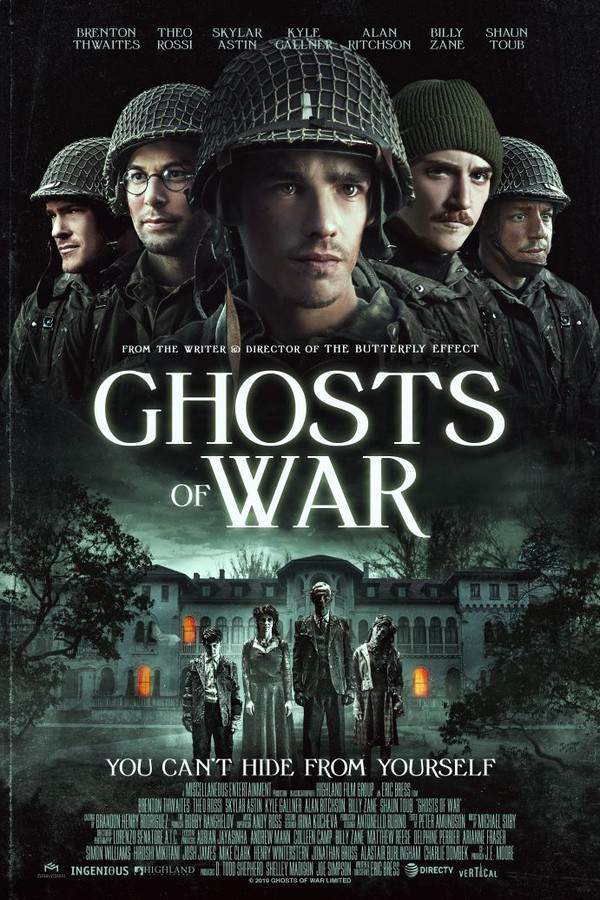
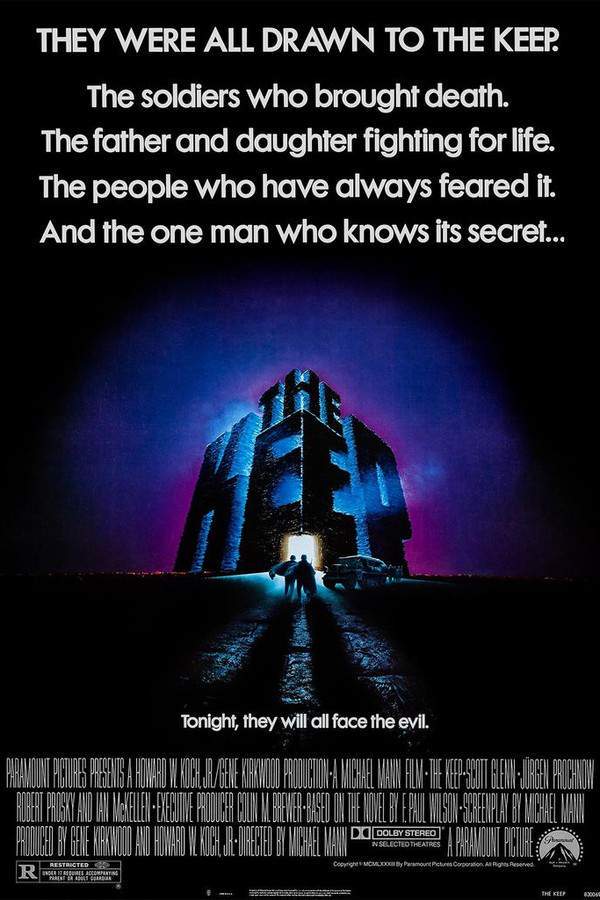
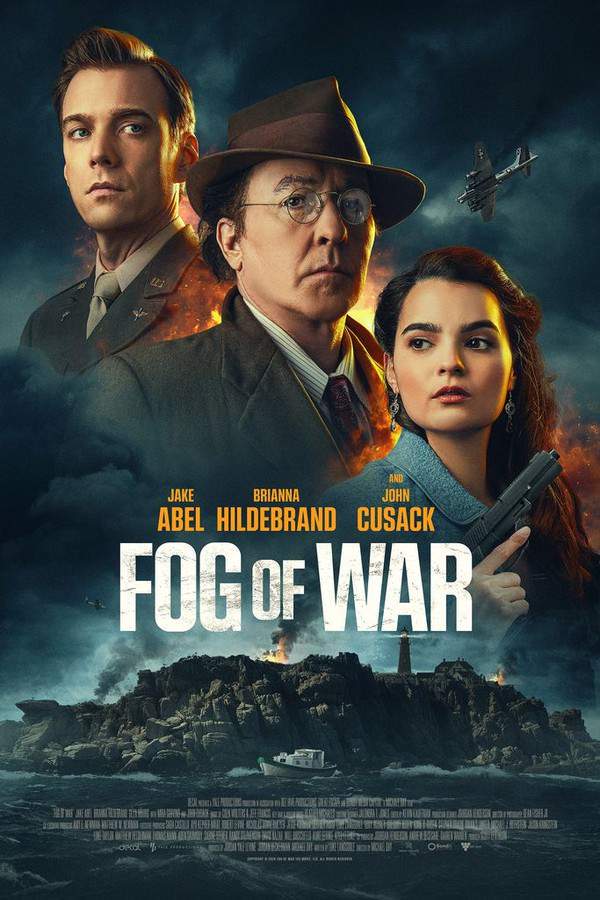
Five soldiers from the 82nd Airborne—Butchie, Eugene, Chris, Kirk, and Tappert—are tasked with guarding a secluded chateau as Allied forces push through rural France in 1944. On the march they neutralize a German unit operating a captured American jeep, leaving no survivors, and soon the group encounters a clutch of Jewish refugees who are taken in as they secure the chateau. The American guards who previously tended the place depart in a rush, and the five men settle into a tense routine amidst the looming fear of what might be hiding behind the stone walls.
Inside, a steady banging from the fireplace catches [Eugene]’s attention, read as Morse code that translates to “I have no legs.” The discovery deepens the sense that something is not right. While investigating, [Eugene] uncovers a journal kept by a German soldier detailing the fate of the Helwig family—the house’s former residents: the father is burned alive, the daughter is hanged, and the son is drowned in a bathtub. As night falls, a new Morse message emerges, seemingly foretelling doom: the hand of the medicating scribe spells out “If you leave, you die.”
> If you leave, you die
As the tension peaks, a German patrol launches an assault, and the group barely survives. In the chaos, Butchie dives on a grenade to shield his comrades, dying a hero’s death while the others witness Germans being felled by unseen powers in a way that echoes the Helwig tragedy. Before he passes, [Butchie] mutters that what they’re experiencing isn’t real and fights to have [Chris] remember. The survivors flee the haunted feeling of the place, only to replay their journey and the same encounters—ambushes, refugees, and the unnerving sense that a malevolent force is guiding events.
Driven by fear and a stubborn need to survive, they decide to bury the Helwig bodies, hoping to lay the house’s ghosts to rest. Returning to the chateau, they face an invisible pull that draws [Chris] toward an outhouse where the Helwig remains are revealed. After laying the bodies to rest, [Eugene] studies the journal again and discovers the text has switched from German to Arabic, revealing the Helwigs were Afghan, not German. The revelation intensifies the supernatural assault as spirits emerge and one of them tries to drown [Chris].
The intensity of the encounter sends [Chris] into a nightmare of medical halls and a futuristic hospital, where doctors explain that the entire sequence was a simulated reality designed to help soldiers cope with post-traumatic stress. The truth unfolds: their “World War II” ordeal was in fact a contemporary mission in Afghanistan, where the Helwigs—an Afghan family that had cooperated with American forces—were evacuated while a CIA handler looked on in the shadows. The woman of the family, the mother, detonates a suicide bomb under pressure from the threat around them, uttering the ancient curse word “Vetrulek,” which binds its victims to endlessly relive their trauma.
The hospital’s power flickers as the curse seems to intrude into the simulation, and the Helwig family’s presence haunts the ongoing reconstruction. [Chris] proposes a path to break the curse: confront the family, offer an apology, and atone for their sins—then return to the simulated world with a clear mind. But as the staff race to reconnect him, they discover the mainframe is erasing patients’ memories. A countdown begins, and with mere seconds left, the screen goes dark, returning [Chris] to the original bivouac where the nightmare began, now with a shadowy observer lingering in the night.
In the end, the film layers a meditation on memory, guilt, and the scars of warfare, asking whether atonement through truth can truly lift an ancient curse—or if some traumas are meant to be endured in a loop, long after the battles have ended.