Year: 1981
Runtime: 98 min
Language: English
Director: Richard Loncraine
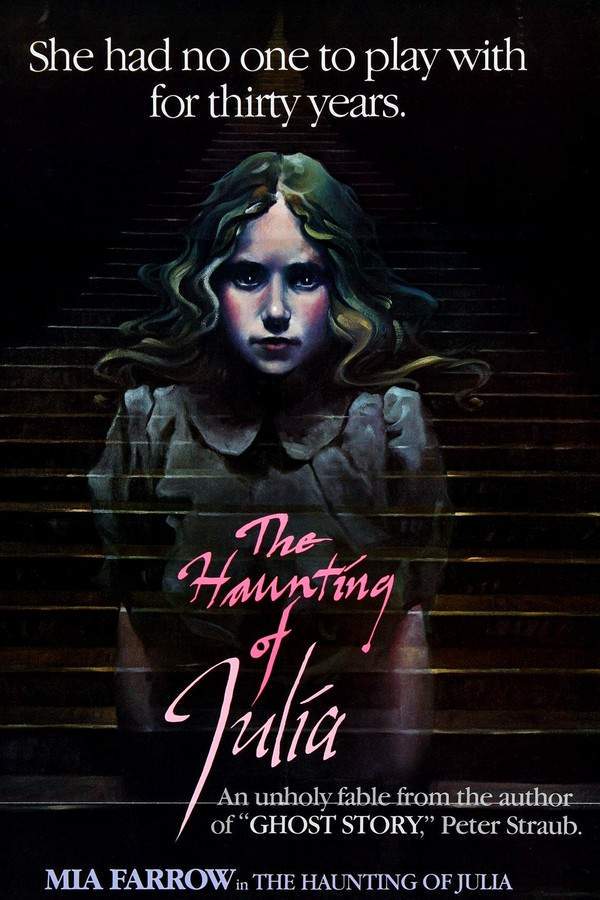
After a tragic accident claims the life of her young daughter, Kate, Julia Lofting is consumed by grief and guilt. Her marriage to Magnus deteriorates as she struggles to cope with the devastating loss. Isolated in their London home, Julia begins to experience unsettling occurrences and is haunted by the spectral figure of a young girl. As she grapples with her sanity, the boundaries between reality and hallucination become increasingly unclear, leaving her questioning what is truly happening.
Warning: spoilers below!
Haven’t seen The Haunting of Julia yet? This summary contains major spoilers. Bookmark the page, watch the movie, and come back for the full breakdown. If you're ready, scroll on and relive the story!
Read the complete plot breakdown of The Haunting of Julia (1981), including all key story events, major twists, and the ending explained in detail. Discover what really happened, and what it all means.
Julia Lofting, portrayed by Mia Farrow, finds herself in a tragic situation after her young daughter Kate, played by Sophie Ward, chokes on a piece of apple during breakfast. Despite her desperate attempts to save her, including a botched tracheotomy, Kate tragically succumbs to her injury, leaving Julia devastated and alone. She decides to leave her husband, Magnus, portrayed by Keir Dullea, and relocates to an eerie old row house in a less favorable part of London.
Once settled, Julia discovers a room laden with a child’s belongings and comes across a peculiar mechanical clown with sharp, clanking cymbals, which ends up injuring her finger. Odd occurrences plague her new home; she soon believes she’s glimpsed Kate in a nearby park, only for the vision to vanish. The unsettling atmosphere becomes further compounded by strange noises she attributes to Magnus, whom she suspects is spying on her. When she attempts to photograph the child’s items, the developed pictures reveal nothing, and she experiences bizarre phenomena, such as a radiator mysteriously activating.
As Julia grapples with her reality, she is invited by Magnus’ sister, Lily, to host a séance in her home with the medium, Mrs. Fludd. However, things take a turn for the worse when Mrs. Fludd, frightened by unseen forces, warns Julia to leave. The situation escalates when one of Lily’s friends, Miss Pinner, has a fatal accident falling down the stairs shortly after the séance.
As Julia tries to make sense of the haunting nature of her new residence, Magnus attempts to check on her but meets with a tragic fate himself after a mysterious fall in the basement. A neighbor informs Julia that her house was once owned by Heather Rudge, who similarly lost her daughter, Olivia, to choking. This connection leads Julia to delve deeper into the past, uncovering disturbing truths regarding Olivia’s friends, all of whom seem to bear the burden of tragic memories.
Julia’s investigation leads her to confront the remaining adults connected to the incidents, including Captain Paul Winter and David Swift. Winter dismisses her claims, while Swift reveals the sinister influence Olivia wielded over the children. The tension escalates when Julia experiences supernatural encounters with Olivia’s spirit, culminating in terrifying events that claim the lives of those around her, including her friend Mark, played by Tom Conti.
Desperate for answers, Julia visits Mrs. Rudge in a psychiatric facility, where she learns that Mrs. Rudge was driven to murder Olivia after the horrific events unfolded. As Julia races against time to uncover the truth, she finds herself drawn deeper into the darkness. Ultimately, she confronts Olivia’s spirit and tries to offer solace, only to find herself facing a tragic end. In a haunting finale, Julia bleeds to death, her throat seemingly cut by the sharp cymbals of the mechanical clown, leaving a trail of sorrow and unanswered questions in the aftermath.
Last updated: November 08, 2024 at 00:02
Explore frequently asked questions about The Haunting of Julia (1981) with spoiler-rich answers covering the full plot summary, major story beats, character motivations, hidden details, and ending meaning. This movie summary FAQ helps explain confusing scenes, plot twists, and narrative decisions in clear, searchable detail.
Julia leaves Magnus because she is consumed by grief and guilt over her daughter's death. She cannot cope with the devastating loss and her marriage deteriorates as she struggles to cope. The tragedy has created an insurmountable distance between them, leading her to seek a fresh start in a new home away from their shared memories.
The mechanical clown is a foreshadowing element that belongs to the previous owner Heather Rudge's daughter Olivia. The clown's sharp cymbals ultimately cause Julia's death by cutting her throat in the finale. When Julia first encounters it, the clown injures her finger, establishing the house as a place of danger and foreshadowing her tragic end.
The clown's injury to Julia's finger early in the film hints at the fatal way she will later die.
Julia sees visions of Kate because she is experiencing profound grief and guilt over her daughter's death. These hallucinations represent her inability to accept the loss and her desperate wish to see Kate again. The visions vanish when she tries to approach them, emphasizing that they are products of her deteriorating mental state rather than actual apparitions of Kate.
During the séance, the medium Mrs. Fludd contacts unseen forces that frighten her significantly. She warns Julia to leave immediately, suggesting that a powerful and dangerous spirit is present in the house. This event marks the escalation of supernatural activity and directly precedes Miss Pinner's death, indicating that the séance has angered or awakened something malignant.
Miss Pinner dies in a fall down the stairs immediately after the séance, which is caused by Olivia's malevolent spirit. The séance has agitated Olivia's presence in the house, and she targets those connected to the event. Miss Pinner's death is the first direct supernatural killing following the séance, demonstrating Olivia's deadly influence over the living.
Mrs. Fludd's warning during the séance foreshadows the danger that claims Miss Pinner's life.
Magnus dies after falling in the basement of Julia's row house. While the exact mechanism is ambiguous, his death occurs during his attempt to check on Julia, suggesting supernatural manipulation by Olivia's spirit. His death adds to the mounting tragedy and isolation surrounding Julia, leaving her completely alone in the haunted house.
Heather Rudge was the previous owner of Julia's row house. She lost her daughter Olivia to a choking incident, similar to how Kate died. Julia discovers that Olivia's spirit haunts the house, and Mrs. Rudge was eventually driven to murder her own daughter due to the circumstances surrounding Olivia's death and her sinister influence over other children.
The neighbor reveals this connection, explaining why Julia's house feels uniquely haunted.
Mrs. Rudge killed Olivia after being driven to madness by the tragic events surrounding her daughter's death and Olivia's sinister influence over other children. When Julia visits Mrs. Rudge in the psychiatric facility, she learns the horrifying truth that Olivia's actions and their consequences pushed her mother to desperation, resulting in murder.
David Swift reveals that Olivia wielded a sinister influence over the children around her, suggesting she had a manipulative and potentially evil presence even as a child. This dark influence explains why the adults connected to Olivia's circle have suffered tragic fates and why her spirit remains dangerous and vengeful after death.
Julia dies when her throat is cut by the sharp cymbals of the mechanical clown, the same toy she found in Olivia's old room. This creates a parallel with both Kate's and Olivia's deaths, as all involve choking or sharp objects related to children. Her death is the final tragedy in a chain of events caused by Olivia's lingering spirit in the house.
The clown's earlier injury to Julia's finger foreshadows the fatal way she will ultimately die.
Olivia's spirit haunts Julia because she represents another grieving mother who lost a child to a tragic accident. Julia's guilt and grief make her vulnerable to supernatural influence, and Olivia seems to draw her deeper into the house's darkness. The spirit targets Julia and those around her, using their emotional vulnerabilities to create tragedy.
The film deliberately blurs the line between reality and hallucination. Some events, like Miss Pinner's death and Magnus's fall, suggest real supernatural occurrences, while Julia's visions of Kate may be grief-induced hallucinations. The ambiguity reflects Julia's deteriorating mental state and the film's themes of guilt and loss, making it unclear whether Olivia's spirit is truly active or if Julia's mind is manifesting her fears.
Discover curated groups of movies connected by mood, themes, and story style. Browse collections built around emotion, atmosphere, and narrative focus to easily find films that match what you feel like watching right now.
Stories where a protagonist's trauma creates a haunting and ambiguous supernatural reality.If you liked the ambiguous psychological horror in The Haunting of Julia, you'll find similar movies here. These films explore unreliable narrators, deep trauma, and supernatural events that may be manifestations of a breaking mind, perfect for fans of eerie and cerebral stories.
These narratives typically follow a protagonist grappling with a recent trauma, such as a profound loss. Their emotional fragility makes them susceptible to supernatural phenomena, or perhaps even inventing them. The story methodically escalates the psychological tension, deliberately blurring the lines between hallucination, haunting, and reality, often culminating in a tragic or ambiguous conclusion.
These films are grouped together because they share a central theme of psychological collapse as the primary engine of horror. They prioritize a slow-building, internal dread over jump scares, and their power comes from the unsettling ambiguity and the heavy emotional weight of the protagonist's journey.
Atmospheric tales where a haunting is a direct manifestation of profound sorrow and loss.Discover movies similar to The Haunting of Julia that use the ghost story framework to explore deep emotional pain. These films feature hauntings that are metaphors for grief, characterized by a steady pace, a gloomy mood, and a focus on the psychological impact of loss.
The narrative pattern begins with a devastating personal loss, often the death of a child or loved one. The protagonist, consumed by guilt and sorrow, becomes a magnet for a haunting that seems to reflect their inner turmoil. The story unfolds at a deliberate pace, using the supernatural as a vehicle to explore the character's unresolved grief, leading to a cathartic or tragic resolution.
These movies are united by their use of the supernatural to externalize internal grief. They share a specific mood blend of melancholy, eeriness, and oppression, with a focus on emotional realism within a horror framework. The pacing is consistently steady, allowing the sorrowful atmosphere to fully envelop the viewer.
Don't stop at just watching - explore The Haunting of Julia in full detail. From the complete plot summary and scene-by-scene timeline to character breakdowns, thematic analysis, and a deep dive into the ending - every page helps you truly understand what The Haunting of Julia is all about. Plus, discover what's next after the movie.
Track the full timeline of The Haunting of Julia with every major event arranged chronologically. Perfect for decoding non-linear storytelling, flashbacks, or parallel narratives with a clear scene-by-scene breakdown.
Discover the characters, locations, and core themes that shape The Haunting of Julia. Get insights into symbolic elements, setting significance, and deeper narrative meaning - ideal for thematic analysis and movie breakdowns.
Discover movies like The Haunting of Julia that share similar genres, themes, and storytelling elements. Whether you’re drawn to the atmosphere, character arcs, or plot structure, these curated recommendations will help you explore more films you’ll love.
The Haunting of Julia (1981) Scene-by-Scene Movie Timeline
The Haunting of Julia (1981) Movie Characters, Themes & Settings
The Haunting of Julia (1981) Spoiler-Free Summary & Key Flow
Movies Like The Haunting of Julia – Similar Titles You’ll Enjoy
The Haunting (1963) Ending Explained & Film Insights
Incident In a Ghostland (2018) Plot Summary & Ending Explained
Let's Scare Jessica to Death (1971) Ending Explained & Film Insights
The Haunting (1999) Complete Plot Breakdown
The Haunting of Hill House (1000) Movie Recap & Themes
The Haunting of Marsten Manor (2007) Ending Explained & Film Insights
The Haunting Passion (1983) Movie Recap & Themes
The Haunting of Molly Bannister (2020) Full Movie Breakdown
The Haunting of Julia (1977) Detailed Story Recap
The Haunting of Helen Walker (1995) Plot Summary & Ending Explained
Haunted (1995) Plot Summary & Ending Explained
The Haunted House of Horror (1969) Plot Summary & Ending Explained
The Haunting of M. (1979) Plot Summary & Ending Explained
My Name Is Julia Ross (1945) Full Summary & Key Details
Fright (2024) Story Summary & Characters