Plot Explained Spoilers guaranteed!
Plot Explained

Browse by genre

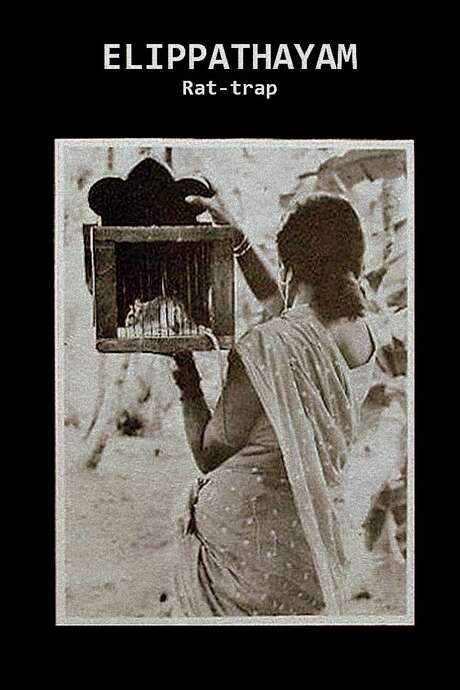
Elippathayam (1982) movie poster

Timeline

Elippathayam (1982) Timeline Explained – Every Event in Order

Release, runtime and language
1982 · 115 mins · Malayalam
Loading streaming availability…
Directed by
Adoor Gopalakrishnan
Starring
Devan, Sharada, Edward, Jalaja, Karamana Janardanan Nair, Vembayam Thampi

Unni, the final male heir of a crumbling feudal household in rural Kerala, clings to outdated customs. As the surrounding society modernizes, he cannot reconcile the changes, retreating deeper into his ancestral home. His resistance turns into growing isolation and mounting paranoia, casting the decaying estate as a symbolic rat‑trap.

On this page (6)
  1. 1 Where to watch
  2. 2 Events in order (11)
  3. 3 Timeline questions answered
  4. 4 Movie threads
  5. 5 Movies like Elippathayam
  6. 6 Every angle
Loading streaming availability…

11 events in order · contains spoilers

Elippathayam Timeline: Events in Chronological Order

Every key event of Elippathayam (1982) in order, scene by scene, with when and where it takes place. Use it to untangle flashbacks, time jumps and parallel storylines, to refresh your memory before the sequel or to find the exact scene you are thinking of.

  1. Opening rat problem and its symbolism

    The film opens with a rat infestation inside the derelict Kerala manor, setting a grim mood. Sridevi takes the initiative to trap and drown the rats, signaling that danger and decay are already inside the house. The scene uses vermin to mirror the rot within the feudal household.

    When
    opening
    Where
    Kerala manor
  2. Unni's stagnant patriarchate

    Unni, the aging patriarch, remains proud and unmoving as the world changes around him. He spends days idling, sleeping, and reading, while his sisters and Scaria Mappila manage the estate. The arrangement underscores a fading feudal order that cannot adapt to the times.

    When
    early
    Where
    manor
  3. Crops stolen; Unni's passivity

    Thieves steal crops from the fields, and Unni responds with fear rather than action. He avoids confrontation and shows little willingness to defend the family's material base. The incident reveals his impotence and the crumbling authority of the landowners.

    When
    early
    Where
    estate fields
  4. Younger sister defies tradition

    The younger sister elopes with a lover, disregarding tradition and without informing anyone. This act highlights a shift in social norms and the sisters' growing agency. Unni remains passive, unable to respond to the new reality.

    When
    mid
    Where
    manor and surroundings
  5. Rajamma's plea and illness

    Rajamma, the middle sister, is devastated by her brother's silence when marriage proposals arrive. She pleads for support and protection, but Unni's indecision worsens her condition. She falls ill and eventually dies, a casualty of his inability to act.

    When
    mid
    Where
    manor
  6. Rajamma's death

    The elder sister mourns as Rajamma dies, underscoring the emotional cost of Unni's neglect and disorganized thinking. The family loses its emotional anchor as the decline accelerates. The death widens the fracture within the household.

    When
    late
    Where
    manor
  7. Eldest sister asserts property rights

    The eldest sister claims her share of the property but leaves with none, sending summons through the courts. The estate fractures as legal disputes replace family mediation. Unni's world shrinks further as trust erodes.

    When
    late
    Where
    manor courts
  8. Unni's paranoia deepens

    Unni becomes increasingly paranoid, retreating to the dark corners of his room. His delusions intensify and he shows reluctance to seek help or admit trouble. The household, once a unit, deteriorates under his gaze.

    When
    late
    Where
    manor, his room
  9. Scaria Mappila's dwindling control

    Scaria Mappila continues to manage finances with old feudal methods, keeping the estate afloat but unable to resolve the underlying collapse. His role as caretaker becomes more about placating the family than restoring order. The tension between tradition and change persists as the family splinters.

    When
    throughout
    Where
    manor
  10. Intruders enter the house

    A group of people enters Unni's house, triggering a panic and a frantic escape. He runs out in fear and is knocked unconscious in the chaos. The nature of the visitors remains ambiguous, hinting at robbers, hallucinations, or rivals.

    When
    climax
    Where
    manor
  11. The pond and the final collapse

    They carry him to the pond where Sridevi used to drown rats and throw him in. He surfaces frightened and cold, his mind and body broken by fear. This scene marks the culmination of his descent and the ultimate unreliability of reality for him.

    When
    climax
    Where
    pond near the manor

Last updated: October 09, 2025 at 14:56

Was this helpful?

Timeline questions answered

Elippathayam Timeline Explained: Your Questions Answered

When does it happen, and why in that order? The questions people ask about the chronology of Elippathayam (1982): time jumps, flashbacks, cause and effect between scenes and the correct order of events, each answered with spoilers.

Q1

Why does Unni refuse to take any action to help his sisters?

Unni remains passive because he is psychologically trapped in the old feudal mindset. He believes his sisters' marriage prospects could disrupt the fragile support system that keeps him insulated from the changing world. His inaction stems from fear, fear of change, fear of losing control, and fear of being forced to confront the irrelevance of his position. He would rather preserve the decaying status quo than adapt to modern realities.

Foreshadowing: This passivity is established early when he does nothing to stop thieves from stealing crops, showing his fundamental inability to act.

  • unni
  • passivity
  • feudal
  • martial prospects
  • marriage
Q2

Why does Rajamma fall ill and die?

Rajamma becomes ill and dies due to a combination of emotional distress and physical neglect. When marriage proposals arrive, she desperately pleads with Unni to support her, but he refuses options he deems beneath the family's prestige. Her distress deepens as her brother remains unmoved even when she falls sick, leaving her without protection or medical care. The emotional toll of abandonment accelerates her decline.

Foreshadowing: Rajamma's distress is introduced early when she expresses deep concern about her brother's inaction regarding marriage proposals.

  • rajamma
  • death
  • illness
  • marriage
  • neglect
Q3

Who throws Unni into the pond at the end?

The identity of the people who throw Unni into the pond remains deliberately ambiguous. They could be robbers attempting to seize the estate, relatives or rivals with legal claims, or even figments of Unni's paranoid imagination. The film never clarifies whether this is a real attack or a hallucination, reflecting Unni's fractured grip on reality. This ambiguity reinforces the central theme of a mind unable to distinguish between actual threats and perceived ones.

Foreshadowing: The scene echoes Sridevi's earlier act of drowning rats, suggesting Unni has become trapped like the vermin he couldn't address.

  • intruders
  • pond
  • ambiguous ending
  • attack
  • reality
Q4

What does the rat trap metaphor mean in the film?

The rat trap serves as the film's central metaphor for Unni's mind and the decaying feudal system. Just as rats are trapped and drowned within the house, Unni traps himself in his refusal to adapt to a changing society. The manor itself becomes the trap, a structure that once represented power and privilege now confines its last inhabitant. The trapped rats mirror Unni's inability to escape his own obsolete beliefs, while the act of drowning parallels his ultimate submersion into delusion and despair.

Foreshadowing: The opening scene establishes the rat problem, setting up the metaphorical framework for everything that follows.

  • rat trap
  • symbolism
  • metaphor
  • decay
  • entrapment
Q5

Why does the younger sister elope with her lover?

The younger sister elopes because she rejects the outdated traditions that trap the family. With her brother unwilling to arrange her marriage and the household in decline, she takes matters into her own hands, choosing personal agency over the patriarchal system that has failed her. This act represents the collapse of traditional control, the younger generation breaking away from the feudal structure that Unni desperately tries to preserve.

Foreshadowing: The sisters' growing restlessness with Unni's passivity is established early as they take initiative in practical matters.

  • younger sister
  • elopement
  • tradition
  • rebellion
  • marriage
Q6

Why does Unni become increasingly paranoid and delusional?

Unni's paranoia intensifies as the external world increasingly invades his protected existence. His sisters abandon him, one elopes, another dies, and the third pursues legal action against him. With his support system crumbling, he withdraws into the dark corners of the manor, obsessively guarding against threats that may be real or imagined. His paranoia reflects his fundamental inability to cope with change; the world outside his decaying home has become incomprehensible, so his mind creates understandable enemies to explain his mounting fears.

Foreshadowing: His paranoia deepens progressively as each sister-related crisis unfolds throughout the film.

  • paranoia
  • delusion
  • psychological breakdown
  • isolation
  • fear
Q7

What does the final pond scene mean?

The pond scene represents the culmination of Unni's complete psychological and social collapse. When he is carried to the pond where Sridevi once drowned rats and thrown in, he emerges terrified, pale, and broken. The scene literalizes the rat trap metaphor, Unni has become the trapped creature. Whether he sinks or surfaces remains ambiguous, but his mind and spirit are clearly destroyed. The image also symbolizes the old order being drowned by the forces of change, with only a broken remnant emerging.

Foreshadowing: This scene directly echoes Sridevi's rat-drowning from the opening, completing the film's symbolic cycle.

  • pond
  • final scene
  • drowning
  • symbolism
  • collapse
Q8

Why does the eldest sister pursue property through legal channels?

The eldest sister takes legal action because she realizes Unni will never act to secure the family's assets or arrange her future. After the younger sister elopes and Rajamma dies, she attempts to claim her rightful share of the property through court summons. This represents the complete breakdown of family mediation, tradition and familial bonds have failed, so she must turn to external authorities. The legal battle further fractures the household and accelerates the manor's decay.

Foreshadowing: The eldest sister's action follows Rajamma's death, showing how the family falls apart piece by piece.

  • property
  • court
  • eldest sister
  • inheritance
  • legal action
Q9

Why does Unni do nothing when thieves steal the crops?

Unni's inaction when crops are stolen reveals his fundamental impotence as a patriarch. Rather than confronting the thieves or organizing defense of the estate, he retreats into fear and inaction. This early scene establishes his complete inability to fulfill the traditional role of a landowning male, protecting the family's material base. His passivity here foreshadows his inability to protect his sisters or preserve anything of the old order.

Foreshadowing: This incident immediately follows the opening rat problem, establishing Unni's pattern of failure to act.

  • crops
  • theft
  • inaction
  • estate
  • landowner
Q10

What is Scaria Mappila's role in the household?

Scaria Mappila serves as the neighbor caretaker who manages the estate's agricultural and financial affairs. He clings to old feudal methods, keeping the manor technically afloat but unable to stop its decay. His role represents those who sustain outdated systems without truly understanding or questioning them. He provides practical support but offers no solution to the fundamental collapse, his feudal habits are as obsolete as Unni's patriarchate.

Foreshadowing: Scaria Mappila appears throughout the film, consistently maintaining old methods as everything else crumbles.

  • scaria mappila
  • caretaker
  • estate management
  • feudal
  • finances
Q11

What does the decaying manor represent in the film?

The manor (*tharavadu*) represents both the dying feudal system of Kerala and the human psyche trapped by the past. As the house physically decays, rats infest, walls crumble, darkness spreads, so does the social structure it embodies. The manor's decay mirrors Unni's psychological deterioration; both become increasingly uninhabitable as they refuse to adapt to change. The house is simultaneously a literal setting and a powerful metaphor for a mind and society that have become prisons.

Foreshadowing: The opening immediately establishes the manor's decay through the rat infestation and overall gloom.

  • manor
  • tharavadu
  • decay
  • feudalism
  • symbolism
  • Kerala

Movie threads

More Movies Like Elippathayam, by Mood & Story

Curated lists built around what makes Elippathayam tick: the same mood, the same kind of story or the same emotional payoff. Each list explains why these movies belong together.

Films about Feudal Decline like Elippathayam

Stories where a crumbling way of life consumes those who cling to it. Movies like Elippathayam that capture the slow, melancholic decay of traditional societies and the psychological toll on their inhabitants. If you were drawn to the atmosphere of a dying feudal world, these similar dramas explore themes of social obsolescence and emotional isolation.

  • decaying
  • melancholic
  • atmospheric
  • isolated
  • slow burn
  • claustrophobic
  • Tone: melancholic, bleak
  • Pacing: slow, deliberate
Why these movies?

The story pattern: Narratives in this thread typically follow a linear descent into decay, focusing on a protagonist's growing isolation and psychological breakdown as the world around them modernizes, leaving them behind. The story itself becomes a metaphor for irreversible loss and existential despair.

Why they belong together: These films are grouped by their shared, heavy atmosphere of decline, a slow pacing that mirrors the gradual collapse, and a deep focus on the melancholic tone of a world and a mind succumbing to the weight of time and change.

Movies with Psychological Claustrophobia like Elippathayam

Films where a character's own mind becomes their inescapable trap. If you liked the mounting paranoia and feeling of being trapped in Elippathayam, this list features similar slow-burn psychological dramas. These films explore characters whose mental state becomes a prison, creating a deeply atmospheric and unsettling viewing experience.

  • claustrophobic
  • paranoid
  • psychological
  • unsettling
  • atmospheric
  • isolated
  • Tone: tense, melancholic
  • Pacing: slow burn, atmospheric
Why these movies?

The story pattern: The narrative pattern involves a character retreating from external pressures into a confined space, which amplifies their internal fears and leads to a descent into paranoia. The plot is often minimal, serving to heighten the atmospheric unease and focus on the character's deteriorating mental state.

Why they belong together: These films share a specific mood of claustrophobia and paranoia, achieved through slow pacing, a focus on a single setting, and a moderate narrative complexity that prioritizes psychological depth over external plot events, often leading to an ambiguous conclusion.

If you liked this

Movies Like Elippathayam

Similar movies to Elippathayam: the same genre, themes or kind of story. Each one comes with its own plot summary, timeline and ending explained.

Browse all movie summaries

Every angle

Elippathayam (1982) Explained: Plot, Timeline & Characters

Everything about Elippathayam in one place: what happens in the plot summary, the timeline in chronological order, the characters and meaning and a spoiler-free summary. What's After the Movie adds the cast, box office and post-credit scenes.

Coming soon on iOS and Android

The Plot Explained Movie Summary App

Plot summaries, endings explained and timelines on your phone. Catch up on any movie in minutes, save your favorites and never miss a twist again.

Be the first to know when we launch. Your email stays private, always.

Learn more about the app