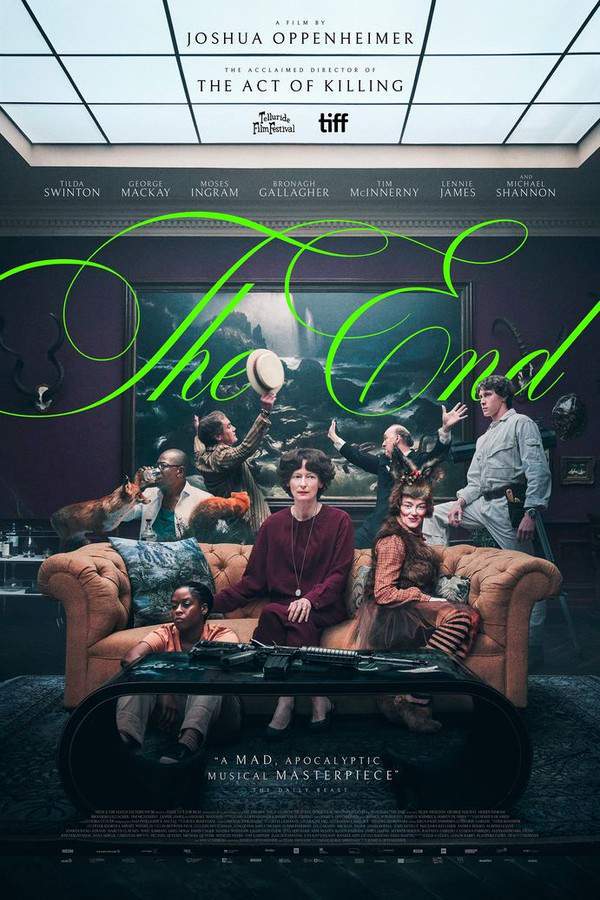
Set two decades after an environmental catastrophe renders Earth's surface uninhabitable, the narrative centers on a wealthy family—Tilda Swinton as Mother, Michael Shannon as Father, and their 20-year-old George MacKay as Son—who have sealed themselves inside a luxurious bunker carved from a converted salt mine, living with a small circle of companions: Bronagh Gallagher as Friend, Tim McInnerny as Butler, and Lennie James as Doctor. The Son, raised underground, longs to see the surface and fills his days by building scale models of historical events and places, a quiet, imaginative rebellion against the world they’ve chosen to inhabit.
Inside, the family follows a strict routine that gives order to their claustrophobic life: safety emergency drills, indoor pool workouts, ongoing duties to keep the bunker running, and a carefully curated collection of art Mother had brought with them. The bunker is dressed to mirror changing seasons, a deliberate effort by Mother to craft perfection in their isolated existence. The Father assists in maintaining this fragile illusion while the Son collaborates on a memoir, describing his past in the energy industry in broader, sometimes embellished terms and recounting philanthropy in a way that blurs fact and memory.
The Friend describes to the Son how her own son was sick with cancer and would not have survived in the bunker, a candid, painful memory that deepens the sense of isolation and loss surrounding the group. The Son begins to feel keen loneliness, a longing to experience the outside world that has become mythic to him. Their quiet routine is interrupted when they discover a Moses Ingram as Girl unconscious in the mines, and they bring her inside to question her about how she found them and what she might know about the surface. The Girl paints a bleak picture of an uninhabitable exterior and reveals that her family died trying to cross a river, leaving her alone with her trauma. Although they debate whether to keep her, the group casts her back out, but the Girl escapes and runs through the bunker, evading capture until the Son pleads for her to stay.
The Girl struggles to adapt to life underground. Mother grows suspicious and voices concerns to the Father while attempting to teach the Girl about their world and to probe her motives. The Mother also pursues her relationship with the Father, a tension that surprises him. Over time, the Girl and the Son form a slow bond. The Son confesses his growing feelings for the Girl to his parents, triggering a debate about love, naivety, and the ethics of their covert existence. He gives the Girl a watch as a sign of trust, and she accepts, though with lingering hesitation. The Girl challenges the Son’s obsession with his scale models of the outside world, especially when he defends the brutal history of the first transcontinental railroad as a necessary step in civilization.
Meanwhile, the Mother and Friend grapple with sleeplessness and nightmares, which Doctor tends to with sleeping pills and reassurance. During a writing session, the Son seeks to understand more about their lives before the bunker and how his Father met his Mother. The Butler and the Father discuss love and longing, and the Son later writes a flowery, embellished version of how the Father met the Mother, which he then shares with the Mother, folding their memories into the present. As winter arrives, the family stages a New Year’s Eve with homemade costumes and a program of skits, even a soft-shoe dance by the Butler and the Father, a moment of fragile joy amid their confinement.
During the New Year dinner, the Girl appeals to the Mother about abandoning the rest of humanity, arguing for a more permanent retreat from the world; the Father halts the conversation, and the Mother wrestles with survivor’s guilt, ultimately justifying their choice as a life they too helped create. The Father continues to rationalize his actions while working on the memoir with the Son, even trying to persuade the Girl of his innocence by insisting that other corporations were worse and, at least, >cared<. The Father’s reflections turn toward mortality and aging, and the Son questions why they left everyone else behind, a debate that underscores the ethical weight of their isolation. The Friend reveals a painful truth: her son did not die of cancer but was lost to addiction, and she chose to leave him behind to seek safety in the bunker. She later overdoses on sleeping pills prescribed by the Doctor, leaving the Son distraught and inflaming a confrontation with the Girl about responsibility and guilt.
Time passes, and a troubling quiet settles over the bunker until, in a future that feels both distant and intimate, the Son and the Girl have a baby together. The family gathers to celebrate the Girl’s birthday and captures a family photo, a fragile record of a life that refuses to be erased. The Mother and the Girl both contemplate what lies ahead for them, and the final moments leave a quiet echo of hope and uncertainty about the future beneath the surface they have chosen to inhabit.