Architect Marc Thiriez finds his life spiraling out of control after impulsively shaving off his trademark mustache. To his shock, everyone around him claims he’s never had it. As he desperately tries to uncover the reason behind this bizarre phenomenon, Marc's sense of reality deteriorates, straining his relationships and pushing him to the brink of madness. His search for answers becomes increasingly urgent as he questions his own identity and the world around him.
Find where to stream, rent, or buy La Moustache (2006) in the US with current JustWatch availability, up-to-date pricing, and platform listings for subscription, rental, and digital purchase options.
Warning: spoilers below!
Haven’t seen La Moustache yet? This summary contains major spoilers. Bookmark the page, watch the movie, and come back for the full breakdown. If you're ready, scroll on and relive the story!
Read the complete plot breakdown of La Moustache (2006), including all key story events, major twists, and the ending explained in detail. Discover what really happened, and what it all means.
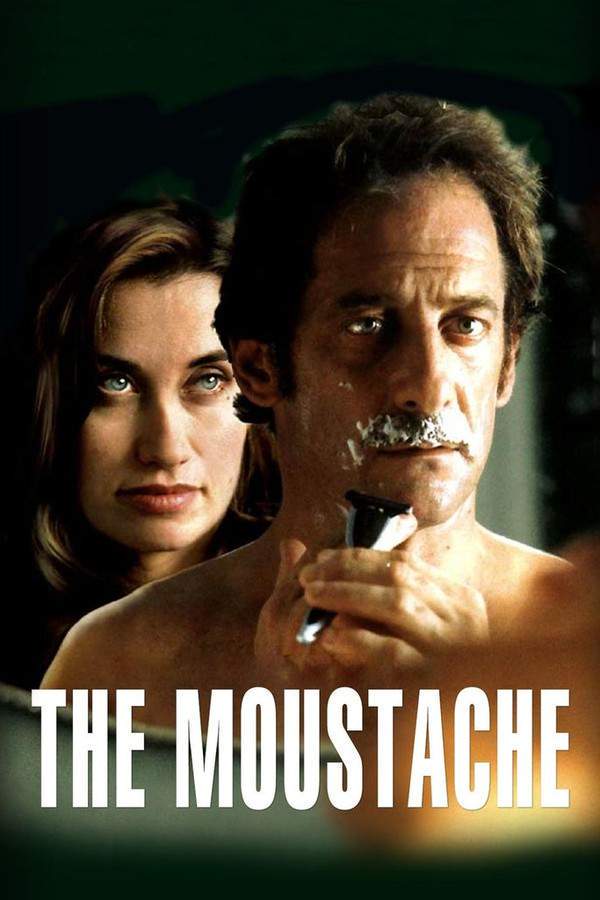
This detailed synopsis aims to illuminate the complexities of La moustache. The film opens with a haunting image of waves in darkness, accompanied by the thought-provoking question, "What if I shaved my moustache off?" As we encounter Marc, portrayed by Vincent Lindon, he undergoes a significant transformation by shaving off his moustache. His girlfriend, Agnes, played by Emmanuelle Devos, initially reacts with confusion, saying, "I don't know you without it." After her departure, Marc sinks into contemplation as he immerses himself in bath water, signaling the emotional depths this change will provoke.
Later, as the couple visits their friends Serge and Nadia, Marc is left feeling invisible when even the little girl at their home fails to acknowledge his altered appearance. Tension mounts when he overhears Serge, enacted by Mathieu Amalric, call Agnes two-faced, recalling a ten-year-old incident involving couples, which casts doubt on Agnes's honesty. This eerie undercurrent of deception keeps Marc on edge, questioning the reality of his relationship. During their drive home, he expresses his frustration, asserting that "the joke has gone far enough," as Agnes seems to feign ignorance about his moustache-less state.
As the narrative flows, Marc’s struggle intensifies. Late-night conversations turn into heated arguments filled with insinuations and misunderstandings. When he searches for evidence in their Bali trip photos — a quest that happens while she sleeps — he finds fleeting glimpses of the life he once knew. His internal conflict deepens; despite having proof of his moustache, he feels paralyzed and chooses not to confront the truth.
Gradually, Marc attempts to reclaim his former self by regrowing his moustache and returning to his old habits, like smoking. Yet, nothing feels the same, not even the restaurant they frequent, which seems changed under Agnes's direction. As they face domestic challenges, Agnes makes a chilling statement about her perception, hinting at a form of existential despair. "It's like freaking out when you're high. Just remember, it ends at some point. It has to end," she reassures him.
In a pivotal scene, he seeks clarity from a stranger, who quickly identifies "Oui, la moustache" as the defining difference between Marc’s images. This validation highlights Marc's disorientation as he grapples with his identity. Confusion peaks when Agnes denies memories of their trip to Bali, setting off alarms in Marc's mind. His paranoia escalates, leading him to question his own sanity when he overhears conversations implying he might be committed to an institution.
The narrative takes him to Hong Kong, where he experiences the anonymity of crowded streets and the loneliness of being lost in a foreign land. He feels disconnected, evidenced by a postcard intended for Agnes, which remains unsent. Marc attempts to find solace but struggles against the tide of confusion that has engulfed him.
In a dramatic twist, Marc encounters Agnes again in Macao, finding her strangely at home in a space he has isolated himself within. Their interactions are fraught with unresolved tension and lingering questions about their past. As he re-embraces his moustache, scenes of him reclaiming his identity within the confines of their shared memories come flooding back.
The climax arrives when Agnes expresses curiosity about his clean-shaven look, leading him to shave once more, which she unexpectedly acknowledges with warmth, contrasting their earlier chaotic exchanges. The sinking postcard symbolizes Marc's retreat into oblivion as he awakens in darkness, implying that the cycle of identity and perception remains unresolved. The journey unfolds in a poignant exploration of reality, truth, and the subtleties of human relationships, leaving viewers to ponder the lasting impact of one simple act: shaving off a moustache.
Last updated: November 04, 2024 at 00:16
Explore frequently asked questions about La Moustache (2006) with spoiler-rich answers covering the full plot summary, major story beats, character motivations, hidden details, and ending meaning. This movie summary FAQ helps explain confusing scenes, plot twists, and narrative decisions in clear, searchable detail.
The film never provides a definitive explanation, which is central to its ambiguous style. Agnès and everyone else in Marc's life insist he never had a moustache, even when shown photographic evidence. This creates uncertainty about whether Marc is experiencing a collective gaslighting, a psychiatric episode, or reality itself is shifting around him. The film suggests multiple possibilities without confirming any, leaving viewers to question the nature of identity and perception.
The opening shot of waves in darkness sets a surreal, dreamlike tone that prepares viewers for the instability of reality that follows.
When Marc finds the Bali photos proving his moustache existed, Agnès claims she has no memory of the trip. This denial is pivotal because it strikes at Marc's only concrete proof of his past identity. Whether Agnès is lying, has been manipulated, or is experiencing her own reality shift remains unclear. Her denial intensifies Marc's paranoia and could indicate she's either part of a deliberate scheme or has been convinced the trip never happened, making Marc question his own memory.
Earlier, Marc overhears Serge calling Agnès 'two-faced' and referencing a ten-year-old incident involving couples, hinting at past deceptions.
Marc overhears Serge tell Nadia that Agnès is 'two-faced' and recall a 'ten-year-old incident involving couples.' This vague reference suggests Agnès may have been unfaithful or deceptive in the past, possibly during a similar gathering of couples. The incident remains deliberately unclear but plants doubt in Marc's mind about Agnès's honesty. It creates tension between them and makes Marc question whether this mysterious denial of his moustache is connected to past secrets.
This overheard conversation occurs during the visit to Serge and Nadia's home, early in Marc's unraveling.
The film deliberately leaves this ambiguous, never confirming whether Marc is delusional or victim of something supernatural. His search for validation leads him to a stranger who confirms his moustache existed in photos, yet Agnès continues denying everything. The mounting paranoia, obsessive behavior, and his eventual isolation in Hong Kong and Macao could indicate a psychiatric break. However, the film's ambiguous ending suggests the question may be unanswerable, which is the point, identity itself may be unstable.
Agnès's comment about 'freaking out when you're high' foreshadows the psychological instability that will consume Marc.
The film ends with the unsent postcard sinking into darkness as Marc awakens in the dark, implying the entire experience may have been a dream, a hallucination, or a循环 that remains unresolved. Earlier, Agnès surprises Marc by acknowledging his clean-shaven face with warmth, creating a brief moment of connection. Yet the final image returns to darkness and uncertainty, suggesting identity and reality remain unstable. The postcard sinking symbolizes Marc's retreat into oblivion or his inability to communicate his truth. The cycle remains unresolved, leaving the mystery of the moustache and identity permanently open.
The cyclic structure, the shave, the chaos, the reconciliation, then another shave, foreshadows the unresolved ending.
Marc shows his old photographs to a stranger, who immediately identifies 'Oui, la moustache' as the defining difference. This moment provides brief validation that Marc's memory is accurate, but it deepens rather than solves the mystery. The stranger's confirmation makes the collective denial by Agnès, Serge, and others even more disturbing. It suggests either everyone in Marc's circle is lying or gaslighting him, or there's a split in reality that only some people experience.
This validation occurs after Marc has already descended into paranoia, making the confirmation both reassuring and terrifying.
After his relationships and sanity deteriorate in Paris, Marc finds himself in Hong Kong experiencing overwhelming isolation despite the crowds. The postcard he intends to send to Agnès remains unsent, symbolizing his emotional disconnect. His journey to Macao leads to a reunion with Agnès in a space he has isolated himself within. The foreign setting amplifies his identity crisis, surrounded by strangers who don't know him, he becomes completely untethered from his former self. The trip represents his desperate attempt to escape or find clarity, but ultimately deepens his confusion.
The change in their familiar restaurant under Agnès's direction foreshadows the foreign, alienating environments Marc will inhabit.
Agnès compares their situation to the panic that occurs during a drug high, telling Marc 'Just remember, it ends at some point. It has to end.' This chilling statement reveals her perception that Marc's behavior resembles a psychiatric episode or drug-induced psychosis. She seems to be waiting for it to pass, perhaps dismissing his concerns as temporary instability. The quote also reflects Agnès's own existential despair and suggests she may believe Marc is genuinely hallucinating, or she is trying to convince herself of this explanation.
This statement occurs during their domestic struggles, marking the escalation of tension between them.
In a pivotal moment, Agnès shows curiosity about Marc's clean-shaven face and accepts it warmly, contrasting sharply with her earlier denial and confusion. This sudden shift suggests possibility of acceptance, manipulation, or a return to normalcy in their relationship. However, the film offers no clear explanation for this change. It could mean Agnès was testing Marc, was part of the collective denial all along, or simply decided to accept the new reality. The warmth is unsettling because it arrives just before the dark, ambiguous ending, leaving doubt about whether this reconciliation is genuine or another layer of the mystery.
The earlier moment when Agnès says 'I don't know you without it' directly contrasts this final acceptance.
When Marc tries to reclaim his former identity by regrowing his moustache and resuming old habits like smoking, he discovers that even his favorite restaurant feels altered. The changes seem to stem from Agnès's direction or influence, suggesting she has been reshaping their shared environment. This deepening dissonance shows that even Marc's attempt to return to normal fails, the world around him has shifted in ways beyond just the moustache. It reinforces the film themes that identity is constructed through relationships and environment, not just physical appearance.
This moment occurs after Marc's attempt to regain his identity, highlighting the impossibility of returning to who he was.
Marc overhears conversations implying he might be committed to a psychiatric institution. This escalation intensifies his paranoia and raises the possibility that his entire reality may be a construction of his own mind. Whether these conversations are real, misheard, or deliberately manipulative remains unclear. The implication that Marc might be institutionalized suggests the film could be depicting his descent into madness, with the moustache denial being a symptom of his deteriorating mental state rather than an external conspiracy.
This occurs during his height of paranoia, after Agnès denies the Bali trip and his search for proof intensifies.
Discover curated groups of movies connected by mood, themes, and story style. Browse collections built around emotion, atmosphere, and narrative focus to easily find films that match what you feel like watching right now.
When a character's grip on objective truth begins to slip and shatter.If you enjoyed the unsettling psychological collapse in La Moustache, you'll find similar stories here. This collection features movies like La Moustache that explore the fragile nature of perception, where characters face gaslighting, memory distortion, or existential crises that challenge their sanity.
The narrative typically centers on a single protagonist who experiences a subtle but profound break from consensus reality. Their attempts to prove their sanity or uncover the truth often lead to deeper isolation and paranoia, creating a feedback loop of deterioration. The plot structure mirrors this confusion, often leaving key questions ambiguous.
These films are grouped together because they share a core theme of questioning reality and identity. They create a deeply unsettling and intellectually stimulating experience by trapping the audience inside a character's disintegrating point of view, using similar tones of tension and psychological dread.
A creeping, atmospheric unease that builds to a suffocating climax.For viewers who appreciated the methodical, anxiety-inducing pace of La Moustache, this section features similar slow burn thrillers. These movies like La Moustache use a gradual build-up of tension and psychological unease to create a heavy, immersive, and deeply unsettling viewing experience.
Stories in this thread unfold gradually, focusing on the subtle erosion of a character's mental state or the quiet accumulation of threatening circumstances. The conflict is often internal or psychological, with external events serving to amplify the protagonist's anxiety. The slow pacing is essential for building a palpable sense of impending doom.
These films are united by their shared approach to tension and pacing. They reject frantic editing for a more measured, oppressive rhythm that makes the audience feel the weight of the protagonist's anxiety. The experience is less about shock and more about sustained, gut-wrenching suspense.
Don't stop at just watching - explore La Moustache in full detail. From the complete plot summary and scene-by-scene timeline to character breakdowns, thematic analysis, and a deep dive into the ending - every page helps you truly understand what La Moustache is all about. Plus, discover what's next after the movie.
Track the full timeline of La Moustache with every major event arranged chronologically. Perfect for decoding non-linear storytelling, flashbacks, or parallel narratives with a clear scene-by-scene breakdown.
Discover the characters, locations, and core themes that shape La Moustache. Get insights into symbolic elements, setting significance, and deeper narrative meaning - ideal for thematic analysis and movie breakdowns.