Plot Explained Spoilers guaranteed!
Plot Explained

Browse by genre

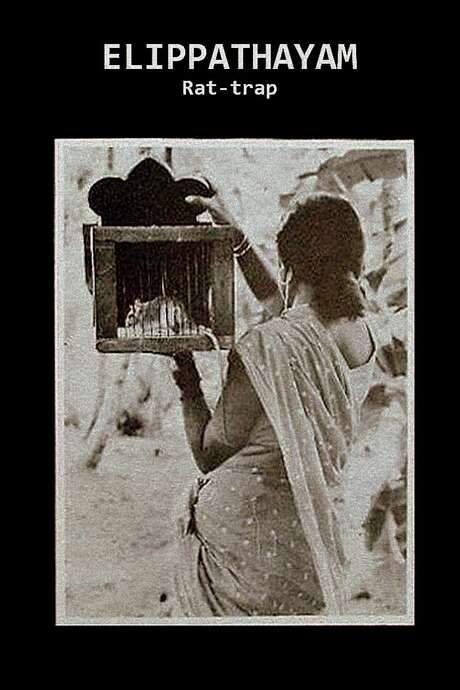
Elippathayam (1982) movie poster

Characters & Themes

Elippathayam (1982) Characters, Setting & Themes Explained

Release, runtime and language
1982 · 115 mins · Malayalam
Loading streaming availability…
Directed by
Adoor Gopalakrishnan
Starring
Devan, Sharada, Edward, Jalaja, Karamana Janardanan Nair, Vembayam Thampi

Unni, the final male heir of a crumbling feudal household in rural Kerala, clings to outdated customs. As the surrounding society modernizes, he cannot reconcile the changes, retreating deeper into his ancestral home. His resistance turns into growing isolation and mounting paranoia, casting the decaying estate as a symbolic rat‑trap.

On this page (8)
  1. 1 Where to watch
  2. 2 Characters explained (4)
  3. 3 Where & when it takes place
  4. 4 Themes & meaning (3)
  5. 5 Character & meaning questions
  6. 6 Movie threads
  7. 7 Movies like Elippathayam
  8. 8 Every angle
Loading streaming availability…

4 main characters · contains spoilers

Elippathayam Characters Explained: Who Is Who

The main characters of Elippathayam (1982), heroes and villains: what drives them, how they change over the course of the story and what each of them reveals about the film's bigger ideas.

  • Unni

    played by Karamana Janardanan Nair

    The middle-aged patriarch of the tharavadu, Unni embodies a stagnant feudal mindset. He spends his days idly, reading the newspaper and oiling his body, while the estate is managed by others. His prideful detachment leads him to resist marrying off his sisters and addressing threats to the family’s fortune, leaving him isolated and increasingly unable to respond to change.

    • 👑 Patriarchy
    • 🗝️ Inertia
    • 🏚️ Old-world
  • Rajamma

    played by Sharada

    The elder sister, Rajamma, bears the weight of unfulfilled expectations as she watches opportunities for marriage and security slip away. Her illness and the cold, dismissive stance of her brother expose the fragility of family bonds under social and economic strain. Her eventual death highlights the consequences of inaction within a decaying system.

    • 💔 Family duty
    • 🧭 Social pressure
    • 🪨 Duty vs fate
  • Sreedevi

    played by Jalaja

    The younger sister who disregards tradition and runs away with a lover, Sreedevi embodies a spark of agency in a collapsing world. Her act challenges the rigid expectations placed on women in a feudal setting and reveals how personal choices collide with collective norms. Her defiance contrasts with Unni’s paralysis and contributes to the family’s unraveling.

    • 💃 Rebellion
    • 🚪 Escape
    • 🌸 Individuality
  • Scaria Mappila

    The caretaker neighbor who tends to the agricultural affairs, Scaria Mappila remains a practical presence within the estate. He represents the maintenance of old structures and the pragmatic response to the manor’s decline, providing a counterpoint to Unni’s impractical inertia. He is a quiet figure who manages day-to-day affairs as the world around them shifts.

    • 🧰 Practicality
    • 🗂️ Estate affairs
    • 🧭 Realism

Last updated: October 04, 2025 at 12:47

Was this helpful?

Setting

Where and When Does Elippathayam Take Place?

The setting of Elippathayam (1982): the year and time period, the places and locations, and how they shape the characters, the mood and the tension of the story.

Time period

Location

Kerala, India; ancient tharavadu (manor)

The story unfolds in a derelict ancient tharavadu, a sprawling manor that serves as a relic of a once-prosperous aristocratic family in Kerala. The house and its grounds, once bustling with activity, are now decaying and dark, reflecting the fortunes of the family. A rat-infested, solitary residence, it becomes a visual metaphor for the stagnation of old power structures as external changes erode their world.

  • 🏰 Derelict manor
  • 🌴 Kerala setting
  • 💰 Feudal decline

Last updated: October 04, 2025 at 12:47

Was this helpful?

3 major themes

Elippathayam Meaning: Themes & Message Explained

What is Elippathayam (1982) really about? The emotional, social and philosophical themes the film keeps returning to, its symbolism and the message beneath the surface.

  • Change vs Tradition

    The film centers on a clash between a decaying feudal order and the encroaching modern world. Unni clings to old rituals and patriarchal prerogatives, resisting any shift that would threaten his authority. External pressures, such as economic decline and social transformations, threaten the stability of the manor. The narrative uses the manor as a stage where the old ways fight to survive against the inevitable.

  • Decay of Privilege

    Feudal privilege dissolves as wealth and influence wane, exposing the fragility of the family’s status. The sisters’ lives and the property become battlegrounds for control over a fading legacy. Proposals, legal summons, and the elder sister’s death illustrate how privilege collapses when support and resources evaporate. The film portrays a world where status is no longer safeguarded by tradition.

  • Isolation and Madness

    Unni’s paranoia and inability to act push him toward a mental trap, illustrating how isolation compounds the fall of a patriarch. The film blurs reality and perception, with threats—real or imagined—shadowing his daily life. The rat motif and the final pond sequence imply a descent into a distorted mindset where external threats mirror internal collapse. The ending suggests that his world may have been a product of delusion as much as danger.

Last updated: October 04, 2025 at 12:47

Was this helpful?

Character & theme questions

Elippathayam Characters & Meaning: Your Questions Answered

The questions people ask about Elippathayam (1982): who the characters really are, their relationships, what the symbols mean, where it takes place and what the movie is really about. Each answer contains spoilers.

Q1

What is a tharavadu and where is the story set?

The story takes place in an ancient tharavadu, a traditional Nair clan manor in Kerala, India. This derelict, rat-infested estate was once the prosperous home of an aristocratic family but now stands in decay, symbolizing the collapse of old power structures. The crumbling manor serves as both the physical setting and a visual metaphor for stagnation.

Foreshadowing: The opening shots establish the manor as a dark, decaying space that mirrors the family's declining fortunes.

  • kerala
  • tharavadu
  • manor
  • setting
  • feudal house
Q2

What does the film say about tradition versus modernization?

The film portrays the clash between a decaying feudal order and the encroaching modern world. Unni, the last male heir, clings to old rituals and patriarchal prerogatives, refusing to adapt as economic decline and social transformations erode his world. The narrative presents tradition not as dignified resistance but as paralysis, showing how rigid attachment to the past leads to isolation and collapse.

  • tradition
  • change
  • feudalism
  • modernization
  • decay
Q3

Who is Unni and what kind of person is he?

Unni is the middle-aged patriarch and final male heir of the tharavadu family. He embodies a stagnant feudal mindset, spending his days idly reading newspapers and oiling his body while others manage the estate. Prideful and detached, he resists addressing threats to the family's fortune, including refusing to marry off his sisters. His inability to adapt traps him in isolation as the world changes around him.

  • unni
  • patriarch
  • protagonist
  • character
Q4

What roles do the sisters play in the story?

The two sisters represent different responses to the family's decay. Rajamma, the elder sister, bears the weight of unfulfilled expectations as marriage opportunities slip away due to her brother's inaction. Her illness and eventual death highlight the human cost of stagnation. Sreedevi, the younger sister, defies tradition by running away with a lover, embodying a spark of agency that contrasts with Unni's paralysis.

  • rajamma
  • sreedevi
  • sisters
  • women
  • tradition
Q5

How does the film portray the collapse of aristocratic privilege?

The film illustrates how feudal privilege dissolves as wealth and influence wane, exposing the fragility of the family's status. Legal summons, marriage proposals, and the elder sister's death demonstrate how privilege collapses when resources evaporate. The tharavadu, once a symbol of power, becomes a prison, status no longer protected by tradition or wealth.

  • privilege
  • aristocracy
  • wealth
  • decline
  • status
Q6

What does the film suggest about isolation and mental state?

Unni's paranoia and inability to act trap him in a mental prison, illustrating how isolation compounds the fall of a patriarch. The film blurs reality and perception, threats become unclear whether real or imagined. The rat motif and final sequences suggest a descent into a distorted mindset where external dangers mirror internal collapse. The ambiguity implies his world may be as much delusion as reality.

  • isolation
  • paranoia
  • madness
  • mental state
  • delusion
Q7

What do the house and rat imagery symbolize?

The derelict tharavadu functions as a symbolic rat-trap, a decaying structure where both inhabitants and vermin are trapped. The rat infestation visually represents the erosion of old systems from within. Just as rats consume a dying structure, external modernizing forces consume the feudal order. The house becomes a prison of both physical decay and psychological entrapment.

  • house
  • rats
  • symbolism
  • metaphor
  • trap
Q8

What is the emotional tone and pacing of the film?

The film maintains a consistently melancholic tone dominated by quiet sadness and reflection on irreversible loss. There are no light-hearted counterpoints. The pacing is deliberately slow, mirroring the gradual decay of both the manor and Unni's mind. This atmospheric approach emphasizes psychological descent over plot events, creating sustained emotional pressure.

  • tone
  • pacing
  • atmosphere
  • melancholy
  • slow burn
Q9

Is the ending meant to be ambiguous?

Yes, the ending is intentionally ambiguous, leaving Unni's fate and the nature of his final confrontation open to interpretation. The pond sequence and final moments blur the line between reality and delusion, suggesting his world may be a product of imagination as much as external danger. This ambiguity reinforces the film's central metaphor of a mind trapped in its own illusions.

  • ending
  • ambiguity
  • interpretation
  • final scene
  • open ending

Movie threads

More Movies Like Elippathayam, by Mood & Story

Curated lists built around what makes Elippathayam tick: the same mood, the same kind of story or the same emotional payoff. Each list explains why these movies belong together.

Films about Feudal Decline like Elippathayam

Stories where a crumbling way of life consumes those who cling to it. Movies like Elippathayam that capture the slow, melancholic decay of traditional societies and the psychological toll on their inhabitants. If you were drawn to the atmosphere of a dying feudal world, these similar dramas explore themes of social obsolescence and emotional isolation.

  • decaying
  • melancholic
  • atmospheric
  • isolated
  • slow burn
  • claustrophobic
  • Tone: melancholic, bleak
  • Pacing: slow, deliberate
Why these movies?

The story pattern: Narratives in this thread typically follow a linear descent into decay, focusing on a protagonist's growing isolation and psychological breakdown as the world around them modernizes, leaving them behind. The story itself becomes a metaphor for irreversible loss and existential despair.

Why they belong together: These films are grouped by their shared, heavy atmosphere of decline, a slow pacing that mirrors the gradual collapse, and a deep focus on the melancholic tone of a world and a mind succumbing to the weight of time and change.

Movies with Psychological Claustrophobia like Elippathayam

Films where a character's own mind becomes their inescapable trap. If you liked the mounting paranoia and feeling of being trapped in Elippathayam, this list features similar slow-burn psychological dramas. These films explore characters whose mental state becomes a prison, creating a deeply atmospheric and unsettling viewing experience.

  • claustrophobic
  • paranoid
  • psychological
  • unsettling
  • atmospheric
  • isolated
  • Tone: tense, melancholic
  • Pacing: slow burn, atmospheric
Why these movies?

The story pattern: The narrative pattern involves a character retreating from external pressures into a confined space, which amplifies their internal fears and leads to a descent into paranoia. The plot is often minimal, serving to heighten the atmospheric unease and focus on the character's deteriorating mental state.

Why they belong together: These films share a specific mood of claustrophobia and paranoia, achieved through slow pacing, a focus on a single setting, and a moderate narrative complexity that prioritizes psychological depth over external plot events, often leading to an ambiguous conclusion.

If you liked this

Movies Like Elippathayam

Similar movies to Elippathayam: the same genre, themes or kind of story. Each one comes with its own plot summary, timeline and ending explained.

Browse all movie summaries

Every angle

Elippathayam (1982) Explained: Plot, Timeline & Characters

Everything about Elippathayam in one place: what happens in the plot summary, the timeline in chronological order, the characters and meaning and a spoiler-free summary. What's After the Movie adds the cast, box office and post-credit scenes.

Coming soon on iOS and Android

The Plot Explained Movie Summary App

Plot summaries, endings explained and timelines on your phone. Catch up on any movie in minutes, save your favorites and never miss a twist again.

Be the first to know when we launch. Your email stays private, always.

Learn more about the app