Plot Explained Spoilers guaranteed!
Plot Explained

Browse by genre

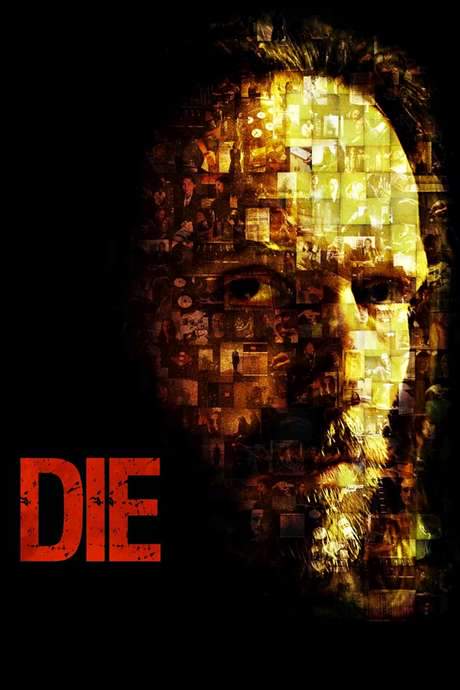
Die (2010) movie poster

Timeline

Die (2010) Timeline Explained – Every Event in Order

Release, runtime and language
2010 · 91 mins · English
Loading streaming availability…
Directed by
Dominic James
Starring
Paul Stewart, Caterina Murino, Elias Koteas, Peter Miller, Stephen McHattie, Emily Hampshire

Six people, each of them is on the road to self-destruction. They wake up in cells in a surreal facility, without knowing how they got there or why.

On this page (5)
  1. 1 Where to watch
  2. 2 Events in order (12)
  3. 3 Timeline questions answered
  4. 4 Movie threads
  5. 5 Every angle
Loading streaming availability…

12 events in order · contains spoilers

Die Timeline: Events in Chronological Order

Every key event of Die (2010) in order, scene by scene, with when and where it takes place. Use it to untangle flashbacks, time jumps and parallel storylines, to refresh your memory before the sequel or to find the exact scene you are thinking of.

  1. Awakening in a surreal facility

    Six strangers wake up in uneasy cells within a surreal facility. They have no memory of how they arrived or why they are there, and the atmosphere hints at something deliberate and dangerous. Confusion and fear set the tone for what feels like a twisted trap.

    Where
    surreal facility, unknown location
  2. Captives introduced one by one

    The film introduces each captive to the audience, hinting at troubled pasts and the reasons they might have sought self-destruction. The introductions build a sense of personal baggage that the game will exploit. Viewers are invited to compare the six lives quickly presented to them.

    Where
    cells in the facility
  3. The glass prison and a chilling mandate

    The captives realize they are confined in glass prison cubes as a man appears to inform them that they must play a life-or-death game. The setup is clinical and cold, emphasizing control and spectators. The rules of the game are about to unfold before their eyes.

    Where
    glass prison cubes, central chamber
  4. Past suicides become the trigger

    It is revealed that each captive has, at some point, attempted suicide, tying their fates to the game. They are told they will be paired in teams and that one person will roll a die to determine how many bullets the other must face. The premise weaponizes their own histories against them.

    Where
    game chamber
  5. Teams formed and the die is cast

    Pairs are formed, and the dice become the controlling mechanic of life and death. The roll determines the number of bullets in a revolver that will be directed at a partner. The tension rises as the players anticipate the impossible choice.

    Where
    game chamber
  6. First deadly roll and the trigger

    In one brutal moment, a roll dictates how many bullets must be loaded, forcing a partner to squeeze the trigger. The outcome is fatal or near-fatal, and the survivors are left stunned and uneasy. The game proves to be more unpredictable than they anticipated.

    Where
    gun area within the chamber
  7. Rounds continue, some live, some die

    As rounds progress, several captives are killed while others survive. The deaths demonstrate the ruthlessness of the game and the cruel calculus behind the captor's design. The survivors struggle to understand whether there is any mercy left in the challenge.

    Where
    game chamber
  8. Backstories and tension

    Interwoven flashbacks reveal a bit more about the captives' troubled pasts, though the summary notes the backstories are not particularly compelling. These moments heighten the emotional stakes and provide motive for their attempts at self-destruction. The game weaponizes these memories as the captor manipulates them.

    Where
    various locations tied to memories
  9. The captor's charisma and the villains' scenes

    The scenes with the villain and the captors are described as the strongest part of the film. The antagonist exerts control through dialogue and intimidation, turning the game into a psychological battleground. The captor's presence dominates the tense atmosphere.

    Where
    the facility's main chamber and surrounding rooms
  10. Meanwhile, investigators close in

    Two FBI agents begin tracking the kidnapped and missing people, trying to connect the dots. Their investigation runs in parallel to the brutal game and offers a rational counterpoint to the claustrophobic horror. Clues start to hint at how the six were chosen and captured.

    Where
    on the trail of the disappearances; various locations
  11. Piecing the puzzle together

    The agents work to connect disparate clues, uncovering patterns that tie the missing to the surreal facility and the game's orchestrator. The pursuit of truth adds a broader menace beyond the immediate danger in the chamber. The body count and clues begin forming a larger narrative thread.

    Where
    investigative settings; locations tied to the case
  12. The ethics and futility of the game

    The summary notes that the film's core idea is a PG-13 take on a Saw-like game, with dialogue-driven tension and predictable twists. The capsule of who survives is a commentary on self-destruction and coercive moral tests. The captors' game mechanism remains the central engine of the film's drama.

Last updated: October 01, 2025 at 10:24

Was this helpful?

Timeline questions answered

Die Timeline Explained: Your Questions Answered

When does it happen, and why in that order? The questions people ask about the chronology of Die (2010): time jumps, flashbacks, cause and effect between scenes and the correct order of events, each answered with spoilers.

Q1

Why were these specific people chosen for the game?

The captor deliberately selected six individuals who had each attempted suicide in their past. Each captive's history of self-destruction became the justification for forcing them into the deadly game. The premise weaponizes their own traumatic histories against them, making their guilt and desperation central to the captor's design.

Foreshadowing: Earlier scenes introduce each captive hinting at their troubled pasts, which the game later exploits.

  • captives selection
  • suicide victims
  • chosen participants
  • game rules
Q2

How does the die game work?

The captives are paired together, and one member must roll a die to determine how many bullets will be loaded into a revolver. The other partner must then squeeze the trigger and face the consequences. The roll transforms chance into survival or death, creating an impossible moral choice where one person's life depends on another's random roll.

Foreshadowing: The glass prison setup and the clinical chamber hint that the game has specific, predetermined rules.

  • die roll
  • bullet game
  • revolver
  • deadly game
  • chance mechanism
Q3

Why is the captives' past suicide history relevant to the game?

The captor reveals that each participant has attempted suicide, tying their fates directly to their histories of self-destruction. This connection serves as the twisted logic behind the game, forcing people who wanted to die to now decide whether others live or die. The game manipulates their guilt and desperation, creating psychological pressure beyond the physical threat.

Foreshadowing: The introduction hints at troubled pasts and reasons each might have sought self-destruction.

  • suicide history
  • past trauma
  • guilt manipulation
  • psychological game
Q4

Who survives the deadly game?

Several captives are killed as the rounds progress while others survive. The exact survivors depend on the outcomes of the die rolls and the choices made under extreme duress. The body count accumulates as the game proves ruthlessly unpredictable, with the final survivors left stunned by the experience.

Foreshadowing: The film's steady pacing toward rounds continuing shows the mounting death toll.

  • survivors
  • deaths
  • body count
  • captive fate
Q5

What motivates the captor to run this deadly game?

The captor operates from a twisted philosophical perspective, viewing the game as a test of human morality under pressure. The scenes with the villain deliver the strongest, most unsettling notes in the film, showing someone who exerts control through dialogue and intimidation. While the full motivation remains somewhat ambiguous, the captor sees the experiment as exposing the participants' true nature.

Foreshadowing: The cold, clinical setup and the captor's dialogue early on establish a persona driven by psychological manipulation.

  • captor motivation
  • villain
  • game orchestrator
  • psychological test
Q6

What is the role of the FBI investigators in the story?

Two FBI agents work in parallel to track the kidnapped individuals, piecing together clues left by the captor's elaborate scheme. Their investigation provides a rational counterpoint to the claustrophobic horror inside the facility. As they connect disparate breadcrumbs, they gradually uncover how the six were chosen and captured, though their progress runs alongside the deadly game rather than stopping it.

Foreshadowing: The pursuit threads appear early, establishing a second narrative layer beyond the immediate danger.

  • FBI agents
  • investigation
  • missing persons
  • 追踪线索
Q7

Why are the captives held in glass prison cubes?

The captives wake up confined in transparent glass prison cubes within a surreal, clinical facility. This design emphasizes constant visibility and control, the captor acts as an observer watching their subjects. The glass creates a sense of being trapped and watched, intensifying the psychological pressure while making every reaction visible to both captor and fellow captives.

Foreshadowing: The opening scenes establish the facility's surreal, unsettling atmosphere from the moment they awaken.

  • glass cells
  • prison cubes
  • facility
  • confinement
Q8

What happens when someone rolls the die in the game?

When a captive rolls the die, the number determines how many bullets get loaded into the revolver pointed at their partner. A low number means fewer chances of death; a high number increases the lethal risk. The other captive must then pull the trigger, turning the roller into an indirect killer and the victim into someone whose fate rests on chance. This creates unbearable tension between trust and betrayal.

Foreshadowing: The die's introduction establishes the mechanism that will drive the film's central tension.

  • die result
  • bullet loading
  • trigger pull
  • survival chance
Q9

Is the ending of the movie ambiguous?

The ending offers a partial understanding of the full picture. The investigators piece together clues and connect threads toward the why behind the nightmare, but many questions remain unanswered. The film's conclusion leaves certain elements unresolved, maintaining an ambiguous feel about the captor's complete scheme and the fate of all participants.

Foreshadowing: The steady pacing builds toward revelation while deliberately leaving gaps in the full understanding.

  • ending
  • resolution
  • ambiguous conclusion
  • partial understanding
Q10

Why is the facility setting described as surreal?

The facility where the captives wake up operates on unsettling, dreamlike logic rather than normal reality. The glass prison cubes, dim clinical lighting, and deliberate arrangement create an otherworldly atmosphere. This surreal quality serves the film's tone, making the captives' disorientation feel authentic while emphasizing that the situation exists outside normal rules, adding to the psychological horror.

Foreshadowing: The very first scene establishes the facility as unnatural and deliberately constructed for this purpose.

  • surreal setting
  • facility
  • clinical environment
  • dreamlike atmosphere
Q11

How many people die in the game?

Multiple captives die as the deadly rounds continue. The film shows a brutal progression where some rolls result in fatal outcomes while others survive by chance. The body count demonstrates the ruthlessness of the captor's design, with several deaths occurring throughout the film as the game unfolds its unpredictable logic.

Foreshadowing: The first deadly roll establishes that death is a real and immediate possibility.

  • death toll
  • fatalities
  • killed
  • deadly outcomes

Movie threads

More Movies Like Die, by Mood & Story

Curated lists built around what makes Die tick: the same mood, the same kind of story or the same emotional payoff. Each list explains why these movies belong together.

Claustrophobic captivity thrillers like Die

Characters trapped and forced to play deadly psychological games for survival. If you liked the high-tension survival horror of Die, explore more movies like it. This list features similar psychological thrillers about characters trapped in deadly games, facing moral choices in confined, unsettling settings. Find your next suspenseful watch among these stories of desperation and cunning.

  • claustrophobic
  • suspenseful
  • desperate
  • unsettling
  • anxious
  • dread-filled
  • Tone: tense, bleak, unsettling
  • Pacing: steady, relentless
Why these movies?

The story pattern: These narratives typically begin with a sudden, unexplained captivity. The plot is driven by a series of tests or games that force characters to confront their fears, guilt, or morality. The central conflict is often against an unseen puppeteer and the deteriorating dynamics within the trapped group, building towards a climactic struggle for freedom and truth.

Why they belong together: Movies are grouped here for their shared focus on confinement as a primary source of tension. They generate a consistent mood of anxiety, dread, and suspense through scenarios where escape is nearly impossible and every decision carries life-or-death consequences, creating a deeply immersive and stressful viewer experience.

Movies with high-stakes moral dilemmas like Die

Ordinary people forced to make impossible choices under extreme pressure. Fans of Die who enjoyed its tense ethical challenges will find more movies like it here. These films explore similar themes of desperate survival and impossible choices, often putting characters in situations where there are no good options. Discover other suspenseful stories that question the price of a life.

  • suspenseful
  • anxious
  • thought-provoking
  • desperate
  • unsettling
  • ethically complex
  • Tone: tense, heavy, thought-provoking
  • Pacing: steady, character-driven
Why these movies?

The story pattern: The narrative pattern involves placing characters in a contrived or extreme scenario that systematically removes easy options. The plot advances through a series of escalating choices, each forcing a deeper moral compromise. The character journey is one of degradation or revelation, exploring what a person is willing to do—and become—when pushed to the brink.

Why they belong together: These films are united by their focus on ethical conflict as the main engine of drama. They share a heavy emotional weight and generate tension by making the viewer ponder, 'What would I do?' The experience is intellectually and emotionally engaging, prioritizing psychological suspense over physical action.

Every angle

Die (2010) Explained: Plot, Timeline & Characters

Everything about Die in one place: what happens in the plot summary, the timeline in chronological order, the characters and meaning and a spoiler-free summary. What's After the Movie adds the cast, box office and post-credit scenes.

Coming soon on iOS and Android

The Plot Explained Movie Summary App

Plot summaries, endings explained and timelines on your phone. Catch up on any movie in minutes, save your favorites and never miss a twist again.

Be the first to know when we launch. Your email stays private, always.

Learn more about the app