Plot Explained Spoilers guaranteed!
Plot Explained

Browse by genre

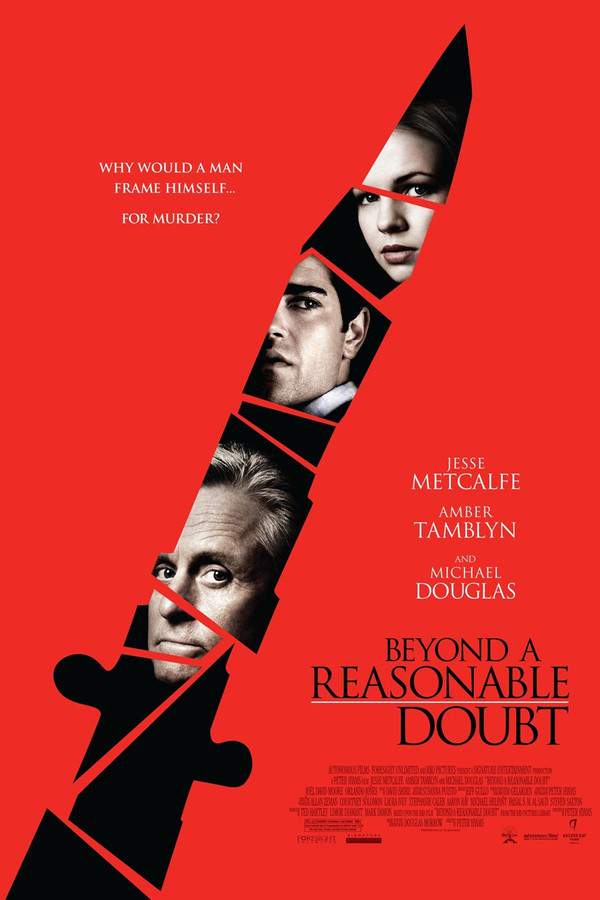
Beyond a Reasonable Doubt (1956) movie poster

Plot Summary

Beyond a Reasonable Doubt (1956) Plot Summary Explained

Release, runtime and language
1956 · 80 mins · English
Directed by
Fritz Lang
Starring
Dana Andrews, Edward Binns, Joan Fontaine, Arthur Franz, Carleton Young, Sidney Blackmer

A newspaper publisher, determined to show that circumstantial evidence is unreliable, convinces his son‑in‑law Tom to stage a hoax. Tom plants false clues implicating him in the murder of a nightclub dancer, aiming to trap city’s hardline district attorney. After Tom’s conviction, the publisher plans to reveal the ruse and humiliate DA.

On this page (6)
  1. 1 Where to watch
  2. 2 What happens: full plot
  3. 3 Plot questions answered
  4. 4 Movie threads
  5. 5 Movies like Beyond a Reasonable Doubt
  6. 6 Every angle

Where to watch

Where to Watch Beyond a Reasonable Doubt (1956)

Where can you watch Beyond a Reasonable Doubt? Stream, rent or buy it in the US, including on Plex, Amazon Video and Apple TV Store: current JustWatch availability with up-to-date prices.

Streaming availability powered by JustWatch

Full plot summary · contains spoilers

What Happens in Beyond a Reasonable Doubt: Full Plot Summary

The whole story of Beyond a Reasonable Doubt (1956) explained, from the opening scene to the final frame: every key event, every twist and what it all adds up to. Read it as a quick recap before the sequel, to check a scene you missed, or to finally understand what really happened.

Austin Spencer, a wealthy newspaper publisher who openly opposes the death penalty, believes the system can convict and execute innocent men based on circumstantial clues. He enlists his daughter Susan’s fiancé, Tom Garrett, a successful novelist and former employee, to participate in a calculated hoax designed to expose what he sees as an overzealous district attorney and a punitive appetite for capital punishment. The plan is simple in concept but dangerous in execution: Tom will plant misleading clues that point to his own guilt in the murder of a nightclub dancer, Patty Gray, with Spencer ready to reveal the set-up publicly to advance his political agenda once Tom is convicted.

Tom agrees to participate and begins his investigation into Patty’s murder by getting close to one of Patty’s former fellow dancers, all while maintaining the veneer of a genuine investigation. The trap closes when Tom appears to attack the dancer and is arrested, later being convicted and sentenced to death for Patty’s murder. The evidence against him is not entirely accidental; it is the very physical trail that Spencer and Tom crafted together, meticulously designed to look like real proof. As the case unfolds, the city braces for the execution, and the hoax seems poised to achieve its political objective.

But fate intervenes in a dramatic turn: Spencer dies in a car accident while on his way to present exonerating documents. The staged photographs and a paper trail of purchases used to fuel the setup burn beyond recognition in the fiery wreck, leaving Tom with no immediate way to prove his innocence. On death row, Tom fights to convince the district attorney that the entire case was manufactured, a pivotal effort to salvage his life when the truth seems to vanish with the ashes.

With the newspaper now under Susan’s control, she publishes an incisive editorial that attacks the district attorney and supports Tom’s version of events. The editorial stirs public interest and prompts the trial judge to consider reopening the case, though he ultimately resists. As more pressure mounts, a handwritten statement left by Spencer—intended to be read after his death—arrives and validates Tom’s story, forcing the DA to acknowledge a grave mistake and to free Tom. A pardon seems imminent as the governor prepares for a ceremonial press conference signing the clemency.

Yet the final act reveals a chilling twist. While Tom and Susan await the pardon, Tom casually reveals Emma—the murder victim’s real name—had never been disclosed during the trial. This detail confirms that Emma was Tom’s estranged wife, whom he had murdered years earlier when she threatened to derail his rising career and marriage plans with Susan. The revelation places Susan in a terrible dilemma: protect Tom or reveal the truth. She hesitates, unable to make the decisive call, and a critical phone line to the governor becomes tied up in the moment of truth. Just as the governor is about to sign the pardon, he receives Susan’s explosive disclosure. The pardon is canceled, Tom is taken away, and the grim possibility of execution looms once again. The movie closes on a note of moral ambiguity, with the question of guilt, responsibility, and the price of manipulation hanging in the air.


Last updated: October 09, 2025 at 14:03

Was this helpful?

Plot questions answered

Beyond a Reasonable Doubt Plot Explained: Your Questions Answered

The questions people ask most about Beyond a Reasonable Doubt (1956): what happens in the confusing scenes, why the characters do what they do, the twists, hidden details and what the ending means. Each answer contains spoilers.

Q1

Why does Tom agree to participate in Spencer's death penalty hoax?

Tom agrees because Spencer, his wealthy future father-in-law, convinces him the hoax is a noble cause, to prove that circumstantial evidence can wrongfully convict innocent people. Spencer frames it as a way to trap the overzealous district attorney and advance his anti-capital punishment agenda. Tom, a successful novelist and former newspaper employee, is confident the setup will work and that Spencer will reveal the truth before any real harm comes to him.

Foreshadowing: Earlier scenes show Tom's ambition and willingness to please his future family, making his dangerous cooperation believable.

  • tom garrett
  • austin spencer
  • hoax
  • death penalty
  • circumstantial evidence
  • district attorney
Q2

What happens to the evidence after Spencer dies in the car accident?

When Spencer dies in the car crash while en route to present exonerating documents, the staged photographs and receipts that formed the paper trail of purchases are burned beyond recognition in the fiery wreck. This destroys the proof Tom needs to prove his innocence, leaving him trapped on death row with no way to immediately demonstrate the evidence was planted.

Foreshadowing: The plan's fatal flaw was relying on a single person to deliver the truth at the critical moment.

  • austin spencer
  • car accident
  • evidence
  • fire
  • death row
  • exoneration
Q3

How does the film reveal Tom is actually guilty of killing Emma?

In the final act, Tom casually reveals to Susan that Emma, the murder victim's real name, had never been disclosed during the trial. This confirms Emma was Tom's estranged wife whom he murdered years earlier when she threatened to derail his career and upcoming marriage to Susan. The entire hoax backfired because Tom was genuinely guilty of the murder he was framing himself for.

Foreshadowing: The film hints at Tom's knowledge of the victim beyond what the hoax would require, and his comfort with the false accusation seems unusually willing.

  • emma
  • tom garrett murder
  • estranged wife
  • twist ending
  • guilty
  • confession
Q4

Why does the governor cancel Tom's pardon at the last moment?

The pardon is canceled when Susan, unable to bear the moral weight of Tom's confession, contacts the governor to reveal that Tom is actually guilty of murder. As Tom and Susan wait for the pardon, Tom reveals his crime, leaving Susan to make the final choice. Her call to the governor exposes the truth just as the ceremonial signing is about to occur, causing the governor to withdraw the clemency.

Foreshadowing: Susan's earlier hesitation and inability to make the decisive call in the newsroom builds to this moment of no return.

  • governor pardon
  • susan spencer
  • canceled
  • execution
  • confession
  • last minute
Q5

Does Susan reveal Tom's guilt to the authorities?

Yes, Susan ultimately reveals Tom's guilt to the governor, though she struggles terribly with the decision. After Tom confesses that he murdered his estranged wife Emma, Susan wrestles in the newsroom, unable to make the call. She attempts to reach the governor by phone but cannot follow through initially. The call eventually goes through during the pardon press conference, canceling Tom's last-minute reprieve.

Foreshadowing: The tension in the newsroom scene foreshadows that Susan's moral compass will prevail over her personal interests.

  • susan spencer
  • moral dilemma
  • truth
  • confession
  • governor
  • report
Q6

Why is Spencer so determined to expose the district attorney?

Austin Spencer, a wealthy newspaper publisher, believes the death penalty system can convict and execute innocent men based solely on circumstantial evidence. He views the district attorney as overzealous and punitive, using the hoax as a political weapon to embarrass the DA and prove his point about capital punishment. Spencer sees the plan as both a journalistic crusade and personal political agenda.

Foreshadowing: Spencer's public stance against the death penalty is established early as his core motivating belief.

  • austin spencer
  • district attorney
  • death penalty
  • political agenda
  • circumstantial evidence
  • newspaper publisher
Q7

What happens to Tom at the end of the film?

Tom is taken away to face execution after the governor cancels the pardon. The film ends with Tom being escorted to prison with the grim possibility of execution looming. The closing note is one of moral ambiguity, no character achieves victory, and the justice system is fundamentally tarnished by the hoax and subsequent revelations.

Foreshadowing: The title "Beyond a Reasonable Doubt" foreshadows that the legal system's certainty will crumble under the weight of revealed truth.

  • ending
  • execution
  • prison
  • fate
  • canceled pardon
  • 结局
Q8

Why does the judge refuse to reopen Tom's case?

Despite public pressure from Susan's editorial attacking the DA and supporting Tom's version of events, the trial judge ultimately decides against reopening the case. Even with the handwritten statement from Spencer confirming the hoax and mounting public sentiment, the judge maintains the status quo. The legal deadlock persists until the handwritten note is discovered hours before execution, temporarily shifting the case's trajectory.

Foreshadowing: The judge's reluctance reflects the system's resistance to admitting fault, even when evidence mounts.

  • judge
  • retrial
  • reopening case
  • legal decision
  • evidence
  • appeal
Q9

What is the handwritten statement that helps free Tom?

A handwritten note left by Spencer, intended to be read after his death, is discovered just hours before Tom's execution. The document confirms the murder case could be a constructed hoax and validates Tom's claim that the evidence was planted. This note provides the crucial evidence that forces DA Thompson to admit mistake and order Tom's release, leading to the governor's pardon announcement.

Foreshadowing: Spencer's careful preparation of a contingency note shows he anticipated his own death as a possibility.

  • spencer note
  • handwritten statement
  • exoneration
  • evidence
  • last minute
  • hoax proof
Q10

How does Tom plant evidence to implicate himself in the murder?

Tom immerses himself in Patty Gray's world by romancing one of her former fellow dancers to research the case. He builds a plausible backstory while meticulously crafting a physical trail of evidence, staged photographs and receipts, that points to his own guilt. This evidence is designed to look like real proof while being entirely fabricated as part of the hoax to trap the DA.

Foreshadowing: Tom's investigative methods appear genuine, masking the deeper deception at play.

  • evidence planting
  • false clues
  • undercover
  • patty gray
  • investigation
  • staged evidence

Movie threads

More Movies Like Beyond a Reasonable Doubt, by Mood & Story

Curated lists built around what makes Beyond a Reasonable Doubt tick: the same mood, the same kind of story or the same emotional payoff. Each list explains why these movies belong together.

Movies about risky justice games like Beyond a Reasonable Doubt

Plans to expose systemic flaws spiral into uncontrollable personal ruin. If you enjoyed the dangerous intellectual gamble of Beyond a Reasonable Doubt, this thread features similar movies where characters attempt to manipulate the legal system, only for their plans to backfire with severe consequences. Expect tense, morally complex stories about hubris, betrayal, and the unpredictable nature of truth.

  • high stakes
  • tense
  • cynical
  • morally ambiguous
  • race against time
  • betrayal
  • Tone: tense, cynical, bleak
  • Pacing: steady, methodical build
Why these movies?

The story pattern: The narrative typically begins with a calculated plan, often based on an idealistic or cynical premise about a flawed institution. The protagonist actively sets the wheels in motion, confident in their ability to control the outcome. However, an unforeseen event—a twist of fate, a betrayal, or the system's raw power—turns the experiment into a grim reality, forcing a shift from intellectual exercise to a visceral race against time.

Why they belong together: They are grouped by their shared foundation of a high-concept, risky plot that critiques authority, combined with a tone of escalating dread as the protagonist's clever plan becomes a life-or-death prison. The pacing is steady and methodical, building towards a bleak revelation about the futility of trying to outsmart chaos.

Bleak critiques of justice like in Beyond a Reasonable Doubt

Stories where the search for truth only reveals a deeper corruption. For viewers who appreciated the cynical conclusion of Beyond a Reasonable Doubt, this collection features movies that similarly challenge the integrity of the legal system. Explore tense dramas and thrillers where the pursuit of justice leads to moral collapse, exposing corruption and leaving a lasting sense of ambiguity and disillusionment.

  • cynical
  • grim
  • morally ambiguous
  • suspenseful
  • anxious
  • judicial injustice
  • Tone: grim, tense, morally ambiguous
  • Pacing: steady, deliberate
Why these movies?

The story pattern: The emotional journey in these films is one of declining faith. Characters may start with a belief in the system, but through a process of manipulation, exposed lies, and institutional failure, they arrive at a grim new understanding. The conflict is often less about catching a culprit and more about revealing how truth is constructed and weaponized, resulting in endings where no one is truly vindicated.

Why they belong together: They share a heavy emotional weight and a complex, often twisting narrative that deconstructs the idea of objective truth. The tone is consistently tense and grim, driven by themes of political manipulation, media influence, and the devastating human cost of judicial failure. The pacing is steady, allowing the moral unease to build methodically.

If you liked this

Movies Like Beyond a Reasonable Doubt

Similar movies to Beyond a Reasonable Doubt: the same genre, themes or kind of story. Each one comes with its own plot summary, timeline and ending explained.

Browse all movie summaries

Every angle

Beyond a Reasonable Doubt (1956) Explained: Plot, Timeline & Characters

Everything about Beyond a Reasonable Doubt in one place: what happens in the plot summary, the timeline in chronological order, the characters and meaning and a spoiler-free summary. What's After the Movie adds the cast, box office and post-credit scenes.

Coming soon on iOS and Android

The Plot Explained Movie Summary App

Plot summaries, endings explained and timelines on your phone. Catch up on any movie in minutes, save your favorites and never miss a twist again.

Be the first to know when we launch. Your email stays private, always.

Learn more about the app