Plot Explained Spoilers guaranteed!
Plot Explained

Browse by genre

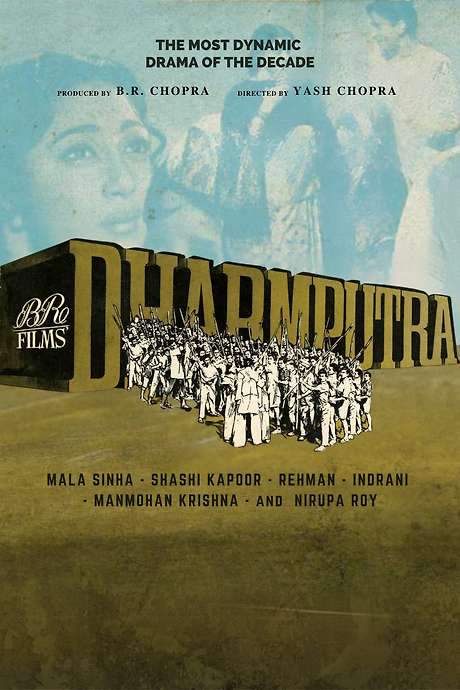
Dharmputra (1961) movie poster

Timeline

Dharmputra (1961) Timeline Explained – Every Event in Order

Release, runtime and language
1961 · 150 mins · Hindi
Loading streaming availability…
Directed by
Yash Chopra
Starring
Shashi Kapoor, Ashok Kumar, Shashikala, Nirupa Roy, Deven Verma, Indrani Mukherjee

Hindu-Muslim bhai-bhai! The story of two families — one Muslim and one Hindu — living together in India under British rule.

On this page (6)
  1. 1 Where to watch
  2. 2 Events in order (12)
  3. 3 Timeline questions answered
  4. 4 Movie threads
  5. 5 Movies like Dharmputra
  6. 6 Every angle
Loading streaming availability…

12 events in order · contains spoilers

Dharmputra Timeline: Events in Chronological Order

Every key event of Dharmputra (1961) in order, scene by scene, with when and where it takes place. Use it to untangle flashbacks, time jumps and parallel storylines, to refresh your memory before the sequel or to find the exact scene you are thinking of.

  1. Opening setting in 1925 Delhi

    The film opens in 1925 against the backdrop of British rule and the rising Indian independence movement. Two Delhi families, Nawab Badruddin’s and Gulshan Rai’s, share almost the same house and form a tightly knit social circle. The political tension outside contrasts with the close personal ties inside the household.

    When
    1925
    Where
    Delhi, British India
  2. Husn Bano and Javed's forbidden pregnancy

    Husn Bano falls for a young man named Javed and becomes pregnant. The relationship brings social pressure and secrecy as they navigate family expectations. The pregnancy sets future stakes for both families who are otherwise tightly connected.

    When
    1925-1926
    Where
    Delhi
  3. Nawab's attempt to arrange marriage and Javed's disappearance

    To legitimize Husn's child, Nawab tries to arrange her marriage to Javed. Before plans can solidify, Javed mysteriously disappears, leaving the families anxious and divided. The absence catalyzes the later acts of support from Amrit Rai and his wife Savitri.

    When
    1925-1926
    Where
    Delhi
  4. Amrit Rai and Savitri adopt the baby

    Amrit Rai and his wife Savitri step in to help Husn by assisting with the birth of the baby, and they adopt the boy, giving him the Rai family name. The child, Dilip, becomes the cherished link between the two households. The adoptive parents lay the foundation for Dilip's upbringing.

    When
    late 1920s
    Where
    Delhi
  5. Dilip grows as the apple of both families

    Despite the past, Dilip is loved by both the Nawab’s and Rai households and feels the warmth of both families. He is raised in a supportive, merged environment that values loyalty and kinship. This fusion of families shapes his early sense of belonging.

    When
    early 1930s
    Where
    Delhi
  6. Husn and Javed reunite and wed

    Husn is reunited with Javed, and they marry, re-entering the Rai household as a couple. Their union reinforces the fragile ties between the two families. The marriage takes place within the same social fabric that raised Dilip.

    When
    1930s
    Where
    Delhi
  7. Nawab is killed in a protest

    During a protest demanding British withdrawal, the Nawab is killed as part of the anti-colonial struggle. The death deepens the emotional stakes for Husn and the family. It marks a turning point in the family’s relationship with political activism.

    When
    1930s
    Where
    Delhi, British India
  8. Years pass; Husn and Javed return to a warm welcome

    Years later, Husn Bano and her husband Javed return to the Rai family and are warmly welcomed. The household atmosphere returns to its familiar harmony, at least on the surface. The reunion underscores the enduring bonds across generations.

    When
    1930s-1940s
    Where
    Delhi
  9. Dilip's transformation into a fascist, Muslim-hater

    Dilip undergoes a stark transformation, becoming fascist and antagonistic toward Muslims. He aligns with extremists who seek to expel Muslims from India, signaling a dangerous turn from the boy loved by both families. This shift turns personal history into political peril.

    When
    late 1930s-1940s
    Where
    Delhi
  10. Husn encounters a changed Dilip

    Husn meets Dilip again, only to discover that the boy she once knew has become a figure of hate and violence. The reunion highlights the deep rifts born from political extremism. Trust between mother and son becomes severely strained.

    When
    late 1930s-1940s
    Where
    Delhi
  11. Dilip carries out attacks against Muslims

    Driven by extremist ideology, Dilip participates in burning buildings and killings aimed at Muslims. The violence escalates the family’s internal conflict and tests loyalty to faith, country, and kin. Its wake spreads fear and moral ambiguity through the household.

    When
    late 1930s-1940s
    Where
    Delhi
  12. The central conflict: legacy vs. distrust

    The film ends with Husn and the Rai family confronting how to respond to Dilip’s hate and the threat it poses. The timeline raises questions about whether love and loyalty can survive in a climate of sectarian violence. The outcome remains open, inviting reflection on coexistence.

    When
    late 1930s-1940s
    Where
    Delhi

Last updated: March 05, 2026 at 18:41

Was this helpful?

Timeline questions answered

Dharmputra Timeline Explained: Your Questions Answered

When does it happen, and why in that order? The questions people ask about the chronology of Dharmputra (1961): time jumps, flashbacks, cause and effect between scenes and the correct order of events, each answered with spoilers.

Q1

Why did Javed disappear when Husn Bano became pregnant?

Javed vanished after learning about Husn's pregnancy, likely due to the social stigma and pressure surrounding their relationship. The Nawab was attempting to arrange a marriage to legitimize the child, but Javed's disappearance forced Husn into a precarious position, leading the Rai family to step in and support her.

Foreshadowing: The initial secrecy around Husn and Javed's relationship hints at the social constraints that would later complicate their reunion.

  • javed
  • husn bano
  • pregnancy
  • disappearance
  • marriage
Q2

Why did Amrit Rai and his wife adopt Husn's baby?

Amrit Rai and his wife Savitri chose to adopt the newborn to protect Husn from social shame and to preserve the bonds between the two families. By giving the child the Rai name, they ensured the baby would be accepted and loved by both households, symbolizing the unity between the Muslim and Hindu families.

Foreshadowing: This act of compassion establishes the Rai family's commitment to transcending religious boundaries, making Dilip's later betrayal even more tragic.

  • amrit rai
  • savitri rai
  • adoption
  • husn bano
  • dilip rai
  • family unity
Q3

How did Dilip become a fascist despite being raised in a loving, mixed family?

The film suggests Dilip was radicalized during the late 1930s-1940s, a period of intense political turmoil and rising extremism in India. Despite his upbringing in a tolerant household, he became aligned with Hindu nationalist extremists who promoted violence against Muslims, eventually participating in arson and killings.

Foreshadowing: The peaceful 1920s setting with its underlying political tensions foreshadows how external ideological forces could eventually overwhelm family bonds.

  • dilip rai
  • fascism
  • radicalization
  • hindu-muslim unity
  • extremism
  • violence
Q4

Why was the Nawab killed in the protest?

The Nawab was killed during a protest against British rule, part of the growing Indian independence movement. His death occurred as part of the anti-colonial struggle, highlighting how political violence affected even prominent families who had maintained harmony across religious lines.

Foreshadowing: The Nawab's earlier acceptance of the Rai family as equals contrasts sharply with the communal violence that would later consume his own household.

  • nawab
  • protest
  • british rule
  • independence
  • death
  • political violence
Q5

What happens between Husn and Dilip after his transformation into a hater of Muslims?

When Husn encounters the adult Dilip, she discovers he has become a figure of hate and violence, diametrically opposed to the values of the family that raised him. The reunion is traumatic, she faces the painful reality that the child she once protected has become someone who threatens the community she comes from. The film leaves the resolution ambiguous, questioning whether their bond can survive his ideology.

  • husn bano
  • dilip rai
  • confrontation
  • violence
  • mother son
  • betrayal
Q6

What does the title Dharmputra mean?

Dharmputra translates to "Son of Religion" or "Righteous Son," referring to Dilip Rai. The title is deeply ironic, the film questions whether Dilip, despite being raised with love and tolerance by both Hindu and Muslim families, truly embodies dharma (righteousness) when his actions promote hatred and violence.

Foreshadowing: The irony of the title becomes clear only after Dilip's transformation, turning what seems like a blessing into a cruel commentary on religious identity.

  • dharmputra
  • title meaning
  • irony
  • righteousness
  • religion
  • son
Q7

Why did the unity between the Nawab and Rai families break down?

The unity failed not because of internal conflict but because of external political forces, rising communalism and extremist ideologies that infiltrated the younger generation. Despite the families' love and shared history, Dilip's radicalization demonstrates how societal polarization can tear apart even the closest bonds.

Foreshadowing: The film opens with the promise of harmony but gradually introduces political tensions that ultimately overwhelm the families' efforts to maintain unity.

  • hindu-muslim unity
  • communalism
  • partition
  • family breakdown
  • political violence
Q8

Why does the film end without a clear resolution?

The open ending reflects the film's intent to pose a question rather than provide answers, can love and shared history withstand the pressure of ideological hatred? By leaving the outcome uncertain, the film forces viewers to confront the painful reality that communal harmony remained fragile during Partition and its aftermath.

  • ending
  • resolution
  • partition
  • ambiguity
  • communal harmony
  • question

Movie threads

More Movies Like Dharmputra, by Mood & Story

Curated lists built around what makes Dharmputra tick: the same mood, the same kind of story or the same emotional payoff. Each list explains why these movies belong together.

Historical family tragedies like Dharmputra

Personal bonds shattered by the violent tides of history. Discover powerful movies like Dharmputra that explore the devastating impact of historical events on family bonds. This collection features intense dramas about interfaith friendships tested by political extremism and the tragic human cost of partition.

  • historical
  • tragic
  • tense
  • grim
  • emotional
  • confrontational
  • Tone: tragic, dark, emotional
  • Pacing: variable, building to climax
Why these movies?

The story pattern: These narratives often begin with a period of harmony and close relationships between different groups. A major historical schism then forces characters to choose sides, pitting loved ones against each other. The story follows the painful unraveling of these bonds, leading to betrayal, violence, and profound loss, all set against an authentic historical backdrop.

Why they belong together: They are grouped by their core premise of using a family or community microcosm to reflect a larger macro-historical conflict. They share a heavy emotional weight, a dark tone, and a focus on the tragic consequences of ideological extremism on human relationships.

Ideological corruption stories like Dharmputra

Stories where good people are twisted by poisonous ideologies. If you liked Dharmputra's exploration of radicalization, find similar movies about characters corrupted by extremist ideologies. These tense, heavy dramas examine how hatred poisons the mind and destroys families from within.

  • tense
  • grim
  • psychological
  • tragic
  • confrontational
  • unsettling
  • Tone: dark, tense, grim
  • Pacing: steady, psychological build
Why these movies?

The story pattern: The narrative follows a character, often young and impressionable, who is gradually indoctrinated into a radical worldview. This process is shown in stark contrast to their earlier life or their family's values. The story builds towards a devastating climax where their newfound ideology forces a direct, tragic confrontation with their former identity and loved ones.

Why they belong together: They share a core focus on the psychological and emotional arc of radicalization. The movies are united by a high intensity, a dark and tense tone, and a heavy emotional weight stemming from the tragedy of a corrupted soul and the resulting familial collapse.

If you liked this

Movies Like Dharmputra

Similar movies to Dharmputra: the same genre, themes or kind of story. Each one comes with its own plot summary, timeline and ending explained.

Browse all movie summaries

Every angle

Dharmputra (1961) Explained: Plot, Timeline & Characters

Everything about Dharmputra in one place: what happens in the plot summary, the timeline in chronological order, the characters and meaning and a spoiler-free summary. What's After the Movie adds the cast, box office and post-credit scenes.

Coming soon on iOS and Android

The Plot Explained Movie Summary App

Plot summaries, endings explained and timelines on your phone. Catch up on any movie in minutes, save your favorites and never miss a twist again.

Be the first to know when we launch. Your email stays private, always.

Learn more about the app