Plot Explained Spoilers guaranteed!
Plot Explained

Browse by genre

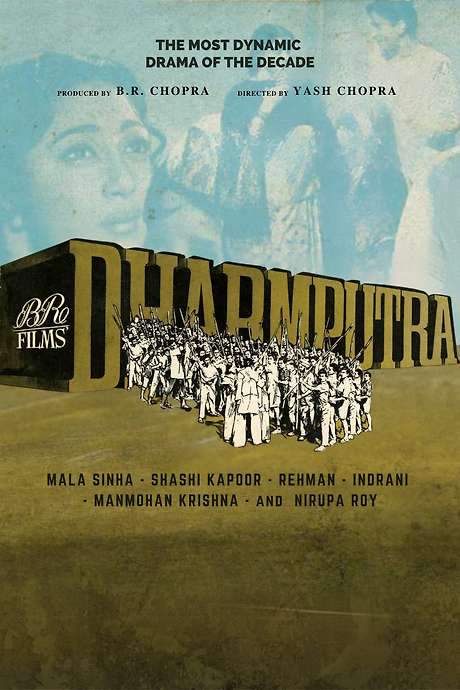
Dharmputra (1961) movie poster

Characters & Themes

Dharmputra (1961) Characters, Setting & Themes Explained

Release, runtime and language
1961 · 150 mins · Hindi
Loading streaming availability…
Directed by
Yash Chopra
Starring
Shashi Kapoor, Ashok Kumar, Shashikala, Nirupa Roy, Deven Verma, Indrani Mukherjee

Hindu-Muslim bhai-bhai! The story of two families — one Muslim and one Hindu — living together in India under British rule.

On this page (8)
  1. 1 Where to watch
  2. 2 Characters explained (6)
  3. 3 Where & when it takes place
  4. 4 Themes & meaning (3)
  5. 5 Character & meaning questions
  6. 6 Movie threads
  7. 7 Movies like Dharmputra
  8. 8 Every angle
Loading streaming availability…

6 main characters · contains spoilers

Dharmputra Characters Explained: Who Is Who

The main characters of Dharmputra (1961), heroes and villains: what drives them, how they change over the course of the story and what each of them reveals about the film's bigger ideas.

  • Dilip Rai (Shashi Kapoor)

    Dilip Rai begins as the cherished son of two closely knit families but becomes a symbol of extremist nationalism. He embraces a fascist, anti-Muslim creed and aligns with others who seek to expel Muslims from India. His actions, rooted in hate, put him at odds with his own family and threaten the delicate harmony of the households.

    • 🔥 Extremism
    • 🧭 Identity
  • Nawab Badruddin (Ashok Kumar)

    The patriarch of the Badruddin family whose death during a British-era protest marks a turning point in the story. He embodies a blend of authority and national sentiment, and his absence heightens the tension between the two families. His legacy underscores the era's political stakes.

    • 🏛️ Leadership
    • 🔥 Patriotism
  • Husn Bano (Mala Sinha)

    Nawab Badruddin's daughter who has a past romance with Javed and becomes the mother of Dilip. Her reunion with Javed and the life they build with the Rai family illustrate how personal histories intersect with political upheaval. She navigates love and duty in a society strained by sectarian conflict.

    • 💞 Love
    • 🕊️ Conflict
  • Javed (Rehman)

    Husn Bano's former lover and the biological father of Dilip. His disappearance and eventual return highlight the disruptions caused by the era's turmoil and the tangled loyalties within the families. He embodies the complexities of love entangled with survival and allegiance.

    • 💔 Love
    • 🕊️ Betrayal
  • Mrs. Savitri Amrit Rai (Nirupa Roy)

    Amrit Rai's wife who assists Husn during the birth of Dilip and helps raise him within the Rai family. Her nurturing stance anchors the more volatile political elements, offering stability and moral guidance. She embodies maternal resilience in trying times.

    • 🤝 Family
    • 🕊️ Guidance
  • Dr. Amrit Rai (Manmohan Krishna)

    A compassionate member of the Rai household who, with Savitri, adopts Dilip and raises him, providing a sense of belonging amid upheaval. He represents reason, care, and the human capacity to choose humanity over hatred. His role underscores how families can shelter a child from the surrounding fanaticism.

    • 👨‍👩‍👧 Family
    • 🛡️ Protection

Last updated: March 05, 2026 at 18:25

Was this helpful?

Setting

Where and When Does Dharmputra Take Place?

The setting of Dharmputra (1961): the year and time period, the places and locations, and how they shape the characters, the mood and the tension of the story.

Time period

1925

Set in 1925 during British rule, the film portrays the height of the Indian independence movement. Protests against colonial rule shape the atmosphere and challenge family loyalties. The era's political turmoil drives the drama and tests personal relationships.

Location

Delhi, British India

Set in Delhi during the British Raj in 1925, the story unfolds as two prominent families share one roof. The city context is defined by protests, social hierarchies, and the rising independence movement. The setting amplifies personal stakes as political agendas permeate domestic life.

  • 🏛️ Historical
  • 🌆 Urban

Last updated: March 05, 2026 at 18:25

Was this helpful?

3 major themes

Dharmputra Meaning: Themes & Message Explained

What is Dharmputra (1961) really about? The emotional, social and philosophical themes the film keeps returning to, its symbolism and the message beneath the surface.

  • Nationalism

    Set against the Indian independence movement, nationalism fuels devotion and action. The story reveals how fervor can slip into fanaticism, as characters embrace extremes to advance their beliefs. Personal bonds bend under political pressure, testing what families owe to country and to each other.

  • Communalism

    Tensions between Hindu and Muslim communities loom large as Husn Bano's past with Javed and Dilip's hatred push people apart. The plot shows fear, distrust, and the urge to exclude others based on faith. Violence and coercion threaten the safety of both families and the broader community.

  • Moral Dilemma

    Family loyalty collides with political ideology as characters must choose between love and principle. The narrative probes whether humanity can survive in the face of radicalization and sectarian zeal. Each choice reveals what individuals value when the future of a nation hangs in the balance.

Last updated: March 05, 2026 at 18:25

Was this helpful?

Character & theme questions

Dharmputra Characters & Meaning: Your Questions Answered

The questions people ask about Dharmputra (1961): who the characters really are, their relationships, what the symbols mean, where it takes place and what the movie is really about. Each answer contains spoilers.

Q1

What is the setting of the film?

The film is set in Delhi during the British Raj in 1925. Two prominent families, one Hindu and one Muslim, share one roof in this historical urban setting, where protests, social hierarchies, and the rising Indian independence movement create a tense atmosphere that permeates domestic life.

  • delhi
  • british raj
  • 1925
  • setting
  • india
Q2

When does the story take place?

The story is set in 1925, during the height of the Indian independence movement. This era is defined by widespread protests against colonial rule, political turmoil, and growing tensions between communities, elements that fundamentally shape the drama and test personal relationships within the families.

  • 1925
  • independence movement
  • british rule
  • historical period
Q3

What does the film say about nationalism?

The film explores how nationalist fervor can slip into fanaticism. Characters embrace extremes to advance their beliefs, and personal bonds bend under political pressure. The story reveals the dangerous line between patriotic devotion and radicalization, showing how ideology can tear families apart.

  • nationalism
  • extremism
  • patriotism
  • political ideology
Q4

How does the film portray Hindu-Muslim relations?

The film depicts the tension between Hindu and Muslim communities as a central conflict. What begins as a harmonious bhai-bhai (brotherhood) relationship between two families living under one roof deteriorates into fear, distrust, and violence. The plot shows how sectarian division threatens both families and the broader community.

  • communalism
  • hindu-muslim
  • religious tension
  • division
Q5

What moral dilemmas do the characters face?

Characters must choose between family loyalty and political ideology, with each decision revealing what individuals value when the nation's future hangs in the balance. The narrative probes whether humanity can survive in the face of radicalization and sectarian zeal.

  • moral dilemma
  • family vs ideology
  • choice
  • ethics
Q6

Who is Dilip Rai?

Dilip Rai, played by Shashi Kapoor, begins as the cherished son of two closely knit families but transforms into a symbol of extremist nationalism. He embraces a fascist, anti-Muslim creed and aligns with those seeking to expel Muslims from India, putting him at odds with his own family and threatening the harmony they once shared.

  • dilip rai
  • shashi kapoor
  • nationalist
  • extremist
Q7

Who is Husn Bano?

Husn Bano is the daughter of Nawab Badruddin and the former lover of Javed. She becomes the mother of Dilip Rai after her relationship with Javed. Her reunion with Javed and their life with the Rai family illustrates how personal histories become intertwined with political upheaval, as she navigates love and duty in a society strained by sectarian conflict.

  • husn bano
  • mala sinha
  • javed
  • mother
Q8

Who is Nawab Badruddin?

Nawab Badruddin, played by Ashok Kumar, is the patriarch of the Muslim family. His death during a British-era protest marks a turning point in the story. He embodies a blend of authority and national sentiment, and his absence significantly heightens the tension between the two families, underscoring the era's political stakes.

  • nawab badruddin
  • ashok kumar
  • patriarch
  • protest
Q9

What role do Dr. Amrit Rai and his wife play?

Dr. Amrit Rai and his wife Savitri Rai adopt Dilip and raise him within the Hindu family. They represent reason, compassion, and the human capacity to choose humanity over hatred. Their nurturing stance offers stability amid the volatile political elements, showing how families can shelter a child from surrounding fanaticism.

  • adoption
  • amrit rai
  • savitri rai
  • family
  • compassion
Q10

What is the film's message about Hindu-Muslim unity?

The film contrasts the hopeful ideal of Hindu-Muslim bhai-bhai (brotherhood) with the bleak reality of rising hatred. It explores how two families living harmoniously under one roof become undone by communal tensions, serving as a commentary on the fragile nature of unity in the face of political manipulation and sectarian division.

  • hindu-muslim unity
  • brotherhood
  • bhai-bhai
  • harmony
Q11

Why is the film historically significant?

Released in 1961, the film was made in the aftermath of the traumatic Partition of 1947, which divided India along religious lines. The story uses the 1925 independence era as a lens to explore the roots of communal division, making it a powerful reflection on how sectarian violence has repeatedly threatened India's social fabric.

  • partition
  • historical significance
  • 1961
  • context

Movie threads

More Movies Like Dharmputra, by Mood & Story

Curated lists built around what makes Dharmputra tick: the same mood, the same kind of story or the same emotional payoff. Each list explains why these movies belong together.

Historical family tragedies like Dharmputra

Personal bonds shattered by the violent tides of history. Discover powerful movies like Dharmputra that explore the devastating impact of historical events on family bonds. This collection features intense dramas about interfaith friendships tested by political extremism and the tragic human cost of partition.

  • historical
  • tragic
  • tense
  • grim
  • emotional
  • confrontational
  • Tone: tragic, dark, emotional
  • Pacing: variable, building to climax
Why these movies?

The story pattern: These narratives often begin with a period of harmony and close relationships between different groups. A major historical schism then forces characters to choose sides, pitting loved ones against each other. The story follows the painful unraveling of these bonds, leading to betrayal, violence, and profound loss, all set against an authentic historical backdrop.

Why they belong together: They are grouped by their core premise of using a family or community microcosm to reflect a larger macro-historical conflict. They share a heavy emotional weight, a dark tone, and a focus on the tragic consequences of ideological extremism on human relationships.

Ideological corruption stories like Dharmputra

Stories where good people are twisted by poisonous ideologies. If you liked Dharmputra's exploration of radicalization, find similar movies about characters corrupted by extremist ideologies. These tense, heavy dramas examine how hatred poisons the mind and destroys families from within.

  • tense
  • grim
  • psychological
  • tragic
  • confrontational
  • unsettling
  • Tone: dark, tense, grim
  • Pacing: steady, psychological build
Why these movies?

The story pattern: The narrative follows a character, often young and impressionable, who is gradually indoctrinated into a radical worldview. This process is shown in stark contrast to their earlier life or their family's values. The story builds towards a devastating climax where their newfound ideology forces a direct, tragic confrontation with their former identity and loved ones.

Why they belong together: They share a core focus on the psychological and emotional arc of radicalization. The movies are united by a high intensity, a dark and tense tone, and a heavy emotional weight stemming from the tragedy of a corrupted soul and the resulting familial collapse.

If you liked this

Movies Like Dharmputra

Similar movies to Dharmputra: the same genre, themes or kind of story. Each one comes with its own plot summary, timeline and ending explained.

Browse all movie summaries

Every angle

Dharmputra (1961) Explained: Plot, Timeline & Characters

Everything about Dharmputra in one place: what happens in the plot summary, the timeline in chronological order, the characters and meaning and a spoiler-free summary. What's After the Movie adds the cast, box office and post-credit scenes.

Coming soon on iOS and Android

The Plot Explained Movie Summary App

Plot summaries, endings explained and timelines on your phone. Catch up on any movie in minutes, save your favorites and never miss a twist again.

Be the first to know when we launch. Your email stays private, always.

Learn more about the app