Plot Explained Spoilers guaranteed!
Plot Explained

Browse by genre

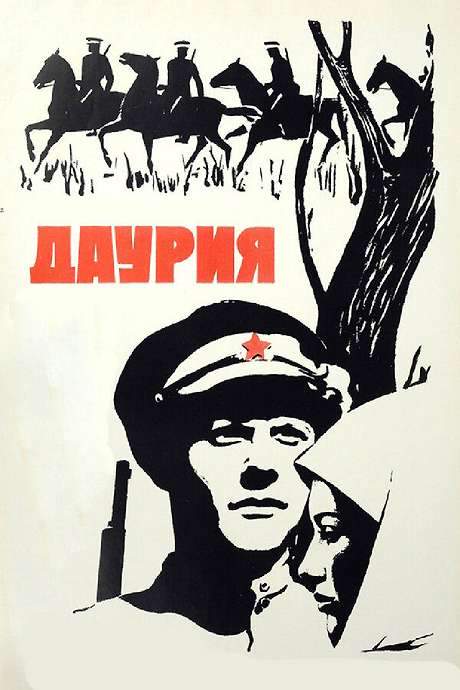
Dauria (1972) movie poster

Plot Summary

Dauria (1972) Plot Summary Explained

Release, runtime and language
1972 · 172 mins · Russian
Directed by
Viktor Tregubovich
Starring
Vasiliy Shukshin, Viktor Pavlov, Mikhail Kokshenov, Lidiya Fedoseyeva-Shukshina, Vitali Solomin, Fyodor Odinokov

Set in a Baikal village on the brink of World I and during the October Revolution, the story follows young Cossack Roman Ulybin. At first he worries only about winning Dashutka’s hand against merchant Alyoshka, trading fists for rivalry. As old hierarchies crumble, Roman sees the fight for equality and, true to his Cossack spirit, joins the upheaval rather than remain a by‑stander.

On this page (6)
  1. 1 What happens: full plot
  2. 2 Plot questions answered
  3. 3 Movie threads
  4. 4 Movies like Dauria
  5. 5 Categories
  6. 6 Every angle

Full plot summary · contains spoilers

What Happens in Dauria: Full Plot Summary

The whole story of Dauria (1972) explained, from the opening scene to the final frame: every key event, every twist and what it all adds up to. Read it as a quick recap before the sequel, to check a scene you missed, or to finally understand what really happened.

This epic drama unfolds in the Siberian province of Dauria, where a traditional Cossack village lives under the steady hand of a formidable Ataman Ataman. Set against the backdrop of the First World War and the early days of the Russian revolution, the story follows life, love, and loyalty as a close-knit community and its outlying kin are drawn into a nation's upheaval.

The heart of the tale centers on Roman Ulybin, a young man whose passion for the beautiful Dashutka tests the limits of his family's old rituals. His father, Severian Ulybin Severian Ulybin, is a proud elder who resents his estranged brother Vasiliy Ulybin for secretly embracing the Red revolutionaries. The family dynamics are tempered by a long-standing tradition: a Matchmaker, embodied by Svatya, is needed to broker a proper match with Dashutka before a rival wedding eclipses everyone.

As Roman's longing grows, he chooses to leave home and follow his uncle into a world torn by war and ideology. The action widens when he is pulled into a mission to seize the Bank of Russia in Chita, a task tied to the Red revolutionaries. Coinciding with this mission, an anarchist gang led by a Navy deserter named Lavrov stages its own robbery, aiming to flee with gold to Manchuria. In the ensuing clash inside the bank, Roman is badly wounded but escapes with a small band into the taiga, only to encounter the advancing White Army and their pursuit.

Captured by anti-communist Cossacks, he faces death by firing squad but slips away by leaping into a river. After healing at Dashutka’s farmhouse, who is now alone and caring for him, Roman returns to visit his parents and learns that Severian has been forced into service with the White Army. Amid the tension, the anti-communist Ataman tries to arrest him, but Severian hides his son and helps him escape. Roman reconnects with the Red revolutionaries, plunging back into a conflict that pits loyalty to family against fidelity to a broader political cause.

The conflict escalates as a White Army detachment, guided by a ruthless executioner, brutalizes those who resist, and the village’s leader Ataman suffers a savage torture. The moment of reckoning comes when Severian is murdered by another executioner in front of the villagers, and Roman arrives as the aggressors flee, finding his mother in tears over his father’s lifeless body. The film closes on a world in convulsive change, where tradition is tested, love endures, and a family is torn apart by the sweeping violence of history.
Last updated: October 09, 2025 at 10:50

Was this helpful?

Plot questions answered

Dauria Plot Explained: Your Questions Answered

The questions people ask most about Dauria (1972): what happens in the confusing scenes, why the characters do what they do, the twists, hidden details and what the ending means. Each answer contains spoilers.

Q1

Why does Roman leave his father’s home to join the Red revolutionaries?

Roman leaves because he feels trapped by family obstacles and social hierarchy. His father Severian cannot afford the matchmaker fees to pursue Dashutka, while a wealthy rival’s son enjoys an extravagant wedding. Frustrated by this class disparity and his own limited prospects within the traditional Cossack world, Roman chooses to follow his uncle Vasili into the revolutionary cause.

Foreshadowing: The wedding contrast earlier foreshadows the class tensions that drive Roman toward political rebellion.

  • Roman Ulybin
  • Vasiliy Ulybin
  • join revolution
  • Dashutka
  • matchmaker
  • class tension
Q2

Why does Vasili order Roman to seize the Bank of Russia in Chita?

Vasili, as a Red revolutionary, orders the bank seizure to secure financial resources for the revolutionary cause during the Russian Civil War. The money would fund the Reds' military operations and political activities. Roman's mission represents a critical step in funding the broader revolutionary effort.

Foreshadowing: Roman's departure from the village marks his transition from personal rivalry to serving the revolutionary cause.

  • Bank of Russia
  • Chita
  • Vasiliy Ulybin
  • Red revolutionaries
  • civil war funding
Q3

How does the anarchist robbery impact Roman’s mission at the bank?

The anarchist gang led by Lavrov stages its own robbery to finance their escape to Manchuria with gold. Their heist creates chaos inside the bank, triggering alarms and gunfire. Roman fights the anarchists for control of the gold, but is badly wounded in the process and must flee with a small group into the taiga.

Foreshadowing: The parallel robbery introduces competing factions beyond Reds and Whites, adding complexity to the power struggle.

  • anarchists
  • Lavrov
  • bank robbery
  • gold
  • Manchuria
  • wounded
Q4

How does Roman escape execution after being captured by anti-communist Cossacks?

Roman and his men are captured by anti-communist Cossacks and sentenced to death by firing squad. At the moment of execution, he miraculously escapes by leaping into a small river before the shots are fired. The river provides both cover and a means of survival in the brutal wartime landscape.

Foreshadowing: This escape mirrors earlier moments of survival in the taiga wilderness.

  • firing squad
  • escape
  • river
  • captured
  • anti-communist Cossacks
Q5

Why is Roman’s father Severian forced into service with the White Army?

Severian is forced into the White Army service because the anti-communist forces conscript local men in the region. Despite his personal reservations about the revolution, the White Army coerces traditional Cossack families like the Ulybins to provide support, forcing Severian to serve a cause that contradicts his brother Vasili's allegiance.

Foreshadowing: The family division between Red and White allegiances was established early through Vasili and Severian's estrangement.

  • Severian Ulybin
  • White Army
  • forced service
  • conscription
  • family loyalty
Q6

Why does the anti-communist Ataman attempt to arrest Roman at his parents’ home?

The Ataman, representing the anti-communist authority in the village, tries to arrest Roman because Roman is a known Red revolutionary who participated in the bank mission. After Roman returns wounded to visit his parents, the Ataman seeks to eliminate him as a threat to the White-aligned government controlling the region.

Foreshadowing: Earlier, the Ataman's authority was established as the strongman maintaining traditional village order.

  • Ataman
  • arrest Roman
  • anti-communist
  • parents' home
  • pursuit
Q7

How does Severian help Roman escape from the Ataman’s arrest attempt?

When the Ataman attempts to arrest Roman at the family home, Severian manages to hide his son and helps him escape through the back or secret passages. Despite his forced service to the White Army, Severian's loyalty to his son overrides his forced political allegiances, demonstrating the family bonds that persist amid the conflict.

Foreshadowing: Severian's choice to protect Roman reflects the tension between family loyalty and political coercion.

  • Severian
  • hide Roman
  • escape
  • Ataman
  • family loyalty
  • father
Q8

Why does the White Army executioner murder Severian in front of the villagers?

Severian is murdered by a White Army executioner as a demonstration of power and intimidation. The executioner kills him publicly in front of the watching villagers to assert White Army dominance and crush any remaining resistance. This brutal act represents the escalating violence targeting those suspected of Red sympathies or family connections.

Foreshadowing: The earlier scene of White Army brutality in the village foreshadows this tragic execution.

  • Severian Ulybin
  • murdered
  • executioner
  • White Army
  • village
  • public execution
Q9

What causes the conflict between Reds and Whites in the Dauria region?

The conflict stems from the Russian Civil War, where the Red revolutionaries fight to establish communist rule while the White Army opposes them to restore the old order. In Dauria, the struggle is fought through local allegiances, with Cossacks torn between traditional hierarchical structures and revolutionary promises of equality. The region becomes a battleground where political ideology collides with clan loyalties.

Foreshadowing: The wedding contrast and class tensions introduced early establish the social fractures that fuel the broader war.

  • Reds
  • Whites
  • Russian Civil War
  • Dauria
  • Cossack
  • ideology
  • conflict
Q10

Why does Dashutka nurse Roman back to health at her farmhouse?

After Roman escapes the firing squad and reaches her isolated farmhouse, Dashutka cares for him because she loves him and they have an existing relationship. Her farmhouse becomes a refuge away from the war's violence. This healing period represents a brief respite where personal bonds endure despite the surrounding political upheaval.

Foreshadowing: Roman's earlier pursuit of Dashutka establishes their romantic connection that justifies her care.

  • Dashutka
  • farmhouse
  • wounded
  • healing
  • love
  • refuge
Q11

How does Roman react when he returns to find his father murdered?

Roman returns to the village just as the White Army executioners flee after killing Severian. He finds his mother weeping over his father's lifeless body. The moment represents a crushing personal blow that combines grief with the broader political violence destroying his family. The tragedy deepens his commitment to the revolutionary cause while marking the ultimate cost of the conflict.

Foreshadowing: The buildup through Severian's forced service and the Ataman's arrest attempt leads to this devastating climax.

  • Roman returns
  • Severian murdered
  • father death
  • grief
  • village
  • mother
Q12

What happens to Roman’s uncle Vasiliy during the course of the story?

Vasiliy Ulybin, Roman's uncle and a committed Red revolutionary, remains actively involved in the revolutionary cause throughout the civil war. He orders Roman's mission to seize the bank and later reconnects with his nephew after Roman heals and escapes the White forces. Vasili represents the ideological commitment that draws Roman into the political struggle, though the story focuses more on Roman's journey than Vasili's ultimate fate.

Foreshadowing: Vasili's secret Red affiliation was established early, creating the family divide with Severian.

  • Vasiliy Ulybin
  • Red revolutionary
  • uncle
  • Roman
  • revolutionary cause

Movie threads

More Movies Like Dauria, by Mood & Story

Curated lists built around what makes Dauria tick: the same mood, the same kind of story or the same emotional payoff. Each list explains why these movies belong together.

Revolutionary family epics like Dauria

Epic historical dramas where political upheaval tears families apart from within. Movies like Dauria that blend a sweeping historical narrative with a deeply personal family saga. If you liked watching the Ulybin family torn apart by the Russian Civil War, you'll find similar emotionally heavy stories where political ideals clash with familial duty.

  • epic
  • turbulent
  • melancholic
  • passionate
  • oppressive
  • gritty
  • Tone: dark, tragic, passionate
  • Pacing: steady, epic, character-driven
Why these movies?

The story pattern: Stories in this thread often follow a multi-generational family through a major historical conflict. The narrative begins with personal rivalries and domestic life, which are gradually overshadowed and shattered by the larger political forces. Character arcs involve ideological awakenings and painful choices that irrevocably damage family structures.

Why they belong together: They are grouped by their dual focus on epic historical scale and intimate family drama, creating a powerful emotional weight. The experience is defined by a steady, immersive pace, a dark tone, and the tragic cost of choosing sides in a world where old orders are collapsing.

Brutal wartime coming of age stories like Dauria

Stories where youthful idealism is forged and broken by the brutalities of war. If you liked Roman Ulybin's journey in Dauria from a young man focused on romance to a hardened participant in revolution, explore these movies. They feature similar narratives of young characters whose lives are irrevocably shaped by the chaos and moral compromises of war.

  • gritty
  • brutal
  • tense
  • turbulent
  • melancholic
  • passionate
  • Tone: gritty, bleak, passionate
  • Pacing: steady, immersive
Why these movies?

The story pattern: The narrative pattern follows a young character, often starting with personal motivations like love or rivalry, who is thrust into a wider conflict. Their coming-of-age arc is not about gentle discovery but violent transformation, as they witness death, make difficult moral choices, and often participate in the very violence that shatters their world.

Why they belong together: These movies share a focus on the brutal education of youth during times of extreme societal collapse. They combine a high-intensity, gritty mood with a complex exploration of ideological loyalty and the heavy emotional weight of losing one's innocence to violence. The pacing is steady, building towards a somber or tragic conclusion.

If you liked this

Movies Like Dauria

Similar movies to Dauria: the same genre, themes or kind of story. Each one comes with its own plot summary, timeline and ending explained.

Browse all movie summaries

Categories

Movie Lists Featuring Dauria

Dauria appears in these hand-built movie categories. Each one groups movies by a specific mood, theme or story type, with their plot summaries and endings explained.

View all movie categories

Every angle

Dauria (1972) Explained: Plot, Timeline & Characters

Everything about Dauria in one place: what happens in the plot summary, the timeline in chronological order, the characters and meaning and a spoiler-free summary. What's After the Movie adds the cast, box office and post-credit scenes.

Coming soon on iOS and Android

The Plot Explained Movie Summary App

Plot summaries, endings explained and timelines on your phone. Catch up on any movie in minutes, save your favorites and never miss a twist again.

Be the first to know when we launch. Your email stays private, always.

Learn more about the app