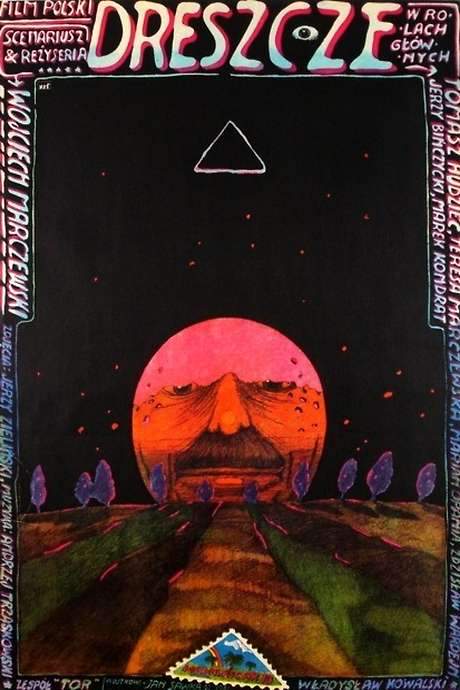
Shivers

Shivers

Year: 1981

Runtime: 106 mins

Language: Polish

Director: Wojciech Marczewski

Drama

A boy comes of age under an oppressive, cruel socialist government and watches as it slowly but surely distorts his family, his school and even his own thoughts.

Warning: spoilers below!

Haven’t seen Shivers yet? This summary contains major spoilers. Bookmark the page, watch the movie, and come back for the full breakdown. If you're ready, scroll on and relive the story!

Shivers (1981) – Full Plot Summary & Ending Explained

Read the complete plot breakdown of Shivers (1981), including all key story events, major twists, and the ending explained in detail. Discover what really happened—and what it all means.

Tomek Tomasz Hudziec is a boy growing up in 1955 Poland, where his home life feels steady but wearying, and a tiny Madagascar stamp tucked away in his father’s books becomes a quiet beacon of curiosity. At school, a melancholy poetry teacher mourns that the government won’t let him teach many of Poland’s great classics, and a ruthless moment shatters innocence: when a window is slammed shut on a boy’s fingers during a prank, the fall that ensues seems to presage a harsher world to come. A new teacher soon arrives, delivering a rigid, Stalinist curriculum that the students cannot escape, turning school into a workshop for obedience where extracurriculars are mandatory and framed as part of a nationwide youth program.

On the way back from one of these drilled excursions, the class, now marching under red neckerchiefs, is forced to push through a street filled with churchgoers singing hymns, a vivid display of how state ideology collides with faith and daily life. The following day, Tom awakens to the shock of a police raid on his home; his father is hauled away to prison, and the stamp—his small, revelatory keepsake—vanishes into the chaos. Soon after, a female Guide from the pioneer camp arrives to recruit him, marking the start of a life that will feel governed by surveillance, ritual, and rumor. The Guide leads him into a world that feels both organized and suffocating, where discipline is maintained by a constant emphasis on loyalty and “duty.”

In the camp, Tom is quickly noticed by Jerzy [Jerzy Binczycki] and his friend Kazimierz Domagała [Krzysztof Kozłowski], who assume a position of control over their peers. The camp’s meals unfold under watchful eyes, and a dramatic moment when a window is smashed by a rock outside propels a harsh demand: the pioneers must identify the provocateur. All but Tom bolt into the street, and the Guide later excuses the misstep while insisting the children were acting on their supposed duty. As the days pass, Jerzy, Kazimierz, and Tom drag Dominik into their “secret base,” where alcohol and a Western radio become their crackling link to the world beyond their borders. Tom learns of the Poznań protests from these late-night broadcasts, and the seeds of intense ideological fixation take root.

Tom’s devotion to the Guide intensifies as the education system grows ever more conspiratorial: snitching on parents, filing reports about classmates, and repeating party lines become daily tasks. The stamp is dropped in front of another student, who uses it to accuse Tom of harboring colonialist views, but the Guide steps in, directing Tom to read a book on theory and to reflect on his loyalties. He overhears a tense exchange between the headmaster and the Guide over the Poznań protests, and when she catches him in a hallway, she offers him emotional support that paradoxically deepens his bond with her and the ideology she embodies. Tom’s transformation accelerates—he becomes a fervent voice for the movement, even when his father returns home and pleads for him to come back to ordinary life; Tom refuses, uttering slogans that echo through the corridors of power.

The Guide’s influence continues to unsettle him, and a stark ritual moment—Tom praying before a portrait of Bierut, with a cross that once hung nearby—signals a broader, darker shift in his inner life. The pioneer organization is abruptly dissolved, and the children are packed onto trucks to return home; in the scramble, Tom loses a Marx portrait and, in a frantic attempt to recover it, watches a counselor cast it aside. The final, quiet image is stark and haunting: Tom presses his Madagascar stamp onto the window of the departing train, a solemn, almost defiant gesture that cements his hard-won complicity with the world he’s been drawn into. The film lingers on the tension between personal memory and public obedience, a memory that will follow Tom long after the journey ends.

Last Updated: October 09, 2025 at 14:57

Mobile App Preview

Coming soon on iOS and Android

The Plot Explained Mobile App

From blockbusters to hidden gems — dive into movie stories anytime, anywhere. Save your favorites, discover plots faster, and never miss a twist again.

Sign up to be the first to know when we launch. Your email stays private — always.

Explore Movie Threads

Discover curated groups of movies connected by mood, themes, and story style. Browse collections built around emotion, atmosphere, and narrative focus to easily find films that match what you feel like watching right now.

Stories of lost innocence like Shivers

Stories where political or social systems systematically dismantle personal freedom and morality.Movies like Shivers explore the devastating impact of oppressive regimes on personal lives. If you were intrigued by the boy's indoctrination and the destruction of his family, this section groups similar dramas about political control, ideological conflict, and the heavy price of conformity.

oppressivegrimmelancholicunsettlingclaustrophobicanxious

Narrative Summary

Narratives in this thread typically follow a protagonist, often a child or young adult, as they are gradually indoctrinated or broken down by a powerful, impersonal system. The journey is one of irreversible loss, marked by key moments of betrayal, forced compliance, and the internalization of a new, darker reality that supplants their original values.

Why These Movies?

These films are grouped by their shared thematic focus on the conflict between the individual and the state, a consistently bleak tone, and a strong emotional weight derived from witnessing the destruction of innocence and autonomy.

Slow burn psychological dramas like Shivers

A steady accumulation of dread and psychological tension without overt horror.If you liked the methodical, unsettling atmosphere of Shivers, this section features movies with a similar steady pacing and high psychological intensity. These films prioritize a creeping sense of dread and moral anxiety over sudden shocks, creating a heavy, claustrophobic mood.

unsettlinganxiousclaustrophobicsombergrimpsychologicalmelancholic

Narrative Summary

The narrative pattern involves a steady, often linear, progression where tension is derived from atmosphere and psychological manipulation rather than action. The focus is on the internal state of characters as they confront an inescapable, oppressive situation, with the pacing allowing the full weight of their circumstances to sink in for both the character and the viewer.

Why These Movies?

Movies in this thread share a specific combination of a dark tone, steady pacing, and high intensity that manifests as psychological tension. They deliver a similar feeling of being trapped in a grim reality that unfolds with deliberate, devastating inevitability.

Unlock the Full Story of Shivers

Don't stop at just watching — explore Shivers in full detail. From the complete plot summary and scene-by-scene timeline to character breakdowns, thematic analysis, and a deep dive into the ending — every page helps you truly understand what Shivers is all about. Plus, discover what's next after the movie.

Shivers Timeline

Track the full timeline of Shivers with every major event arranged chronologically. Perfect for decoding non-linear storytelling, flashbacks, or parallel narratives with a clear scene-by-scene breakdown.

Shivers Timeline

Characters, Settings & Themes in Shivers

Discover the characters, locations, and core themes that shape Shivers. Get insights into symbolic elements, setting significance, and deeper narrative meaning — ideal for thematic analysis and movie breakdowns.

Characters, Settings & Themes in Shivers

Shivers Spoiler-Free Summary

Get a quick, spoiler-free overview of Shivers that covers the main plot points and key details without revealing any major twists or spoilers. Perfect for those who want to know what to expect before diving in.

Shivers Spoiler-Free Summary

More About Shivers

Visit What's After the Movie to explore more about Shivers: box office results, cast and crew info, production details, post-credit scenes, and external links — all in one place for movie fans and researchers.

More About Shivers

Similar Movies to Shivers

Discover movies like Shivers that share similar genres, themes, and storytelling elements. Whether you’re drawn to the atmosphere, character arcs, or plot structure, these curated recommendations will help you explore more films you’ll love.