Plot Explained Spoilers guaranteed!
Plot Explained

Browse by genre

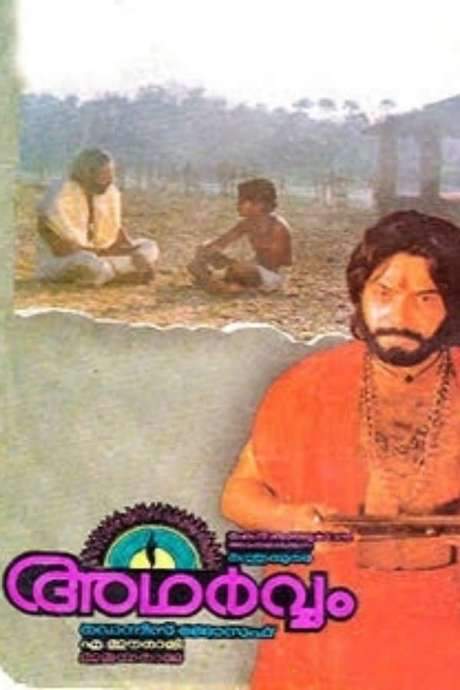
Devadoothan (2000) movie poster

Plot Summary

Devadoothan (2000) Plot Summary Explained

Release, runtime and language
2000 · 158 mins · Malayalam
Directed by
Sibi Malayil
Starring
Mohanlal, Jagathy Sreekumar, Murali, Jagadish, Janardhanan, Vijayalakshmi

Vishal Krishnamoorthy, a celebrated music composer and singer, reflects on his early struggles as an enigmatic spirit quietly guides him. The unseen presence fuels his creativity, leading him to craft emotionally resonant songs. Through recollections, he sees how the spirit’s whispers bridge his modest beginnings with his current fame.

On this page (5)
  1. 1 What happens: full plot
  2. 2 Plot questions answered
  3. 3 Movie threads
  4. 4 Movies like Devadoothan
  5. 5 Every angle

Full plot summary · contains spoilers

What Happens in Devadoothan: Full Plot Summary

The whole story of Devadoothan (2000) explained, from the opening scene to the final frame: every key event, every twist and what it all adds up to. Read it as a quick recap before the sequel, to check a scene you missed, or to finally understand what really happened.

Vishal Krishnamoorthy, a world famous musician, Mohanlal is about to receive a prestigious musical award for his symphony Rhythm of Love. The story then slides back into Vishal’s past, where he wrestles with debt and a stubborn struggle to forge his own path in music. Even with deep knowledge and talent, he experiments with various businesses that all collapse, leaving him more determined than ever to prove himself.

A letter arrives that shifts his fate: the principal-cum-priest of his old college invites him to direct a musical play with the present students. At first, Vishal refuses, fueled by memories of a hostile campus environment, but curiosity and a spark of unfinished business pull him back. The college, a place steeped in memory, is ruled by Angelina Ignatius, a formidable figure who keeps a sacred instrument called the Seven Bells locked away in a chapel.

The backstory unfolds: years earlier, Vishal was expelled by Angelina, who runs the school in memory of her late father, William Ignatius. Vishal had been accused of somehow coaxing the Seven Bells to ring, but he insists the instrument played by itself. Angelina’s decision to expel him becomes a stain he cannot forget, and his bitterness toward the college lingers as the troupe prepares to stage the play.

Upon arriving at the campus, Vishal discovers that the play centers on a romance between Mary, the daughter of a wealthy man, and a young musician named Nikhil Maheshwar. Mary’s love for Nikhil clashes with her father’s disapproval, and Nikhil’s absence after seeking parental consent leaves Mary waiting in a quiet limbo. As rehearsals unfold, Vishal cannot resist stepping in at key moments, tweaking dialogue and rearranging scenes, a choice that hints at his own longing to rewrite the past.

That night, while composing a new song for the play, Vishal hears a haunting melody from a tape recorder beside him. It isn’t the first time the music has reached him; it matches the ancient tone associated with the Seven Bells. He initially dismisses it, but the melody persists, tugging at him with a strange sense of familiarity. The next day, during a crucial rehearsal, he subtly suggests replacing the name Mary with Alina, a deduction he makes from the newfound music.

The nocturnal music returns, guiding Vishal to the chapel where the Bells sit. He finds the instrument playing on its own, and Angelina arrives, ready to eject him once more. But this time Vishal refuses to run, determined to uncover the truth beneath the rumors of the past. He asks the principal about Nikhil Maheshwar, and a cryptic answer points him toward a deeper history. An old priest, once the college’s principal and a keeper of Angelina’s past, fills in the missing pieces: Angelina’s real name is Alina. She received the Seven Bells from her father, William Ignatius, along with a distant liaison to Maheshwar—an artist whose music inspired her deeply.

Vishal digs through the college library, searching for records about Angelina and William. He uncovers a fragment of musical notation from an ancient book—a clue that Maheshwar himself may have composed it. When he attempts to play the notation on the instrument, he experiences a jarring sensation that seems to threaten his vision. Angelina, confronted with the evidence, admits that Maheshwar was indeed the composer and that Vishal’s accusations against him were unfounded. She begins to believe in Vishal’s innocence, recognizing that the music speaks of a truth larger than old grudges.

A pivotal moment arrives when Sneha—the student who plays Alina in the on-campus play and an admirer of Vishal’s work—appears in the chapel. Vishal reveals that the true performer of the instrument is not him but an unseen force, a revelation that unsettles everyone but deepens Vishal’s resolve to uncover the full story. Sneha’s presence anchors the theatrical world in which reality and performance blur, highlighting how memory and art intertwine.

Vishal’s search for truth leads him to a dreamlike vision of a horse-drawn carriage. Angelina takes him to the old carriage where a crucial twist of history begins to unfold. There he meets Alberto, William Ignatius’s former stableman, a man whose hints carry a sense of hidden secrets. Vishal senses that Alberto knows more than he reveals, and the tension between memory and evidence grows heavier with every step.

In the library, Vishal encounters a chilling discovery: a glass-encased skeleton—what remains of a worker who helped lay the foundation for a new building. The principal explains that the workers uncovered it during excavation, but Vishal suspects that this is more than a mere accident of time. He begins to understand that the Seven Bells were not merely played by someone in life; they were sustained by the soul of Maheshwar himself.

The trail leads to Alberto, who finally discloses a horrifying truth: Maheshwar was buried alive on William’s orders, a secret kept for years. William himself dies soon after in a carriage accident, adding a tragic symmetry to the tale. The skeleton is Maheshwar’s, the bones testifying to a brutal end that history tried to forget. When Vishal tells Sneha that Alina must not be told the full truth, the Seven Bells erupt with a violent surge of sound, a force that finally reconnects Alina with the buried past.

Alina, now understanding the entire history, strides toward the library and confronts the skeleton of her former beloved. Vishal cannot keep her from the truth, and a mystical light fills the room. Alina dies in the library, and two doves are seen outside, symbolizing her reunion with Maheshwar. In the final moment, Vishal dedicates his award to Maheshwar and Alina, placing the prize above The Seven Bells as a quiet tribute to a love that endured beyond death.

The film closes on a note of reconciliation and remembrance, a reminder that art can unearth the voices of those who have long been silenced, and that the past, when faced with courage and compassion, can finally become part of the present.


Last updated: October 09, 2025 at 16:38

Was this helpful?

Plot questions answered

Devadoothan Plot Explained: Your Questions Answered

The questions people ask most about Devadoothan (2000): what happens in the confusing scenes, why the characters do what they do, the twists, hidden details and what the ending means. Each answer contains spoilers.

Q1

Why was Vishal expelled from the college?

Vishal was expelled by Angelina Ignatius after being accused of coaxing the Seven Bells to ring, a sacred instrument locked in the college chapel. Vishal always insisted the bells played by themselves, but the administration did not believe him. This expulsion became a defining grievance that fueled his bitterness toward the institution for years.

Foreshadowing: Early scenes show Vishal's resentment toward the college, hinting at a past injustice that drives his initial refusal to accept the invitation.

  • vishal expulsion
  • seven bells
  • angelina
  • college
Q2

What are the Seven Bells and why are they significant?

The Seven Bells are a sacred instrument kept locked in the college chapel, gifted to Alina (Angelina) by her father William Ignatius. The instrument possesses a mystical quality, reportedly playing on its own, and is central to the mystery surrounding Maheshwar, the musician who was connected to Alina. The bells also represent the suppressed truth of a tragic love story.

Foreshadowing: The haunting melody Vishal hears throughout the film is tied to the ancient tone of the Seven Bells, connecting the present mystery to past events.

  • seven bells
  • chapel
  • sacred instrument
  • alina
Q3

Who is Angelina Ignatius and what is her real name?

Angelina Ignatius is the head of the college who expelled Vishal. Her real name is Alina, the daughter of William Ignatius. She took on the name Angelina after her father's death as she took over running the school in his memory. Years earlier, she was in a romantic relationship with a musician named Maheshwar, which her father disapproved of.

Foreshadowing: Vishal's deduction to change the character name from Mary to Alina during rehearsals is the first clue that reveals Angelina's hidden identity.

  • angelina
  • alina
  • william ignatius
  • college principal
Q4

What happened to Maheshwar and why was he buried?

Maheshwar was a talented musician from Agra who fell in love with Alina's music and later with her. When their relationship became known, William Ignatius forbade their union. In a brutal act to silence the truth and prevent further scandal, William ordered Maheshwar buried alive. His skeleton was later discovered in the college library during excavation work, revealing the murder that had been concealed for years.

Foreshadowing: The cryptic answers from Alberto the stableman and the mysterious references to hidden secrets build toward this revelation.

  • maheshwar
  • buried alive
  • william ignatius
  • skeleton
Q5

Why did William Ignatius have Maheshwar buried alive?

William Ignatius had Maheshwar buried alive primarily to prevent the scandal of his daughter Alina's relationship with a musician he considered unsuitable. William was a powerful, traditional figure who maintained strict control over his daughter's life and the college's reputation. The murder was a calculated act to eliminate Maheshwar and bury the truth of their relationship forever.

Foreshadowing: The backstory reveals William as a controlling father figure who gave Alina the Seven Bells as a keepsake while also arranging a distant liaison to Maheshwar, showing his initial attempt to manage the situation.

  • william ignatius
  • murder
  • scandal
  • control
Q6

How does Vishal uncover the truth about the Seven Bells?

Vishal discovers the truth through a series of investigations: he hears the haunting melody from the bells, changes the character's name from Mary to Alina based on the music, and researches the college archives. The old priest reveals Alina's true identity and her relationship with Maheshwar. In the library, Vishal finds ancient musical notations that Maheshwar composed. When he plays them, he experiences vision problems, confirming Maheshwar's connection to the bells. Alberto finally confesses to witnessing Maheshwar's burial.

Foreshadowing: The recurring nocturnal music guides Vishal to the chapel and gradually reveals the hidden history tied to the instrument.

  • investigation
  • library
  • notations
  • alberto
Q7

Why does Vishal alter the play's story during rehearsals?

Vishal modifies the play by replacing the female lead's name from Mary to Alina after hearing the mystical melody associated with the Seven Bells. This change reflects his subconscious connection to the unresolved past and his unspoken desire to rewrite history. The play itself mirrors his own story, being wrongfully accused and expelled, making his interventions feel like a personal quest to correct past wrongs.

Foreshadowing: The play's storyline of Mary waiting for Nikhil who goes to seek parental approval parallels Alina's own等待 for Maheshwar.

  • play
  • rehearsal
  • alina
  • vishal creative control
Q8

What is the significance of the doves at the end of the film?

The two doves seen flying away after Alina's death in the library symbolize her spiritual reunion with Maheshwar in death. Just as the bells connected them in life through music, the doves represent their souls finally coming together after being separated by William's violent intervention. The imagery provides a bittersweet closure to their tragic love story.

Foreshadowing: The Seven Bells produce a violent surge of sound when Alina confronts the truth, suggesting a spiritual awakening or release.

  • doves
  • reunion
  • afterlife
  • symbolism
Q9

Why does Alina die in the library?

Alina dies in the library after confronting the skeleton of Maheshwar, the man she loved and thought had abandoned her. When she learns the full truth, that he was murdered and buried by her own father, she is overwhelmed by the revelation. The mystical light that fills the library during this moment suggests she dies from the emotional shock and perhaps a spiritual departure to be with Maheshwar.

Foreshadowing: The building tension throughout the film, especially when Vishal tells Sneha that Alina must not know the full truth, foreshadows the devastating impact of the revelation.

  • alina death
  • library
  • revelation
  • maheshwar
Q10

What connects the music Vishal hears to the Seven Bells?

The melody Vishal hears repeatedly is the same ancient tone associated with the Seven Bells. This music is actually Maheshwar's composition, preserved within the instrument itself, a supernatural element suggesting his soul is tied to the bells. When Vishal plays Maheshwar's notations on the bells, he experiences the same haunting melody and vision problems, confirming the spiritual connection between the musician and the instrument.

Foreshadowing: The music first appears when Vishal is composing for the play, linking his current creative process to the bells' mysterious history.

  • melody
  • haunting music
  • maheshwar composition
  • supernatural
Q11

Why do the Seven Bells ring on their own?

The Seven Bells ring on their own because Maheshwar's spirit is connected to the instrument. The supernatural element suggests that Maheshwar's soul remains tied to the bells, perhaps driven by his unfinished love for Alina or the injustice of his death. The mystical ringing serves as both a haunting and a call for the truth to be uncovered.

Foreshadowing: Vishal's insistence during his expulsion that the bells played themselves is vindicated by the supernatural events he later witnesses.

  • supernatural
  • ringing
  • maheshwar spirit
  • mystery
Q12

What does Vishal's award dedication signify at the end?

Vishal dedicates his prestigious award for Rhythm of Love to Maheshwar and Alina by placing it above the Seven Bells. This act honors the tragic lovers whose story inspired the truth he uncovered. It represents his artistic journey coming full circle, his music was influenced by the spirits of the past, and now he acknowledges that debt publicly. The dedication also symbolizes his own closure after years of being wrongfully accused.

Foreshadowing: The film opens with Vishal about to receive this award, creating a frame that is resolved when he dedicates it to the forgotten lovers.

  • award
  • dedication
  • rhythm of love
  • tribute

Movie threads

More Movies Like Devadoothan, by Mood & Story

Curated lists built around what makes Devadoothan tick: the same mood, the same kind of story or the same emotional payoff. Each list explains why these movies belong together.

Musical Ghost Stories Like Devadoothan

Stories where spectral beings inspire art and uncover unresolved past tragedies. Explore movies like Devadoothan where a spectral presence inspires an artist's work, blending music or art with a ghostly mystery. These films share a melancholic tone, a steady pace, and a focus on themes of unrequited love, artistic inspiration, and posthumous redemption. If you enjoyed the bittersweet, haunting feel of Devadoothan, you'll find similar resonance here.

  • supernatural
  • melancholic
  • romantic
  • mysterious
  • tragic
  • haunting
  • Tone: melancholic, mysterious, bittersweet
  • Pacing: steady, reflective
Why these movies?

The story pattern: The narrative follows a creative protagonist whose life becomes intertwined with a supernatural force. As they create, they are compelled to investigate the entity's past, often discovering a tale of tragic love, betrayal, or injustice. The story moves between the creative process in the present and the historical mystery, culminating in a bittersweet resolution that brings peace to the lost soul and meaning to the artist's work.

Why they belong together: Movies in this thread are grouped by their unique blend of the supernatural, the artistic process, and tragic romance. They share a specific melancholic and reflective mood, a structure that connects past and present, and a central theme of art as a conduit for healing unresolved grief.

Ethereal Grief Mysteries Similar to Devadoothan

Emotional journeys where uncovering a hidden past heals present wounds. Discover films similar to Devadoothan that follow a character piecing together a tragic event from the past, leading to a bittersweet and emotionally heavy conclusion. These stories often involve a ghostly guide, a steady pacing that builds to a sad revelation, and themes of grief, loss, and redemption. If you were moved by the heavy emotional weight and tragic revelation in Devadoothan, this thread is for you.

  • tragic
  • grief
  • mysterious
  • reflective
  • haunting
  • supernatural
  • Tone: tragic, reflective, bittersweet
  • Pacing: steady, methodical
Why these movies?

The story pattern: The plot functions as a slow-burn investigation into a historical tragedy, typically a wrongful death or betrayal. The protagonist, sometimes an unwilling participant, is drawn into the mystery by subtle clues or supernatural phenomena. The emotional journey is heavy, focusing on themes of grief and the lingering impact of the past. The ending provides a sense of justice or reconciliation that is deeply moving yet undeniably sad.

Why they belong together: These films are connected by their core structure of a melancholy mystery investigation and their powerful emotional payoff. They prioritize a heavy, reflective mood over action, and they share a common narrative arc of uncovering a dark truth to achieve a form of peaceful, if sorrowful, resolution.

If you liked this

Movies Like Devadoothan

Similar movies to Devadoothan: the same genre, themes or kind of story. Each one comes with its own plot summary, timeline and ending explained.

Browse all movie summaries

Every angle

Devadoothan (2000) Explained: Plot, Timeline & Characters

Everything about Devadoothan in one place: what happens in the plot summary, the timeline in chronological order, the characters and meaning and a spoiler-free summary. What's After the Movie adds the cast, box office and post-credit scenes.

Coming soon on iOS and Android

The Plot Explained Movie Summary App

Plot summaries, endings explained and timelines on your phone. Catch up on any movie in minutes, save your favorites and never miss a twist again.

Be the first to know when we launch. Your email stays private, always.

Learn more about the app