The History of Sound

The History of Sound

Year: 2025

Runtime: 2 h 7 m

Language: english

Director: Oliver Hermanus

Echo Score: 72
DramaHistoryMusicRomance

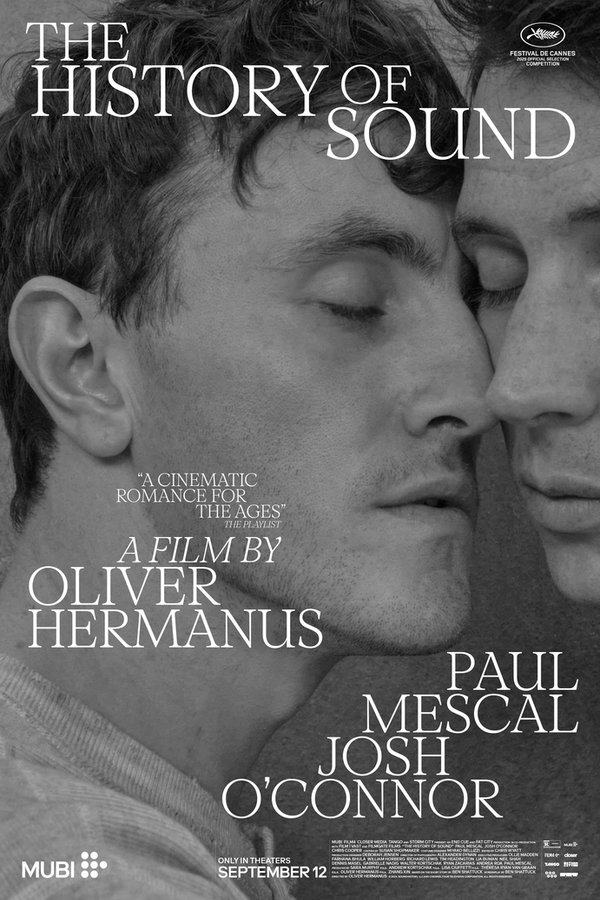
Set in the aftermath of World War I, the film follows two young men—Lionel (Paul Mescal) and David (Josh O'Connor)—who devote themselves to capturing the lives, voices and music of their fellow countrymen. While documenting these stories, their partnership deepens into a tender romance.

Warning: spoilers below!

Haven’t seen The History of Sound yet? This summary contains major spoilers. Bookmark the page, watch the movie, and come back for the full breakdown. If you're ready, scroll on and relive the story!

The History of Sound (2025) – Full Plot Summary & Ending Explained

Read the complete plot breakdown of The History of Sound (2025), including all key story events, major twists, and the ending explained in detail. Discover what really happened—and what it all means.

In 1917, Paul Mescal plays Lionel Worthing, a music student at the Boston Conservatory, who meets fellow student Josh O’Connor David White at a pub, and the two instantly bond over their shared love of folk music before returning to David’s apartment for an intimate night. As their connection deepens, the war darkens the horizon: America enters World War I, David is drafted, while Lionel, who is ineligible due to his eyesight, returns to his home state of Kentucky when the conservatory closes. He puts music aside to tend the family farm after his father dies suddenly, a loss that weighs on him and those around him, including Lionel Sr. (portrayed by Raphael Sbarge).

In 1919, Lionel receives a letter from David announcing his return from Europe, his employment at a Maine college, and a department-funded trip across the state to collect folk songs on wax cylinders, inviting Lionel to accompany and assist him. The two reunite and travel around, capturing songs from people of varying walks of life and renewing their relationship. They eventually part again as David must return to work and Lionel plans to travel to Europe. Lionel continues to write letters, but the correspondence ends after a year when he never hears back.

In 1923, Lionel, now living in Rome, tells his lover Luca of his dissatisfaction singing in a local choir and of taking a job at the University of Oxford, ending their relationship on bad terms. A year later, Lionel serves as conductor for the school’s choir and becomes involved with student socialite Clarissa Roux, who invites him to meet her family at a country manor. During the trip, Lionel is overwhelmed with memories of David, and the relationship with Clarissa ends when Lionel must suddenly return to the United States to comfort his dying mother, Molly Price.

After tying up his family affairs, Lionel travels to Maine to find David, only to learn from a colleague that David had died some time after their trip and that his department never actually commissioned the wax cylinders trip, leaving the location of the cylinders unknown. The colleague directs Lionel to David’s widow, Belle, Hadley Robinson. Belle reveals she recognizes Lionel, explains how she and David became involved, and shares that David’s death was a suicide linked to shell shock from the war. She returns his letters and promises to send the cylinders if they can be found. Lionel mourns David by revisiting his favorite places and recounting the songs that connected them, especially The Unquiet Grave.

In 1980, Lionel, now an ethnomusicologist, is promoting his latest book when a package arrives containing the wax cylinders, including one recorded on the day of David’s death. On the recording, David apologizes to Lionel and thanks him for their time together before singing Silver Dagger, the song Lionel sang to David when they first met.
Last Updated: December 04, 2025 at 15:32

Ending Explained – What Happens at the End of The History of Sound?

Still wondering what the ending of The History of Sound (2025) really means? Here’s a spoiler-heavy breakdown of the final scene, major twists, and the deeper themes that shape the film’s conclusion.

In the film’s final act, an older Lionel finally reaches the college in Maine where David once taught, only to learn that David died several years earlier, long after their last recording expedition. The college never actually funded the trip, so the wax cylinders they used to capture folk songs are nowhere to be found, and Lionel discovers that David had married a woman named Belle, a fact he never knew. Grief drives Lionel to Newport, where he confronts Belle; she admits she, too, had been captivated by David and that his inability to reconcile his two lives led him to despair and eventual suicide. She returns every letter Lionel sent, promises to send any surviving cylinders, and keeps that promise for nearly six decades.

Decades later, a now‑elderly Lionel—himself a celebrated ethnomusicologist—receives a package on his doorstep. Inside are the long‑lost wax cylinders. When he plays one, a voice from the past—David’s—offers an apology and, with trembling sincerity, sings “Silver Dagger,” the very song that first bound them together in a Boston pub. As the recording fades and Lionel’s eyes fill with tears, the film cuts to black, leaving him finally able to hear the love and regret he never got to share in life. This moment of listening provides the quiet, emotional closure the story has been building toward.

Last Updated: December 27, 2025 at 21:41

Mobile App Preview

Coming soon on iOS and Android

The Plot Explained Mobile App

From blockbusters to hidden gems — dive into movie stories anytime, anywhere. Save your favorites, discover plots faster, and never miss a twist again.

Sign up to be the first to know when we launch. Your email stays private — always.

Explore Movie Threads

Discover curated groups of movies connected by mood, themes, and story style. Browse collections built around emotion, atmosphere, and narrative focus to easily find films that match what you feel like watching right now.

Elegiac Historical Romances like The History of Sound

Stories where romance blooms beautifully but tragically against a historical backdrop.Explore movies like 'The History of Sound' where love stories unfold against significant historical events, often ending on a bittersweet or melancholic note. If you enjoyed the tender but tragic romance shaped by the aftermath of WWI, you'll find similar emotional journeys here, blending deep personal connection with the weight of history.

melancholicromantictendernostalgicsadreflectiveelegiactragic

Narrative Summary

The narrative pattern typically involves a deep connection forming between characters during a tumultuous historical era. Their love provides a sanctuary, but external forces—war, social constraints, political upheaval—inevitably intrude, creating obstacles that lead to separation or loss, resulting in a reflection on memory and what was lost.

Why These Movies?

Movies are grouped here for their shared focus on the intersection of profound personal love and impersonal historical forces. They share a melancholic, reflective tone, a deliberate pacing that allows emotions to build, and a central theme of love remembered through the lens of loss and the passage of time.

Movies about Sonic Discovery like The History of Sound

Films about characters deeply connected through the intimate act of recording sound.Find films similar to 'The History of Sound' where the act of recording sound or music drives the narrative and deepens character bonds. If you liked the intimate portrayal of two men documenting folk music and falling in love, you'll appreciate these quiet, reflective stories about connection through auditory exploration.

contemplativeintimatereflectivemelancholicartisticnostalgicquiettender

Narrative Summary

The narrative follows characters, often in pairs or small groups, on a quest to document, create, or preserve sounds—be it music, voices, or ambient noise. This shared purpose becomes a vessel for their relationship to develop, with the sonic elements serving as a metaphor for memory, connection, and understanding.

Why These Movies?

These films are grouped by their unique focus on sound as a narrative device and a catalyst for human connection. They share a slow, introspective pacing, a tender and often melancholic mood, and a thematic exploration of how preserving moments in sound can be an act of both love and remembrance.

Unlock the Full Story of The History of Sound

Don't stop at just watching — explore The History of Sound in full detail. From the complete plot summary and scene-by-scene timeline to character breakdowns, thematic analysis, and a deep dive into the ending — every page helps you truly understand what The History of Sound is all about. Plus, discover what's next after the movie.

The History of Sound Timeline

Track the full timeline of The History of Sound with every major event arranged chronologically. Perfect for decoding non-linear storytelling, flashbacks, or parallel narratives with a clear scene-by-scene breakdown.

The History of Sound Timeline

Characters, Settings & Themes in The History of Sound

Discover the characters, locations, and core themes that shape The History of Sound. Get insights into symbolic elements, setting significance, and deeper narrative meaning — ideal for thematic analysis and movie breakdowns.

Characters, Settings & Themes in The History of Sound

The History of Sound Ending Explained

What really happened at the end of The History of Sound? This detailed ending explained page breaks down final scenes, hidden clues, and alternate interpretations with expert analysis and viewer theories.

The History of Sound Ending Explained

The History of Sound Spoiler-Free Summary

Get a quick, spoiler-free overview of The History of Sound that covers the main plot points and key details without revealing any major twists or spoilers. Perfect for those who want to know what to expect before diving in.

The History of Sound Spoiler-Free Summary

More About The History of Sound

Visit What's After the Movie to explore more about The History of Sound: box office results, cast and crew info, production details, post-credit scenes, and external links — all in one place for movie fans and researchers.

More About The History of Sound

Similar Movies to The History of Sound

Discover movies like The History of Sound that share similar genres, themes, and storytelling elements. Whether you’re drawn to the atmosphere, character arcs, or plot structure, these curated recommendations will help you explore more films you’ll love.