Plot Explained Spoilers guaranteed!
Plot Explained

Browse by genre

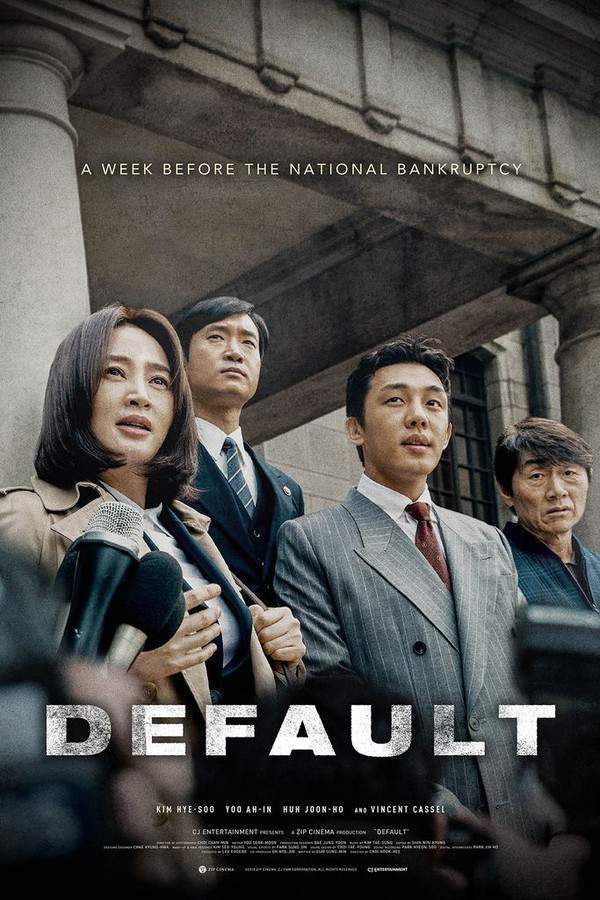
Default (2018) movie poster

Characters & Themes

Default (2018) Characters, Setting & Themes Explained

Release, runtime and language
2018 · 114 min · Korean
Echo score 74
Loading streaming availability…
Directed by
Kook-Hee Choi
Starring
Ah In Yoo, Vincent Cassel, Hae-hyo Kwon, Deok-Hwan Ryu, Hye-su Kim, Hyo-Seob Eom

A monetary policy manager foresees a devastating financial collapse, but her concerns are dismissed. Simultaneously, a financial consultant recognizes the looming crisis and quietly assembles investors prepared for the fallout. Unbeknownst to a small business owner, a promising opportunity leads to disaster when he unknowingly jeopardizes his future as the nation teeters on the edge of bankruptcy.

On this page (8)
  1. 1 Where to watch
  2. 2 Characters explained (4)
  3. 3 Where & when it takes place
  4. 4 Themes & meaning (3)
  5. 5 Character & meaning questions
  6. 6 Movie threads
  7. 7 Movies like Default
  8. 8 Every angle
Loading streaming availability…

4 main characters · contains spoilers

Default Characters Explained: Who Is Who

The main characters of Default (2018), heroes and villains: what drives them, how they change over the course of the story and what each of them reveals about the film's bigger ideas.

  • Gap-su

    Gap-su is a factory owner who wins a contract with a big department store but accepts payment in a promissory note. When the store goes bankrupt, he is left without funds to pay his suppliers, highlighting how small businesses bear the first brunt of systemic financial distress. His arc reflects vulnerability, stubborn optimism, and the fragility of cash flow in crises.

    • 💼 Small Business
    • 😟 Financial Hardship
  • Jung-hak (Ah In Yoo)

    Jung-hak is a young, ambitious financial analyst who hears radio stories about distressed families during the crisis. He launches his own investment fund to bet against the Korean economy, illustrating how fear and opportunity collide in turbulent markets. His pursuit of profit exposes a moral tension at the heart of speculative finance.

    • 💹 Speculation
    • 💰 Wealth
    • 🧭 Moral Dilemma
  • Si-hyun (Kim Hye-soo)

    played by Hye-su Kim

    Si-hyun is the governor's head of monetary policy who warns that Korea will run out of foreign reserves. Her report foreshadows the potential collapse of the won's fixed exchange rate and triggers high-stakes government action. She embodies the analytical and political pressures that shape crisis management.

    • 🏛️ Policy
    • 🌐 Government & Finance
  • Michel Camdessus

    played by Vincent Cassel

    Michel Camdessus, portrayed by Vincent Cassel, represents the IMF's global perspective on Korea's crisis, surrounding negotiations and bailout conditions. His presence anchors the international dimension of the crisis and the external pressures on Korean policy decisions.

    • 🌐 Global Finance
    • 🤝 IMF Negotiations

Last updated: February 03, 2026 at 07:32

Was this helpful?

Setting

Where and When Does Default Take Place?

The setting of Default (2018): the year and time period, the places and locations, and how they shape the characters, the mood and the tension of the story.

Time period

1997

The film unfolds at the height of Korea's 1997 financial crisis, when foreign reserves dwindled and the won faced devaluation pressure. IMF negotiations and swift policy responses shaped a tense, unprecedented period for the country. Personal stories of loss, home sales, and despair anchor the era in human terms.

Location

South Korea

Set in South Korea during the 1997 financial crisis, the story moves through commercial hubs, government offices, and banking corridors. It references a department store contract, a central bank emergency meeting, and the everyday fear of debt and unemployment. The setting captures the national mood of rapid economic upheaval and social strain.

  • 🌆 Urban
  • 🇰🇷 Korean Setting

Last updated: February 03, 2026 at 07:32

Was this helpful?

3 major themes

Default Meaning: Themes & Message Explained

What is Default (2018) really about? The emotional, social and philosophical themes the film keeps returning to, its symbolism and the message beneath the surface.

  • Economic Downturn

    Three parallel stories reveal the fragility of a modern economy under crisis. Gap-su's factory and the ripple effects of a bankrupt department store illustrate how liquidity problems cascade through supply chains. Jung-hak's profit-seeking fund shows how speculation can flourish amid fear. Si-hyun's policy pressures and looming reserve shortfalls highlight the high-stakes decisions that determine national fate.

  • Policy Response

    The central bank and government scramble to prevent default and preserve the currency. An emergency meeting of top officials is depicted, illustrating how technical policy choices translate into real-world consequences. The film emphasizes the tension between stabilizing markets and protecting ordinary people from the fallout of crisis.

  • Human Cost

    Beyond numbers, the crisis consumes homes, livelihoods, and dignity. Families lose assets as the economy contracts, and some grapple with despair to the point of tragedy. The narrative ties macro decisions to intimate stories of hardship, addiction, and the search for hope amid ruin.

Last updated: February 03, 2026 at 07:32

Was this helpful?

Character & theme questions

Default Characters & Meaning: Your Questions Answered

The questions people ask about Default (2018): who the characters really are, their relationships, what the symbols mean, where it takes place and what the movie is really about. Each answer contains spoilers.

Q1

Where is the movie set?

The film takes place in South Korea during the 1997 financial crisis, depicting commercial districts, government offices, banking corridors, and everyday environments where the economic turmoil deeply affects ordinary citizens.

  • south korea
  • 1997
  • setting
  • financial crisis
  • asia
Q2

When does the story take place?

The movie is set in 1997 at the height of South Korea's financial crisis, when foreign reserves were dwindling, the won faced severe devaluation pressure, and the country negotiated an IMF bailout.

  • 1997
  • time period
  • financial crisis
  • korea
  • imf
Q3

What are the main themes?

The film explores three interconnected themes: economic downturn showing how financial crises cascade through the economy, policy response examining the high-stakes decisions made by government and central bank officials, and human cost depicting how macroeconomic choices affect individual lives and families.

  • themes
  • economic crisis
  • policy
  • human cost
  • financial collapse
Q4

Who is Gap-su?

Gap-su is a small factory owner who wins a contract with a major department store but accepts payment through a promissory note, leaving him vulnerable when the store goes bankrupt and he cannot pay his suppliers.

  • gap-su
  • factory owner
  • small business
  • bankrupt
  • creditor
Q5

Who is Jung-hak and what does he do?

Jung-hak is a young financial analyst who launches an investment fund to profit from betting against the Korean economy during the crisis, exploiting the fear and instability for personal gain.

  • jung-hak
  • investment fund
  • speculator
  • profit
  • finance
Q6

Who is Si-hyun?

Si-hyun serves as the head of monetary policy under the central bank governor, warning that Korea will run out of foreign reserves and that the won's fixed exchange rate faces collapse, putting her at the center of the crisis response.

  • si-hyun
  • central bank
  • monetary policy
  • governor
  • reserves
Q7

Who is Michel Camdessus?

Michel Camdessus, portrayed by Vincent Cassel, represents the IMF's perspective during the crisis, serving as the international face of the bailout negotiations and the external pressure placed on Korean policymakers.

  • michel camdessus
  • imf
  • vincent cassel
  • bailout
  • international
Q8

What role does the IMF play in the story?

The IMF represents the international financial community demanding policy reforms and bailout conditions from South Korea as the country faces currency collapse and seeks emergency assistance to prevent national bankruptcy.

  • imf
  • bailout
  • negotiations
  • international
  • finance
Q9

How are small businesses affected in the movie?

The film illustrates how small businesses like Gap-su's factory bear the first and harshest impact of financial crises, showing how a single department store bankruptcy can cascade through supply chains and destroy small enterprises.

  • small business
  • factory
  • suppliers
  • bankruptcy
  • economic shock
Q10

What is the human cost of the crisis?

Beyond economic numbers, the crisis takes a heavy emotional toll, families lose their homes and savings, individuals face despair and desperation, and the narrative connects macro policy decisions to intimate stories of hardship and tragedy.

  • human cost
  • families
  • homes
  • loss
  • tragedy
  • suicide
Q11

How is the story structured?

The film uses three parallel storylines, a small business owner, a young financial speculator, and government/policy officials, to show how the same crisis affects different levels of society from multiple angles.

  • narrative structure
  • parallel stories
  • three perspectives
  • government
  • business

Movie threads

More Movies Like Default, by Mood & Story

Curated lists built around what makes Default tick: the same mood, the same kind of story or the same emotional payoff. Each list explains why these movies belong together.

Systemic collapse thrillers like Default

Stories where the failure of a major system puts society on edge. If you enjoyed the high-stakes tension of Default, explore other movies that focus on the impending failure of a major system. These gripping films feature desperate characters, complex negotiations, and a pervasive sense of crisis, creating a similarly anxious and emotionally heavy viewing experience.

  • tense
  • anxious
  • gripping
  • somber
  • desperate
  • high-stakes
  • Tone: tense, somber, desperate
  • Pacing: steady, methodical
Why these movies?

The story pattern: Narratives in this thread typically follow multiple characters or perspectives—often including an insider who sees the problem coming, a opportunist positioned to exploit the chaos, and an unwitting victim caught in the fallout. The plot builds steadily toward a breaking point where the system's fragility is exposed, rarely offering simple or happy solutions.

Why they belong together: These movies are grouped together for their shared focus on systemic failure as the central antagonist. They create a specific kind of intellectual and emotional tension, combining high-stakes realism with a somber mood and a steady, methodical pacing that mirrors the complexity of the systems they explore.
Bleak multi-perspective dramas like Default

Gripping stories told through interconnected characters facing a shared tragedy. For viewers who appreciated the multiple storylines and heavy emotional weight of Default, this thread collects dramas with a similar structure. Discover movies that connect separate characters through a tragic event, exploring themes of systemic failure and personal cost with a tense, somber mood.

  • somber
  • tragic
  • gripping
  • oppressive
  • desperate
  • interconnected
  • Tone: somber, tense, tragic
  • Pacing: steady, deliberate
Why these movies?

The story pattern: The narrative structure follows parallel stories that may not directly intersect but are thematically bound by a common source of conflict—an economic crash, a natural disaster, a societal scandal. This approach deepens the emotional impact by showing the widespread consequences and varied moral responses, often leading to a mixed or bleak overall conclusion.

Why they belong together: This thread groups films that share a specific narrative architecture and emotional tone. The combination of multiple viewpoints with a consistently bleak, tense atmosphere and a heavy emotional weight creates a uniquely powerful and immersive viewing experience focused on complex human reactions to crisis.

If you liked this

Movies Like Default

Similar movies to Default: the same genre, themes or kind of story. Each one comes with its own plot summary, timeline and ending explained.

Browse all movie summaries

Every angle

Default (2018) Explained: Plot, Timeline & Characters

Everything about Default in one place: what happens in the plot summary, the timeline in chronological order, the characters and meaning and a spoiler-free summary. What's After the Movie adds the cast, box office and post-credit scenes.

Coming soon on iOS and Android

The Plot Explained Movie Summary App

Plot summaries, endings explained and timelines on your phone. Catch up on any movie in minutes, save your favorites and never miss a twist again.

Be the first to know when we launch. Your email stays private, always.

Learn more about the app