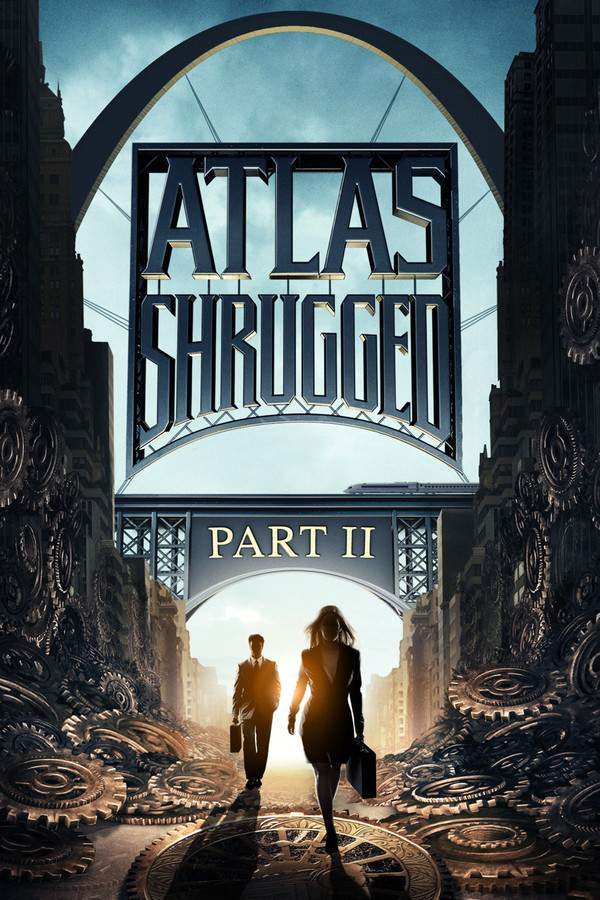
Atlas Shrugged II: The Strike

Atlas Shrugged II: The Strike

JustWatch#1,97819

Year: 2012

Runtime: 111 min

Language: English

Director: John Putch

Sci-FiDramaMystery

With the global economy facing imminent collapse, the most innovative minds vanish without a trace, leaving behind perplexing hints. Dagny Taggart, a resourceful and determined leader, discovers a groundbreaking motor with the potential to avert disaster, but it’s useless without its creator. Racing against time, she embarks on a quest to locate the missing inventor and unravel the mystery behind the widespread strike, ultimately confronting the elusive John Galt.

Where to Watch Atlas Shrugged II: The Strike?

Find where to stream, rent, or buy Atlas Shrugged II: The Strike (2012) in the US with current JustWatch availability, up-to-date pricing, and platform listings for subscription, rental, and digital purchase options.

Warning: spoilers below!

Haven’t seen Atlas Shrugged II: The Strike yet? This summary contains major spoilers. Bookmark the page, watch the movie, and come back for the full breakdown. If you're ready, scroll on and relive the story!

Atlas Shrugged II: The Strike (2012) – Full Plot Summary & Ending Explained

Read the complete plot breakdown of Atlas Shrugged II: The Strike (2012), including all key story events, major twists, and the ending explained in detail. Discover what really happened, and what it all means.

Dagny Taggart, portrayed by Samantha Mathis, finds herself at the controls of an airplane while pursuing another aircraft. As tension builds, she ponders the enigmatic question, “Who is John Galt?”, before her plane seemingly collides with a mountainside.

Fast forward nine months, Dagny is determined to unlock the secrets of an abandoned advanced motor prototype alongside her lover, Hank Rearden. Their search takes them on a quest to understand the mysterious disappearances of scientists nationwide. After much effort, Dagny manages to locate Quentin Daniels, a brilliant mind hiding in an abandoned laboratory in Utah, whom Dr. Robert Stadler, the head of the State Science Institute, recommended, albeit without direct assistance for her cause.

Meanwhile, Eddie Willers diligently supports Dagny at Taggart Continental while the controversial fair share law is defended by Wesley Mouch. This legislation, which mandates companies to serve customers equitably, is blamed for numerous business closures, including those in Colorado, forcing Dagny to halt essential freight services.

Dagny’s brother, James Taggart, the president of their family’s railroad business, is introduced to store clerk Cherryl Brooks. They attend a performance by famed pianist Richard Halley, only to witness his bizarre disappearance as he leaves behind a note asking, “Who is John Galt?” During their wedding, Dagny’s close friend, Francisco d’Anconia, sparks a heated debate among the guests about the nature of money, critiquing the view that it is inherently evil while secretly informing Rearden of troubling incidents concerning his copper mine.

As Dagny and Rearden’s relationship deepens, they face complications when Rearden’s wife, Lillian, confronts him. He offers a divorce, which Lillian declines, content to retain her privileged social status. Rearden’s commitment to integrity is palpable when he refuses to sell his innovative Rearden Metal to the federal government, countering the oppressive fair share law. However, this defiance results in threats of imprisonment led by Dr. Floyd Ferris from the State Science Institute.

In a pivotal moment, Francisco engages Rearden, revealing that he is the one providing wealth for those who exploit it. Despite Francisco’s pleas, Rearden remains steadfast, witnessing firsthand the commendable labor ethics Francisco embodies during a mill accident. At Rearden’s trial, he passionately champions the principles of individual freedom and profit, but the government fears martyrdom and imposes only a nominal penalty. Subsequently, the disruptive “Directive 10-289” is introduced, freezing production and mandating the transfer of patents to the government.

As challenges mount, the board of Taggart Transcontinental opts to dismantle the John Galt line, choosing immediate profitability over long-term vision. Under mounting pressure from James, who focuses on raising wages for the public good, Dagny finds herself forced to resign.

Tragedy strikes when a disastrous collision occurs in the Taggart tunnel, attributed to political pressures and inadequate training of Dagny’s temporary replacement. The aftermath pushes Dagny back into her role, even as d’Anconia urges her to reconsider. Determined to restore confidence in the railways, she embarks on a journey to Colorado, only to face a mechanical failure.

While seeking help, Dagny learns about the fate that befell the 20th Century Motor Company from a technician, revealing critical insights about the company’s demise and the vow made by John Galt to “stop the motor of the world.” In a desperate bid, Dagny tries to persuade Daniels to continue his work, but as she reaches Utah, she witnesses him depart, catalyzing a dramatic aerial pursuit that culminates in her plane’s crash.

In a remote valley, the wounded Dagny emerges from the wreckage to meet the mysterious John Galt who awaits her, opening a new chapter in her journey to uncover the truths that have caused society’s decline.

Last updated: October 25, 2024 at 12:31

Was this helpful?

Atlas Shrugged II: The Strike (2012) Plot Questions Answered – Summary FAQ

Explore frequently asked questions about Atlas Shrugged II: The Strike (2012) with spoiler-rich answers covering the full plot summary, major story beats, character motivations, hidden details, and ending meaning. This movie summary FAQ helps explain confusing scenes, plot twists, and narrative decisions in clear, searchable detail.

Q1

Who is John Galt?

A.

John Galt is the enigmatic leader of a underground movement composed of the world's most brilliant minds who have vanished from society in protest against the oppressive collectivist policies. He is the inventor of a revolutionary motor technology and has sworn to 'stop the motor of the world' by withdrawing his knowledge and labor from a society he sees as destructively collectivist. By the film's end, Dagny finally encounters him in a remote valley, where he reveals himself as the key to understanding the societal collapse unfolding around them.

Throughout the film, various characters reference John Galt's mysterious influence, with the recurring question 'Who is John Galt?' appearing as a motif, most notably when pianist Richard Halley disappears leaving only that cryptic question behind.

john galtinventormotorstrikedisappearancesleader
Q2

Why do scientists keep disappearing in the movie?

A.

The scientists are part of a coordinated strike led by John Galt. These brilliant minds have withdrawn from society in response to what they perceive as the government's destructive policies that punish individual achievement and innovation. They hide their abilities and locations because working openly would subject them to exploitation under laws like the fair share law and Directive 10-289, which would force them to surrender their intellectual property and creative freedom to the state.

Dr. Robert Stadler admits he recommended Quentin Daniels to Dagny but provides no actual assistance, hinting at the pressure scientists face to remain silent about the strike.

scientistsdisappearancesstrikeinventorsmissing minds
Q3

What is Directive 10-289?

A.

Directive 10-289 is a government edict that freezes all production and mandates the transfer of all patents and innovations to the federal government. It represents the climax of the collectivist policies in the film, essentially seizing control of industry and innovation under the guise of public good. This directive forces business owners like Rearden to surrender their intellectual property, effectively ending private enterprise and individual achievement.

The fair share law and Wesley Mouch's political maneuvering build toward this extreme government intervention, showing the escalating control over private industry.

directive 10-289governmentpatentsfreeze productioncollectivism
Q4

Why does Hank Rearden refuse to sell his metal to the government?

A.

Rearden refuses because he believes in the principle of individual rights and free enterprise. He views the government's demand as an attempt to steal his innovation without just compensation, violating his fundamental right to benefit from his own work. Despite facing threats of imprisonment from Dr. Floyd Ferris and the State Science Institute, Rearden maintains his integrity, arguing that profit is not evil but rather the result of serving others through voluntary exchange.

Francisco d'Anconia attempts to warn Rearden about the corrupt system while secretly observing Rearden's admirable work ethic during a mill accident, reinforcing Rearden's commitment to his principles.

hank reardenrearden metalgovernmentrefusalindividual rights
Q5

What causes the Taggart tunnel disaster?

A.

The Taggart tunnel disaster is caused by political pressure and inadequate training. When James Taggart forces Dagny to resign and replaces her with a temporary successor, this replacement lacks the experience necessary to safely operate the railway. Political pressures to maintain service despite deteriorating conditions lead to a catastrophic collision in the tunnel, killing many people. This tragedy compels Dagny to return to leadership, demonstrating how the brother's short-sighted decisions directly endanger public safety.

The board's decision to dismantle the John Galt line for short-term profit, combined with James's focus on raising wages over infrastructure, foreshadows the prioritization of politics over safety that leads to the disaster.

taggart tunneldisastercollisionjames taggarttrain accident
Q6

Why is the John Galt line dismantled?

A.

The board of Taggart Transcontinental chooses to dismantle the John Galt line because it represents a long-term vision that does not generate immediate profits. Under pressure from James Taggart, who prioritizes raising wages for political favor over maintaining the railway's innovative infrastructure, the board opts for short-term financial gain. This decision symbolizes the film's critique of sacrificing future prosperity for present political considerations.

The conflict between Dagny's long-term vision and James's short-term political focus runs throughout the film, with this decision representing the ultimate failure of collectivist thinking over practical innovation.

john galt linedismantletaggart transcontinentaljames taggartrailroad
Q7

What is the fair share law?

A.

The fair share law is legislation pushed by Wesley Mouch that requires companies to serve all customers equally, regardless of profitability. While framed as helping the public, it effectively forces businesses to operate at a loss by mandating service to unprofitable routes and customers. This law is blamed for numerous business closures, including those in Colorado, and forces Dagny to suspend essential freight services, demonstrating how well-intentioned but coercive legislation can destroy economic productivity.

Wesley Mouch's role as a lobbyist who initially appears to help business but instead enables government control sets up the fair share law as a tool of collectivist oppression.

fair share lawwesley mouchlegislationbusiness closurescollectivism
Q8

Why does Dagny's plane crash at the end?

A.

Dagny's plane crashes because she desperately pursues Quentin Daniels after discovering he is leaving Utah. When she arrives at the abandoned laboratory, she witnesses him departing and takes to the air in a frantic attempt to stop him. During this pursuit, her plane collides with a mountainside, leaving her wounded. This crash leads her to the remote valley where she finally encounters John Galt, making the crash the catalyst for the pivotal meeting that represents the film's climax.

Dagny's earlier near-crash at the film's opening, where she also asks 'Who is John Galt?' foreshadows this final crash and suggests her journey has come full circle.

dagny taggartplane crashquentin danielspursuitjohn galt
Q9

What happens to Cherryl Brooks after marrying James Taggart?

A.

After marrying James Taggart, Cherryl Brooks discovers the hollowness of his character and the Taggart family's values. While the exact fate is not detailed in this summary portion, her marriage represents James's attempt to appear successful and legitimate while fundamentally betraying the principles of genuine achievement. Her storyline highlights the personal cost of the Taggart family's moral corruption.

James's focus on public perception and political maneuvering rather than actual railway excellence during their wedding and throughout the film foreshadows the moral emptiness Cherryl would eventually recognize.

cherryl brooksjames taggartmarriagefatecharacter
Q10

Why does Francisco d'Anconia reveal himself to Rearden?

A.

Francisco d'Anconia reveals his true nature to Hank Rearden because he recognizes Rearden as one of the few remaining industrialists who genuinely creates value rather than exploiting the system. During a mill accident, Francisco demonstrates admirable work ethics, confirming his character to Rearden. Francisco's revelation serves to contrast genuine producers like Rearden with those who drain wealth from society, while also explaining how Francisco has secretly funded the very people Opposing his interests.

Throughout James and Cherryl's wedding, Francisco sparks debates about money's morality, hinting at his deeper knowledge of the system's corruption before his direct confrontation with Rearden.

francisco d'anconiareardenrevealidentitymill accident
Mobile App Preview

Coming soon on iOS and Android

The Plot Explained Mobile App

From blockbusters to hidden gems - dive into movie stories anytime, anywhere. Save your favorites, discover plots faster, and never miss a twist again.

Sign up to be the first to know when we launch. Your email stays private, always.

Explore Movie Threads

Discover curated groups of movies connected by mood, themes, and story style. Browse collections built around emotion, atmosphere, and narrative focus to easily find films that match what you feel like watching right now.

Ideological Thrillers in Crumbling Societies like Atlas Shrugged II: The Strike

High-stakes quests for truth set against the backdrop of systemic collapse.If you liked the tense, high-stakes mystery of Atlas Shrugged II: The Strike, explore more movies like it. This thread features similar sci-fi and drama stories where characters race against time to uncover the truth within a dystopian or collapsing society, blending philosophical conflict with urgent narrative drive.

tenseurgentideologicaldystopianmysteriousdefiantanxioushigh-stakes

Narrative Summary

The narrative follows a determined individual confronting a powerful, often shadowy system. The plot is driven by a central mystery or disappearance that symbolizes a larger ideological conflict. The journey involves investigation, confrontation with authority, and a gradual unveiling of a grand, society-altering plan, typically leading to an ambiguous or paradigm-shifting conclusion.

Why These Movies?

Movies in this thread share a core DNA of high-tension storytelling within a dystopian framework. They are united by a steady, escalating pace, heavy emotional weight derived from high-stakes scenarios, and a focus on intellectual and moral dilemmas rather than pure action. The tone is consistently tense and urgent, making the viewing experience intellectually gripping and suspenseful.

Movies about a Quest for a Missing Genius like in Atlas Shrugged II: The Strike

A relentless search for a vanished visionary who holds the key to salvation.Fans of Atlas Shrugged II: The Strike and its core mystery of vanishing innovators will enjoy these films. Discover similar movies where a determined hero embarks on a urgent search for a missing inventor or genius, facing ideological opposition and uncovering a larger conspiracy that threatens the future.

mysteriousdeterminedinvestigativeideologicalurgentdefianthigh-stakesquest

Narrative Summary

The plot is built around a MacGuffin-like invention or discovery that is useless without its creator. The narrative arc is a procedural investigation, following clues and encountering resistance from those who benefit from the status quo. It's a story about the value of the individual mind and the moral courage required to pursue truth against overwhelming odds, often ending with a revelation that changes the protagonist's worldview.

Why These Movies?

These films are connected by a very specific plot engine: the search for a missing genius. They share a steady, investigative pacing and a tone of tense determination. The emotional weight is heavy, deriving from the high stakes of the search and the philosophical implications of the genius's absence. The experience is consistently mysterious and driven by a singular, defiant goal.

Unlock the Full Story of Atlas Shrugged II: The Strike

Don't stop at just watching - explore Atlas Shrugged II: The Strike in full detail. From the complete plot summary and scene-by-scene timeline to character breakdowns, thematic analysis, and a deep dive into the ending - every page helps you truly understand what Atlas Shrugged II: The Strike is all about. Plus, discover what's next after the movie.

Atlas Shrugged II: The Strike Timeline

Track the full timeline of Atlas Shrugged II: The Strike with every major event arranged chronologically. Perfect for decoding non-linear storytelling, flashbacks, or parallel narratives with a clear scene-by-scene breakdown.

Atlas Shrugged II: The Strike Timeline

Characters, Settings & Themes in Atlas Shrugged II: The Strike

Discover the characters, locations, and core themes that shape Atlas Shrugged II: The Strike. Get insights into symbolic elements, setting significance, and deeper narrative meaning - ideal for thematic analysis and movie breakdowns.

Characters, Settings & Themes in Atlas Shrugged II: The Strike

Atlas Shrugged II: The Strike Spoiler-Free Summary

Get a quick, spoiler-free overview of Atlas Shrugged II: The Strike that covers the main plot points and key details without revealing any major twists or spoilers. Perfect for those who want to know what to expect before diving in.

Atlas Shrugged II: The Strike Spoiler-Free Summary

More About Atlas Shrugged II: The Strike

Visit What's After the Movie to explore more about Atlas Shrugged II: The Strike: box office results, cast and crew info, production details, post-credit scenes, and external links - all in one place for movie fans and researchers.

More About Atlas Shrugged II: The Strike

Similar Movies to Atlas Shrugged II: The Strike

Discover movies like Atlas Shrugged II: The Strike that share similar genres, themes, and storytelling elements. Whether you’re drawn to the atmosphere, character arcs, or plot structure, these curated recommendations will help you explore more films you’ll love.