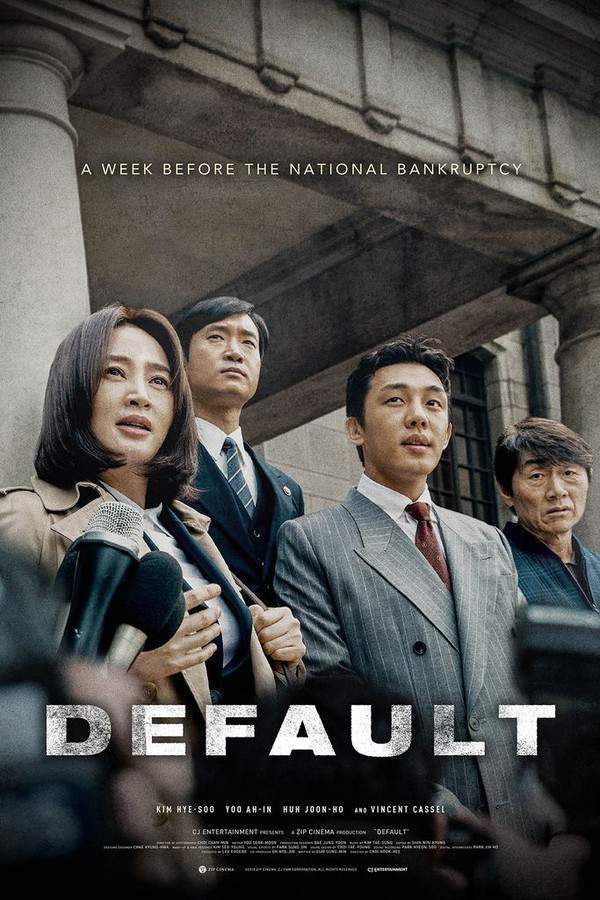
Default dramatizes the behind-the-scenes story of the IMF negotiations during the 1997 financial crisis through three parallel stories, offering a layered look at how a national emergency unfolds from different angles.
In one thread, gap between enterprise and economy is laid bare through Gap-su, a factory owner who wins a contract to supply metal bowls to a major department store. The store pays him with a promissory note, a choice that seems ordinary at first but bricks the wall of risk as the department store later collapses. When the retailer goes bankrupt, Gap-su finds himself short of funds to pay his own suppliers, a sudden squeeze that echoes through the supply chain and reverberates in the lives of everyone who depends on credit and timely payments. The tension isn’t just financial; it becomes a test of trust and resilience as Gap-su navigates a market where one failed deal can ripple into missed payments, halted production, and a fragile future for his business.
In a second thread, Jung-hak, a young financial analyst, watches the crisis unfold from the opposite side of the glass—the world of markets and bets. Yoo Ah-in plays Jung-hak, who radios stories of distress among families and communities being squeezed by rising costs and falling assets. The broadcasts describe households forced to sell their homes below market value to cover mounting bills from a wave of small-business bankruptcies. Seizing the moment, Jung-hak launches his own investment fund with the aim of betting against the Korean economy, turning fear and uncertainty into calculated risk. The narrative tracks how his strategy mirrors a larger shift in appetite for risk, lending a cold, economic logic to a situation that is anything but cold in real life, and it asks hard questions about who profits when a country teeters on the brink.
A third thread centers on Si-hyun, the head of monetary policy, as the crisis accelerates toward a cliff edge. Si-hyun, Hye-su Kim, becomes a key voice in the government’s response as a brutal report lands on the desk of Korea’s central authorities. The document warns that foreign reserves are vanishing and that the won’s exchange rate—artificially fixed to the U.S. dollar—could be exposed to collapse within a week. This revelation triggers emergency meetings among top officials who must steer the economy away from a total meltdown. The arc paints a portrait of the political and bureaucratic maneuvers behind the scenes: debates, disagreements, and the pressure to act quickly when every decision has the potential to alter the course of thousands of lives.
Together, these three stories offer a panoramic view of the 1997 crisis. Si-hyun’s perspective highlights the government’s response and the pressure to preserve financial stability; Jung-hak’s lens shows the market’s cold calculus and how macroeconomic moves translate into personal gambles; Gap-su’s experience represents the millions of ordinary business owners who found themselves suddenly exposed to risk through a single instrument that seemed secure at the outset. The film doesn’t shy away from the human cost: families struggling to keep roofs over their heads, people seeking solace in soju amid financial strain, and the despair that tragedy can drive. The emotional texture sits alongside the technical details, creating a portrait of a country under stress where policy debates, personal decisions, and marketplace dynamics intersect in ways that redefine what it means to survive an economic crisis.
In the end, Default presents a sober, multi-faceted meditation on a defining moment in modern economic history. It emphasizes that behind every headline about IMF negotiations and currency stabilization, there are real people making decisions under pressure, watching their futures tremble on the edge of a difficult doubt, and moving forward with a mix of hope, fear, and stubborn resilience.