Plot Explained Spoilers guaranteed!
Plot Explained

Browse by genre

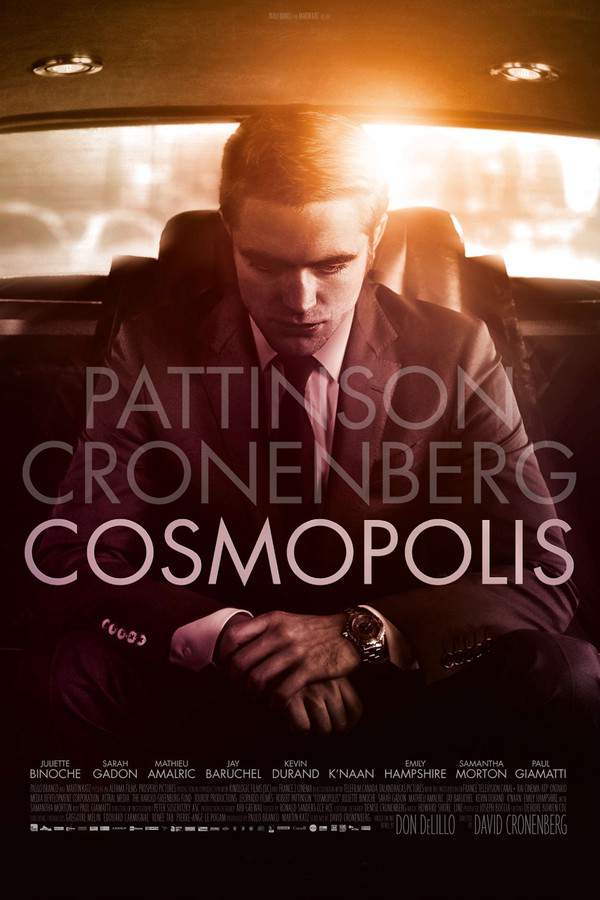
Cosmopolis (2012) movie poster

Timeline

Cosmopolis (2012) Timeline Explained – Every Event in Order

Release, runtime and language
2012 · 109 min · English
Loading streaming availability…
Directed by
David Cronenberg
Starring
Robert Pattinson, Juliette Binoche, Mathieu Amalric, Sarah Gadon

During a day of escalating turmoil in New York City, a young and wealthy asset manager named Eric Packer finds his carefully constructed world falling apart. He sets out on a tense journey across Manhattan in a state-of-the-art limousine, encountering various unsettling events and individuals. While traveling, he makes a risky financial wager against the Chinese Yuan, further jeopardizing his situation and exposing the fragility of his empire.

On this page (7)
  1. 1 Where to watch
  2. 2 Events in order (13)
  3. 3 Timeline questions answered
  4. 4 The book behind the movie
  5. 5 Movie threads
  6. 6 Movies like Cosmopolis
  7. 7 Every angle
Loading streaming availability…

13 events in order · contains spoilers

Cosmopolis Timeline: Events in Chronological Order

Every key event of Cosmopolis (2012) in order, scene by scene, with when and where it takes place. Use it to untangle flashbacks, time jumps and parallel storylines, to refresh your memory before the sequel or to find the exact scene you are thinking of.

  1. Eric's Luxurious Limousine Ride

    Eric Packer, a billionaire asset manager, starts his day riding through Manhattan in a luxurious stretch limousine. The ride seems straightforward, as he heads out with the intention of getting a simple haircut.

    Where
    Manhattan
  2. Traffic Jam Incident

    Eric's journey takes a turn as he becomes stuck in traffic caused by the President of the United States visiting the city. This unexpected delay foreshadows the chaotic day ahead and causes Eric to feel increasingly trapped.

    Where
    Manhattan
  3. Reflection on Loss

    While in traffic, Eric reflects on the recent death of his beloved musician. The influence of the musician's melodies resonates deeply with him, adding a layer of melancholy to his turbulent day.

    Where
    Limousine
  4. Strained Marriage

    Eric grapples with the detachment in his marriage, as his wife focuses on her demanding career. Their lack of intimacy leaves Eric feeling isolated and lost, which exacerbates his struggle for connection.

    Where
    Limousine
  5. Awkward Medical Check-Up

    During his day, Eric fits in an awkward medical check-up that reveals troubling health issues related to his prostate. This news adds to his growing anxieties and feelings of mortality.

    Where
    Medical Office
  6. Financial Catastrophe

    As the day unfolds, Eric faces monumental financial losses from risky currency speculations. This crushing news sends him deeper into a spiral of self-destruction, questioning his life choices.

    Where
    Limousine
  7. Self-Destructive Behavior

    In a shocking turn of events, Eric kills his bodyguard as he spirals further into chaos. This act of violence signifies the culmination of his internal struggles and detachment from reality.

    Where
    Limousine
  8. The Meeting of Doom

    Eric actively seeks out a meeting with an individual who has intentions of harming him. This encounter indicates his recklessness and acceptance of his ominous fate as he delves deeper into darkness.

    Where
    Unspecified Meeting Location
  9. Deliberate Injury

    In an act of profound despair, Eric deliberately injures himself, illustrating his turmoil and sense of loss of control. This self-harm is a physical manifestation of the inner conflict he faces throughout the day.

    Where
    Limousine
  10. Searching for a Haircut

    Despite the chaos and destruction surrounding him, Eric's day ultimately culminates in a simple search for a haircut. This ironic twist highlights the absurdity of his experiences, mirroring his disintegrating reality.

    Where
    Manhattan
  11. Realization of Existential Dread

    As the day progresses, Eric begins to confront the existential dread that encapsulates his life. The realization that 'this is what happens when the world goes to hell' becomes a haunting understanding for him.

    Where
    Limousine
  12. Isolation in a Crowded City

    Despite being surrounded by the bustling life of Manhattan, Eric feels an overwhelming sense of isolation. The disconnection from the reality of his surroundings mirrors his internal despair and detachment.

    Where
    Manhattan
  13. Confrontation with Reality

    By the end of the day, Eric is forced to confront the chaotic reality that has unraveled around him. His journey, meant to be simple, has evolved into an exploration of the fragility of life and relationships.

    Where
    Limousine

Last updated: November 03, 2024 at 14:46

Was this helpful?

Timeline questions answered

Cosmopolis Timeline Explained: Your Questions Answered

When does it happen, and why in that order? The questions people ask about the chronology of Cosmopolis (2012): time jumps, flashbacks, cause and effect between scenes and the correct order of events, each answered with spoilers.

Q1

Why does Eric Packer kill his own bodyguard?

Eric kills his bodyguard as he spirals into complete psychological breakdown. Throughout the day, he has experienced mounting losses, financial devastation from his currency speculation, the revelation of serious health issues, and a profound sense of isolation despite his wealth. The act represents the final collapse of his rational mind and his descent into meaningless violence, essentially acting out the complete detachment from morality and human connection that has characterized his day.

Foreshadowing: Earlier scenes establish Eric's growing detachment from reality and his willingness to act against his own interests, foreshadowing this violent outbreak.

  • eric packer
  • bodyguard
  • violence
  • psychological breakdown
  • self-destruction
Q2

Why does Eric deliberately seek out someone who wants to kill him?

Eric actively seeks out his would-be assassin because he has reached a point of complete existential resignation. After losing his fortune, discovering his mortality through the prostate diagnosis, and experiencing profound isolation, Eric no longer has any reason to live. He arranges this meeting as a form of passive suicide, engineering his own death rather than directly taking his own life.

Foreshadowing: Eric's earlier comment that he's 'finished' and his escalating self-destructive actions throughout the day build toward this fatalistic conclusion.

  • eric packer
  • assassin
  • death wish
  • fatalism
  • self-destruction
Q3

What is the significance of Eric's quest for a haircut throughout the movie?

Eric's insistence on getting a haircut despite mounting chaos represents his desperate clinging to normalcy and control. The haircut symbolizes his desire to maintain his carefully constructed identity and routine in a world that is rapidly disintegrating around him. By the end, when he still cannot obtain this simple task, it underscores how completely his life has fallen apart, his orderly world has become inaccessible even in its most mundane aspects.

Foreshadowing: The opening establishes the haircut as Eric's primary goal, creating ironic contrast as more significant events overtake this trivial objective.

  • haircut
  • normalcy
  • control
  • symbolism
  • identity
Q4

Why does Eric lose money on his currency speculation against the Chinese Yuan?

Eric's massive bet against the Yuan represents hubristic overconfidence in his own financial acumen. Despite being surrounded by advisors and market intelligence, he places a catastrophic wager that turns out to be catastrophically wrong. This financial collapse isn't just about money, it demonstrates how his belief in his own invincibility and understanding of the world has been fundamentally flawed all along.

Foreshadowing: Early scenes show Eric conducting business from his limousine with absolute confidence, establishing the arrogance that leads to this downfall.

  • yuan
  • currency speculation
  • financial loss
  • hubris
  • asset manager
Q5

What is the significance of the dead musician referenced in the film?

The death of the musician whose music Eric plays in his private elevator represents the loss of meaning and beauty in his life. The musician's melodies are one of the few things that provide Eric with genuine emotional connection, and his death adds to the day's atmosphere of loss and mortality. This detail reinforces how Eric is surrounded by death and endings throughout his journey.

Foreshadowing: Eric's choice to listen to this musician's music establishes his sentimental attachment to the past and his need for emotional anchors.

  • musician
  • death
  • grief
  • loss
  • elevator
Q6

Why is Eric's marriage to his wife failing?

Eric's marriage fails because both spouses have become emotionally unavailable to each other. His wife is consumed by her demanding career and avoids intimacy, leaving Eric feeling isolated and unwanted. This marital dysfunction reflects the broader theme of disconnection in the film, Eric is surrounded by people (his wife, employees, security) but experiences no genuine human connection.

Foreshadowing: Early scenes establish the coldness between Eric and his wife, showing their lack of physical affection and meaningful conversation.

  • marriage
  • wife
  • isolation
  • disconnection
  • intimacy
Q7

What is the significance of Eric's prostate health diagnosis?

The medical examination revealing prostate issues represents Eric's confrontation with mortality. As a young, powerful man who has lived believing himself invincible, this diagnosis forces him to acknowledge his physical vulnerability and eventual death. This health crisis adds to his psychological deterioration and contributes to his overall sense that his carefully controlled life is slipping away.

Foreshadowing: The awkwardness of the mobile medical examination itself highlights how Eric cannot escape even basic human vulnerabilities.

  • prostate
  • medical exam
  • mortality
  • health
  • vulnerability
Q8

Why does Eric deliberately injure himself in the limousine?

Eric's act of self-harm represents the physical manifestation of his internal turmoil and desperate need to feel something real. By this point in the day, he has lost his fortune, killed his bodyguard, arranged his own death, and experienced complete existential collapse. The self-injury is his final attempt to assert some form of control over his body and his fate, even if that control leads to destruction.

Foreshadowing: Eric's earlier statement that he feels nothing and his escalating violent actions throughout the day foreshadow this extreme act of self-destruction.

  • self-harm
  • injury
  • despair
  • control
  • physical pain
Q9

What does the President's visit and the resulting traffic represent in the story?

The President's visit creating massive traffic jams serves as a metaphor for how systems of power disrupt ordinary life and trap citizens in inefficiency. Eric, who believes he operates above normal constraints, finds himself just as trapped as everyone else. This moment establishes the film's theme that even the wealthy and powerful cannot escape the dysfunction of the broader society they inhabit.

Foreshadowing: The traffic jam immediately sets the tone for Eric's day, his carefully planned schedule derailed by forces beyond his control.

  • president
  • traffic
  • power
  • constraint
  • societal dysfunction
Q10

What does the ending quote 'This is what happens when the world goes to hell' mean?

This closing statement encapsulates the film's bleak worldview, that societal and personal collapse are intertwined. Eric's day represents a microcosm of broader cultural decay, where financial systems fail, violence becomes meaningless, and individual identity disintegrates. The quote suggests Eric's destruction is not just personal but reflects a larger collapse of meaning and order in the world around him.

Foreshadowing: This theme of societal breakdown is woven throughout the film through the various encounters and events Eric experiences.

  • existential
  • society
  • collapse
  • decay
  • meaning

Movie threads

More Movies Like Cosmopolis, by Mood & Story

Curated lists built around what makes Cosmopolis tick: the same mood, the same kind of story or the same emotional payoff. Each list explains why these movies belong together.

Movies about claustrophobic self-destruction like Cosmopolis

Characters trapped in confined spaces spiral towards an inevitable, bleak fate. If you liked the confined, downward spiral of Cosmopolis, this list features movies with similar journeys. Find films about characters trapped in a psychological or physical space, methodically heading toward a bleak and inevitable conclusion, often as a critique of larger systems.

  • claustrophobic
  • unsettling
  • existential
  • decadent
  • oppressive
  • anxious
  • Tone: bleak, detached, existential
  • Pacing: slow, deliberate, methodical
Why these movies?

The story pattern: The narrative follows a protagonist, usually isolated and powerful in some way, on a single, contained journey. The plot is less about external events and more about the internal logic of their collapse, which they often engineer themselves, leading to an ending with no redemption.

Why they belong together: These movies are grouped by their shared core experience: a slow, deliberate, and confined unraveling. They share a bleak, intellectual tone, high emotional weight, and a focus on existential dread within a tightly controlled setting, creating a uniquely oppressive and thoughtful viewing experience.

Abstract capitalism critique movies similar to Cosmopolis

Surreal and intellectual films dissecting the psychological rot of extreme wealth. For viewers who enjoyed Cosmopolis's surreal critique of wealth, this list features movies that use similar abstract and philosophical approaches. Discover films that are less about story and more about creating a mood of existential dread and societal decay centered on powerful, isolated figures.

  • surreal
  • existential
  • decadent
  • unsettling
  • satirical
  • philosophical
  • Tone: bleak, surreal, critical
  • Pacing: slow, meditative, episodic
Why these movies?

The story pattern: Stories in this thread are often episodic and dialogue-heavy, prioritizing theme over conventional plot. The protagonist, typically a hyper-wealthy or powerful individual, moves through a surreal version of reality, encountering characters who represent different facets of the system's failure, leading to a collapse that is both personal and symbolic.

Why they belong together: These films are united by their shared goal: to use complex, non-linear storytelling and a distinct, often cold aesthetic to deliver a forceful critique of economic systems. They prioritize mood, philosophical dialogue, and thematic depth, resulting in a challenging and intellectually stimulating experience.

If you liked this

Movies Like Cosmopolis

Similar movies to Cosmopolis: the same genre, themes or kind of story. Each one comes with its own plot summary, timeline and ending explained.

Browse all movie summaries

Every angle

Cosmopolis (2012) Explained: Plot, Timeline & Characters

Everything about Cosmopolis in one place: what happens in the plot summary, the timeline in chronological order, the characters and meaning and a spoiler-free summary. What's After the Movie adds the cast, box office and post-credit scenes.

Coming soon on iOS and Android

The Plot Explained Movie Summary App

Plot summaries, endings explained and timelines on your phone. Catch up on any movie in minutes, save your favorites and never miss a twist again.

Be the first to know when we launch. Your email stays private, always.

Learn more about the app