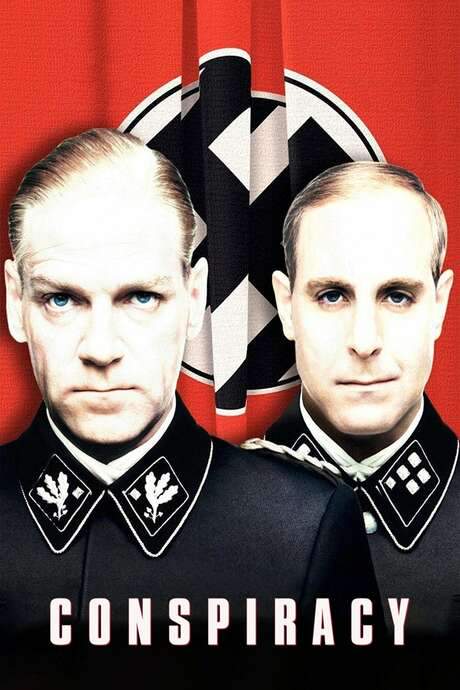
In January 1942, a quiet Berlin suburb becomes the stage for a gathering that will echo through history. Officials from the German government, the SS, and occupied territories converge in a modest villa, each representing a distinct branch of a sprawling bureaucracy. The setting feels both intimate and unnervingly formal, a place where polite conversation masks the weight of decisions poised to reshape an entire continent. The film’s tone is deliberately restrained, employing a documentary‑like rhythm that lets the silence between words speak as loudly as the dialogue itself.
At the center of the meeting sits Reinhard Heydrich, the determined chair whose authority is both overt and subtly coercive. He steers the discussion with a calm precision that contrasts with the unease bubbling beneath the surface. Friedrich Wilhelm Kritzinger pushes back, questioning whether the issue has already been settled, while Wilhelm Stuckart, a meticulous lawyer, oscillates between caution and persuasion, embodying the internal tug‑of‑war between legalism and ambition. Adolf Eichmann brings a cold, methodical clarity to the table, outlining the mechanisms under consideration with an analytical detachment that heightens the film’s chilling ambience.
The interplay among the participants is a study in bureaucratic choreography. Every exchange is laced with subtext: the careful choice of euphemisms, the polite veneer that conceals an undercurrent of pressure, and the subtle power plays that reveal each man’s stakes within the regime. Supporting figures such as Josef Bühler and Karl Eberhard Schöngarth add further texture, their presence underscoring how a wide array of personalities must align to give shape to a collective vision. The camera lingers on nervous glances, the rustle of papers, and the restrained gestures that convey more than the spoken agenda.
Visually, the film favors muted palettes and precise framing, reinforcing its clinical, almost surgical focus on the mechanics of governance. The performances are understated yet powerful, capturing the tension between personal ambition and the weight of an emerging policy. By immersing the viewer in this tightly wound atmosphere, the story invites a deeper contemplation of how ordinary structures can be repurposed toward extraordinary—and terrifying—ends, all without ever straying from its meticulously measured, spoiler‑free presentation.