







Plot Explained Spoilers guaranteed!
Plot Explained

Browse by genre

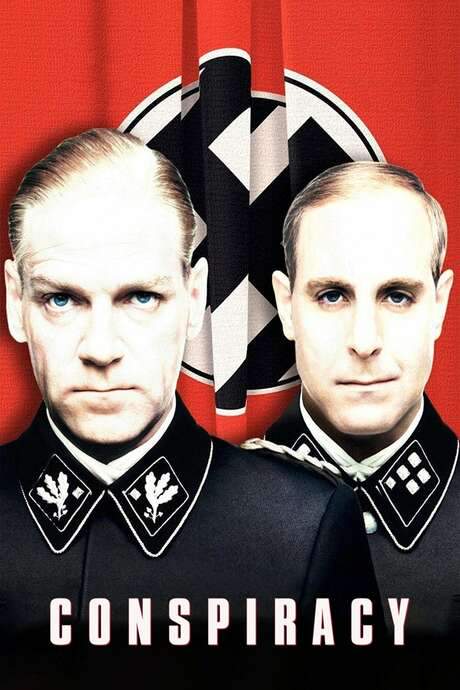
Conspiracy (2001) movie poster

Characters & Themes

Conspiracy (2001) Characters, Setting & Themes Explained

Release, runtime and language
2001 · 96 mins · English
JustWatch #3,482 7
Directed by
Frank Pierson
Starring
Stanley Tucci, Tom Hiddleston, Kenneth Branagh, Colin Firth, Ben Daniels, Ewan Stewart

At the Wannsee Conference on January 20, 1942, senior Nazi officials gather to coordinate the logistics of the “Final Solution to the Jewish Question,” devising how six million lives will be systematically exterminated. The meeting marks a decisive step toward the Holocaust.

On this page (8)
  1. 1 Where to watch
  2. 2 Characters explained (7)
  3. 3 Where & when it takes place
  4. 4 Themes & meaning (3)
  5. 5 Character & meaning questions
  6. 6 Movie threads
  7. 7 Movies like Conspiracy
  8. 8 Every angle

Where to watch

Where to Watch Conspiracy (2001)

Where can you watch Conspiracy? Stream, rent or buy it in the US, including on HBO Max, Amazon Video and Apple TV Store: current JustWatch availability with up-to-date prices.

Streaming availability powered by JustWatch

7 main characters · contains spoilers

Conspiracy Characters Explained: Who Is Who

The main characters of Conspiracy (2001), heroes and villains: what drives them, how they change over the course of the story and what each of them reveals about the film's bigger ideas.

  • Adolf Eichmann (Stanley Tucci)

    Eichmann drives the logistical planning of the Final Solution, presenting the scale and method of extermination with clinical precision. He navigates the meeting with calm efficiency, exposing the bureaucratic mindset behind genocide. His role crystallizes how technical planning can enable mass murder.

    • ⚙️ Logistics
    • 🧭 Bureaucracy
    • 💀 Genocide
  • Reinhard Heydrich (Kenneth Branagh)

    Heydrich chairs the meeting and asserts control, demanding explicit assent and steering discussions toward a unified policy. He uses intimidation and authority to push through the plan, showing ruthless determination. His presence binds the group to a perverse consensus.

    • 🗝️ Power
    • ⚖️ Authority
    • 🕵️ Secrecy
  • Wilhelm Stuckart (Colin Firth)

    Stuckart is the Reich Ministry for the Interior lawyer sought for opinions on policy. He is praised by Heydrich and warned about the consequences of stubbornness, illustrating the danger of bureaucratic caution. His stance reveals the tension between legal craft and moral horror.

    • 🧭 Bureaucracy
    • ⚖️ Law
    • 💬 Policy
  • Josef Bühler (Ben Daniels)

    Bühler participates as an administrator at the meeting, mediating between officials and policy proposals. His role shows how officials weigh practical considerations against the genocidal plan. He reflects the collaborative nature of bureaucratic complicity.

    • 🧭 Bureaucracy
    • 💭 Ideology
    • 🗝️ Power
  • Georg Leibbrandt (Ewan Stewart)

    Leibbrandt contributes as a party to the discussion, representing occupied territories and administrative concerns. He embodies the global scale of coordination among Nazi offices, highlighting the systemic reach of the Final Solution.

    • 🧭 Bureaucracy
    • ⚙️ Logistics
    • 💬 Policy
  • Karl Eberhard Schöngarth (Peter Sullivan)

    Schöngarth is present as a high-ranking official, reflecting the chain of command that implements the plan. His participation emphasizes how various offices align under a shared objective. The group’s agreement signals a step toward institutionalized genocide.

    • 🧭 Bureaucracy
    • ⚖️ Law
    • 💀 Genocide
  • Martin Luther (Kevin McNally)

    Luther is the Foreign Office secretary whose minutes and copies become the record of the meeting. His role underlines the international bureaucratic footprint of the plan and its documentation.

    • 🧭 Bureaucracy
    • 📜 Documentation
    • 🗂️ Policy

Last updated: October 04, 2025 at 12:29

Was this helpful?

Setting

Where and When Does Conspiracy Take Place?

The setting of Conspiracy (2001): the year and time period, the places and locations, and how they shape the characters, the mood and the tension of the story.

Time period

1942

Set during World War II, the events occur in early 1942, culminating in the Wannsee Conference on 20 January 1942. The atmosphere is procedural and solemn as officials discuss 'emigration' vs 'evacuation'. The time period highlights the shift from rhetoric to planned genocide, driven by bureaucratic rationalization.

Location

Wannsee Villa, Berlin

The Wannsee Conference takes place in a villa along the Wannsee in Berlin. The setting is formal and bureaucratic, designed for a meeting among high-ranking Nazi officials. The location is used to coordinate a policy with far-reaching consequences for Europe’s Jewish population.

  • 🏛️ Government villa
  • 🧊 Formal
  • 🕊️ Tense

Last updated: October 04, 2025 at 12:29

Was this helpful?

3 major themes

Conspiracy Meaning: Themes & Message Explained

What is Conspiracy (2001) really about? The emotional, social and philosophical themes the film keeps returning to, its symbolism and the message beneath the surface.

  • Bureaucracy

    The film shows how a formal bureaucratic process can enable atrocity, with minutes, offices and ranks shaping decisions. Officials debate policies in neutral tones, revealing how ordinary processes can mask extraordinary violence. The setting underscores that genocide is implemented through administrative steps rather than a single decree.

  • Euphemism

    Language like 'evacuation' is used to hide the reality of extermination. Participants weigh various euphemisms and exemptions, illustrating how words can mask intent. The dialogue demonstrates how bureaucrats compartmentalize moral horror into manageable concepts.

  • Moral compromise

    Officials rationalize their complicity, balancing career, fear, and personal risk. The film examines how individuals choose self-preservation over conscience in the face of genocide. The recurring tension shows how small compromises accumulate into systemic atrocity.

Last updated: October 04, 2025 at 12:29

Was this helpful?

Character & theme questions

Conspiracy Characters & Meaning: Your Questions Answered

The questions people ask about Conspiracy (2001): who the characters really are, their relationships, what the symbols mean, where it takes place and what the movie is really about. Each answer contains spoilers.

Q1

Where is the Wannsee Conference held in the film?

The conference takes place in a villa along the Wannsee in Berlin, a formal government setting designed for a meeting among high-ranking Nazi officials. This location was chosen for its discretion and bureaucratic formality, underscoring how the systematic planning of genocide was conducted in a seemingly ordinary administrative environment.

  • wannsee villa
  • berlin
  • nazi conference location
  • meeting location
Q2

When does the Wannsee Conference take place?

The conference occurs on January 20, 1942, during World War II. This timing is significant because it marks the moment when Nazi officials shifted from discussing Jewish persecution as 'emigration' to explicitly planning 'evacuation', a euphemism for systematic extermination. The early 1942 date places the meeting at a critical point in the Holocaust's escalation.

  • january 1942
  • world war 2
  • wannsee conference date
  • 1942 historical event
Q3

What does "Final Solution" refer to in this context?

The "Final Solution" is the Nazi term for the systematic extermination of Europe's Jewish population. In the film, officials discuss the logistics of killing six million Jews, presenting the plan with clinical precision and bureaucratic language. The term masks the reality of genocide behind administrative terminology, demonstrating how language can dehumanize and obscure mass murder.

  • final solution
  • holocaust
  • genocide
  • nazi policy
  • extermination
Q4

How does the film portray bureaucracy as a theme?

The film demonstrates how formal bureaucratic processes enable atrocity, showing officials debating policy in neutral tones while discussing mass murder. Minutes, offices, and ranks shape decisions, revealing how ordinary administrative procedures can mask extraordinary violence. The setting underscores that genocide was implemented through administrative steps rather than a single decree.

  • bureaucracy
  • administrative process
  • nazi bureaucracy
  • complicity
Q5

What role does Adolf Eichmann play in the meeting?

Adolf Eichmann, played by Stanley Tucci, drives the logistical planning of the Final Solution, presenting the scale and method of extermination with clinical precision. He navigates the meeting with calm efficiency, exposing the bureaucratic mindset behind genocide. His role crystallizes how technical planning and administrative organization can enable mass murder.

  • adolf eichmann
  • stanley tuci
  • logistics
  • final solution planning
Q6

What is Reinhard Heydrich's role at the Wannsee Conference?

Reinhard Heydrich, portrayed by Kenneth Branagh, chairs the meeting and asserts control, demanding explicit assent from all participants and steering discussions toward a unified policy. He uses intimidation and authority to push through the plan, showing ruthless determination. His presence binds the group to a perverse consensus, demonstrating how leadership pressure enforces complicity.

  • reinhard heydrich
  • kenneth branagh
  • chairman
  • authority
  • meeting leader
Q7

How does the film explore the use of euphemisms?

The film shows how language like 'evacuation' is used to hide the reality of extermination. Participants debate various euphemisms and exemptions, illustrating how words can mask intent. The dialogue demonstrates how bureaucrats compartmentalize moral horror into manageable concepts, making genocide palatable through semantic distortion.

  • euphemisms
  • language
  • propaganda
  • semantic distortion
  • word manipulation
Q8

How do officials justify their participation in the meeting?

Officials rationalize their complicity by balancing career advancement, fear of repercussions, and personal risk. The film examines how individuals choose self-preservation over conscience in the face of genocide. The recurring tension shows how small compromises accumulate into systemic atrocity, with each participant bearing responsibility for enabling the final plan.

  • moral compromise
  • complicity
  • justification
  • self-preservation
  • nazi officials
Q9

What role does Wilhelm Stuckart play in the film?

Wilhelm Stuckart, played by Colin Firth, is the Reich Ministry for the Interior lawyer sought for legal opinions on policy. He is praised by Heydrich but warned about the consequences of stubbornness, illustrating the danger of bureaucratic caution. His stance reveals the tension between legal craft and moral horror, showing how legal expertise can be weaponized for genocide.

  • wilhelm stuckart
  • colin firth
  • lawyer
  • legal policy
  • reich ministry
Q10

What is the historical significance of the Wannsee Conference?

The Wannsee Conference marked a decisive step toward the Holocaust by coordinating the logistics of genocide across multiple Nazi offices. The meeting institutionalized the Final Solution, transforming abstract policy into actionable plans. The film's depiction shows how bureaucratic coordination transformed rhetorical 'solutions' into systematic mass murder, leaving a dark legacy in human history.

  • historical significance
  • holocaust legacy
  • institutionalized genocide
  • coordination

Movie threads

More Movies Like Conspiracy, by Mood & Story

Curated lists built around what makes Conspiracy tick: the same mood, the same kind of story or the same emotional payoff. Each list explains why these movies belong together.

Movies about systemic evil and bureaucracy like Conspiracy

Stories where evil is enacted through cold procedure and office politics. If you were fascinated by the chilling procedural nature of Conspiracy, this section features movies like it. Discover similar historical dramas and tense thrillers where evil is implemented through cold, impersonal systems and administrative decisions.

  • procedural
  • clinical
  • ominous
  • chilling
  • somber
  • restrained
  • Tone: dark, clinical, chilling
  • Pacing: steady, dialogue-driven
Why these movies?

The story pattern: These narratives often center on meetings, official documents, and decision-making processes that lead to catastrophic outcomes. The conflict is less about physical violence and more about the moral collapse within sterile environments, showing how easily evil can be normalized.

Why they belong together: Movies are grouped here by their shared focus on the procedural, administrative side of darkness. They possess a similar tone of clinical detachment and a pacing that builds dread through dialogue and logical steps rather than action.

Talk-driven tense dramas in one location like Conspiracy

Films where intense conversations in confined spaces create unbearable suspense. For fans of the confined, dialogue-heavy tension in Conspiracy, this list features movies with a similar feel. Find other claustrophobic dramas and thrillers where the entire plot hinges on a single, intense meeting or conversation that decides fates.

  • claustrophobic
  • tense
  • dialogue-heavy
  • unsettling
  • psychological
  • restrained
  • Tone: tense, dark, oppressive
  • Pacing: steady, real-time feel
Why these movies?

The story pattern: The narrative is typically restricted to one primary setting, such as a boardroom or bunker. The plot advances through argument, negotiation, and revelation, creating a slow-burn structure where the weight of words carries the dramatic impact.

Why they belong together: These films share a specific storytelling technique: using limited locations and powerful dialogue to generate suspense. They have a steady, methodical pacing and a high-tension atmosphere that comes from intellectual and moral conflict rather than physical action.

If you liked this

Movies Like Conspiracy

Similar movies to Conspiracy: the same genre, themes or kind of story. Each one comes with its own plot summary, timeline and ending explained.

Browse all movie summaries

Every angle

Conspiracy (2001) Explained: Plot, Timeline & Characters

Everything about Conspiracy in one place: what happens in the plot summary, the timeline in chronological order, the characters and meaning and a spoiler-free summary. What's After the Movie adds the cast, box office and post-credit scenes.

Coming soon on iOS and Android

The Plot Explained Movie Summary App

Plot summaries, endings explained and timelines on your phone. Catch up on any movie in minutes, save your favorites and never miss a twist again.

Be the first to know when we launch. Your email stays private, always.

Learn more about the app