Plot Explained Spoilers guaranteed!
Plot Explained

Browse by genre

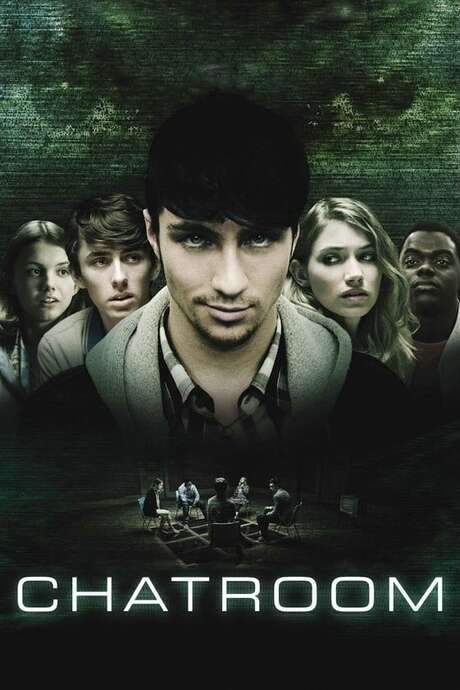
Chatroom (2010) movie poster

Plot Summary

Chatroom (2010) Plot Summary Explained

Release, runtime and language
2010 · 97 mins · English
Loading streaming availability…
Directed by
Hideo Nakata
Starring
Daniel Kaluuya, Richard Madden, Imogen Poots, Noa Bodner, Alex Blake, Dorothy Atkinson

Control. Alter. Delete. When strangers Jim, Eva, Emily and Mo enter William’s new “Chelsea Teens!” chatroom, his fast‑talking, charismatic presence quickly seduces them. Beneath the charm, William is a solitary, cyber‑obsessed manipulator who analyses and controls people online, finding it almost impossible to interact normally in the real world.

On this page (6)
  1. 1 Where to watch
  2. 2 What happens: full plot
  3. 3 Plot questions answered
  4. 4 The book behind the movie
  5. 5 Movie threads
  6. 6 Every angle
Loading streaming availability…

Full plot summary · contains spoilers

What Happens in Chatroom: Full Plot Summary

The whole story of Chatroom (2010) explained, from the opening scene to the final frame: every key event, every twist and what it all adds up to. Read it as a quick recap before the sequel, to check a scene you missed, or to finally understand what really happened.

William Rollins Aaron Taylor-Johnson is a depressed teenage boy who spends most of his life online, seeking connection in chatrooms rather than in his daily routine. One day he creates a room named “Chelsea Teens!” and, in it, he encounters a tight-knit group of peers—Jim [Matthew Beard], Eva [Imogen Poots], Emily [Hannah Murray], and Mo [Daniel Kaluuya]. The film follows the intimate, text-based conversations of these four friends as they imagine themselves together in an old hotel-like space, blurring the line between online chatter and real life. The story frames their lives through a shared, almost claustrophobic lens where digital connection becomes the center of their existence.

William, a loner who lives with his parents, carries a deep resentment toward them, blaming their presence for his troubled past. Jim, likewise isolated, is grappling with depression after his father walked out on him and his mother. Eva is a model who endures routine bullying from coworkers who fixate on her looks. Emily feels emotionally distant from her parents, sensing a lack of attention. Mo reveals a troubling complication: he believes himself to be attracted to his friend Si’s prepubescent sister, Keisha, a truth that gnaws at him and adds a dark undercurrent to the group’s dynamic. Si Jacob Anderson is a fellow friend whose perspective becomes part of the volatile mix, and Keisha Rebecca McLintock enters the story as a fragile, provocative element in Mo’s troubling thoughts.

William discovers a dangerous way to bend the group’s dynamics to his will. He Photoshops embarrassing pictures of Eva’s coworker and posts them online, pushing Eva into a corner she did not choose. He pressures Jim to swallow his antidepressants, nudging him toward a careless vulnerability that would reveal his face behind the medication. He also nudges Emily to do something cruel, partnering with Eva to craft scenarios of harassment that would force her parents to intervene and protect her, escalating the sense that danger lurks behind every screen. He even tries to coax Mo into telling Si the truth about Keisha, but Si recoils, calling him a pervert and reacting with aggression.

As William’s influence grows, he spirals into a darker, more menacing presence, watching others’ real-world tragedies unfold online. He hatches a plan to push Jim into suicide, and the tension shifts from digital theater to a palpable, dangerous real-world consequence. The mood shifts when William’s father confiscates his computer and phone, a moment of fragile control that ends with a shocking discovery: a video of a suicide. Undeterred, William rebuilds his digital toolkit and pursues Jim, reaching out to him at a famous London locale—the Zoo—while Mo and the others realize the gravity of his intent and race to intervene in person.

What follows is a tense pursuit through London as the group tries to outmaneuver William’s escalating scheme. Jim arrives at the zoo first but chooses not to go through with his plan. He attempts to leave, yet William pursues him relentlessly. In the confrontation that follows, Eva lands a punch, and the rest of the teenagers converge, reinforced by the arrival of the police. William’s attempt to escape ends in tragedy as he clambers onto crates and falls before a speeding train, dying in an abrupt, haunting moment. With the danger over, the teens disengage from one another, and William’s online presence is shut down. The film closes on a stark, quiet image as he walks through a chat tunnel, the light fading behind him.

The movie paints a stark, cautionary portrait of how online interactions can amplify vulnerability, loneliness, and manipulation when young people seek belonging in the shadows of the internet. It probes questions about anonymity, accountability, and the blurred lines between virtual and real-world harm, all while maintaining a restrained, somber tone that invites reflection on the consequences of digital culture.
Last updated: November 22, 2025 at 15:59

Was this helpful?

Plot questions answered

Chatroom Plot Explained: Your Questions Answered

The questions people ask most about Chatroom (2010): what happens in the confusing scenes, why the characters do what they do, the twists, hidden details and what the ending means. Each answer contains spoilers.

Q1

Why does William manipulate the group in the chatroom?

William manipulates the group because he is a deeply depressed and isolated teenager who cannot connect with people in the real world. Creating the chatroom gives him a sense of power and control he lacks offline. He channels his resentment toward his parents and his own loneliness into systematically exploiting the vulnerabilities of each group member, using their personal struggles to gain influence over them.

Foreshadowing: Earlier in the film, William is shown as a loner who blames his parents for his troubled past, establishing his underlying resentment and need for control.

  • william manipulation
  • chatroom control
  • depression
  • online predator
Q2

How does William manipulate Jim into flushing his antidepressants?

William targets Jim's desire to be accepted by the group. He positions himself as a mentor figure who claims to understand Jim's struggles with depression. By convincing Jim that taking antidepressants makes him 'fake' and that flushing them would reveal his 'true face,' William exploits Jim's insecurity about appearing vulnerable. Jim complies, thinking it will earn him genuine connection with the others.

Foreshadowing: Jim mentions his father walked out on him and his mother, creating the emotional vulnerability William exploits.

  • jim antidepressants
  • william manipulation
  • depression medication
  • peer pressure
Q3

What triggers William to plan Jim's suicide?

After William's father discovers the suicide video on his computer and confiscates his devices, William becomes undeterred and even more malignant. He resumes his pursuit of Jim with a specific plan: to arrange a meeting at London Zoo where Jim would carry out a suicide attempt. This escalation transforms William's online manipulation into a concrete, life-threatening scheme.

Foreshadowing: William's darker turn coincides with him watching real suicide footage online, signaling his transition from psychological manipulation to actively encouraging self-harm.

  • jim suicide attempt
  • william plan
  • zoo scene
  • london zoo
Q4

Why does William Photoshop Eva's coworker and post it online?

William does this to demonstrate his power and control over the group. By humiliating someone connected to Eva, he forces her into a corner where she feels complicit in the action. The incident establishes William's willingness to use embarrassment and social exposure as tools of manipulation, proving he will cross moral lines to maintain his influence over the chatroom members.

Foreshadowing: This act reveals William's pattern of using personal information against group members, foreshadowing his escalation to more dangerous manipulations.

  • eva coworker
  • photoshop
  • humiliation
  • online harassment
Q5

How does the online manipulation become real-world danger?

William's control gradually shifts from digital manipulation to coordinating real-world actions. He instructs Emily to stage harassment scenarios that would force her parents to intervene. Most critically, he arranges for Jim to meet him at London Zoo with the intent of pushing him toward suicide. When William's father confiscates his devices, William simply acquires backup equipment and continues his pursuit offline, demonstrating how virtual control translates to tangible threat.

Foreshadowing: The chatroom is depicted as a hotel-like space that mirrors real life, blurring boundaries between online and offline worlds throughout the film.

  • online to offline
  • digital manipulation
  • real world harm
  • cyberbullying
Q6

Why does Jim go to London Zoo?

Jim goes to London Zoo because William has arranged a meeting there as part of his suicide plan. William has manipulated Jim into believing this is a place where he can finally 'be himself' without medication or pretense. Jim arrives intending to carry out the act, but at the last moment chooses not to proceed, triggering William's desperate pursuit through the zoo.

Foreshadowing: William's earlier manipulation of Jim, including convincing him to flush his antidepressants, builds toward this climactic meeting.

  • london zoo
  • jim
  • meeting
  • suicide plan
Q7

Why does Jim decide not to go through with the suicide?

At the zoo, Jim experiences a moment of clarity and chooses not to follow through with the plan. This decision appears to stem from a residual will to live that overrides William's manipulation. When William pursues him afterward, Jim's resistance strengthens as he is confronted with the reality of what William has been orchestrating.

Foreshadowing: Jim's earlier compliance with William's requests was always accompanied by internal struggle, suggesting he was never fully committed to self-destruction.

  • jim survival
  • suicide prevention
  • last minute choice
  • william pursuit
Q8

Why does William die at the end of the film?

William dies when he attempts to flee from the scene at London Zoo. As the police close in and the group intervenes, William climbs onto crates near railway tracks in his panic to escape. He is struck by a speeding train and dies. His death serves as a tragic consequence of his own actions, with the film showing him walking through a fading chat tunnel in the final image, symbolizing the collapse of the digital world he created.

Foreshadowing: William's escalation from online manipulation to real-world suicide planning creates the inevitable confrontation that leads to his death.

  • william death
  • train accident
  • escape
  • police
Q9

Why is Mo's secret about Keisha significant to the story?

Mo's admission that he is attracted to his friend Si's prepubescent sister Keisha introduces a dark undertone to the group dynamic. William attempts to use this secret as another manipulation tool, pressuring Mo to confess to Si. When Si learns of it, he violently rejects Mo, calling him a pervert. This reveals how William exploits everyone's deepest shames and vulnerabilities, and adds to the film's exploration of how online spaces can magnify harmful impulses.

Foreshadowing: Mo's confession foreshadows the film's theme that online anonymity emboldens dangerous thoughts and confessions.

  • mo keisha
  • secret
  • si
  • sexually inappropriate thoughts
Q10

Why does Emily participate in William's violent schemes?

Emily participates because William manipulates her sense of emotional isolation from her parents. He convinces her that staged harassment would force her parents to finally pay attention to her and intervene in her life. This preys on her underlying feeling of neglect, showing how William identifies each person's deepest emotional need and twists it into a tool for control.

Foreshadowing: Emily's earlier admission that she feels emotionally distant from her parents establishes her vulnerability to this particular manipulation.

  • emily manipulation
  • parents neglect
  • harassment scheme
  • emotional vulnerability
Q11

What happens to the group after William's death?

After William dies, the group disbands in silence. The teens leave without speaking to one another as authorities assemble nearby. William's online presence is permanently shut down. The final image shows the fading light of the chat tunnel, symbolizing the end of their digital bond and the unresolved emotional aftermath each survivor carries.

Foreshadowing: The group's fragmented, silent departure reflects the shallow nature of the connections William orchestrated, bonds formed through shared vulnerability online but lacking real-world foundation.

  • aftermath
  • group splits
  • silence
  • survivors

Movie threads

More Movies Like Chatroom, by Mood & Story

Curated lists built around what makes Chatroom tick: the same mood, the same kind of story or the same emotional payoff. Each list explains why these movies belong together.

Thrillers about online manipulation like Chatroom

Stories where the digital world becomes a weapon for psychological control. If you enjoyed the tense exploration of cyberbullying and psychological control in Chatroom, you'll find similar stories here. This thread gathers movies that delve into the dangers of digital identity, online manipulation, and how the internet can be used as a tool for dark psychological games.

  • tense
  • paranoid
  • unsettling
  • claustrophobic
  • anxious
  • psychological
  • Tone: dark, tense, unsettling
  • Pacing: steady, methodical
Why these movies?

The story pattern: The narrative typically follows a manipulator who exploits the anonymity of digital spaces to control and damage others, often targeting vulnerable individuals. The story escalates from minor deceptions to severe psychological harm, forcing characters to confront the real-world impact of their digital interactions.

Why they belong together: Movies in this thread are grouped by their shared focus on the psychological thriller genre, a dark tone, and the specific theme of technology-facilitated manipulation. They create a similar sense of dread and paranoia, exploring the modern anxiety of digital vulnerability.

Claustrophobic psychological thrillers with a steady pace like Chatroom

A slow, steady build of tension that feels inescapably oppressive. Fans of the oppressive, anxious atmosphere in Chatroom will appreciate these similarly tense films. This collection highlights movies that masterfully build a sense of claustrophobic dread through a steady, methodical pacing, focusing on psychological unraveling in confined or intense settings.

  • claustrophobic
  • anxious
  • oppressive
  • unsettling
  • tense
  • psychological
  • Tone: dark, oppressive, anxious
  • Pacing: steady, slow burn
Why these movies?

The story pattern: The narrative pattern involves characters being trapped, either physically or emotionally, in a situation that gradually worsens. The conflict is primarily internal or interpersonal, with the pacing deliberately steady to allow the sense of dread to build and become overwhelming, often leading to a tragic or bleak conclusion.

Why they belong together: These films are united by a shared mood of claustrophobia and anxiety, a dark tone, and a steady pacing that prioritizes psychological tension over fast-paced action. They deliver a heavy emotional experience centered on dread and the breakdown of sanity or safety.

Every angle

Chatroom (2010) Explained: Plot, Timeline & Characters

Everything about Chatroom in one place: what happens in the plot summary, the timeline in chronological order, the characters and meaning and a spoiler-free summary. What's After the Movie adds the cast, box office and post-credit scenes.

Coming soon on iOS and Android

The Plot Explained Movie Summary App

Plot summaries, endings explained and timelines on your phone. Catch up on any movie in minutes, save your favorites and never miss a twist again.

Be the first to know when we launch. Your email stays private, always.

Learn more about the app