Plot Explained Spoilers guaranteed!
Plot Explained

Browse by genre

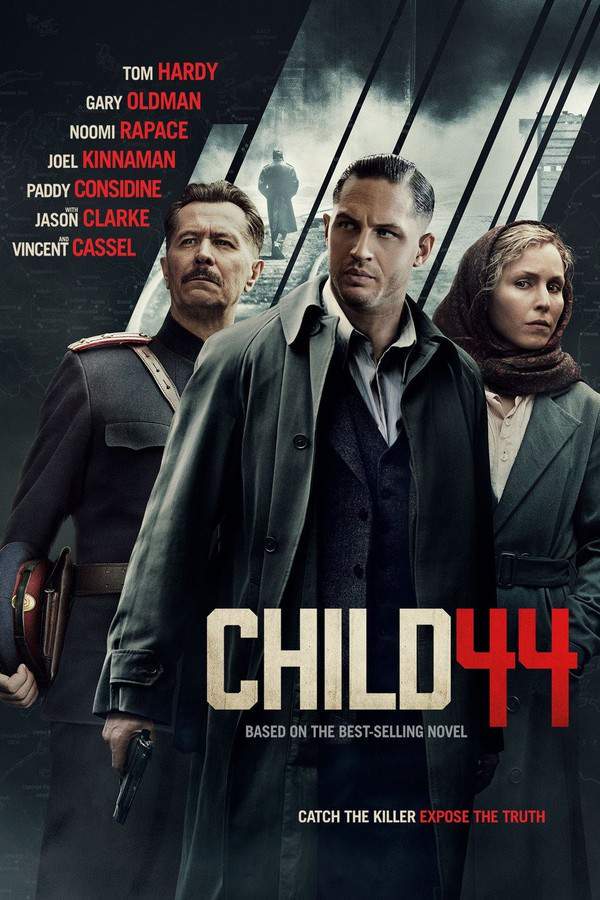
Child 44 (2015) movie poster

Characters & Themes

Child 44 (2015) Characters, Setting & Themes Explained

Release, runtime and language
2015 · 137 min · English
Loading streaming availability…
Directed by
Daniel Espinosa
Starring
Joel Kinnaman, Tom Hardy, Noomi Rapace

In 1953 Soviet Russia, idealistic agent Leo Demidov finds his life overturned when he attempts to shield his wife from unjust accusations. Exiled to a remote region, he and his wife, Raisa, partner with General Mikhail Nesterov to pursue a brutal serial killer preying on young boys. Their investigation unveils a disturbing network of lies and corruption, placing them directly in the path of Leo's manipulative adversary, Vasili, and threatening to expose the dark secrets of the regime.

On this page (9)
  1. 1 Where to watch
  2. 2 Characters explained (3)
  3. 3 Where & when it takes place
  4. 4 Themes & meaning (2)
  5. 5 Character & meaning questions
  6. 6 The book behind the movie
  7. 7 Movie threads
  8. 8 Movies like Child 44
  9. 9 Every angle
Loading streaming availability…

3 main characters · contains spoilers

Child 44 Characters Explained: Who Is Who

The main characters of Child 44 (2015), heroes and villains: what drives them, how they change over the course of the story and what each of them reveals about the film's bigger ideas.

  • Leo Demidov (Joel Kinnaman)

    Leo is a complex character who evolves from a celebrated hero to a man burdened by moral dilemmas and the oppressive nature of the Soviet regime. His dedication to uncovering the truth about his wife and seeking justice shows his resilience and inner strength. Despite the threats he faces, Leo remains steadfast in his beliefs, embodying the struggle between loyalty and integrity.

    • 🕵️‍♂️ Investigator
    • 🎖️ Hero
    • 💔 Betrayed
  • Raisa (Noomi Rapace)

    Raisa is depicted as a loving and devoted wife, whose life is turned upside down due to the machinations of others. Her strength and commitment to justice mirror Leo’s, creating a powerful partnership. While she faces incredible challenges, including betrayal and the loss of her unborn child, Raisa's resilience and compassion shine through.

    • ❤️ Supportive
    • 👩‍🏫 Teacher
    • 💪 Resilient
  • Vasili Nikitin

    Vasili serves as the primary antagonist, embodying the ambitious and ruthless elements of the MGB. His resentment towards Leo drives much of the conflict, leading to tragic events that further complicate the narrative. Vasili's betrayal and manipulation depict the dark side of the Soviet officials who enforce compliance at any cost.

    • 🗡️ Antagonist
    • ⚔️ Ambitious
    • 📉 Betrayal

Last updated: October 22, 2024 at 20:36

Was this helpful?

Setting

Where and When Does Child 44 Take Place?

The setting of Child 44 (2015): the year and time period, the places and locations, and how they shape the characters, the mood and the tension of the story.

Time period

1933-1953

The movie spans two decades of Soviet history, from the devastating Holodomor in Ukraine to the aftermath of World War II and Stalin's rule. This period is marked by significant political repression, societal upheaval, and the moral complexities faced by individuals like Leo, who grapple with loyalty and justice amidst an unforgiving regime.

Location

Moscow, Volsk, Rostov

Moscow serves as a pivotal location in 'Child 44', representing the power of the Soviet regime and the oppressive atmosphere of the MGB. Volsk, a small town, symbolizes the harsh reality of internal exile, where characters endure personal and political struggles. Rostov becomes the site of a crucial turning point as Leo and Raisa confront danger and uncover the identity of the serial killer.

  • 🏛️ City
  • 🌾 Countryside
  • 🚂 Railway

Last updated: October 22, 2024 at 20:36

Was this helpful?

2 major themes

Child 44 Meaning: Themes & Message Explained

What is Child 44 (2015) really about? The emotional, social and philosophical themes the film keeps returning to, its symbolism and the message beneath the surface.

  • Justice

    The quest for justice is a central theme in 'Child 44', as Leo Demidov defies oppressive orders to uncover the truth about his wife and the serial killer. The struggle against systemic corruption highlights the challenges of maintaining one's integrity in a repressive society. Ultimately, Leo’s dedication to justice leads to personal redemption and a newfound hope for the future.

  • Love

    Love is portrayed as a driving force for the characters, particularly in Leo’s relationship with Raisa. Their bond is tested through betrayal and hardship, yet it remains resilient in the face of adversity. The couple’s commitment to each other and their eventual decision to adopt orphaned children underscores the theme of love transcending personal loss and providing a path toward healing.

Last updated: October 22, 2024 at 20:36

Was this helpful?

Character & theme questions

Child 44 Characters & Meaning: Your Questions Answered

The questions people ask about Child 44 (2015): who the characters really are, their relationships, what the symbols mean, where it takes place and what the movie is really about. Each answer contains spoilers.

Q1

Where is Child 44 set?

The movie is set primarily in Soviet Russia, spanning multiple key locations. Moscow serves as the seat of power where the MGB operates, representing the oppressive atmosphere of the regime. Volsk is a small town where Leo and Raisa are exiled, symbolizing the harsh reality of internal exile. Rostov becomes the site of a crucial turning point in the investigation.

  • soviet russia
  • moscow
  • volsk
  • rostov
  • setting
  • locations
Q2

What time period does Child 44 cover?

The movie spans two decades of Soviet history from 1933 to 1953, encompassing the devastating Holodomor in Ukraine, World War II, and Stalin's rule. This period is marked by significant political repression, societal upheaval, and the moral complexities faced by individuals living under an unforgiving regime.

  • stalin era
  • soviet history
  • 1930s
  • 1940s
  • 1950s
  • time period
  • holodomor
Q3

What are the main themes in Child 44?

The film explores two central themes. Justice is a driving force as Leo defies oppressive orders to uncover the truth, highlighting the challenges of maintaining integrity in a repressive society. Love is also prominent, particularly in Leo and Raisa's relationship, which is tested through betrayal and hardship but remains resilient, ultimately leading them to adopt orphaned children as a path toward healing.

  • justice
  • love
  • themes
  • redemption
  • soviet regime
  • integrity
Q4

Who is Leo Demidov?

Leo Demidov is the protagonist, a Soviet agent who evolves from a celebrated hero to a man burdened by moral dilemmas. His dedication to uncovering the truth about his wife and seeking justice shows his resilience and inner strength. Despite threats from the regime, Leo remains steadfast in his beliefs, embodying the struggle between loyalty to the state and personal integrity.

  • leo demidov
  • protagonist
  • mgb agent
  • soviet police
  • hero
Q5

Who is Raisa in Child 44?

Raisa is Leo Demidov's wife, depicted as a loving and devoted partner whose life is turned upside down due to the machinations of others. Her strength and commitment to justice mirror Leo's, creating a powerful partnership. She faces incredible challenges including betrayal and the loss of her unborn child, yet her resilience and compassion shine through throughout the film.

  • raisa
  • leo's wife
  • noomi rapace
  • protagonist
  • love interest
Q6

Who is Vasili Nikitin?

Vasili Nikitin serves as the primary antagonist, embodying the ambitious and ruthless elements of the MGB. His resentment towards Leo drives much of the conflict, leading to tragic events that complicate the narrative. Vasili's betrayal and manipulation depict the dark side of Soviet officials who enforce compliance at any cost.

  • vasili nikitin
  • antagonist
  • villain
  • mgb
  • enemy
  • adversary
Q7

How does Child 44 portray the Soviet regime?

The film portrays the Soviet regime as an oppressive system characterized by paranoia, corruption, and state-sanctioned murder. The setting of Stalinist Russia creates a consistently dark tone where citizens live in constant fear. The MGB represents the regime's ruthlessness, using manipulation and betrayal as tools of control. The movie highlights how the system itself encourages citizens to inform on each other.

  • soviet regime
  • stalin
  • mgb
  • oppression
  • corruption
  • political repression
Q8

What does the movie say about justice in Soviet Russia?

The film depicts justice in Soviet Russia as compromised and politically motivated. Leo's quest for truth about the serial killer defies the state's official narrative that serial killers do not exist in the socialist utopia. His struggle highlights how true justice is nearly impossible in a corrupt system, yet his determination leads to personal redemption despite having to work within the regime's flawed framework.

  • justice
  • soviet justice
  • corruption
  • truth
  • redemption
  • moral dilemma
Q9

What role does Moscow play in the story?

Moscow serves as the pivotal location representing the power of the Soviet regime and the oppressive atmosphere of the MGB. It is where Leo works as a celebrated agent before his downfall. The city symbolizes the central authority and the place where political decisions are made that affect the characters' lives throughout the film.

  • moscow
  • capital
  • soviet government
  • mgb headquarters
  • power
Q10

What is the significance of Volsk in the movie?

Volsk represents the harsh reality of internal exile in the Soviet system. Leo and Raisa are sent there after Leo falls from favor, stripped of his status and protection. The small town symbolizes the isolation and personal struggles that exiles face, where characters endure both personal hardship and political persecution away from the capital.

  • volsk
  • exile
  • internal exile
  • remote town
  • punishment
Q11

What defines Leo and Raisa's relationship?

Leo and Raisa's relationship is defined by unwavering devotion tested through betrayal and hardship. Their bond is resilient in the face of adversity, surviving false accusations, exile, and the loss of their unborn child. Their partnership is built on mutual commitment to justice, and their eventual decision to adopt orphaned children demonstrates how love transcends personal loss and provides a path toward healing.

  • marriage
  • love
  • partnership
  • loyalty
  • adoption
  • healing
Q12

What is the tone and ending like in Child 44?

The film has a consistently dark tone established by the setting of Stalinist Russia, with themes of state-sanctioned murder and betrayal. The ending is bittersweet, while Leo and Raisa achieve a form of justice and personal redemption by adopting orphans, their victory is contingent on perpetuating a lie within the corrupt system. This offers qualified hope rather than a pure triumph, reflecting the moral compromises required to survive in such a regime.

  • ending
  • tone
  • bittersweet
  • hope
  • redemption
  • darkness

Movie threads

More Movies Like Child 44, by Mood & Story

Curated lists built around what makes Child 44 tick: the same mood, the same kind of story or the same emotional payoff. Each list explains why these movies belong together.

Crime Thrillers in Oppressive Regimes like Child 44

Investigating brutal crimes while navigating the treacherous politics of a totalitarian state. If you liked the tense atmosphere of 'Child 44', explore more movies like it where detectives and agents pursue justice within the shadow of a brutal political system. These similar historical thrillers and crime dramas capture the grim reality of investigating murders and corruption under totalitarianism, where every clue uncovered threatens to expose the investigator.

  • oppressive
  • tense
  • paranoid
  • gritty
  • persevering
  • melancholic
  • Tone: dark, tense, grim
  • Pacing: steady, methodical
Why these movies?

The story pattern: The narrative typically follows a law enforcement agent or investigator who begins a case that challenges the official state narrative. Their pursuit of truth pits them against a powerful and corrupt system, forcing them to operate in the shadows. The journey is as much about surviving the regime as it is about solving the crime, often leading to a pyrrhic victory or a bittersweet resolution.

Why they belong together: These movies are grouped by their shared high-stakes setting, where the political environment is as menacing as the criminal antagonist. They blend the tension of a crime thriller with the dread of a political drama, resulting in a consistently dark, intense, and heavy viewing experience focused on perseverance against overwhelming odds.
Movies with Bittersweet Justice Endings like Child 44

Achieving a personal victory that comes at a cost, leaving the system unchanged. For viewers who appreciated the complex ending of 'Child 44', this list features movies with similar conclusions. Discover films like it where the heroes achieve a personal, bittersweet victory against injustice, but the overarching corruption or darkness of their world persists, resulting in a heavy yet satisfying emotional payoff.

  • bittersweet
  • melancholic
  • grim
  • persevering
  • thought-provoking
  • heavy
  • Tone: bittersweet, heavy, dark
  • Pacing: steady, building
Why these movies?

The story pattern: The narrative arc involves protagonists fighting against an entrenched, powerful antagonist or system. Their struggle is brutal and costly. While they may succeed in their immediate goal—exposing a killer, saving a loved one, finding personal redemption—the broader evil or corruption is too powerful to defeat. The ending acknowledges the small win but underscores the enduring nature of the larger problem, creating a resonant, thoughtful conclusion.

Why they belong together: These films are united by their specific emotional payoff. They deliver the catharsis of a hard-won battle but refuse a simplistic, wholly optimistic ending. This creates a powerful and memorable experience that feels more authentic and weighty, resonating with audiences who appreciate narratives where good prevails, but not without significant scars and compromises.

If you liked this

Movies Like Child 44

Similar movies to Child 44: the same genre, themes or kind of story. Each one comes with its own plot summary, timeline and ending explained.

Browse all movie summaries

Every angle

Child 44 (2015) Explained: Plot, Timeline & Characters

Everything about Child 44 in one place: what happens in the plot summary, the timeline in chronological order, the characters and meaning and a spoiler-free summary. What's After the Movie adds the cast, box office and post-credit scenes.

Coming soon on iOS and Android

The Plot Explained Movie Summary App

Plot summaries, endings explained and timelines on your phone. Catch up on any movie in minutes, save your favorites and never miss a twist again.

Be the first to know when we launch. Your email stays private, always.

Learn more about the app