Plot Explained Spoilers guaranteed!
Plot Explained

Browse by genre

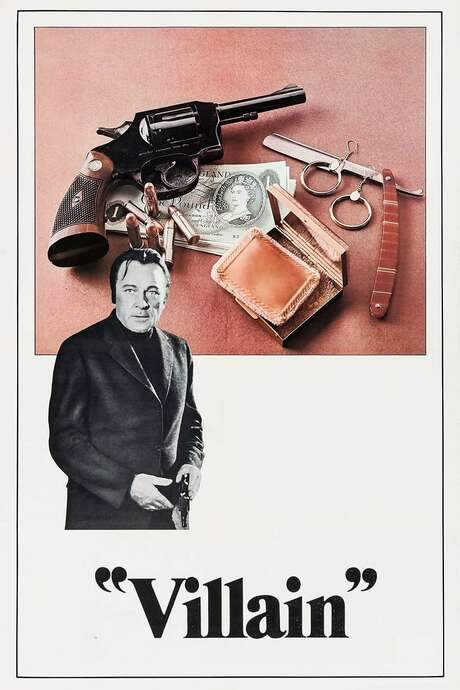
Villain (1971) movie poster

Plot Summary

Villain (1971) Plot Summary Explained

Release, runtime and language
1971 · 98 mins · English
Directed by
Michael Tuchner
Starring
Ian McShane, Cathleen Nesbitt, Michael Robbins, Richard Burton, Del Henney, Nigel Davenport

By the time he’s ready to pull the trigger, he knows it will be an act of mercy. Set in gritty 1970s London, Scotland Yard launches a calculated campaign to bring down ruthless mob boss Vic Dakin after he oversteps by blackmailing senior Members of Parliament, forcing a tense battle of wills between law enforcement and the underworld.

On this page (6)
  1. 1 Where to watch
  2. 2 What happens: full plot
  3. 3 Plot questions answered
  4. 4 Movie threads
  5. 5 Movies like Villain
  6. 6 Every angle

Where to watch

Where to Watch Villain (1971)

Where can you watch Villain? Stream, rent or buy it in the US, including on Amazon Video and Apple TV Store: current JustWatch availability with up-to-date prices.

Streaming availability powered by JustWatch

Full plot summary · contains spoilers

What Happens in Villain: Full Plot Summary

The whole story of Villain (1971) explained, from the opening scene to the final frame: every key event, every twist and what it all adds up to. Read it as a quick recap before the sequel, to check a scene you missed, or to finally understand what really happened.

Vic Dakin is a ruthless and sadistic London gangster, a figure whose merciless treatment of rivals and loyalists sits in stark contrast with the quiet tenderness he shows toward his elderly mother, Mrs. Dakin. She seems largely oblivious to the violence that stalks his days, which makes his world feel both intimate and dangerous. Dakin hatches an ambitious plan to hijack a delivery of wages to a factory, a heist that must unfold within the territorial bounds of his rival, Frank Fletcher. To pull it off, Fletcher’s consent is essential, and so Fletcher agrees to join forces, bringing along his brother-in-law, Edgar Lowis to seal the deal.

Behind the scenes, the police tighten their net. Detective Bob Matthews and his colleague Tom Binney keep a wary eye on Dakin, aided by an informant, Danny, who moves through Dakin’s circle. In the shadows of the underworld, Wolfe Lissner trades in drugs and supplies girls for the aristocrat’s mansion-hosted sex parties, and he owes money to Dakin, a debt the gangster uses as leverage to keep Wolfe in line.

The heist itself unfolds with violence and misfortune: Fletcher is badly wounded during the raid, and the gang scatters, agreeing to reconvene later to divide the loot. The immediate aftermath sees rapid law enforcement action as Edgar Lowis is arrested when fingerprint evidence ties him to the scene. To shield Dakin, Wolfe enlists Gerald Draycott, a member of parliament, using compromising photos to pressure him into providing an alibi for the operation. The political rope-work adds a chilling layer of manipulation to the crime, highlighting how far the criminal world can reach into the corridors of power.

Suspicion sharpens as Dakin begins to suspect a double-cross by Lowis, who may have hidden the money or betrayed the crew. Through Danny, Matthews learns that Lowis has supposedly been moved to hospital for an ulcer, a ruse meant to stall the investigation. Dakin orders a forceful abduction of Lowis, threatening him to reveal the whereabouts of the stolen funds. They drag Lowis to a disused building, but the loot cannot be found, and the pressure intensifies as the police close in.

A tense confrontation erupts as the chase intensifies. In the end, Dakin and Wolfe make a last, desperate attempt to escape, but they are ultimately captured. The arrest scene is charged with defiance, and Dakin looks out at the onlookers with a chilling glare as he faces the consequences of his brutal empire.

When the dust settles, the courtroom glare and street rumors converge into a stark tableau of power, loyalty, and exposure. Dakin’s bravado finally meets its match, and the story closes on his hard-won, self-assured defiance chastened by the weight of the law.

> Who are you looking at?!
Last updated: October 09, 2025 at 12:30

Was this helpful?

Plot questions answered

Villain Plot Explained: Your Questions Answered

The questions people ask most about Villain (1971): what happens in the confusing scenes, why the characters do what they do, the twists, hidden details and what the ending means. Each answer contains spoilers.

Q1

Why does Vic Dakin need Frank Fletcher's permission for the robbery?

Dakin plans to hijack a delivery of wages to a factory, but the heist would take place within Frank Fletcher's territorial boundaries. Since Fletcher is a rival gangster, Dakin cannot operate in his territory without consent. This is why Fletcher's agreement is essential to the plan, proceeding without it would risk a violent conflict between rival factions.

  • fletcher territory
  • rival gang
  • heist planning
  • gangland rules
Q2

How does Vic Dakin get an alibi from MP Gerald Draycott?

After the robbery goes wrong and Edgar Lowis is arrested, Dakin needs a cover story. His associate Wolfe Lissner uses compromising photos to pressure Draycott, a Member of Parliament, into providing a false alibi for the gang. This political manipulation extends Dakin's influence beyond the criminal underworld into the highest levels of government.

Foreshadowing: Earlier, Wolfe is established as someone who supplies girls for aristocratic sex parties, explaining how he obtains the compromising material.

  • alibi
  • blackmail
  • MP
  • Draycott
  • parliament
  • political corruption
Q3

Why does Vic Dakin suspect Edgar Lowis of betraying the crew?

After the robbery fails and Lowis is arrested, Dakin becomes convinced that Lowis has hidden the stolen money or betrayed the crew. The suspicion stems from the fact that Lowis was arrested at the scene with his fingerprints, and Dakin believes Lowis may have kept the money for himself rather than allowing it to be divided among the gang.

Foreshadowing: The heist proceeds with violence and misfortune, and Fletcher is badly injured, creating chaos that fuels mistrust.

  • lowis betrayal
  • stolen money
  • double-cross
  • gang trust
Q4

What happens when Dakin abducts Edgar Lowis?

Dakin orders Lowis abducted and threatens to kill him unless he reveals where the money is hidden. Lowis is dragged to a disused building, but the money cannot be found there. The police, who have been tracking the crew through their informant Danny, close in during the confrontation. In the chaos, Lowis is killed by Dakin during the struggle, and Dakin and Wolfe attempt to escape but are ultimately captured.

Foreshadowing: Danny, the police informant, has been feeding information to Detective Matthews throughout, allowing law enforcement to track the gang's movements.

  • abduction
  • lowis
  • disused building
  • police raid
  • capture
Q5

Who kills Edgar Lowis?

Vic Dakin kills Edgar Lowis during the confrontation in the disused building. When the police close in and the gang attempts to escape, Dakin murders Lowis rather than let him be taken or potentially reveal more information. This marks the violent climax of the story and signals the complete collapse of Dakin's operation.

  • lowis death
  • murder
  • Dakin violence
  • confrontation
Q6

Why is Wolfe Lissner indebted to Vic Dakin?

Wolfe Lissner is a minor underworld figure who deals in drugs and supplies girls for aristocratic sex parties. He lost money to Dakin and owes him a debt, which gives Dakin leverage to control him. Dakin uses this debt to compel Wolfe into performing various tasks, including arranging the blackmail of MP Draycott and serving as an accomplice in the heist.

Foreshadowing: Wolfe's criminal activities and dependency on Dakin are established early, showing how Dakin maintains influence over multiple criminal networks.

  • wolfe debt
  • leverage
  • underworld
  • criminal network
Q7

How does the police manage to catch Vic Dakin?

The police catch Dakin through a combination of surveillance and informant intelligence. Detective Bob Matthews and Tom Binney have been tracking Dakin through Danny, an informant embedded in Dakin's circle. When Dakin abducts Lowis and moves him to a disused building, the police track the crew and move in. The raid catches the gang attempting to escape, leading to Dakin and Wolfe's capture.

Foreshadowing: Danny's role as an informant is established early, with regular information flowing to the detectives about Dakin's plans and movements.

  • police capture
  • informant danny
  • surveillance
  • arrest
Q8

What does Dakin mean by 'Who are you looking at?!' when arrested?

When Dakin is finally arrested, he defiantly declares he will beat the charges by intimidating the jury. As he is led away, he looks out at the onlookers and bellows 'Who are you looking at?!' This line encapsulates his unbowed arrogance and refusal to show weakness, even in defeat. It represents his gangster code, facing consequences with bravado rather than shame.

  • arrest
  • defiance
  • final scene
  • iconic line
Q9

What happens to the money from the failed robbery?

The wages robbery never succeeds as planned. Fletcher is badly injured during the raid, causing the gang to scatter before they can secure the loot. When Dakin later suspects Lowis of hiding the money, he abducts him to force a confession, but the money is never found. The police intervention at the disused building prevents any possibility of recovering the stolen funds, and the loot's location remains unresolved.

Foreshadowing: The heist unfolds with violence and misfortune, and the gang's fragmentation after Fletcher's injury sets the stage for the money's disappearance.

  • stolen money
  • heist outcome
  • wages robbery
  • missing loot
Q10

Why does Vic Dakin show tenderness toward his mother despite being violent?

Vic Dakin is depicted as a ruthless and sadistic gangster who shows merciless treatment of rivals and loyalists. However, he displays quiet tenderness toward his elderly mother, Mrs. Dakin, who seems largely oblivious to the violence that defines his criminal life. This contrast creates a complex portrait of the character, showing that even a brutal criminal can maintain genuine human connections, making his world feel both intimate and dangerous.

  • mother
  • character complexity
  • duality
  • family
Q11

How does Danny serve as the police informant inside Dakin's gang?

Danny is an informant who moves through Dakin's criminal circle, feeding information to Detective Bob Matthews and his colleague Tom Binney. Through Danny, the police learn about Dakin's plans, including the suspected double-cross by Lowis and the false story about Lowis being hospitalized for an ulcer. Danny's intelligence allows the police to maintain surveillance and eventually track the gang to the disused building for the final confrontation.

Foreshadowing: Danny's role as an informant is established from the beginning, with the police keeping a watchful eye on Dakin through him.

  • informant
  • Danny
  • police surveillance
  • intelligence

Movie threads

More Movies Like Villain, by Mood & Story

Curated lists built around what makes Villain tick: the same mood, the same kind of story or the same emotional payoff. Each list explains why these movies belong together.

Movies about gangster downfalls like Villain

Stories of powerful criminals whose ambition leads to their inevitable, brutal end. If you liked watching Vic Dakin's empire crumble in Villain, you'll find similar grim satisfaction here. This collection features movies about ruthless crime lords whose unchecked ambition leads to betrayal, police pressure, and a sad, often violent, conclusion. Explore other films about organized crime and the inevitable fall from power.

  • brutal
  • cynical
  • tense
  • menacing
  • gritty
  • sadistic
  • Tone: dark, cynical, menacing
  • Pacing: steady, deliberate
Why these movies?

The story pattern: These narratives typically follow a powerful but flawed criminal protagonist at the height of their power. Their overreach—through a risky heist, political blackmail, or disrespecting rivals—sets in motion a chain of events involving police investigations, betrayals from within, and violent confrontations, culminating in a tragic and definitive ending for the central figure.

Why they belong together: Movies in this thread share a dark, cynical tone and a heavy emotional weight. They are characterized by high intensity, brutal violence, and a steady pacing that builds towards an inescapably sad conclusion. The central theme is the corruption of power and the grim inevitability of a downfall in the criminal underworld.

Gritty 70s crime movies like Villain

Raw and unflinching crime stories set in the bleak urban landscapes of the 1970s. Fans of the grim, realistic 1970s London setting in Villain will appreciate this selection of similar films. These movies share a dark tone, high intensity, and a focus on the brutal mechanics of organized crime and police work from that era. Discover more crime thrillers that capture the gritty, pessimistic vibe of 70s cinema.

  • gritty
  • oppressive
  • tense
  • cynical
  • realistic
  • menacing
  • Tone: dark, gritty, realistic
  • Pacing: steady, procedural
Why these movies?

The story pattern: The narrative pattern often involves a procedural element, such as a detailed heist or a dogged police investigation, set against a backdrop of widespread institutional and political corruption. The stories are linear and character-driven, emphasizing the grimy details of criminal life and the cynical view that no one is truly clean.

Why they belong together: These films are grouped by their specific historical aesthetic and mood. They share a dark tone, high intensity from realistic violence, and a steady, often methodical pacing. The key unifying elements are the 1970s setting, a gritty visual style, and themes of pervasive corruption that create an oppressive, authentic atmosphere.

If you liked this

Movies Like Villain

Similar movies to Villain: the same genre, themes or kind of story. Each one comes with its own plot summary, timeline and ending explained.

Browse all movie summaries

Every angle

Villain (1971) Explained: Plot, Timeline & Characters

Everything about Villain in one place: what happens in the plot summary, the timeline in chronological order, the characters and meaning and a spoiler-free summary. What's After the Movie adds the cast, box office and post-credit scenes.

Coming soon on iOS and Android

The Plot Explained Movie Summary App

Plot summaries, endings explained and timelines on your phone. Catch up on any movie in minutes, save your favorites and never miss a twist again.

Be the first to know when we launch. Your email stays private, always.

Learn more about the app