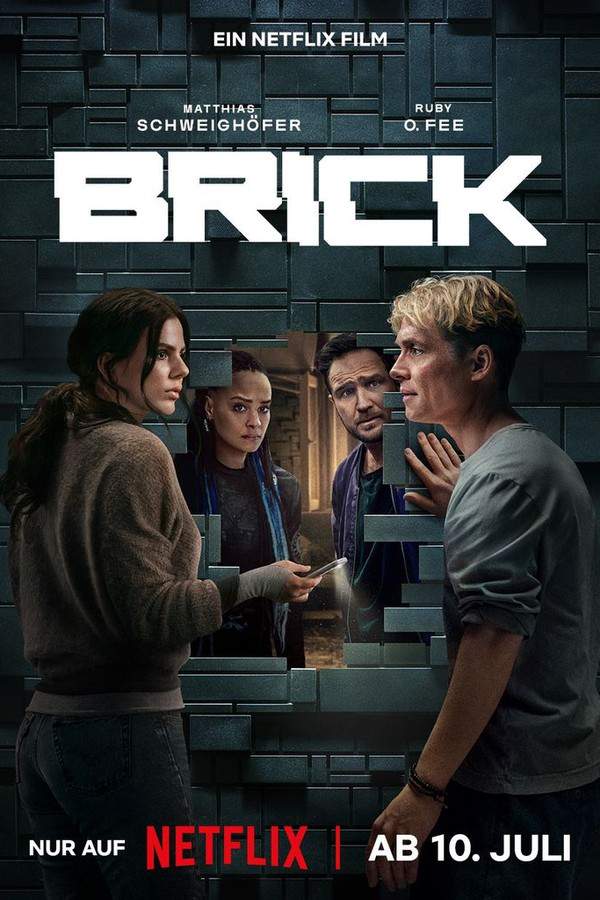
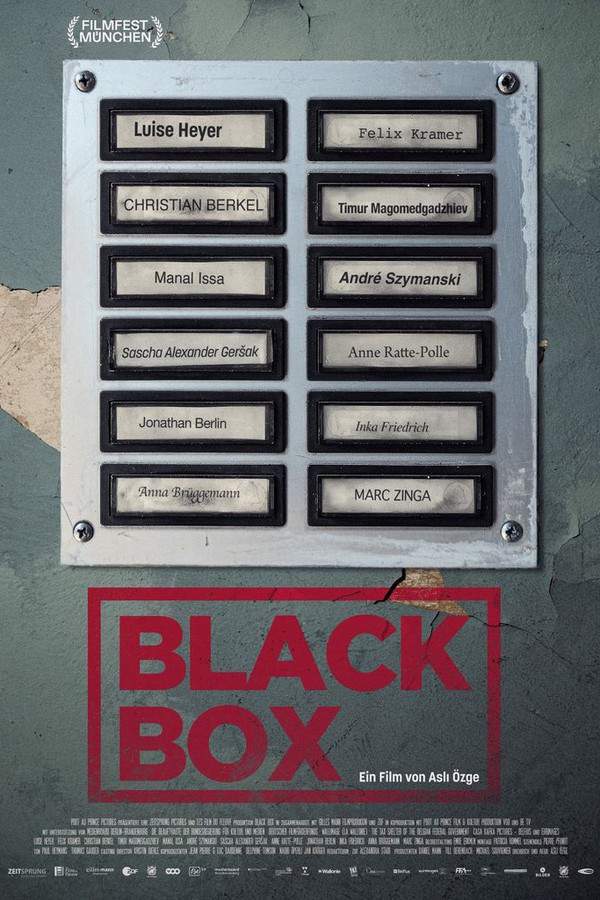
Tim and Liv have a strained marriage, with Liv secretly planning to slip away to Paris and restart their life together. She quits her job, and the plan seems simple—until a routine day spirals into a nightmare: when they awaken, the doors and windows of their apartment building are sealed behind an almost supernatural wall. The structure blocks all mobile signals and the Wi‑Fi, and it behaves like a magnet, flinging back metal objects if they’re gathered in a crowd. The couple quickly realizes they’re trapped inside a fortress of bricks that cuts them off from the outside world.
Determined to escape, they reach out to their neighbors: Marvin, Ana, Yuri, Lea, and Oswalt. The group learns the building is a relic built before World War II, with air-raid shelters that once connected to the subway, suggesting a potential route to freedom. But the mystery deepens as Yuri, a conspiracy theorist who distrusts the outside world, argues that the wall is a protective barrier against some catastrophe and should not be breached. He also harbors a darker secret: Anton, a resident with a pacemaker who collapsed near the wall, was killed, and Yuri would kill again to keep others from breaking out.
The shelter exits are blocked by the same brick barrier, and the company history surrounding the building (and a fire at HafenCity) hints at a broader, covert project. Anton, it turns out, was a senior programmer at Epsilon Nanodefense, and the fire claimed by the authorities may have activated a nanotech defense system that sprawled across Hamburg. What people suspect—and what Yuri quietly pushes back against—is the idea that a private project, possibly with government involvement, has quietly turned everyday homes into prisons under the guise of protection.
As the group investigates, Friedman—the building manager who lost his hands to the wall and who had been secretly watching everyone—becomes a grim symbol of the cost of this experiment. Hidden cameras reveal Yuri’s true violence: he murdered Anton to halt any attempt to pry open the wall, and Lea discovers this truth by digging through Anton’s notes. When she learns the evidence, she becomes a target, and Yuri kills her as well before burning Anton’s research so no one else can unlock the barrier.
With the truth emerging, the remaining survivors realize that Anton had indeed created a way to open the wall: a smartphone‑based system using a sequence of flashes, like dialing a password. Tim, whose skillset as a gamer and coder proves crucial, works to recreate Anton’s app. Their first attempt goes tragically wrong and claims Ana’s life as the wall turns semi‑solid and grabs her fingers. The loss compounds the emotional strain already weighing on Tim and Liv, who have their own unresolved pain: Liv’s miscarriage years earlier and Tim’s instinct to shield both her and himself from pain by building emotional walls around them.
In a desperate confrontation, Yuri reappears, but is quickly thwarted by Liv, who knocks him out. The couple, now navigating the hard truth about their relationship and their shared past, makes a painful decision to escape rather than reopen questions about Hamburg’s secret project. They convert their revived plan—driving a caravan to Paris—into a fresh commitment to family over work, a symbolic break in the barrier they’ve lived with for so long.
The escape finally comes when Tim and Liv synchronize the flashes from Anton’s device to the wall’s “buttons.” The sequence is fraught with risk: Ana dies during the first test, leaving a stark reminder of the human cost embedded in their fight. Yet the pair survives and, along with Marvin, chooses to flee rather than dwell on the enigma behind the nanotech bricks.
The film closes with an emergency news broadcast that ties the mystery to a wider catastrophe: the fire at the Epsilon Nanodefense facility appears to have activated a nanotech defense system that spread across Hamburg overnight, turning ordinary homes into locked fortresses. Whether the blaze was an accident or deliberate sabotage remains unclear, but the result is the same for the people inside: a city sealed off by power, paranoia, and a technology they came to fear as much as they misunderstood.
In the end, the wall that confined them becomes a metaphor for the barriers they built around each other. By choosing to focus on their renewed bond and the prospect of a shared future, Tim and Liv reclaim a sense of normalcy—one that prioritizes family, connection, and the chance to begin again, even as the world outside remains shrouded in uncertainty.