Plot Explained Spoilers guaranteed!
Plot Explained

Browse by genre

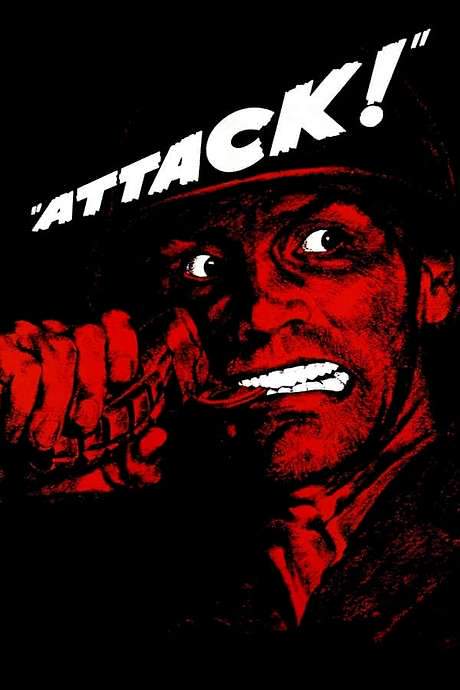
Attack (1956) movie poster

Plot Summary

Attack (1956) Plot Summary Explained

Release, runtime and language
1956 · 107 mins · English
JustWatch #10,262 4
Directed by
Robert Aldrich
Starring
Peter van Eyck, Lee Marvin, Strother Martin, Jack Palance, Steven Geray, Eddie Albert

Set amid the brutal Battle of the Bulge in 1944, the story follows Lieutenant Costa, an infantry company officer tasked with establishing artillery observation posts in a key sector. As he grapples with the chaotic front, Costa begins to question Captain Cooney’s leadership, fearing reckless decisions could endanger his men.

On this page (6)
  1. 1 Where to watch
  2. 2 What happens: full plot
  3. 3 Plot questions answered
  4. 4 Movie threads
  5. 5 Movies like Attack
  6. 6 Every angle

Where to watch

Where to Watch Attack (1956)

Where can you watch Attack? Stream, rent or buy it in the US, including on Amazon Prime Video, Artiflix and Eternal Family: current JustWatch availability with up-to-date prices.

Streaming availability powered by JustWatch

Full plot summary · contains spoilers

What Happens in Attack: Full Plot Summary

The whole story of Attack (1956) explained, from the opening scene to the final frame: every key event, every twist and what it all adds up to. Read it as a quick recap before the sequel, to check a scene you missed, or to finally understand what really happened.

Europe 1944 unfolds around Fox Company, a US Army National Guard infantry unit nicknamed "Fragile Fox," stationed in a Belgian town near the front. Captain Erskine Cooney, Eddie Albert, governs with a knack for red tape more than battlefield courage, a trait that quietly tilts the balance between duty and danger. When Lieutenant Joe Costa, Jack Palance, sends a squad to take a pillbox, Cooney agrees to provide covering fire but freezes at the critical moment, sealing the fate of Costa’s squad and setting off a chain of consequences that ripple through the company. In the aftermath, Lt. Ned Lathrop’s death—off-screen, during a rescue attempt—hangs over the unit like a cold reminder of what could have been prevented.

The executive officer, Lt. Harold Woodruff, William Smithers, emerges as the “voice of reason” amid the mounting chaos, trying to keep peace between Cooney and Costa. He seeks out battalion commander Lieutenant Colonel Clyde Bartlett, Lee Marvin, a career officer whose ambition stretches beyond the moment: he hopes to leverage Cooney’s family ties for post-war political gain. When Woodruff appeals to Bartlett’s sense of honor, arguing that Cooney is unfit to lead and should be reassigned, Bartlett remains unmoved. He reassures Woodruff that the war is nearing its end and that the platoon may never fight again. The truth, however, is that Cooney’s position owes much to Bartlett’s long-ago influence—an influence tied to the judge who once ran his father’s office and whose political weight could be a tool for Bartlett’s own post-war ascent.

As spring turns to the grim realities of the Battle of the Bulge, Bartlett orders Cooney to seize the town of La Nelle. Woodruff suggests a two-pronged approach, but Cooney overruling insists Costa lead a reconnaissance mission, with the caveat that reinforcements will be sent if heavy resistance is met. The platoon presses toward La Nelle, only to collide with a fortified German position—tanks, mortars, and infantry turning the town into a lethal trap. Costa’s squad suffers devastating losses; those who survive, including the Platoon Sergeant Tolliver, Buddy Ebsen; Bernstein, Robert Strauss; Ricks, Jim Goodwin; and Snowden, Richard Jaeckel—take refuge in a farmhouse. When Costa requests reinforcements, Cooney ignores the plea and drinks instead, a choice that foreshadows tragedy. They capture a German SS officer and a soldier, but the house is shelled by tanks, forcing a desperate retreat. Costa’s plea over the radio to Woodruff—“> I’m coming back!” —echoes through the radios as danger closes in.

As the survivors retreat, Ricks is shot and badly wounded. Tolliver, Snowden, and Bernstein dash past him, but Costa refuses to abandon the injured man and stays behind, attempting to carry Ricks to safety. Ricks dies in Costa’s arms, and the bombardment swallows Costa’s squad, leaving the others to stumble back to their lines. The unit’s contempt for Cooney becomes audible in the wake of the disaster. Bartlett reprimands Cooney for not bringing in the entire company to secure La Nelle, and pressure mounts as the Germans press forward. He orders the troops to hold their ground, threatening to arrest Cooney if he retreats, a threat that provokes a heated exchange and a brutal strike from Bartlett.

Woodruff clamps down, threatening to reveal the whole scheme to the commanding general, Gen. Parsons, unless Cooney is held to account. Cooney, once again flanked by his own fragility, retreats into drink until Woodruff shatters the bottle and asserts control. Just then, Costa staggers back, more determined than ever to save his men, and a tense confrontation erupts between the two officers. Corporal Jackson, Jon Shepodd, radios that La Nelle is being overrun and that Costa’s remnants are cut off, adding a sense of urgency to an already collapsing front. Costa, wielding a bazooka, manages to disable one tank, but another tank runs over his arm, leaving him grievously wounded and pinned down.

The group gathers in a basement, with Cooney soon joining, and Bernstein’s leg is crushed when a beam collapses. As they strive to return to safety, they realize they are surrounded. Cooney orders surrender, but the sight of Costa—crushed and bleeding—hammers home the seriousness of their fate. Costa implores a last act of strength to kill Cooney, and, as he dies, Cooney is left standing, his pistol kicked away by Costa’s final, defiant push. Woodruff, horrified by the raw truth, wants to confess, but his comrades—Tolliver, Bernstein, Jackson, and Snowden—step forward to take the blame themselves. Only Snowden remains detached enough to report that the town is empty and reinforcements are arriving as German troops begin a retreat.

Bartlett locates the men and demands to speak to Cooney, who is no longer among the living. The remaining soldiers direct him toward Cooney’s body, a stark symbol of the mess they all helped create. Bartlett senses that Woodruff’s allies across the line are trying to shield the truth, but instead he tries to elevate the narrative: offering a field promotion to captain for Woodruff in exchange for keeping quiet, while vowing to award Costa a medal as well. Woodruff, furious at the political maneuvering, accuses Bartlett of engineering the entire incident to ruin Cooney and curry favor with the powerful family. Yet Bartlett’s scheme collapses under scrutiny, and in a final act of responsibility, Woodruff chooses to do the right thing and contacts Gen. Parsons to file a full report, honoring Costa’s courage and the men who fought, bled, and sacrificed themselves in a doomed, morally complex mission.
Last updated: October 09, 2025 at 14:14

Was this helpful?

Plot questions answered

Attack Plot Explained: Your Questions Answered

The questions people ask most about Attack (1956): what happens in the confusing scenes, why the characters do what they do, the twists, hidden details and what the ending means. Each answer contains spoilers.

Q1

Why did Captain Cooney freeze during the pillbox mission?

Captain Cooney promised covering fire for Lieutenant Costa's squad during the pillbox assault, but when the critical moment came, he froze and failed to provide the promised support. This decision resulted in the slaughter of Costa's squad and set the central conflict in motion, Costa's growing determination to hold Cooney accountable for his cowardice and incompetence.

Foreshadowing: Earlier scenes establish Cooney as a paper-pusher more comfortable with red tape than combat leadership, hinting at his inability to perform under fire.

  • captain cooney
  • pillbox mission
  • cowardice
  • fox company
  • failed assault
Q2

Why wouldn't Lieutenant Colonel Bartlett remove Cooney from command?

Bartlett refused to reassign Cooney because he harbored political ambitions beyond the war. Cooney's family connections, particularly to a judge who once ran Bartlett's father's office, represented potential leverage for Bartlett's postwar political career. Rather than prioritize the safety of the troops, Bartlett chose to protect his future political prospects.

Foreshadowing: Bartlett's character is introduced as a career officer more concerned with advancement than the wellbeing of his men.

  • lieutenant colonel bartlett
  • captain cooney
  • political cover-up
  • command failure
  • postwar ambitions
Q3

Why did Lieutenant Costa stay behind to help Ricks?

When Ricks was shot and badly wounded during the retreat from La Nelle, Costa refused to abandon him despite the incoming tank bombardment. He attempted to carry Ricks to safety, but Ricks died in his arms. This act of loyalty and refusal to leave a man behind defined Costa's character and intensified his vendetta against Cooney, who had refused to send reinforcements.

Foreshadowing: Costa's earlier frustration with Cooney's failure to support his squad establishes his deep sense of responsibility toward his men.

  • lieutenant costa
  • ricks
  • abandoned
  • sacrifice
  • loyalty
  • retreat from la nelle
Q4

What happened to Lieutenant Costa at the end?

Costa was gravely wounded while fighting German tanks, he managed to disable one with a bazooka, but another tank ran over his arm, crushing it. He crawled to the basement shelter with the surviving members of Fox Company. In his final moments, he implored his fellow soldiers to kill Captain Cooney, then died after kicking Cooney's pistol away in a final act of defiance.

Foreshadowing: Costa's determined return from the La Nelle disaster, wounded but alive, foreshadows his fatal confrontation with Cooney.

  • lieutenant costa death
  • bazooka
  • tank
  • wounded
  • final confrontation
  • la nelle
Q5

Why did Lieutenant Woodruff kill Captain Cooney?

When Cooney ordered surrender while trapped in the basement with the wounded survivors, Woodruff realized that if they surrendered, Cooney would likely blame all of them for the disaster to save himself. To prevent Cooney from shifting accountability and to protect his men, Woodruff shot Cooney dead. The other soldiers then briefly fired at Cooney's body to make it appear they had all participated, shielding Woodruff from consequences.

Foreshadowing: The earlier power struggle between Woodruff and Cooney, combined with Bartlett's attempts at a cover-up, establishes the political stakes of the final confrontation.

  • lieutenant woodruff
  • captain cooney
  • shooting
  • surrender
  • blame
  • cover-up
  • basement
Q6

Why did Bartlett try to cover up the La Nelle disaster?

Bartlett attempted to offer Woodruff a field promotion to captain in exchange for his silence, while also promising to award Costa a posthumous medal. His goal was to bury the truth about Cooney's failures and his own complicity in the chain of command. Bartlett had leveraged his influence to keep Cooney in power and wanted to prevent the scandal from damaging his postwar political aspirations.

Foreshadowing: Bartlett's earlier refusal to remove Cooney despite Woodruff's protests planted the seeds for this attempted cover-up.

  • lieutenant colonel bartlett
  • cover-up
  • promotion
  • la nelle
  • political scandal
  • postwar career
Q7

What caused the conflict between Lieutenant Costa and Captain Cooney?

The conflict began when Cooney froze during the pillbox mission, refusing to provide the promised covering fire that resulted in the deaths of Costa's squad members, including Lieutenant Lathrop. Costa witnessed Cooney's cowardice firsthand and spent the rest of the film demanding accountability, culminating in his determined pursuit of justice and his violent confrontation with Cooney after the La Nelle disaster.

Foreshadowing: The opening scene with the failed pillbox mission directly establishes the personal vendetta that drives Costa throughout the film.

  • costa vs cooney
  • conflict
  • accountability
  • cowardice
  • leadership
  • pillbox mission failure
Q8

Why did Fox Company turn against Captain Cooney?

Fox Company grew to despise Cooney after he repeatedly put their lives at risk through incompetent leadership. His failure to provide covering fire during the pillbox mission, his refusal to send reinforcements during the La Nelle assault, and his drinking during critical moments made him a symbol of useless command. When the survivors returned from La Nelle, their audible contempt for Cooney became a turning point that emboldened Woodruff to confront Bartlett and ultimately led to Cooney's death.

Foreshadowing: The buildup of resentment from failed missions and lost soldiers creates the tension that explodes in the final basement scene.

  • fox company
  • mutiny
  • contempt
  • captain cooney
  • soldiers
  • leadership failure
  • la nelle
Q9

What was Bartlett's relationship with the Cooney family?

Bartlett admitted to Woodruff that he had helped advance Cooney's career because Cooney's father had been a judge who once ran Bartlett's father's office. This political debt, combined with Bartlett's desire to collect future favors, motivated him to protect Cooney even when it endangered the lives of the soldiers under Cooney's command.

Foreshadowing: This connection explains Bartlett's otherwise inexplicable loyalty to an incompetent officer.

  • bartlett
  • cooney family
  • political connection
  • judge
  • career advancement
  • debt
Q10

Why didn't reinforcements arrive during the La Nelle attack?

When Costa requested reinforcements during the La Nelle assault, Cooney ignored the plea and instead retreated to drink. Despite Costa's condition that reinforcements would be sent if heavy resistance was met, Cooney chose not to send help. This abandonment directly caused the devastating casualties and forced Costa's squad to take refuge in the farmhouse.

Foreshadowing: The mission briefing established that reinforcements would only come if Costa encountered heavy resistance, conditions that were clearly met.

  • reinforcements
  • la nelle
  • denied
  • cooney
  • drinking
  • failure to support
  • casualties
Q11

What did Woodruff threaten to do about Cooney's conduct?

Woodruff threatened to reveal the entire scheme to General Parsons, the commanding general, if Cooney was not held accountable for his failures. This ultimatum came after Bartlett refused to reassign Cooney and attempted to downplay the La Nelle disaster. Woodruff's threat represented a desperate attempt to use military hierarchy to override Bartlett's political maneuvering.

Foreshadowing: Woodruff's earlier attempts to work through proper channels with Bartlett had failed, leaving him no choice but to escalate.

  • woodruff
  • bartlett
  • general parsons
  • threat
  • report
  • accountability
  • escalation
Q12

What happened to the German troops at the end?

In the final scene, Private Snowden, who had remained detached throughout the crisis, reported that the town was empty and that German troops were retreating. Reinforcements arrived just as the survivors emerged from the basement. This retreat marked the end of the immediate combat threat, though it came too late to save Costa or prevent the tragedy.

Foreshadowing: The timing of the German retreat, arriving just after Cooney's death and the survivors' darkest moment, adds bitter irony to the resolution.
  • german troops
  • retreat
  • snowden
  • reinforcements
  • town empty
  • end of battle

Movie threads

More Movies Like Attack, by Mood & Story

Curated lists built around what makes Attack tick: the same mood, the same kind of story or the same emotional payoff. Each list explains why these movies belong together.

War movies with leadership crises like Attack

Stories where soldiers are trapped by enemy forces and incompetent command. If you liked the tense dynamic between soldiers and a failing commander in Attack, you'll find more movies like it here. This collection features war dramas where the central conflict revolves around incompetent leadership, moral dilemmas, and the desperate struggle for survival against overwhelming odds.

  • tense
  • frustrating
  • claustrophobic
  • grim
  • desperate
  • anxious
  • Tone: tense, grim, frustrating
  • Pacing: steady, pressure-building
Why these movies?

The story pattern: These narratives typically follow a unit or protagonist who must confront the incompetence or cowardice of their superior officer. The plot revolves around the growing tension between duty and self-preservation, often culminating in a direct challenge to authority and heavy casualties. The journey is one of frustration, moral courage, and tragic sacrifice.

Why they belong together: Movies in this thread are grouped for their shared focus on the internal collapse of a military unit. They create a specific, anxious mood by combining the external threat of combat with the internal threat of poor leadership, resulting in a uniquely frustrating and tense viewing experience.

Bleak war survival stories like Attack

Grim stories of survival where victory comes at a profound personal cost. For viewers who appreciated the grim atmosphere and heavy emotional weight of Attack, this list offers similar movies. Discover other war films that portray the desperate fight for survival with a bitterswart tone, where the endings are sobering and the sacrifices are deeply felt.

  • grim
  • desperate
  • atmospheric
  • anxious
  • bleak
  • heavy
  • Tone: grim, desperate, bitterswart
  • Pacing: steady, deliberate
Why these movies?

The story pattern: The narrative pattern involves a group or individual simply trying to endure a brutal military engagement. The plot is less about grand strategy and more about moment-to-moment survival, often in a confined or hopeless-seeming situation. Character arcs are defined by loss, trauma, and the erosion of idealism, leading to an ending that acknowledges survival but mourns what was lost.

Why they belong together: These films are united by their grim, atmospheric portrayal of war and their emotionally heavy, bitterswart conclusions. They share a similar vibe of desperation and a focus on the high cost of survival, which creates a powerful and resonant experience for viewers seeking realism and depth.

If you liked this

Movies Like Attack

Similar movies to Attack: the same genre, themes or kind of story. Each one comes with its own plot summary, timeline and ending explained.

Browse all movie summaries

Every angle

Attack (1956) Explained: Plot, Timeline & Characters

Everything about Attack in one place: what happens in the plot summary, the timeline in chronological order, the characters and meaning and a spoiler-free summary. What's After the Movie adds the cast, box office and post-credit scenes.

Coming soon on iOS and Android

The Plot Explained Movie Summary App

Plot summaries, endings explained and timelines on your phone. Catch up on any movie in minutes, save your favorites and never miss a twist again.

Be the first to know when we launch. Your email stays private, always.

Learn more about the app