Plot Explained Spoilers guaranteed!
Plot Explained

Browse by genre

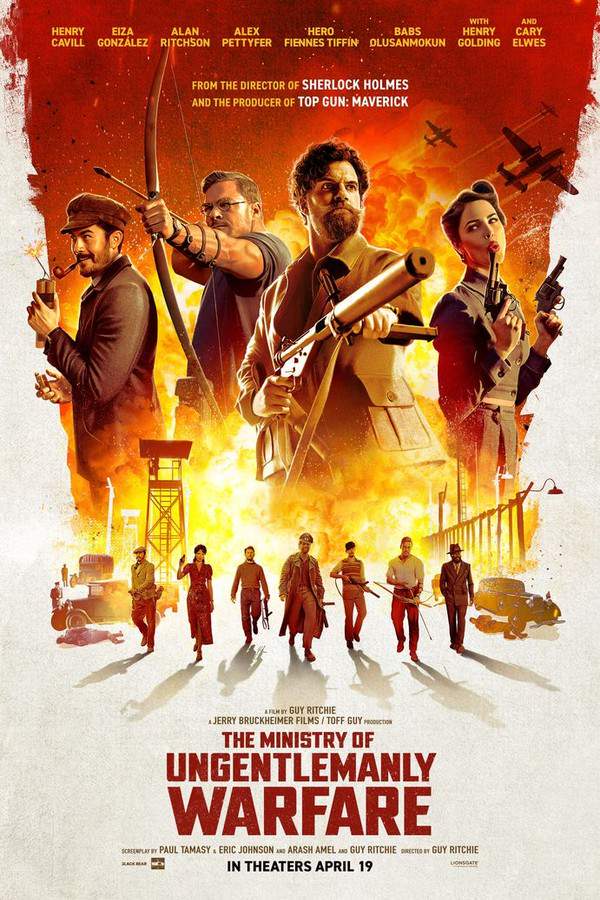
The Ministry of Ungentlemanly Warfare (2024) movie poster

Plot Summary

The Ministry of Ungentlemanly Warfare (2024) Plot Summary & Ending Explained

Release, runtime and language
2024 · 2 h · English
Echo score 60
JustWatch #3 1
Directed by
Guy Ritchie
Starring
Alan Ritchson, Eiza González, Henry Golding, Henry Cavill, Rory Kinnear, Alex Pettyfer
Budget
$60M

During World War II, British Prime Minister Winston Churchill authorizes the creation of a clandestine special forces unit. Recruited are a diverse and unconventional group of military experts, tasked with carrying out daring and humorous missions. Inspired by declassified historical accounts, the film blends action and comedy as this unique team faces perilous challenges on the battlefield.

On this page (7)
  1. 1 Where to watch
  2. 2 What happens: full plot
  3. 3 Plot questions answered
  4. 4 How it ends
  5. 5 Movie threads
  6. 6 Movies like The Ministry of Ungentlemanly Warfare
  7. 7 Every angle

Where to watch

Where to Watch The Ministry of Ungentlemanly Warfare (2024)

Where can you watch The Ministry of Ungentlemanly Warfare? Stream, rent or buy it in the US, including on Netflix, Netflix Standard and YouTube TV: current JustWatch availability with up-to-date prices.

Streaming availability powered by JustWatch

Full plot summary · contains spoilers

What Happens in The Ministry of Ungentlemanly Warfare: Full Plot Summary

The whole story of The Ministry of Ungentlemanly Warfare (2024) explained, from the opening scene to the final frame: every key event, every twist and what it all adds up to. Read it as a quick recap before the sequel, to check a scene you missed, or to finally understand what really happened.

In the final months of 1941, Germany establishes dominance over the Atlantic, utilizing U-Boats to wreak havoc on merchant vessels traveling from the United States to the United Kingdom. The narrative unfolds in 1942, where we find Gus March-Phillips and Anders Lassen aboard a sailboat that is confronted by a German naval party. Offended by their drunken antics, the German captain, portrayed by Tim Seyfi, orders their vessel to be set ablaze. However, as German sailors discover armed men hiding below deck, chaos erupts, leading to Anders decisively slitting the German captain's throat and a brutal massacre of the boarding party.

The German crew had boarded from a nearby destroyer, which comes under attack as Freddy Alvarez, a skilled diver, has planted explosives on its hull. Their mission meets success when the destroyer succumbs to the blast and sinks.

At this time during World War II, the United Kingdom is grappling with the relentless bombardment from the Luftwaffe and the crippling losses of supply ships to German submarines in the Atlantic. Faced with the dire need for 3 million tons of supplies each month and the troubling fact that they are losing half of that to U-Boats, British commanders, including Winston Churchill, contemplate surrender, believing they cannot thwart an impending invasion from Germany.

In a desperate move, Brigadier Colin Gubbins, operating with covert approval from Churchill, devises Operation Postmaster. This clandestine sabotage mission aims to disrupt the supply lines that keep Hitler’s U-Boat fleet operational from the neutral grounds of Fernando Po, an island under Spanish control, where a supply ship, Duchessa D'Aosta, and two tugboats are stationed. Attacking this neutral territory would risk an escalation with the rest of Europe siding with Hitler.

Tasked with assembling a team, Gubbins enlists Gus March-Phillips to lead the operation. Undercover agent, Marjorie Stewart, and fellow agent Richard Heron set off by train to join the mission. Marjorie will pose as a gold trader from New York, intending to seduce and distract Heinrich Luhr (played by Til Schweiger), the German commanding officer. With a deadline of 44 days to act before the Germans shift operations, securing the Duchessa as a target is crucial to their plan.

Traveling aboard the neutral Swedish fishing trawler, Maid of Honor, Gus and his crew members—Graham Hayes, Freddy Alvarez, and Anders Lassen—make their way along the West African coast, armed with explosives intended for the Duchessa.

Upon learning that the Geoffrey Appleyard, a fellow SOE agent sent ahead by Gubbins, has fallen into Gestapo hands, Gus decides on a risky detour to the Nazi-controlled Canary Islands for a rescue. With time ticking away, Gus believes Appleyard holds vital intelligence for their mission's success.

Reaching La Palma, they find the Gestapo already active in the area. Calculating their moves carefully, Gus leads his crew into a daring raid on a fortified German camp, with Anders single-handedly battling through to find Appleyard.

Meanwhile, Marjorie and Heron scheme to claim crucial cargo manifests from a German officer, uncovering the Duchessa is laden with arms and supplies. With valuable insights gathered, Marjorie sets about securing further local support while using her charm to keep Luhr unsuspecting.

Yet as the raid's planned night approaches, new information reaches them: the Duchessa will depart earlier than expected. In a bold move, Gus’s team navigates through a British naval blockade to intercept the ship, completely aware of the severe repercussions if caught.

On the night of the operation, a carefully orchestrated diversion with parties underway distracts German forces, allowing Gus and his crew to execute their plan. With the Duchessa's hull fortified against traditional means of attack, their plan to hijack the vessel becomes paramount. As they wage battle against German soldiers, chaos ensues, leading to Marjorie's critical moment where she takes out Luhr, saving the mission.

In the end, they successfully secure the Duchessa and deliver the ships to a British fleet outside Lagos. However, their victory is bittersweet as they find themselves arrested. But their remarkable actions catch the attention of Churchill, who brings them into his 'Ministry of Ungentlemanly Warfare'. Their impact ripples throughout the war, allowing American forces to enter the European theater after Japan's assault on Pearl Harbor.

As the story concludes, a montage showcases the fates of the protagonists: Gus becomes a celebrated war hero and eventually marries Marjorie as her acting career takes off; Appleyard is recognized for his valor; Hayes becomes an accomplished spy; Lassen continues his daring exploits until his untimely death; and Ian Fleming draws inspiration from their legendary mission to shape the iconic tales of James Bond.
Last updated: October 24, 2024 at 08:41

Was this helpful?

Plot questions answered

The Ministry of Ungentlemanly Warfare Plot Explained: Your Questions Answered

The questions people ask most about The Ministry of Ungentlemanly Warfare (2024): what happens in the confusing scenes, why the characters do what they do, the twists, hidden details and what the ending means. Each answer contains spoilers.

Q1

Why does Gus March-Phillips risk the mission to rescue Geoffrey Appleyard?

Gus decides to rescue Appleyard because the captured SOE agent possesses vital intelligence critical to the mission's success. Even though detaining to the Nazi-controlled Canary Islands risks delaying their operation against the Duchessa, Gus calculates that Appleyard's information outweighs the danger of the detour. This decision highlights Gus's prioritization of intelligence over strict adherence to the timeline.

  • gus march-phillips
  • appleyard rescue
  • canary islands
  • gestapo
Q2

What was Operation Postmaster trying to accomplish?

Operation Postmaster was a covert sabotage mission designed to disrupt Hitler's U-Boat supply lines. The target was the Duchessa D'Aosta, a supply ship anchored at Fernando Po (a neutral Spanish island), along with two tugboats that supported German submarine operations. By capturing or destroying these vessels, the Allies aimed to reduce the devastating 50% loss of supply ships to U-Boats and prevent a potential German invasion of Britain.

  • operation postmaster
  • duchessa d'aosta
  • u-boats
  • fernando po
  • supply lines
Q3

Why was the Duchessa D'Aosta a strategically important target?

The Duchessa D'Aosta was crucial because it served as a floating supply base for Germany's U-Boat fleet operating from neutral Fernando Po. The ship was laden with arms and supplies needed to keep submarines operational in the Atlantic. Disrupting this supply line would directly impact Germany's ability to sink Allied merchant vessels, which were losing half of all supplies destined for Britain.

  • duchessa d'aosta
  • strategic target
  • u-boat supplies
  • fernando po
Q4

How did Marjorie Stewart contribute to the mission's success?

Marjorie Stewart played a critical intelligence and distraction role. Posing as a gold trader from New York, she seduced and distracted German commanding officer Heinrich Luhr, keeping him unaware of the Allied operation. Simultaneously, she and Richard Heron extracted crucial cargo manifests from a German officer, confirming that the Duchessa carried arms and supplies. Her ability to gather intelligence and maintain Luhr's unsuspecting demeanor was essential to the mission's success.

  • marjorie stewart
  • heinrich luhr
  • intelligence
  • distraction
  • seduction
Q5

What happened to Gus and his team after successfully capturing the Duchessa?

After successfully securing the Duchessa and delivering it to the British fleet outside Lagos, Gus and his team were arrested. Despite their heroic mission that significantly disrupted German U-Boat operations, their unauthorized operation in neutral waters and the methods they used led to their detention. However, their actions caught Winston Churchill's attention, who personally intervened to bring them into his newly formed 'Ministry of Ungentlemanly Warfare.'

  • arrest
  • duchessa capture
  • churchill
  • ministry of ungentlemanly warfare
  • lagos
Q6

What was the Ministry of Ungentlemanly Warfare?

The Ministry of Ungentlemanly Warfare was a real covert British organization created by Winston Churchill during World War II. It specialized in unconventional warfare, including sabotage, guerrilla tactics, and black operations that regular military forces could not conduct. In the film, Churchill invites the successful Operation Postmaster team to join this ministry, recognizing that their unorthodox methods were exactly what Britain needed to turn the tide of war.

  • ministry of ungentlemanly warfare
  • churchill
  • covert operations
  • ww2
  • special forces
Q7

How did this mission inspire the creation of James Bond?

The real-life Operation Postmaster mission directly inspired Ian Fleming, who served in British naval intelligence during WWII. Fleming drew from the daring exploits of Gus March-Phillips and his team, their covert sabotage, theatrical techniques, and against-all-odds operations, to shape the iconic character of James Bond. The film's ending explicitly shows Ian Fleming drawing inspiration from their legendary mission.

  • ian fleming
  • james bond
  • inspiration
  • operation postmaster
  • spy fiction
Q8

Why was the 44-day deadline critical to the mission?

The 44-day deadline was crucial because German forces were planning to shift their operations from Fernando Po to a new location. If the team failed to act within that window, they would lose the opportunity to disrupt the U-Boat supply lines at that site. This deadline created the urgency that drove the entire operation and made Gus's decision to rescue Appleyard even more risky.

  • 44 days
  • deadline
  • german operations
  • fernando po
  • time pressure
Q9

Why was attacking Fernando Po a risky political decision?

Attacking Fernando Po was extremely risky because the island was neutral territory under Spanish control. A direct military assault could escalate tensions with Spain and potentially push the country toward supporting Hitler rather than remaining neutral. This diplomatic risk is why Churchill authorized the operation covertly through Brigadier Colin Gubbins, ensuring plausible deniability if the mission were discovered.

  • fernando po
  • neutral territory
  • spain
  • political risk
  • covert operation
Q10

Why does Anders Lassen kill the German captain at the beginning?

When German sailors board Gus and Anders's sailboat expecting unarmed civilians, they discover armed men hiding below deck. The German captain orders their vessel to be set ablaze, and upon realizing he's encountered enemy combatants, Anders quickly kills the captain by slitting his throat to prevent warning the other Germans. This violent encounter sets the tone for the team members as ruthless and capable of extreme violence when confronted.

  • anders lassen
  • german captain
  • kill
  • sailboat
  • opening scene
Q11

Why does Gus risk crossing the British naval blockade?

Gus decides to navigate through a British naval blockade because new intelligence reveals the Duchessa will depart earlier than expected. With the deadline collapsing and no time to wait for proper clearance, Gus calculates that the risk of crossing the blockade is worth taking since failing to intercept the ship would mean losing their only opportunity to disrupt the U-Boat supply lines. They proceed knowing the severe repercussions if caught by British forces.

  • british naval blockade
  • duchessa
  • intercept
  • crossing
  • risk
Q12

What happened to Anders Lassen after the war?

According to the film's ending montage, Anders Lassen continued his daring exploits throughout the war until his untimely death. While the film doesn't provide specific details about how he died, his character is portrayed as a relentless warrior who kept fighting until the end, contrasting with the fates of other team members who survived and found different paths after the war.

  • anders lassen
  • death
  • war
  • fate
  • ending montage

Ending explained

What Happens at the End of The Ministry of Ungentlemanly Warfare?

How The Ministry of Ungentlemanly Warfare (2024) ends, in short: the final scene, the last twist and what it means for the characters. The full ending explained, with every spoiler, lives on its own page.

Read the full ending explained

The film concludes with Gus and his team successfully carrying out their daring raid, stealing the Nazi supply ship and escaping moments before German forces can retaliate, thanks to meticulous planning and their covert approach. While they initially planned to destroy the ship, they had to adapt when they discovered it was heavily reinforced—so instead, they managed to seize it, disrupting the critical supply route for the Nazis in the Atlantic. Afterward, the team narrowly escapes the chaos at the harbor, with Heron and Marjorie’s covert efforts paying off, and the Germans only realizing too late what had happened. Despite their victory, the British agents are captured and sentenced to execution for disobedience, as they had acted without official orders. However, Churchill intervenes at the last moment, entering the prison and revealing that the Allies are making progress, with American forces landing in France—a detail that signals the turning point for WWII. Churchill then pardons the agents, acknowledging their crucial role. The film ends with a nod to the real-life inspiration behind James Bond, as photographs and a brief note at the end remind viewers that the bravery and ingenuity of these secret operatives helped shape not only the war’s outcome but also the spy genre’s legendary figures. This ending emphasizes that despite the risks and the unofficial nature of their missions, their efforts made a significant difference in turning the tide against the Nazis, and they were ultimately celebrated as heroes, even if only in secret.

The Ministry of Ungentlemanly Warfare ending explained in full

Movie threads

More Movies Like The Ministry of Ungentlemanly Warfare, by Mood & Story

Curated lists built around what makes The Ministry of Ungentlemanly Warfare tick: the same mood, the same kind of story or the same emotional payoff. Each list explains why these movies belong together.

Irreverent Historical Action Missions like The Ministry of Ungentlemanly Warfare

True story special ops teams with humor and high-stakes sabotage. If you liked The Ministry of Ungentlemanly Warfare, explore other movies about real-life special operations that mix daring action with witty humor. These films feature unconventional teams on high-stakes missions, offering a similar blend of historical intrigue and thrilling, character-driven combat.

  • action-packed
  • humorous
  • daring
  • thrilling
  • heroic
  • suspenseful
  • Tone: tense, humorous
  • Pacing: fast, mission-driven
Why these movies?

The story pattern: The narrative follows a specialized, often maverick, team assembled for a critical mission against a powerful enemy. The plot is linear and mission-focused, driving forward with clear objectives, daring set-pieces, and moments of levity that stem from the team's chemistry and unorthodox methods. Victory is often achieved, but tempered by the costs of war.

Why they belong together: Movies in this thread are grouped by their unique tonal blend: they are grounded in historical events yet energized by a playful, almost pulpy sensibility. They share a focus on teamwork, audacious plans, and a pacing that balances intense action sequences with character-driven humor.

Movies about Daring Wartime Sabotage Teams like The Ministry of Ungentlemanly Warfare

Squadrons of specialists risking everything on a single crucial operation. Find more movies like The Ministry of Ungentlemanly Warfare that feature a team of experts on a single, crucial sabotage mission. These similar war films focus on teamwork, high-tension infiltration, and the high-stakes action of operations behind enemy lines.

  • tense
  • daring
  • teamwork
  • sabotage
  • suspenseful
  • thrilling
  • Tone: tense, heroic
  • Pacing: fast, relentless
Why these movies?

The story pattern: The narrative structure is straightforward: a clear objective is established, a team with complementary skills is assembled, and the film follows the execution of their perilous plan, often encountering unforeseen obstacles. The journey is defined by strategic teamwork, close calls, and the immense pressure of the mission's stakes.

Why they belong together: These films share a specific plot archetype—the 'mission movie'—with a strong emphasis on ensemble casts, strategic action, and a tense, fast-paced atmosphere. They are connected by their focus on a collective effort against a larger force, rather than a single hero's journey.

If you liked this

Movies Like The Ministry of Ungentlemanly Warfare

Similar movies to The Ministry of Ungentlemanly Warfare: the same genre, themes or kind of story. Each one comes with its own plot summary, timeline and ending explained.

Browse all movie summaries

Every angle

The Ministry of Ungentlemanly Warfare (2024) Explained: Plot, Ending, Timeline & Characters

Everything about The Ministry of Ungentlemanly Warfare in one place: what happens in the plot summary, the timeline in chronological order, the characters and meaning, the ending explained and a spoiler-free summary. What's After the Movie adds the cast, box office and post-credit scenes.

Coming soon on iOS and Android

The Plot Explained Movie Summary App

Plot summaries, endings explained and timelines on your phone. Catch up on any movie in minutes, save your favorites and never miss a twist again.

Be the first to know when we launch. Your email stays private, always.

Learn more about the app