Plot Explained Spoilers guaranteed!
Plot Explained

Browse by genre

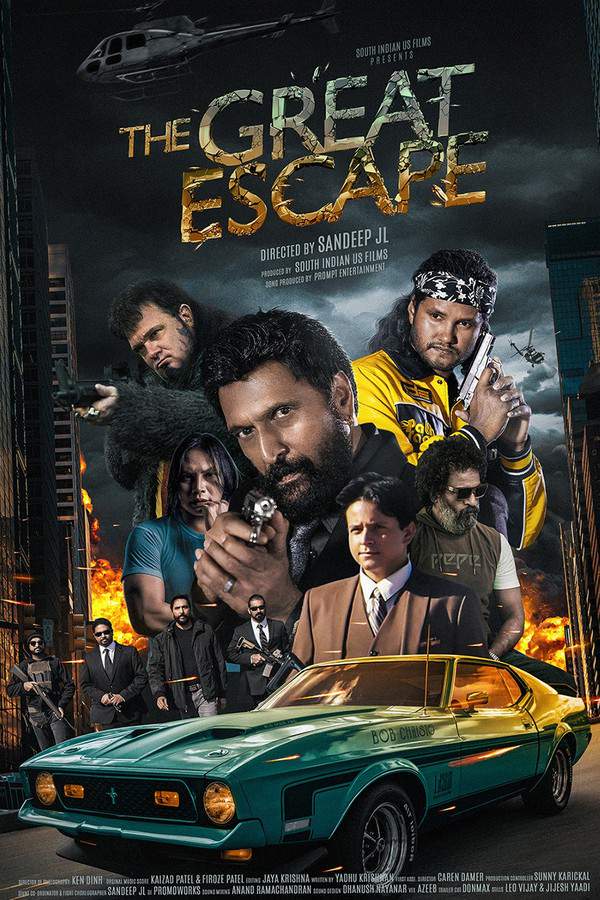
The Great Escape (1963) movie poster

Plot Summary

The Great Escape (1963) Plot Summary Explained

Release, runtime and language
1963 · 172 min · Malayalam
Loading streaming availability…
Starring
James Garner, Charles Bronson, Donald Pleasence, David McCallum, Gordon Jackson, Hannes Messemer

During World War II, a group of Allied prisoners of war plan and execute a complex escape from a seemingly impenetrable German POW camp. Their audacious scheme aims to free themselves while also diverting German forces away from crucial battlefronts, disrupting the enemy’s war machine. The meticulously crafted plan involves a large-scale operation and demands incredible courage and ingenuity from all involved.

On this page (7)
  1. 1 Where to watch
  2. 2 What happens: full plot
  3. 3 Plot questions answered
  4. 4 The book behind the movie
  5. 5 Movie threads
  6. 6 Movies like The Great Escape
  7. 7 Every angle
Loading streaming availability…

Full plot summary · contains spoilers

What Happens in The Great Escape: Full Plot Summary

The whole story of The Great Escape (1963) explained, from the opening scene to the final frame: every key event, every twist and what it all adds up to. Read it as a quick recap before the sequel, to check a scene you missed, or to finally understand what really happened.

In 1943, a contingent of Allied POWs, infamous for their repeated escape attempts from various camps throughout the Third Reich, finds themselves relocated to a new facility under the stern command of Luftwaffe Colonel von Luger. He forewarns the British Group Captain Ramsey, who is the highest-ranking officer among the POWs and serves as their de facto leader, that any escape will result in execution. Behind closed doors, von Luger is opposed to such extreme measures, yet the Gestapo—frustrated by the escalating chaos due to breakouts—threatens intervention if the Luftwaffe cannot effectively put an end to the escapes.

On the very first day, a few prisoners disregard the grim warning and attempt to escape, but they all fail. Among them is Hilts, a notorious escape artist, who keenly observes a blind spot in the camp's fencing system and intentionally gets captured before the guards can detect his discovery. After being sentenced to "the cooler," he is confined in a cell adjacent to Ives, and the two form a friendship amidst the confines of their captivity.

RAF Squadron Leader Roger Bartlett takes the initiative to revive "the X Organisation," a committee dedicated to planning escapes, with Ramsey's unspoken consent. He passionately argues that they could disrupt the German war effort significantly by breaking out an unprecedented 250 men at once, thereby forcing the German army to redirect essential resources away from the front lines.

As the prisoners’ resolve strengthens, they embark on constructing three tunnels named "Tom", "Dick", and "Harry." Hendley cleverly acquires essential tools through the black market and builds a partnership with the master forger Blythe. Meanwhile, Sedgwick assembles tools for digging, while Welinski and Dickes supervise labor efforts. MacDonald collects intelligence, Griffith stitches civilian disguises, and Ashley-Pitt devises a strategy for concealing the displaced dirt. Their mining activities are cleverly masked by a choir led by Cavendish, who is also tasked with monitoring the tunnels' routes. Recognizing Hilts' intentions of jumping the fence, Bartlett asks him to survey the surroundings before voluntarily getting recaptured to aid in their plans. However, Hilts refuses out of sheer pride.

When "Tom" nears completion first, Bartlett instructs that "Dick" and "Harry" be sealed off. In a moment of camaraderie, Hilts, Hendley, and Goff celebrate Independence Day with homemade potato moonshine, but their revelry is abruptly cut short as the guards unexpectedly discover "Tom." Overcome with despair, Ives frantically attempts to scale the fence, only to be shot dead. The traumatic event leaves Hilts stirred, leading him to reluctantly accept Bartlett's strategy.

Bartlett then decides to reopen "Harry." However, when the tunnel partially collapses, Welinski breaks down, admitting his claustrophobia to Dickes. As he attempts to escape like Ives, Dickes manages to diffuse the situation and prevent another tragedy. Meanwhile, Blythe faces an alarming reality as he discovers he is going blind, prompting Hendley to assist him as they plan their escape.

With "Harry" finally complete, the night of the breakout arrives, but the prisoners are shocked to find themselves just 20 feet short of the safety of the forest, still exposed to the guards’ line of sight. Under Hilts' guidance, who signals the group with a rope, and aided by the momentary blackout from a nearby air raid, dozens of men flee. Yet chaos ensues when Cavendish slips and stirs suspicion. An eager Griffith surfaces to investigate but is swiftly captured, leading to the unraveling of their carefully orchestrated plan.

The prisoners scatter across Europe in a desperate search for freedom. Welinski and Dickes successfully row to safety and board a ship bound for Sweden, while Sedgwick cycles towards France, ultimately relying on the Resistance to smuggle him into Spain. Regrettably, many others meet with failure: Cavendish attempts to hitch a ride only to be betrayed by the driver, Hilts commandeers a motorcycle in a daring escape towards the German-Swiss border, but after a thrilling chase where he jumps over tank barriers, he is recaptured. Hendley and Blythe steal a Luftwaffe training plane in a bid for survival but plummet when their engine fails; Blythe is shot, and Hendley is apprehended again. At a train station, Ashley-Pitt eliminates a Gestapo guard to protect Bartlett, only to be shot himself in the process. Ultimately, Bartlett and MacDonald are caught when a Gestapo officer tricks MacDonald into revealing his identity.

Fifty prisoners, including Bartlett, MacDonald, and Cavendish, are rounded up, transported to a field, and executed under Hitler's direct orders. Seventeen return to the camp, while six are sent to death camps.

Upon his return, Hendley, hearing of the grim news, questions Ramsey if their daring escape was worthwhile. Meanwhile, von Luger, burdened by the shame of the executions, loses his command and is driven away, facing an uncertain fate. Before he departs, he poignantly informs Hilts that it seems he will be the one to see Berlin first. Now facing confinement in the cooler once more, Hilts begins plotting his next escape, determined as ever.
Last updated: November 16, 2024 at 15:12

Was this helpful?

Plot questions answered

The Great Escape Plot Explained: Your Questions Answered

The questions people ask most about The Great Escape (1963): what happens in the confusing scenes, why the characters do what they do, the twists, hidden details and what the ending means. Each answer contains spoilers.

Q1

Why did Roger Bartlett want to escape 250 prisoners at once?

Bartlett proposed breaking out 250 men simultaneously because he believed such a large-scale escape would force the German army to divert critical resources, troops, guards, and equipment, away from the front lines to search for the escaped prisoners. This would disrupt the German war effort significantly rather than just freeing a few individuals.

  • roger bartlett
  • mass escape
  • x organisation
  • 250 prisoners
  • war effort
Q2

What happened to Ives after tunnel Tom was discovered?

When guards discovered tunnel Tom during the Independence Day celebration, Ives became frantic and attempted to scale the camp fence in desperation. He was shot dead by the guards, which deeply affected the other prisoners and particularly stirred Hilts into finally cooperating with Bartlett's plan.

  • ives
  • tunnel tom
  • shot
  • fence
  • independence day
Q3

Why was tunnel Harry shorter than expected?

When the prisoners emerged from tunnel Harry on escape night, they discovered it ended about 20 feet short of the forest, leaving them still within the guards' line of sight. The tunnel had been built shorter than planned, likely due to miscalculation or ground conditions, forcing them to make a dangerous dash across open ground under the cover of an air raid.

Foreshadowing: Earlier scenes show the prisoners monitoring tunnel routes through the choir, but the precise distance to the forest was apparently misjudged.

  • tunnel harry
  • 20 feet
  • forest
  • escape night
  • air raid
Q4

Why were the recaptured prisoners executed under Hitler's orders?

Hitler personally ordered the execution of 50 recaptured prisoners as a direct response to the embarrassing mass escape from the supposedly impenetrable camp. The Gestapo had already pressured Colonel von Luger to end the escapes, and the large-scale breakout humiliated the Nazi command, leading to the harsh retaliation as a warning against future escape attempts.

Foreshadowing: Colonel von Luger warned at the beginning that any escape would result in execution, and the Gestapo had threatened to intervene if the Luftwaffe could not stop the breakouts.

  • hitler
  • execution
  • 50 prisoners
  • recaptured
  • gestapo
Q5

What happened to Hilts after his motorcycle escape?

After the breakout, Hilts commandeered a motorcycle and raced toward the German-Swiss border in a daring escape. He performed an impressive jump over tank barriers during a chase but was ultimately recaptured by German forces and returned to the camp's cooler (solitary confinement).

  • hilts
  • motorcycle
  • swiss border
  • recaptured
  • cooler
Q6

Why did Colonel von Luger lose his command?

Von Luger lost his command because he was forced to order the execution of 50 prisoners on Hitler's direct orders, something he had privately opposed. The shame and burden of this order, combined with the failure to prevent the escape, led to his removal from the camp. He was driven away facing an uncertain fate.

Foreshadowing: Von Luger had told Ramsey that escapes would result in execution, yet he was personally opposed to such extreme measures behind closed doors.

  • von luger
  • command
  • shame
  • executed
  • removed
Q7

How were Bartlett and MacDonald caught after the escape?

Bartlett and MacDonald were caught when a Gestapo officer at a train station tricked MacDonald into revealing his identity. The officer pretended to be a friendly German who wanted to help them, exploiting MacDonald's need for assistance.

  • bartlett
  • macdonald
  • gestapo
  • train station
  • caught
Q8

What was the purpose of the choir in the escape plan?

The prisoners established a choir led by Cavendish to disguise the sound of their tunneling activities. The singing and general noise from choir practice helped mask the sounds of digging, and the choir also served the practical purpose of monitoring the tunnels' routes through the camp's ventilation system.

  • choir
  • cavendish
  • tunnel
  • camouflage
  • digging
Q9

What happened to Hendley and Blythe after they stole the plane?

Hendley and Blythe stole a Luftwaffe training plane in their attempt to escape, but the engine failed mid-flight and they crashed. Blythe was shot during the crash, while Hendley was apprehended and returned to captivity.

Foreshadowing: Earlier, Hendley had used black market connections to acquire tools, showing his resourcefulness that led to the plane theft.

  • hendley
  • blythe
  • plane
  • crash
  • luftwaffe
Q10

How did Welinski and Dickes successfully escape?

Welinski and Dickes escaped by rowing a boat across a body of water and eventually boarded a ship bound for Sweden, which was neutral territory. Their escape route proved successful, making them among the few who achieved full freedom.

  • welinski
  • dickes
  • sweden
  • boat
  • escape
Q11

Why did Ashley-Pitt kill the Gestapo guard at the train station?

Ashley-Pitt killed a Gestapo guard at a train station to protect Bartlett, who would have been exposed or killed if the guard caught them. Ashley-Pitt was shot and killed in the process, sacrificing himself to save Bartlett.

  • ashley-pitt
  • gestapo guard
  • train station
  • killed
  • bartlett
Q12

Why was Blythe going blind and what happened to him?

Blythe, the master forger responsible for creating false documents and civilian disguises, discovered he was going blind, an alarming development that threatened his ability to contribute to the escape plan. Hendley assisted him during the escape, but after their plane crash, Blythe was shot and did not survive.

  • blythe
  • blind
  • forger
  • documents
  • hendley

Movie threads

More Movies Like The Great Escape, by Mood & Story

Curated lists built around what makes The Great Escape tick: the same mood, the same kind of story or the same emotional payoff. Each list explains why these movies belong together.

Meticulous prison escape movies like The Great Escape

Stories of collective ingenuity against overwhelming odds in captivity. If you enjoyed the intricate planning and tense execution of the breakout in The Great Escape, you'll find more movies like it here. These films focus on collective intelligence, detailed schemes, and the claustrophobic tension of life under confinement, all leading to a daring escape attempt.

  • tense
  • methodical
  • claustrophobic
  • desperate
  • courageous
  • ingenious
  • Tone: tense, desperate
  • Pacing: steady, methodical
Why these movies?

The story pattern: Narratives in this thread typically follow a structured process: introduction to the oppressive environment, assembly of a team with diverse skills, careful planning and execution of an elaborate scheme, setbacks and close calls that raise the tension, and a final, high-stakes escape sequence. The journey is as much about the process as the outcome.

Why they belong together: Movies are grouped here for their shared focus on the intellectual and logistical challenge of escaping confinement. They share a tense, methodical mood, a steady pacing that builds suspense through planning, and a heavy emotional weight due to the life-or-death stakes for their characters.

Bittersweet World War II survival stories like The Great Escape

Stories of resilience and sacrifice in the grim reality of war. If you were moved by the heavy emotional weight and bittersweet ending of The Great Escape, explore similar war films. These movies capture the courage and camaraderie of survival against oppression, but they don't shy away from the tragic costs and losses inherent in war.

  • tragic
  • grim
  • hopeful
  • courageous
  • somber
  • defiant
  • Tone: bittersweet, grim
  • Pacing: steady, character-driven
Why these movies?

The story pattern: The narrative pattern involves characters striving to maintain their humanity and resist oppression in a wartime setting. Their acts of courage and unity provide hope, but the overarching narrative is often shadowed by the brutal realities of war, leading to significant losses and endings that are poignant mixtures of limited success and profound sacrifice.

Why they belong together: These films are united by their bittersweet emotional tone and heavy weight. They share a tense atmosphere, a steady pacing that allows for character development amidst the dread of war, and a focus on the moral and physical costs of defiance rather than glorified combat.

If you liked this

Movies Like The Great Escape

Similar movies to The Great Escape: the same genre, themes or kind of story. Each one comes with its own plot summary, timeline and ending explained.

Browse all movie summaries

Every angle

The Great Escape (1963) Explained: Plot, Timeline & Characters

Everything about The Great Escape in one place: what happens in the plot summary, the timeline in chronological order, the characters and meaning and a spoiler-free summary. What's After the Movie adds the cast, box office and post-credit scenes.

Coming soon on iOS and Android

The Plot Explained Movie Summary App

Plot summaries, endings explained and timelines on your phone. Catch up on any movie in minutes, save your favorites and never miss a twist again.

Be the first to know when we launch. Your email stays private, always.

Learn more about the app