Plot Explained Spoilers guaranteed!
Plot Explained

Browse by genre

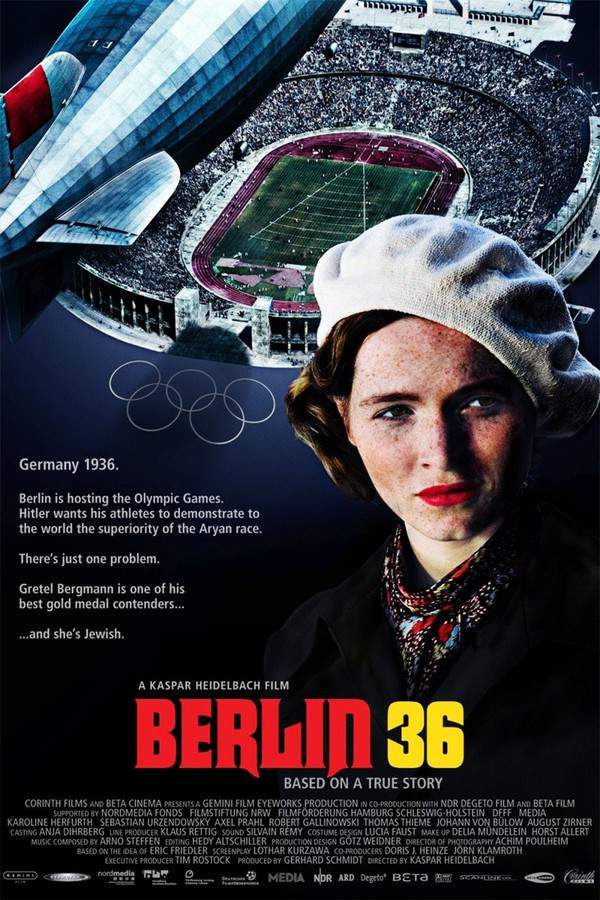
Berlin 36 (2011) movie poster

Timeline

Berlin 36 (2011) Timeline Explained – Every Event in Order

Release, runtime and language
2011 · 100 min · German
Loading streaming availability…
Directed by
Kaspar Heidelbach

During the 1936 Berlin Olympics, Jewish athlete Gretel Bergmann’s talent challenges the Nazi ideal of Aryan supremacy. Her potential for a gold medal threatens the regime’s propaganda, and she becomes entangled in a web of national pride and prejudice. As authorities conspire to undermine her, a surprising secret about her background emerges, which could have even more damaging consequences for the Nazi party.

On this page (5)
  1. 1 Where to watch
  2. 2 Events in order (14)
  3. 3 Timeline questions answered
  4. 4 Movie threads
  5. 5 Every angle
Loading streaming availability…

14 events in order · contains spoilers

Berlin 36 Timeline: Events in Chronological Order

Every key event of Berlin 36 (2011) in order, scene by scene, with when and where it takes place. Use it to untangle flashbacks, time jumps and parallel storylines, to refresh your memory before the sequel or to find the exact scene you are thinking of.

  1. Gretel's Victory

    In the high jump championships held in the United Kingdom, German athlete Gretel Bergmann showcases her unmatched skills. Her hard work and dedication culminate in a triumphant win, earning her the recognition she deserves on an international stage.

    Where
    United Kingdom
  2. Nazi Germany's Reality

    Despite her victory, Gretel's achievement is overshadowed by the oppressive racial laws of Nazi Germany. These laws previously forced her father to send her away, highlighting the grim reality that Jewish athletes face during this unsettling time.

    Where
    Germany
  3. Approaching Berlin Olympics

    As the Berlin Olympics draw near, Gretel finds herself thrust back into the spotlight of the international sports world. The International Olympic Committee insists on including Jewish athletes, creating a complex situation for both them and the Nazi regime.

    Where
    Berlin
  4. Family Threats

    With rising tensions in Nazi Germany, Gretel's family faces increasing threats due to their Jewish identity. This dire situation compels Gretel to return home, adding a sense of urgency and personal stakes to her challenges.

    Where
    Germany
  5. Joining the German Team

    Upon her return, Gretel is initially welcomed into the German Olympic high jump team. This moment represents both hope and irony, as she navigates her complicated identity as an athlete in a country that disparages her.

    Where
    Germany
  6. Deception Unfolds

    As Gretel settles into the team, she unknowingly becomes entangled in a web of deception. Her coach, Hans Waldmann, is ousted by Sigfrid Kulmbach, a party loyalist intent on undermining her confidence and sabotaging her ambitions.

    Where
    Germany
  7. Unexpected Friendship

    Amidst the turmoil, Gretel develops an unlikely friendship with her roommate and rival, Marie Ketteler. Their camaraderie offers a fleeting sense of normalcy, even as Marie harbors a secret that complicates their bond.

    Where
    Germany
  8. Marie’s Secret Identity

    As tensions rise, Gretel discovers that Marie is not who she appears to be. In a desperate attempt to evade Nazi scrutiny, Marie is actually a man, disguising himself as a female athlete to navigate the oppressive regime.

    Where
    Germany
  9. Unjust Exclusion

    Gretel is unjustly barred from her rightful place in the competition, a heart-wrenching result of the political machinations surrounding her. Marie, taking Gretel's position, commits an act of betrayal that deeply affects their friendship.

    Where
    Germany
  10. The Transformation

    Marie undergoes a profound transformation to maintain his disguise, meticulously adopting behaviors and appearances typically associated with female athletes. This dedication underscores the lengths to which individuals go to survive in a hostile environment.

    Where
    Germany
  11. Truth Revealed

    Ultimately, the truth about Marie's identity is revealed to Gretel, shattering her perception of their relationship. This revelation forces both characters to confront their intertwined fates in a world that seeks to redefine who they are.

    Where
    Germany
  12. Final Competition

    In a dramatic final moment, Marie resolves to deliberately fail at the last high jump competition. This act ensures that the bar falls, snuffing out Germany’s hopes for victory and serving as a powerful defiance against the oppressive regime.

    Where
    Germany
  13. Defiance Against Oppression

    As the competition concludes, a silent understanding forms between Gretel and Marie. They share a profound smile that signifies their shared struggle and resilience in the face of Nazi oppression.

    Where
    Germany
  14. Aftermath of the Saga

    In the aftermath of these events, both Gretel and Marie emerge as symbols of resistance against the Nazi regime. Their stories reflect the larger fight for identity and dignity amidst a backdrop of societal intolerance.

    Where
    Germany

Last updated: November 18, 2024 at 21:08

Was this helpful?

Timeline questions answered

Berlin 36 Timeline Explained: Your Questions Answered

When does it happen, and why in that order? The questions people ask about the chronology of Berlin 36 (2011): time jumps, flashbacks, cause and effect between scenes and the correct order of events, each answered with spoilers.

Q1

Why was Gretel Bergmann forced to return to Germany for the Olympics?

Gretel was brought back because the International Olympic Committee insisted on the participation of Jewish athletes. The Nazis had no choice but to include her, though they attempted to undermine her chances. Her return was also motivated by threats to her family in Germany, creating immense personal pressure.

Foreshadowing: Earlier, her father had sent her away to protect her from Nazi racial laws.

  • gretel bergmann
  • berlin olympics
  • international olympic committee
  • jewish athletes
  • nazi coercion
Q2

Why was Gretel Bergmann barred from competing?

Gretel was unjustly excluded from competition through false pretenses orchestrated by Nazi officials. Her position was taken by Marie, who competed in her place. This was part of the regime's scheme to prevent a Jewish athlete from potentially winning and damaging Nazi propaganda.

Foreshadowing: Sigrefid Kulmbach had been systematically undermining Gretel's confidence and opportunities.

  • gretel bergmann
  • competition ban
  • nazi scheme
  • marie
  • betrayal
Q3

Why did Marie deliberately fail the final high jump attempt?

Marie chose to fail deliberately as an act of defiance against the Nazi regime. By ensuring the bar fell, Marie prevented Germany from winning gold, turning personal survival into a statement of resistance. This final act united Gretel and Marie in silent acknowledgment of their shared struggle.

Foreshadowing: Marie had been forced to live as a woman to escape Nazi persecution, making this act a reversal of that subjugation.

  • marie
  • high jump
  • deliberate failure
  • defiance
  • berlin olympics
  • resistance
Q4

Why was Marie disguised as a female athlete?

Marie was actually a man who伪装as a woman to evade Nazi scrutiny. Under the regime's strict policies, men faced conscription and persecution, while women had slightly more freedom in certain contexts. Marie underwent extreme measures, shaving daily and adopting feminine behaviors, to survive.

Foreshadowing: The friendship between Gretel and Marie develops despite this hidden truth.

  • marie
  • disguise
  • man posing as woman
  • survive
  • Nazi persecution
  • identity
Q5

What happened to Gretel's original coach Hans Waldmann?

Hans Waldmann, Gretel's original coach, was forced out by Sigfrid Kulmbach, a party loyalist assigned to undermine Gretel's performance. Kulmbach systematically dismantled her support system to sabotage her confidence and athletic success.

Foreshadowing: Kulmbach's arrival marked the beginning of overt sabotage against Gretel.

  • hans waldmann
  • sigfrid kulmbach
  • coach
  • removal
  • sabotage
  • german olympic team
Q6

Why did the Nazis want to prevent Gretel from winning gold?

If a Jewish athlete like Gretel won gold, it would directly contradict the Nazi ideology of Aryan racial supremacy. This would dealt a significant blow to the regime's propaganda and international image during the 1936 Berlin Olympics, which they were using to showcase their power.

Foreshadowing: The entire narrative centers on this political tension between athletic merit and racial ideology.

  • gretel bergmann
  • gold medal
  • nazi propaganda
  • aryan supremacy
  • berlin olympics
  • political stakes
Q7

Why did Gretel and Marie share a knowing smile at the end?

The smile represented their shared understanding that while Gretel was denied victory, Marie's deliberate failure ensured Germany lost anyway. This act turned their personal betrayal into collective defiance, mixing the bitterness of lost opportunity with the triumph of outwitting the Nazis together.

Foreshadowing: Marie had promised to help Gretel, and their friendship evolved through shared secrets.

  • gretel
  • marie
  • knowing smile
  • defiance
  • ending
  • shared struggle
Q8

Why did Gretel's father send her away before the Olympics?

Gretel's father sent her away for her safety because Nazi Germany's racial laws prohibited Jewish athletes from competing fairly. Her earlier victory in the UK high jump championships occurred while she was in exile, protected from the regime's persecution.

Foreshadowing: This earlier separation set up the emotional stakes of her return to Nazi Germany.

  • father
  • send away
  • safety
  • racial laws
  • jewish athlete
  • exile

Movie threads

More Movies Like Berlin 36, by Mood & Story

Curated lists built around what makes Berlin 36 tick: the same mood, the same kind of story or the same emotional payoff. Each list explains why these movies belong together.

Historical dramas about defiance like Berlin 36

Personal acts of courage challenge overwhelming state power in historical settings. Explore movies like Berlin 36 that center on personal defiance against oppressive political systems. These historical dramas share a tense, heavy atmosphere and focus on the moral courage required to stand up to overwhelming power, often leading to complex, bittersweet conclusions.

  • defiant
  • oppressive
  • tense
  • historical
  • urgent
  • moral conflict
  • Tone: tense, grim, defiant
  • Pacing: steady, deliberate
Why these movies?

The story pattern: Narratives in this thread typically follow a protagonist whose conscience conflicts with a powerful, unethical regime. The journey involves escalating risk, moral quandaries, and ultimately a defining act of resistance. While the character may not achieve a conventional victory, their defiance serves as a powerful symbolic win against injustice.

Why they belong together: These films are grouped by their shared focus on individual resistance within a historically grim context. They create a similar viewing experience defined by high emotional stakes, a tense and oppressive tone, and a conclusion that balances the pain of loss with the nobility of the struggle.

Bittersweet sports dramas like Berlin 36

Where the real triumph isn't the medal, but the personal integrity preserved. If you liked Berlin 36, discover other sports movies where the victory is complex and bittersweet. These films explore rivalry and competition but prioritize moral and emotional triumphs over simple wins, often set against serious political or personal backdrops.

  • defiant
  • hopeful
  • tense
  • athletic
  • urgent
  • moral victory
  • Tone: tense, hopeful, bittersweet
  • Pacing: steady, building
Why these movies?

The story pattern: Stories in this thread use the framework of competition to explore larger themes of justice, identity, and integrity. The protagonist's athletic journey becomes a vehicle for a greater personal or ethical battle. The climax often involves a sacrifice or a subversion of the expected competitive outcome, leading to a victory that is spiritual or moral rather than purely physical.

Why they belong together: These movies share a specific narrative arc that subverts traditional sports movie tropes. They are united by a steady pacing that builds to an emotional climax, a heavy weight derived from high-stakes personal conflicts, and a conclusively bittersweet feeling that celebrates a deeper, more meaningful form of success.

Every angle

Berlin 36 (2011) Explained: Plot, Timeline & Characters

Everything about Berlin 36 in one place: what happens in the plot summary, the timeline in chronological order, the characters and meaning and a spoiler-free summary. What's After the Movie adds the cast, box office and post-credit scenes.

Coming soon on iOS and Android

The Plot Explained Movie Summary App

Plot summaries, endings explained and timelines on your phone. Catch up on any movie in minutes, save your favorites and never miss a twist again.

Be the first to know when we launch. Your email stays private, always.

Learn more about the app