Plot Explained Spoilers guaranteed!
Plot Explained

Browse by genre

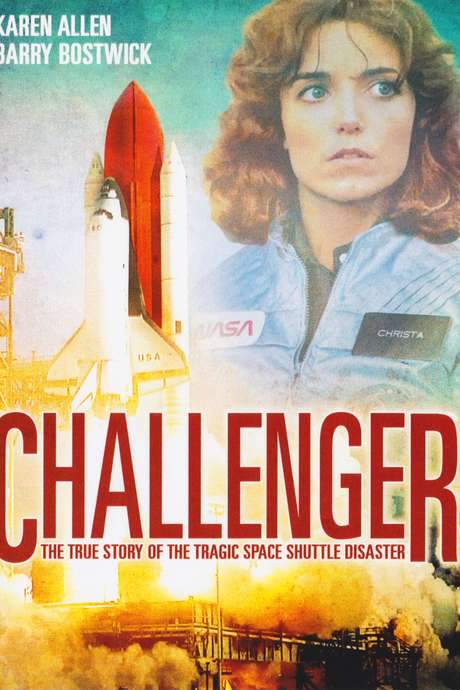
Challenger (1990) movie poster

Plot Summary

Challenger (1990) Plot Summary Explained

Release, runtime and language
1990 · 140 mins · English
Directed by
Glenn Jordan
Starring
Angela Bassett, Peter Boyle, Karen Allen, Melanie Haynes, Richard Jenkins, Joe Morton

The documentary profiles the astronauts, mission personnel and civilians connected to the January 28, 1986 launch of the Space Shuttle Challenger, which exploded seconds after liftoff. It centers on the safety inspections and the heated debate over the O‑ring design that was later identified as the cause of the disaster, blending technical analysis with personal recollections.

On this page (6)
  1. 1 Where to watch
  2. 2 What happens: full plot
  3. 3 Plot questions answered
  4. 4 Movie threads
  5. 5 Movies like Challenger
  6. 6 Every angle

Where to watch

Where to Watch Challenger (1990)

Where can you watch Challenger? Stream, rent or buy it in the US, including on Hoopla, Amazon Video and Apple TV Store: current JustWatch availability with up-to-date prices.

Streaming availability powered by JustWatch

Full plot summary · contains spoilers

What Happens in Challenger: Full Plot Summary

The whole story of Challenger (1990) explained, from the opening scene to the final frame: every key event, every twist and what it all adds up to. Read it as a quick recap before the sequel, to check a scene you missed, or to finally understand what really happened.

In a tense, emotionally charged arc that weaves past and present, the world of professional tennis becomes a stage for redemption, rivalry, and complicated love. Set against the backdrop of a late-summer 2019 in New Rochelle, this story follows Art Donaldson, a talented player fighting to re-enter the scene as a wild card at a Challenger event. He faces Patrick Zweig in a high-stakes final set, while his wife and coach, Tashi Duncan, watches from the stands with a mix of fierce expectation and quiet worry. They share a daughter, Lily, and their family life is a careful balance of discipline, devotion, and the remnants of past battles that still echo through every rally.

Two weeks before the pivotal match, the couple’s life centers on Art’s return from a stubborn string of losses and the brutal, unyielding discipline Tashi imposes to push him toward one last chance at greatness. Their relationship is weathered by the grind of training and the intense focus required to compete at the highest level, yet their bond remains undeniable even as Tashi’s drive sometimes eclipses their personal connection. The pair’s dynamic is underscored by a difficult but affectionate exchange: when Art confesses his love, she answers with a cool, almost clinical certainty—“I know.” The moment hints at a history of sacrifice and the unspoken priorities that fueling their professional world.

The narrative then returns to earlier decades to trace the origins of the rivalry and the bond between Art and Patrick. In 2006, the two childhood friends and enduring training partners are part of a celebrated duo nicknamed “Fire and Ice.” Their rise tracks through junior doubles wins and early life at a tennis academy, where they first cross paths with Tashi, a forthcoming star who captivates their attention with her talent and charisma. A party introduces a volatile triangle: Tashi becomes the focal point of affection for both boys, and a charged, boundaries-testing moment unfolds as she invites them into a room together. The encounter is intense and complicated, revealing how desire and ambition intertwine with the sport they love. The next day’s match becomes a test not only of skill but of loyalty and control, as Patrick secures the win and, in a provocative turn, uses Art’s own tell—a cue Art uses to time his serves—to reveal intimate details about their night together. The layers of friendship and competition blur, laying the groundwork for the future collisions of pride and reconciliation.

In 2007, the story pushes forward to their university days at Stanford, where Art and Patrick remain close allies despite evolving paths. Tashi’s presence intensifies their dynamic: she becomes a complicated third point in the equation, someone who challenges Patrick’s moves and Art’s expectations. The tension climaxes when a knee injury robs Tashi of a promising tennis career, forcing a painful reevaluation for everyone involved. Art supports her through the recovery, and their shared struggle strengthens a bond that will persist into the years ahead. Patrick’s role mutates as the trio navigates fame, doubt, and the brittle balance between competing at the top and protecting each other from the cruel pressures of the sport they love.

By 2010, a new phase of reconciliation begins. Art and Tashi reconnect and share a quiet dinner as they redefine their relationship and professional partnership. Tashi returns to the court not as a competitor in the same orbit as Art—but as his coach, guiding him through a landscape that now feels both familiar and newly complicated. The past wounds begin to soften as they chart a path forward, drawing on memories of what they endured together and what they can still achieve.

Fast-forward to the 2019 climactic match, the tournament becomes a crucible where old wounds, present ambitions, and the love that binds them are all put to the test. Patrick’s debut in the set is marked by competence and control, yet his temper begins to fray as pressure mounts. A parallel sequence of flashes hints at the wrong turns and painful choices that have defined his career, including the night-before conversations where old grievances surface, and a bid for power in the relationship between Patrick, Tashi, and Art surfaces once more. In a pivotal, late-night confrontation, Patrick seeks to heal the rift by reconnecting with Art in the sauna, an encounter underscored by vulnerability, vulnerability and bravado in equal measure. Tashi, in a moment of stark honesty, contends with the men and their history with the sport—and with who she is in the lives they’ve built.

The tension explodes in a dramatic, boundary-defying turn: a late-night rendezvous in Patrick’s car, where Tashi and Patrick confront their past and their longing in a charged moment that tests loyalties and fuels the fire of the upcoming match. The scene does not shy away from the raw truth of their relationships, but it also underscores a shared belief in the possibility of renewal through sport and honesty.

Back on the court, the match unfolds with a combustible mix of skill, strategy, and sentiment. Patrick, aiming to seize the moment, attempts to tilt the game toward a throw, stalling and venting with raw energy. Art resists the impulse to carry old grievances forward; instead, he channels their history into a fierce, purposeful gameplay that pushes both men toward their best forms. The tension culminates in a climactic tie-break that becomes less about a single winner and more about a revelation: the players’ passion for the sport, their mutual respect, and their willingness to risk everything to recapture what felt lost. In a final, shared surge, Art and Patrick collide at the edge of the net, and as the ball drops away, they fall into a rare, powerful embrace that signals a return to camaraderie rather than a definitive victory over one another. The crowd erupts in a chorus of cheers as Tashi joins the spectacle, her voice rising with an ecstatic, triumphant “COME ONNNNN!” that captures the moment’s exhilaration.

Throughout this sweeping, multi-tiered drama, the sport of tennis serves as the evolving lens through which love, mentorship, rivalry, and forgiveness are tested. The characters wrestle with the price of ambition, the demands of coaching, and the fragile line between personal happiness and career success. In the end, their story isn’t solely about who wins or loses a match; it’s about how they choose to move forward together—how a team, once fractured by pride and passion, finds a way to fuse old loyalties with new understandings, and how the human heart, much like a long rally, discovers the strength to endure and grow even when the odds are stacked against it.

Last updated: October 07, 2025 at 13:38

Was this helpful?

Plot questions answered

Challenger Plot Explained: Your Questions Answered

The questions people ask most about Challenger (1990): what happens in the confusing scenes, why the characters do what they do, the twists, hidden details and what the ending means. Each answer contains spoilers.

Q1

Why does Tashi become Art's coach instead of continuing to play professionally?

Tashi's tennis career ends abruptly in 2007 when she suffers a severe knee injury during a match. After her injury, she is forced to step back from competing. Art supports her through recovery, and by 2010, they reconnect and redefine their relationship. Tashi transitions to coaching as a way to stay connected to the sport she loves while working within the limits of her physical capabilities. This role reversal allows her to channel her competitive drive through Art's career.

  • tashi injury
  • coach role
  • career change
  • tennis career ending
Q2

Why does Patrick sleep in his car before the tournament?

Patrick arrives at the tournament in a desperate financial state. He struggles to secure lodging and cannot afford a hotel room, forcing him to sleep in his car outside the court. This precarious situation underscores the pressure and desperation surrounding his attempt to compete, highlighting how far he has fallen from his earlier success.

  • patrick lodging
  • homeless
  • car sleeping
  • financial struggles
Q3

What happened between Tashi and Patrick at the 2011 Atlanta Open?

A flashback reveals that Tashi and Patrick had a one-night stand at the 2011 Atlanta Open. This secret encounter occurs while Art and Tashi are together, adding a significant layer of betrayal and jealousy to their existing complicated history. The revelation of this affair later fuels emotional tension as the 2019 match approaches.

  • one night stand
  • atlanta open
  • affair
  • betrayal
  • 2011
Q4

Why does Tashi ask Patrick to lose the match on purpose?

The night before the final, Tashi sneaks out to meet Patrick and urges him to throw the match so Art can win. This desperate request stems from her complex feelings - she wants Art to have his moment of victory while also addressing the unresolved history between her and Patrick. The plan reflects the depth of their intertwined fates and her belief that manipulating the match outcome might resolve their emotional triangle.

  • match fixing
  • throw match
  • tashi manipulation
  • night meeting
Q5

What is Art's tell and why does Patrick use it during the match?

Art has a specific tell, a physical cue he uses to time his serves, that Patrick knows intimately from years of training together as partners. During the match, Patrick deliberately uses this tell to signal to Art that they share a renewed bond, transforming what could be a competitive disadvantage into a secret communication about their rekindled friendship.

Foreshadowing: In 2006, Patrick first discovers Art's tell during their junior doubles partnership and later uses it to reveal intimate details about their night with Tashi.

  • serve tell
  • tennis signal
  • body language
  • competitive strategy
Q6

Why do Art and Patrick embrace at the net after the tie-break?

The embrace represents reconciliation and the restoration of their friendship rather than a competitive victory. After a match filled with tension, raw emotion, and references to their shared past, the collision at the net symbolizes their mutual respect and the end of years of resentment. It shifts the narrative from winning or losing to celebrating their bond and love for the sport.

  • reconciliation
  • friendship
  • net embrace
  • sportsmanship
Q7

Why does Tashi slap Patrick when he asks for her help with coaching?

In 2019, Patrick attempts to reinsert himself into Tashi's world by seeking her coaching, but she publicly slaps him and calls out his ego. This reaction reveals how far Patrick has fallen in her eyes and demonstrates Tashi's fierce protection of her boundaries. The moment also fuels Art with renewed energy, as the rift between Patrick and Tashi becomes a source of motivation.

  • slap
  • coaching rejection
  • ego
  • public confrontation
Q8

What does Tashi mean when she replies "I know" to Art saying he loves her?

When Art confesses his love, Tashi's cool, almost clinical "I know" response reflects the complexity of their relationship. It suggests a history of sacrifice and an unspoken understanding that their bond goes beyond words, it's been proven through years of dedication, hardship, and survival together. The moment highlights how their professional world has shaped their emotional expression, making grand declarations unnecessary when actions have already spoken louder.

  • i know response
  • love confession
  • relationship dynamic
  • emotional communication
Q9

Why does Patrick get Tashi's number in 2006 instead of Art?

After the charged hotel room moment where all three connect, the next day features a match between the two friends. Patrick wins this match and earns Tashi's number, sealing a connection that will haunt all three players. This early victory sets the foundation for the complicated love triangle that develops over the following years.

Foreshadowing: The hotel room scene establishes Tashi as the object of affection for both boys, with the match outcome determining who gets her contact information.

  • phone number
  • junior match
  • winning
  • love triangle origin
Q10

Why does Tashi's knee injury in 2007 change everything for the trio?

Tashi's severe knee injury during a match forces her to abandon her promising tennis career. This devastating turn creates a ripple effect: Art stays to support her recovery, Patrick is told to leave, and the dynamic between all three fundamentally shifts. The injury ends Tashi's playing career and forces everyone to reevaluate their relationships and future paths.

  • knee injury
  • career ending
  • relationship shift
  • stanford
Q11

Why does Patrick confront Art in the sauna the day before the final?

The day before the final, Patrick seeks out Art in a nude sauna in an attempt to intimidate him and test their relationship under pressure. The confrontation triggers memories of past betrayals, particularly the 2011 one-night stand between Patrick and Tashi. Art responds by acknowledging their glory days are behind him, and the tense encounter tests whether their friendship can survive the emotional stakes of the upcoming match.

  • sauna confrontation
  • intimidation
  • pre-match tension
  • psychological warfare
Q12

What does the "Fire and Ice" nickname refer to?

"Fire and Ice" is the nickname for the duo of Art and Patrick after they win the US Open junior doubles title in 2006. The name reflects their complementary playing styles and personalities, likely Art representing passion and Patrick representing composure. This partnership forms the foundation of their rivalry and friendship that spans decades.

  • fire and ice
  • junior doubles
  • nickname
  • partnership

Movie threads

More Movies Like Challenger, by Mood & Story

Curated lists built around what makes Challenger tick: the same mood, the same kind of story or the same emotional payoff. Each list explains why these movies belong together.

Documentaries of institutional failure like Challenger

True stories of systemic failure and the human cost of ambition. Discover powerful documentaries and dramas that explore real-world tragedies and institutional breakdowns, similar to Challenger. If you were captivated by the tense investigation into the O-ring failure, you'll find these films compelling. They focus on complex systems, human error, and the profound consequences of ambition under pressure.

  • tense
  • investigative
  • somber
  • fact-based
  • critical
  • emotionally charged
  • Tone: tense, investigative, somber
  • Pacing: variable, building to a climax
Why these movies?

The story pattern: These narratives typically unfold by introducing a complex system or organization, then delving into the chain of events and key decisions that lead to a catastrophic failure. The focus is on the interplay between technical analysis and personal accountability, often building towards a moment of disaster that feels both inevitable and shocking.

Why they belong together: Movies are grouped here because they share a focus on real events, a tense and investigative tone, and a complex structure that weaves together technical details with deeply human stories. They create a heavy emotional weight by showing the profound impact of systemic failures on individuals and society.

Bittersweet historical documentaries like Challenger

Stories where looking back at tragedy brings a painful but necessary clarity. Explore movies like Challenger that reflect on historical events with a bittersweet perspective. These films use personal recollections and technical analysis to create a complex, emotionally heavy viewing experience. If you appreciated the blend of past tragedy and present understanding in Challenger, you'll find similar thoughtful and poignant stories here.

  • bittersweet
  • historical
  • reflective
  • somber
  • introspective
  • poignant
  • Tone: tense, melancholic, reflective
  • Pacing: variable, reflective
Why these movies?

The story pattern: The narrative pattern involves weaving together flashbacks or archival footage with present-day reflections or investigations. This structure reveals the full emotional and factual weight of a past event, building towards an ending that is not happy, but provides a sense of reconciliation, respect, or sobering acceptance of the facts.

Why they belong together: These films are grouped by their shared bittersweet ending feel, heavy emotional weight, and complex narrative structure that blends timelines. They create a specific mood of introspective melancholy mixed with tense revelation, appealing to viewers who want a thoughtful, impactful experience based on true events.

If you liked this

Movies Like Challenger

Similar movies to Challenger: the same genre, themes or kind of story. Each one comes with its own plot summary, timeline and ending explained.

Browse all movie summaries

Every angle

Challenger (1990) Explained: Plot, Timeline & Characters

Everything about Challenger in one place: what happens in the plot summary, the timeline in chronological order, the characters and meaning and a spoiler-free summary. What's After the Movie adds the cast, box office and post-credit scenes.

Coming soon on iOS and Android

The Plot Explained Movie Summary App

Plot summaries, endings explained and timelines on your phone. Catch up on any movie in minutes, save your favorites and never miss a twist again.

Be the first to know when we launch. Your email stays private, always.

Learn more about the app