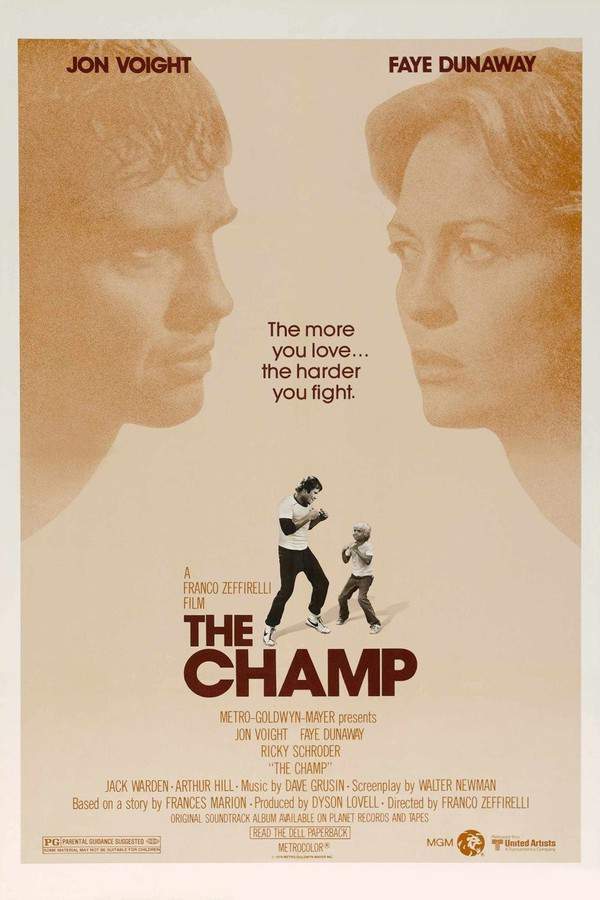
The Champ

The Champ

Year: 1931

Runtime: 86 mins

Language: English

Director: King Vidor

DramaFamily

The knockout picture of the year! A broken-down alcoholic prizefighter struggles to keep custody of his adoring son.

Warning: spoilers below!

Haven’t seen The Champ yet? This summary contains major spoilers. Bookmark the page, watch the movie, and come back for the full breakdown. If you're ready, scroll on and relive the story!

The Champ (1931) – Full Plot Summary & Ending Explained

Read the complete plot breakdown of The Champ (1931), including all key story events, major twists, and the ending explained in detail. Discover what really happened—and what it all means.

In the sun-soaked city of Hialeah, Florida, a former boxing champion named Billy Flynn tries to trade the punch-drunk glare of a ring career for the steadier rhythm of life as a horse trainer. He swerves away from crowds and headlines, focusing on a quieter dream, but the world he’s left behind isn’t done with him yet. A challenger from the boxing days pokes at the possibility of a comeback, a reminder that the old fire can flare up again even when the body begs for mercy. One afternoon, Billy shows up at a gym with his young son, T.J., who lovingly calls him “Champ.” The moment is warm and hopeful until the gym empty chair and a delayed arrival reveal a different mood. Billy’s temper flickers, he storms out, and the boy is left behind, a moment that foreshadows the rift between past glory and present responsibility.

That night, T.J. finds his father in a bar, drunk, and desperate to make sense of a life that keeps circling back to the same old choices. The next morning brings a startling mix of joy and consequence. Billy reveals that he has won a substantial gambling sum—$6,400—enough to buy T.J. his own horse, a spirited mare named She’s a Lady. The dream of shared success seems within reach as the horse is entered into a race, but fate intervenes when Lady collapses on the track, injuring her leg. Annie, Billy’s wife who has been apart from them for seven years, arrives, carrying the weight of a past that refuses to stay buried. She has placed a wager on the horse, and her presence complicates the fragile balance Billy is trying to establish. Billy explains a painful truth to T.J.—that he had told him Annie was dead, a lie born of fear and pride—and the family’s fragile circle begins to fracture anew. Annie’s arrival brings an uneasy tension, and her invitation to join her on a cruise ship underscores the distance that time and choices have carved between them.

As old loyalties collide with new realities, the story pivots on a debt and a demand. Whitey, a hard-edged promoter, pressures Billy to surrender the horse or pay $2,000 in cash after Billy loses a crucial bet. Annie contributes the money, but Whitey takes Lady anyway, leaving Billy to lash out in a violent scuffle that shatters any pretence of control. He is arrested, and in the sterile quiet of a holding room, he voices a painful resolution to T.J.: he plans that the boy will live with Annie. The moment deepens Billy’s fear that he may have failed as a father, and a brutal slap in a moment of fury seals the rift. Back at Annie’s home, the truth about motherhood finally lands with blunt force, and T.J.’s resistance to accepting Annie as his mother sits side by side with Annie’s growing ache to belong.

When Billy is released, the air between father and son remains taut, yet a reunion begins to glimmer in the glow of a shared moment in a stadium. They share a long-awaited embrace, and Billy promises that he will never abandon T.J. again. Annie re-enters the scene, seeking a chance to mend what was broken, and a tentative friendship begins to replace resentment. To atone for his past failures, Billy defers to Jackie, a wary mentor who warns him about the toll of age and the risk of continuing in the ring. Jackie agrees—though with reluctance—to train Billy for one more fight, a decision rooted in the stubborn belief that some promises are worth keeping, even when the odds are steep.

The night of the fight arrives with a hush of nerves and a chorus of doubts. In his dressing room, Billy weighs a boxer’s last chance against a lifetime of scars. His opponent looks stronger on paper, and the early rounds test Billy’s resolve as blows rain down and the end of his career—and perhaps his life—feels imminent. The doctor on break explains that any further damage could force a stoppage, and the toll of the fight becomes painfully visible. Billy endures a brutal barrage, yet he summons a stubborn grit and lands enough blows to turn the tide, delivering a knockout that seems to seal the comeback he has chased for years. He staggers toward the corridor, faint with exhaustion, and asks his son if he is glad to see his father win. The answer that answers all questions comes in a single, quiet moment from T.J.: “The champ always comes through.”

The champ always comes through.

But the victory is hollow, for the price of glory is paid in blood. Billy collapses on the way back to his dressing room, and the news of his death settles over the stadium with a heavy, crushing weight. Jackie’s solemn word to T.J.—that his father is gone—lands with a finality that does not need to be spoken aloud. In the quiet that follows, T.J. mourns beside Annie, and the two of them hold onto the memory of a man who fought not only in a ring but for a family he may not have fully understood how to keep. The film closes on an aching note of love, reconciliation, and the endurance of a child’s memory of a father who rose one last time only to fall again, embraced by a mother’s presence and a friend’s steady support.

Last Updated: October 09, 2025 at 12:31

Mobile App Preview

Coming soon on iOS and Android

The Plot Explained Mobile App

From blockbusters to hidden gems — dive into movie stories anytime, anywhere. Save your favorites, discover plots faster, and never miss a twist again.

Sign up to be the first to know when we launch. Your email stays private — always.

Explore Movie Threads

Discover curated groups of movies connected by mood, themes, and story style. Browse collections built around emotion, atmosphere, and narrative focus to easily find films that match what you feel like watching right now.

Dramas of Parental Redemption like The Champ

Flawed parents fight for a second chance through their child's unwavering love.If you were moved by the tragic struggle in The Champ, explore more movies like it that focus on flawed parents fighting for redemption. These emotionally heavy stories feature themes of addiction, sacrifice, and a child's love, offering a similar mix of heartbreaking and hopeful moments.

heartbreakinghopefulpoignanttendergrittymelancholicintense

Narrative Summary

The narrative follows a parent's downward spiral and subsequent, often costly, attempt at a comeback, all witnessed and filtered through the perspective of their devoted child. The central conflict is the parent's internal battle against their flaws, with the child's well-being serving as the ultimate stake, leading to an ending that is earned but rarely purely happy.

Why These Movies?

These films are grouped by their intense emotional focus on the parent-child bond under extreme duress. They share a high emotional weight, a steady, deliberate pacing that builds to a climactic sacrifice or effort, and a consistently bittersweet tone where love and loss are inextricably linked.

Emotional Sports Dramas like The Champ

Triumphs in the ring or on the field that come with a profound personal cost.For viewers who liked the powerful blend of sports and raw emotion in The Champ, this list features similar movies where an athlete's comeback is deeply intertwined with personal struggle. These stories prioritize character drama over pure competition, often leading to a bittersweet or tragic conclusion.

tragicintensegrittypoignanthopefulmelancholicdramatic

Narrative Summary

The plot uses the structure of a sporting event—training, set-backs, and a final match—as a metaphor for a character's internal battle. The climax of the game or fight resolves the external conflict but often underscores a more significant, permanent personal loss or sacrifice, making the victory feel profoundly ambiguous.

Why These Movies?

These movies share a specific narrative formula: the world of sports is a stage for human drama. They are united by a high emotional weight, a focus on character flaws like addiction, and a tone that is ultimately bittersweet, where professional triumph is inextricably linked with personal tragedy.

Unlock the Full Story of The Champ

Don't stop at just watching — explore The Champ in full detail. From the complete plot summary and scene-by-scene timeline to character breakdowns, thematic analysis, and a deep dive into the ending — every page helps you truly understand what The Champ is all about. Plus, discover what's next after the movie.

The Champ Timeline

Track the full timeline of The Champ with every major event arranged chronologically. Perfect for decoding non-linear storytelling, flashbacks, or parallel narratives with a clear scene-by-scene breakdown.

The Champ Timeline

Characters, Settings & Themes in The Champ

Discover the characters, locations, and core themes that shape The Champ. Get insights into symbolic elements, setting significance, and deeper narrative meaning — ideal for thematic analysis and movie breakdowns.

Characters, Settings & Themes in The Champ

The Champ Spoiler-Free Summary

Get a quick, spoiler-free overview of The Champ that covers the main plot points and key details without revealing any major twists or spoilers. Perfect for those who want to know what to expect before diving in.

The Champ Spoiler-Free Summary

More About The Champ

Visit What's After the Movie to explore more about The Champ: box office results, cast and crew info, production details, post-credit scenes, and external links — all in one place for movie fans and researchers.

More About The Champ

Similar Movies to The Champ

Discover movies like The Champ that share similar genres, themes, and storytelling elements. Whether you’re drawn to the atmosphere, character arcs, or plot structure, these curated recommendations will help you explore more films you’ll love.