Plot Explained Spoilers guaranteed!
Plot Explained

Browse by genre

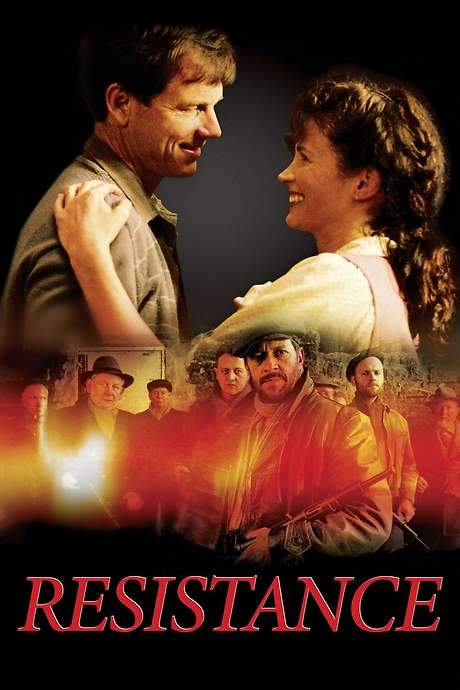
Resistance (2019) movie poster

Plot Summary

Resistance (2019) Plot Summary Explained

Release, runtime and language
2019 · 122 mins · Portuguese
Echo score 68
Loading streaming availability…
Directed by
Zeca Brito
Starring
Cleo, Eduardo Mendonça, Fernando Alves Pinto, Paulo César Peréio, Marcos Contreras, Luis Franke

Brazil, 1961. Governor Leonel Brizola, holed up in an underground bunker within the Piratini Palace, anticipates an attack by the Brazilian military. The nation teeters on the brink of civil war after President Jânio Quadros's sudden resignation and efforts to prevent Vice-President João Goulart from assuming office. Using a radio transmitter, Brizola initiates the Legality movement to defend Goulart’s right to the presidency. Two brothers, entangled in a love triangle, find themselves drawn into the conflict and fight alongside him.

On this page (6)
  1. 1 Where to watch
  2. 2 What happens: full plot
  3. 3 Plot questions answered
  4. 4 Movie threads
  5. 5 Movies like Resistance
  6. 6 Every angle
Loading streaming availability…

Full plot summary · contains spoilers

What Happens in Resistance: Full Plot Summary

The whole story of Resistance (2019) explained, from the opening scene to the final frame: every key event, every twist and what it all adds up to. Read it as a quick recap before the sequel, to check a scene you missed, or to finally understand what really happened.

The film opens in 1938 Berlin, where the rise of the Nazi regime shatters a young Jewish girl’s world when Brown Shirts burst into her home and kill her parents. This brutal prelude sets the stage for a deeply human story about art, memory, and resistance under the shadow of oppression.

In Strasbourg, 1939, a young Marcel Marceau dreams of a life beyond his father’s butcher shop. Surrounded by growing threats from a powerful regime, he works to carve out a path in the arts—mime and painting become his sanctuary even as danger lurks outside. He performs playful impressions at a local cabaret, hinting at his later gift for transforming pain into performance. While he struggles with his father’s disapproval, he is drawn to a local girl named Emma, whose quiet strength and warmth spark a shy but growing affection between them. The atmosphere is tense, yet the bond between the two deepens as the world around them teeters on the brink of catastrophe.

Georges, Marcel’s cousin, and Emma become guardians to a Scout troop of 123 Jewish orphans, who take shelter in a castle in Strasbourg. The children arrive frightened and withdrawn, but the young mime’s talent for connection—his comedy, his timing, and his ability to see beyond fear—helps them begin to trust again. Emma becomes an indispensable partner in their care, and a tender romance blossoms between her and Marcel as they work to provide a sense of normalcy amid the perils of the occupation. The story follows their quiet, steadfast efforts to shield the vulnerable youths while keeping hope alive in a world that seems to be losing its way.

As the war spreads after Germany invades Poland in 1939, France reels under the threat of invasion and occupation. The French government relocates populations from border regions, and Marcel and Emma’s circle grows more entwined with the resistance. The children are redistributed to churches and Jewish families to minimize their visibility, yet Marcel and Emma remain deeply involved in their welfare. Their connection with the young Elsbeth persists, threading a through line of personal stakes through the larger conflict. The mood shifts from buoyant camaraderie to urgent danger as the stakes rise and the Nazis tighten their grip on occupied territory.

The narrative intensifies with the arrival of Klaus Barbie in Lyon in 1942, a ruthless enforcer whose brutal methods incarnate the cruelty of the occupation. Barbie’s campaign to crush the Resistance is marked by bribe-driven betrayals and executions carried out in a stark, empty pool at Gestapo Headquarters. The tension escalates as Marcel and Emma relocate to Lyon to continue their work with the Resistance, joined by Marcel’s brother Alain and Emma’s sister Mila. A narrow escape at the train station sees Alain slipping away from Nazi sweep; Marcel’s desperate act—burning a German soldier to aid his brother—demonstrates the immediacy and danger of their struggle. Mila and Emma, however, are not as fortunate. Mila is tortured to death in a brutal interrogation, while Emma survives only through a grim collaboration with her captors, a choice that drives her to despair and a subsequent suicide attempt. Marcel intervenes to rescue Emma, and the couple resolves to help more Jewish children find safety away from the reach of Barbie and the Gestapo.

With courage and ingenuity, Marcel and Emma orchestrate a dangerous, hopeful plan. They masquerade as a Scout troop on a hiking excursion and escort a dozen children, including Elsbeth, toward Switzerland by train through the French Alps. As the group passes their last station before the Franco-Swiss border, Barbie and his SS troops close in, forcing Emma to hide and putting Marcel under ruthless cross-examination. Barbie, convinced by his own machinations that Emma is a collaborator, narrows his search but fails to uncover the true mission: a clandestine crossing to freedom. The group presses on toward safety, their footsteps light with fear and heavy with resolve.

The pursuit intensifies as Barbie dispatches SS forces into the icy forests along the border. A gunshot shatters the moment of relief when Emma is mortally wounded during Barbie’s pursuit, and Marcel is left devastated by her death. Yet their escape endures; the children, led by Marcel, reach Switzerland, and the group’s endurance becomes a testament to resilience in the face of overwhelming danger.

The film returns to a starkly different afterword in 1945, when Marceau serves as a Liaison Officer with the United States Army in postwar Germany. The narrative closes in Nuremberg, where Marceau is introduced to troops by General George S. Patton and is celebrated for having traversed the Alps countless times to rescue hundreds of children, many of them orphans, saving thousands more through his quiet, tireless acts of courage. The final image lingers on a mime—Marceau’s signature performance—carved in white face against a simple, hopeful backdrop, a poignant reminder of art’s power to endure amid horror.

Last updated: February 18, 2026 at 23:38

Was this helpful?

Plot questions answered

Resistance Plot Explained: Your Questions Answered

The questions people ask most about Resistance (2019): what happens in the confusing scenes, why the characters do what they do, the twists, hidden details and what the ending means. Each answer contains spoilers.

Q1

Why did Marcel Marceau join the resistance against the Nazis?

Marcel joined the resistance after witnessing the Nazi regime's brutality against Jewish families, including the murder of a young Jewish girl in Berlin in 1938 and the escalating persecution in Strasbourg. His connection to the 123 Jewish orphans under his care, combined with his artistic philosophy that art could combat oppression, motivated him to risk his life. He used his skills as a mime to entertain and comfort the children while covertly helping them escape detection.

Foreshadowing: The opening scene in Berlin, where Brown Shirts kill a Jewish girl's parents, establishes the persecution that drives Marcel to action.

  • Marcel Marceau
  • resistance
  • Nazis
  • Jewish children
  • motivation
  • Holocaust
Q2

How did Emma survive her Gestapo captivity?

Emma was captured by Klaus Barbie's Gestapo in Lyon and subjected to brutal interrogation. She survived only by agreeing to collaborate with her captors, a devastating choice that haunted her. This collaboration involved pretending to work for the Nazis while secretly maintaining her resistance connections. The trauma led her to attempt suicide, but Marcel rescued her and helped restore her resolve to continue saving children.

Foreshadowing: The arrival of Klaus Barbie in Lyon signals the increased danger that ultimately leads to Emma's capture.

  • Emma
  • Gestapo
  • Klaus Barbie
  • torture
  • collaboration
  • survival
Q3

What happened to Mila, Emma's sister?

Mila was captured during the same Gestapo raid that took Emma. She was tortured to death in a brutal interrogation, her fate serving as a stark reminder of the Nazi regime's ruthlessness. Her death deeply affected Emma and Marcel, strengthening their determination to continue resisting and saving as many children as possible despite the personal costs.

Foreshadowing: The escalating danger in Lyon, with Barbie's arrival, foreshadows the tragic loss of Mila.

  • Mila
  • Emma's sister
  • torture
  • death
  • Gestapo
  • Lyon
Q4

How did Marcel and Emma get the children across the border to Switzerland?

They devised a dangerous plan to masquerade as a Scout troop on a hiking excursion. Dressed in Scout uniforms and maintaining their cover, they escorted a dozen children, including Elsbeth, by train through the French Alps toward the Franco-Swiss border. The disguise allowed them to move through checkpoints without raising suspicion, though they faced constant danger from Klaus Barbie's pursuit.

Foreshadowing: Earlier scenes showing Marcel's work with the Scout troop establish the legitimacy of their disguise.

  • Switzerland
  • escape
  • children
  • Alps
  • Scout troop
  • border crossing
Q5

Why was Emma mortally wounded during the escape to Switzerland?

As Marcel and the group approached the Franco-Swiss border, Klaus Barbie and his SS troops closed in on their position. During the pursuit through the icy Alpine forests, Emma was shot and mortally wounded. Her death came as Barbie hunted the group attempting to reach safety. She was forced to hide during the final approach to the border, and the gunshot that struck her was part of Barbie's desperate attempt to prevent their escape.

Foreshadowing: Barbie's arrival at the border station and his intense cross-examination of Marcel signal the deadly pursuit to come.

  • Emma
  • death
  • border
  • Switzerland
  • Barbie
  • pursuit
  • gunshot
Q6

Who was Klaus Barbie and why was he so dangerous?

Klaus Barbie was the Nazi SS officer known as the 'Butcher of Lyon' who arrived in Lyon in 1942. He was renowned for his brutal methods of crushing the French Resistance, using bribery to induce betrayals and conducting executions in stark locations like an empty pool at Gestapo Headquarters. His relentless pursuit of Marcel and Emma's group demonstrated his personal commitment to stopping their rescue missions, making him a terrifying and deadly adversary.

Foreshadowing: The shift in tone to extreme danger coincides directly with Barbie's arrival in the narrative.

  • Klaus Barbie
  • Lyon
  • SS
  • Gestapo
  • Butcher of Lyon
  • resistance
Q7

Why did Marcel burn a German soldier at the train station?

During a narrow escape at a Lyon train station in 1942, Marcel's brother Alain was trapped in a Nazi sweep. Marcel made the desperate decision to set a German soldier on fire as a distraction, allowing Alain to slip away and avoid capture. This act demonstrates the extreme risks and moral compromises the resistance members faced daily, showing how personal stakes drove them to violent action to protect family and colleagues.

Foreshadowing: The train station scene marks a turning point where passive resistance gives way to active, dangerous confrontation.

  • Marcel
  • German soldier
  • train station
  • Alain
  • escape
  • burning
Q8

How did Marcel Marceau save hundreds of children during the war?

After rescuing Emma and solidifying their resolve, Marcel and Emma orchestrated multiple rescue operations, moving children from occupied France to safety in Switzerland. They used disguises, false documentation, and covert routes through the Alps. Marcel personally traversed the dangerous mountain passages countless times, leading groups of children to safety. His work continued throughout the war, eventually saving hundreds of Jewish orphans and helping thousands more through underground networks.

Foreshadowing: The success of the first rescue mission establishes the pattern that Marcel would repeat throughout the war.

  • Marcel Marceau
  • children
  • rescue
  • Switzerland
  • saved
  • hundreds
Q9

What happened to Elsbeth, the Jewish girl Marcel saved?

Elsbeth was one of the 123 Jewish orphans initially sheltered in the Strasbourg castle. Throughout the war, she remained connected to Marcel and Emma's care network. She was among the dozen children who escaped to Switzerland via the Scout troop disguise. Her survival represents the successful outcome of Marcel's efforts, the rescue of vulnerable children from Nazi persecution, and serves as a symbol of hope amid the Holocaust's devastation.

Foreshadowing: The early scenes in Strasbourg establish Elsbeth as a central child character whose fate is tied to Marcel and Emma's work.

  • Elsbeth
  • Jewish girl
  • children
  • saved
  • Switzerland
  • escape
Q10

Why was Marcel Marceau working with the US Army in 1945?

After surviving the war, Marcel Marceau served as a Liaison Officer with the United States Army in postwar Germany in 1945. His fluency in French, German, and his intimate knowledge of the region made him valuable for the Allied occupation. More importantly, his proven commitment to fighting oppression and his established connections with resistance networks aligned with Allied goals in stabilizing postwar Europe. This role marked his transition from resistance fighter to cultural ambassador.

Foreshadowing: Marcel's multilingual abilities and resistance experience naturally positioned him for this role.

  • Marcel Marceau
  • US Army
  • Liaison Officer
  • 1945
  • postwar
  • Nuremberg
Q11

What is the significance of the final mime performance at the end of the film?

The final image shows Marcel performing his signature mime routine, white-faced against a simple backdrop, in a poignant tribute to art's power to endure. This closing moment symbolizes how Marcel transformed the suffering of the war into artistic expression. His mime, which once entertained and gave hope to orphaned children during the darkest times, becomes his lasting legacy. The performance represents resilience, the triumph of creativity over brutality, and memory honoring those lost, particularly Emma.

Foreshadowing: Throughout the film, Marcel uses mime to comfort children and maintain hope, establishing it as his form of spiritual resistance.

  • mime
  • performance
  • ending
  • legacy
  • art
  • Marcel Marceau
  • white face

Movie threads

More Movies Like Resistance, by Mood & Story

Curated lists built around what makes Resistance tick: the same mood, the same kind of story or the same emotional payoff. Each list explains why these movies belong together.

Romance Under Political Oppression like in Resistance

Personal bonds tested by the brutal pressures of political conflict. Discover movies like Resistance that explore how love and relationships endure during times of intense political conflict. These films blend intimate romance with the high-stakes tension of fighting oppressive regimes, perfect for viewers seeking emotionally charged historical dramas.

  • tense
  • romantic
  • clandestine
  • hopeful
  • tragic
  • oppressive
  • Tone: tense, romantic, heavy
  • Pacing: steady
Why these movies?

The story pattern: Stories in this thread typically follow a couple whose love story is intrinsically linked to a larger political fight. The narrative alternates between intimate moments of connection and high-tension sequences of danger, betrayal, and resistance. The lovers' personal stakes are elevated by the external threat, creating a powerful emotional through-line.

Why they belong together: Movies are grouped here because they share a core focus on the interplay between romantic relationships and political survival. They feature a similar emotional mix of hope, tension, and sacrifice, often culminating in bittersweet endings where personal happiness is weighed against the cost of the greater good.

Clandestine Bunker Dramas like Resistance

High-stakes resistance plans forged in hidden, confined spaces. If you liked the tense scenes in the bunker in Resistance, explore more movies about characters planning resistance from hidden headquarters. These films capture the gripping suspense of being under siege, combining strategic planning with the heavy emotional weight of leadership.

  • claustrophobic
  • tense
  • suspenseful
  • gripping
  • anxious
  • clandestine
  • Tone: tense, suspenseful, oppressive
  • Pacing: steady
Why these movies?

The story pattern: The narrative pattern revolves around a group or leader confined to a strategic hideout, coordinating a larger conflict while managing internal tensions and the constant threat of discovery. The plot is driven by strategic decisions, radio communications, and the psychological pressure of confinement, building to a climactic confrontation.

Why they belong together: These movies share a distinct atmospheric and structural similarity: a tense, oppressive mood generated by a clandestine setting under imminent threat. They focus on themes of leadership, sacrifice, and the logistical and emotional challenges of directing a resistance movement from the shadows.

If you liked this

Movies Like Resistance

Similar movies to Resistance: the same genre, themes or kind of story. Each one comes with its own plot summary, timeline and ending explained.

Browse all movie summaries

Every angle

Resistance (2019) Explained: Plot, Timeline & Characters

Everything about Resistance in one place: what happens in the plot summary, the timeline in chronological order, the characters and meaning and a spoiler-free summary. What's After the Movie adds the cast, box office and post-credit scenes.

Coming soon on iOS and Android

The Plot Explained Movie Summary App

Plot summaries, endings explained and timelines on your phone. Catch up on any movie in minutes, save your favorites and never miss a twist again.

Be the first to know when we launch. Your email stays private, always.

Learn more about the app