Plot Explained Spoilers guaranteed!
Plot Explained

Browse by genre

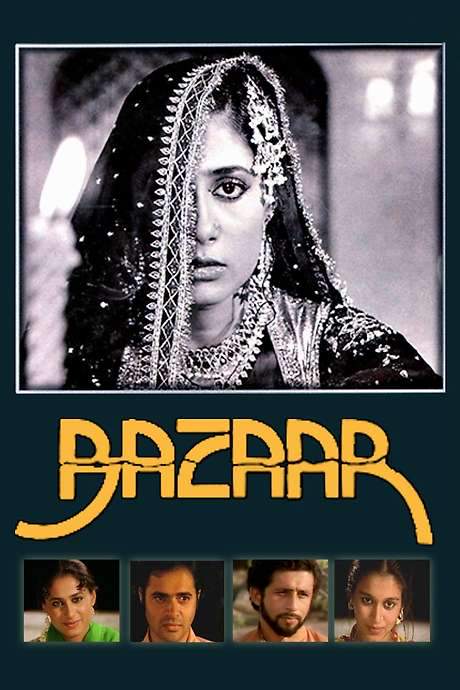
Bazaar (1982) movie poster

Timeline

Bazaar (1982) Timeline Explained – Every Event in Order

Release, runtime and language
1982 · 121 mins · Hindi
Loading streaming availability…
Directed by
Sagar Sarhadi
Starring
Naseeruddin Shah, Tabu, Supriya Pathak, Sulabha Deshpande, Aanjjan Srivastav, Farooq Shaikh

Najma harbors a deep, platonic love for Salim Akhtar, yet she refuses to marry him until he can provide financial security. When the elderly Shakir offers to fund Salim’s new business venture, he attaches a condition: Najma must locate a suitable bride for him, forcing her to balance loyalty, societal expectations, and her own heart.

On this page (6)
  1. 1 Where to watch
  2. 2 Events in order (12)
  3. 3 Timeline questions answered
  4. 4 Movie threads
  5. 5 Movies like Bazaar
  6. 6 Every angle
Loading streaming availability…

12 events in order · contains spoilers

Bazaar Timeline: Events in Chronological Order

Every key event of Bazaar (1982) in order, scene by scene, with when and where it takes place. Use it to untangle flashbacks, time jumps and parallel storylines, to refresh your memory before the sequel or to find the exact scene you are thinking of.

  1. Najma's Mumbai flat and Akhtar's visit

    The film opens with Najma preparing in a Mumbai flat as Akhtar Hussain visits. He explains the pressures of an arranged marriage and says he must earn on his own to marry her. He mentions Shakir Khan's promised help and the flat's arrangement, while Najma recalls her family's past and the shame she felt when forced to sell herself. A flashback hints at a prior attempt to run away with Akhtar.

    When
    Evening / Night
    Where
    Mumbai, Najma's flat
  2. Salim's arrival and declaration of love

    The next morning Salim, a renowned poet, visits Najma and reiterates his six-year love for her. He argues that Akhtar merely uses Najma for nights and has no intention of marrying her. He warns that Najma is living a life of lies in the eyes of society. The confrontation deepens Najma's sense of entrapment and moral doubt.

    When
    Next morning
    Where
    Najma's flat, Mumbai
  3. Shakir Khan arrives and outlines a plan

    Najma and Akhtar receive Shakir Khan at the airport. He questions Akhtar's whereabouts and signals his interest in helping them by marrying a woman like Najma. He reveals his wish to marry a bride from Hyderabad and asks Najma to find one, setting the stage for a larger arrangement. The meeting hints at power and money guiding their fates.

    When
    Following day
    Where
    Airport, Mumbai
  4. Party demands and Shakir's painful past

    Shakir asks Najma to host a party where he privately confesses his longing for a wife and a sense of home. A flashback shows his abusive wife and children, explaining why he seeks a bride through Najma. He pressures Najma to locate a suitable bride from Hyderabad to secure his family life. The episode reveals the personal cost of his ambitions.

    When
    Evening
    Where
    Najma's residence, Mumbai
  5. Hyderabad romance: Sarju and Shabnam

    The story shifts to Hyderabad, where Sarju and Shabnam fall in love. Nasreen secretly loves Sarju and helps arrange a meeting, while keeping her own feelings hidden. The lovers face social and familial obstacles as Najma's wedding plans loom in the background. The city's mood underscores the pressure to marry for money.

    When
    Present / ongoing
    Where
    Hyderabad
  6. Najma prepares for the Hyderabad wedding

    Najma buys jewellery and other items for the wedding, and the Mumbai wedding party travels toward Hyderabad. A flashback shows Salim's past visits to Najma in Hyderabad and her repeated refusals to marry him. The sequence highlights Najma's inner conflict between love, duty, and economic necessity.

    When
    Travel / flashback sequence
    Where
    Train journey to Hyderabad
  7. Shabnam's prospects and Hajjan Bi's role

    In Hyderabad, Shabnam's mother cannot afford a good match, and Hajjan Bi promises to help when a suitable opportunity arises. Najma searches for a bride among the poor, witnessing girls displayed as prospects for money. The visit intensifies Najma's discomfort with the plan and the social marketplace she is part of.

    When
    Evening
    Where
    Hyderabad, Shabnam's home
  8. The wedding plan: Shabnam as a bride for Shakir

    During a gathering with the Mumbai wedding party, Shabnam's wedding is proposed to Shakir Khan. Shabnam is barely sixteen, shocking Najma. Akhtar urges Najma to push the arrangement forward, arguing poverty will force families to accept, while Salim protests the commodification of brides.

    When
    Evening / wedding planning
    Where
    Hyderabad / wedding venue
  9. Sarju confronts the parents; Najma's guilt grows

    Sarju learns of the planned wedding and confronts Shabnam's parents about auctioning her happiness. He vows to stop the wedding or harm himself, while Najma begins to feel the harm she has helped cause. Salim condemns the system, emphasizing that marriage is a form of selling people for survival.

    When
    Just before the wedding
    Where
    Hyderabad, wedding venue
  10. Shabnam's marriage and the tragedy

    Shabnam is married to Shakir Khan despite her protests. She goes to the mazaar to untie the thread of her wish, but soon poisons herself. The wedding night reveals Shabnam's body on the bridal bed, devastating Sarju and the party. Najma feels immense guilt for her role in orchestrating the arrangement.

    When
    Wedding night
    Where
    Hyderabad, wedding night / mazaar
  11. Najma confesses to Salim on the train

    On the return journey to Mumbai, Najma tells Salim about Shabnam's death and the consequences of the wedding scheme. She openly owns up to her part in orchestrating the match and the harm it caused. The moment marks a personal reckoning as she confronts the reality of her actions.

    When
    End of Hyderabad arc
    Where
    Train to Mumbai
  12. Final reckoning and resolve

    Back in Mumbai, Najma rejects Akhtar, recognizing that he could betray her for money again. Akhtar breaks down, realizing he has been ruined by his ambitions. Najma accepts responsibility for her role and resolves to seek a different path, acknowledging the damage done by the money-driven schemes.

    When
    Post-train / aftermath
    Where
    Mumbai

Last updated: October 09, 2025 at 14:50

Was this helpful?

Timeline questions answered

Bazaar Timeline Explained: Your Questions Answered

When does it happen, and why in that order? The questions people ask about the chronology of Bazaar (1982): time jumps, flashbacks, cause and effect between scenes and the correct order of events, each answered with spoilers.

Q1

Why does Najma agree to find a bride for Shakir Khan?

Najma agrees to find a bride because Shakir Khan offers to fund Akhtar's business venture in exchange. This arrangement would finally allow Najma and Akhtar to marry, as Akhtar has been insisting he needs financial security before wedlock. Despite her disgust at the request, Najma sees it as the only path to her own future with Akhtar.

Foreshadowing: Earlier, Akhtar explains that the flat they use is provided by Shakir, establishing that they are already dependent on his money.

  • najma
  • shakir khan
  • akhtar
  • marriage
  • business
  • poverty
Q2

Why does Shabnam commit suicide after marrying Shakir Khan?

Shabnam is forced to marry Shakir Khan despite loving Sarju. She is barely sixteen years old and has no agency in the decision, the marriage is arranged solely for money, as her family cannot afford a suitable match. She goes to the mazaar, unties the thread symbolizing her wish to marry Sarju, and poisons herself on her wedding night, unable to bear a life with a man she does not love.

Foreshadowing: During the party, Shabnam sings a haunting song that shifts the mood and draws Shakir's attention to her, foreshadowing her fate.

  • shabnam
  • sarju
  • suicide
  • marriage
  • shakir khan
  • hyderabad
Q3

Why does Najma reject Akhtar at the end of the film?

After witnessing Shabnam's suicide and confronting her own guilt, Najma realizes Akhtar would also "buy" her loyalty just as he accepted buying Shabnam for Shakir. She recognizes that his willingness to profit from another woman's suffering reveals he could betray her for money again. Her rejection represents her final moral reckoning.

Foreshadowing: Salim warns Najma early on that Akhtar uses her for nights but has no intention of marrying her, proving his self-interest.

  • najma
  • akhtar
  • rejection
  • guilt
  • money
  • choice
Q4

Why is Sarju unable to stop Shabnam's marriage to Shakir Khan?

Sarju is powerless because he lacks the financial means to marry Shabnam himself. Despite confronting her parents and declaring their mutual love, he cannot offer money or security. The social system rewards wealth over love, Shakir Khan's money makes him the acceptable suitor regardless of Shabnam's wishes.

Foreshadowing: Sarju tells Shabnam's parents he is trying hard to work and earn enough to marry her, but poverty is an insurmountable barrier.

  • sarju
  • shabnam
  • poverty
  • money
  • marriage
  • hyderabad
Q5

Why does Najma feel guilty after Shabnam's death?

Najma orchestrated the arrangement that led to Shabnam's forced marriage. She actively searched for a bride from poor families in Hyderabad and brought the wedding party together, directly enabling the union that caused Shabnam's despair. When she sees the consequences of her actions, she can no longer deny her complicity.

Foreshadowing: Najma's discomfort grows as she witnesses girls being "auctioned" for marriage money in Hyderabad, questioning her own role.

  • najma
  • guilt
  • shabnam
  • arranged marriage
  • responsibility
Q6

What does the title Bazaar signify in the film?

The title refers to the marketplace where women are treated as commodities to be bought and sold through marriage. The film explicitly shows families auctioning daughters for money, with Salim condemning the wedding as a "human auction." Like a bazaar, the social system operates on transactional terms, valuing women only for marriage prospects.

Foreshadowing: Salim explicitly calls the wedding a "sale" and condemns the commodification of women during the party confrontation.

  • bazaar
  • title
  • metaphor
  • marketplace
  • commodification
  • marriage
Q7

Why does Salim return to Mumbai with Najma after the tragedy?

Salim returns with Najma because she needs someone to turn to after her moral collapse. On the train, she finally confesses her role in orchestrating Shabnam's fatal marriage. Salim's presence represents her only remaining connection to honesty and accountability, as her previous life with Akhtar has collapsed.

Foreshadowing: Salim has been a constant presence throughout, warning Najma about Akhtar and condemning the marriage system.

  • salim
  • najma
  • train
  • mumbai
  • confession
  • return
Q8

Why does Najma refuse to read her family's letters for six years?

Najma's family forced her into selling herself to earn money, then justified it by claiming that working would tarnish the "pride of the Nawaabs." This betrayal created deep shame, and she refuses to answer their letters as a form of rejecting the family that commodified her. Her unresolved past directly influences her complicity in Shabnam's tragedy.

Foreshadowing: Najma reveals the unread letters to Akhtar early in the film, establishing her painful history with family and money.

  • najma
  • family
  • letters
  • shame
  • poverty
  • history
Q9

Why does Shakir Khan specifically want a bride from Hyderabad?

Shakir Khan works in the Gulf and has been away from home for years. His flashback reveals he had an abusive wife who is not welcome at home. He longs for a connection to his homeland and specifically asks for a bride from Hyderabad who will remind him of home, seeking both companionship and cultural familiarity.

Foreshadowing: At the airport, Shakir mentions his wish to marry a woman from Najma's Hyderabad hometown, establishing the geographic preference early.

  • shakir khan
  • hyderabad
  • home
  • marriage
  • gulf
  • wife
Q10

Why does Akhtar encourage Najma to proceed with finding Shakir a bride?

Akhtar pushes the arrangement because it directly benefits him, Shakir's funding of his business venture depends on Najma completing the task. He rationalizes that poor families will be grateful for the match with a wealthy man, completely overlooking the human cost to the young bride.

Foreshadowing: Akhtar explains early on that he must earn his own living to marry Najma, showing his prioritization of financial security.

  • akhtar
  • business
  • money
  • wedding
  • arrangement
  • shakir khan
Q11

Why does Nasreen help Sarju and Shabnam get together despite loving Sarju herself?

Nasreen loves Sarju secretly but helps arrange his meeting with Shabnam because she wants his happiness even if it cannot be with her. Her selfless act highlights genuine love versus transactional relationships, contrasting with the film's central critique of commodified marriage.

Foreshadowing: Nasreen is introduced as secretly loving Sarju yet facilitating his romance with Shabnam.

  • nasreen
  • sarju
  • shabnam
  • love
  • sacrifice
  • help
Q12

Why does Salim criticize the wedding as a human auction?

Salim, as a poet, recognizes the wedding as a transaction where a young girl is sold to an old man for money. He sees the system as morally corrupt, where poverty forces families to sacrifice their daughters. His criticism represents the film's moral voice condemning the commodification of women.

Foreshadowing: Salim has loved Najma for six years and repeatedly warns her that Akhtar uses her without intention to marry.

  • salim
  • auction
  • criticism
  • wedding
  • money
  • commodification

Movie threads

More Movies Like Bazaar, by Mood & Story

Curated lists built around what makes Bazaar tick: the same mood, the same kind of story or the same emotional payoff. Each list explains why these movies belong together.

Movies like Bazaar about desperate moral compromises

Stories where poverty and desperation force heartbreaking ethical choices. If you were moved by the difficult choices in Bazaar, this thread gathers films with similar themes of societal pressure and moral collapse. These movies explore how poverty and desperation force characters into transactional relationships, often with tragic, soul-crushing outcomes.

  • morally complex
  • despairing
  • oppressive
  • wrenching
  • somber
  • guilt-ridden
  • Tone: dark, despairing
  • Pacing: steady, deliberate
Why these movies?

The story pattern: The narrative typically follows a protagonist faced with an impossible choice, often involving the commodification of themselves or others. The story methodically builds tension as the initial compromise leads to a cascade of consequences, culminating in a sad or bleak ending that underscores the dehumanizing nature of the system.

Why they belong together: Movies in this thread are grouped by their shared focus on the intersection of poverty, ethics, and human dignity. They share a dark tone, heavy emotional weight, and a steady pacing that allows the full gravity of the characters' compromises to sink in, resulting in a profoundly somber viewing experience.

Bleak social dramas with oppressive systems like Bazaar

Grim narratives about individuals crushed by rigid, exploitative systems. For viewers who appreciated Bazaar's critique of societal constraints, this collection features movies with a similar dark, somber vibe. These films depict characters struggling against exploitative systems, often featuring themes of arranged marriage, female commodification, and the emotional despair that results.

  • oppressive
  • melancholic
  • tense
  • somber
  • despairing
  • wrenching
  • Tone: dark, oppressive
  • Pacing: steady, methodical
Why these movies?

The story pattern: The narrative pattern centers on a protagonist trapped within an oppressive societal or familial system. The conflict arises from the clash between personal desires and rigid expectations, with the system itself acting as the primary antagonist. The journey is one of increasing tension and diminishing hope, often ending in tragedy that reinforces the power of the oppressive structure.

Why they belong together: These films are united by their dark, oppressive atmosphere and their thematic focus on systemic injustice. They share a steady, deliberate pacing that builds a sense of inescapable dread, a high emotional intensity, and a consistent mood of melancholy and despair, creating a cohesive viewing experience for those seeking serious social commentary.

If you liked this

Movies Like Bazaar

Similar movies to Bazaar: the same genre, themes or kind of story. Each one comes with its own plot summary, timeline and ending explained.

Browse all movie summaries

Every angle

Bazaar (1982) Explained: Plot, Timeline & Characters

Everything about Bazaar in one place: what happens in the plot summary, the timeline in chronological order, the characters and meaning and a spoiler-free summary. What's After the Movie adds the cast, box office and post-credit scenes.

Coming soon on iOS and Android

The Plot Explained Movie Summary App

Plot summaries, endings explained and timelines on your phone. Catch up on any movie in minutes, save your favorites and never miss a twist again.

Be the first to know when we launch. Your email stays private, always.

Learn more about the app