Plot Explained Spoilers guaranteed!
Plot Explained

Browse by genre

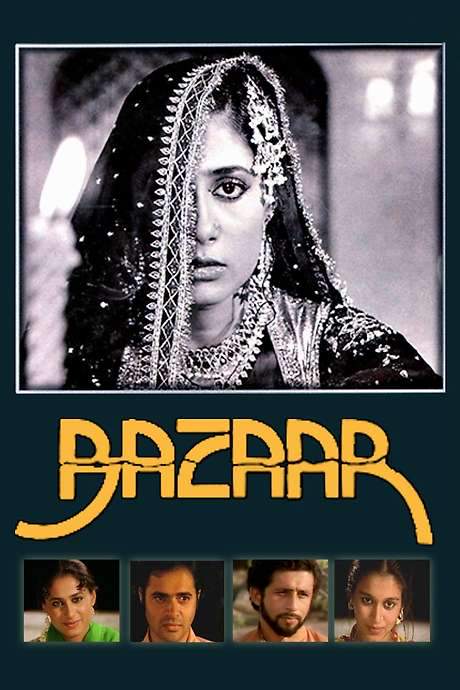
Bazaar (1982) movie poster

Characters & Themes

Bazaar (1982) Characters, Setting & Themes Explained

Release, runtime and language
1982 · 121 mins · Hindi
Loading streaming availability…
Directed by
Sagar Sarhadi
Starring
Naseeruddin Shah, Tabu, Supriya Pathak, Sulabha Deshpande, Aanjjan Srivastav, Farooq Shaikh

Najma harbors a deep, platonic love for Salim Akhtar, yet she refuses to marry him until he can provide financial security. When the elderly Shakir offers to fund Salim’s new business venture, he attaches a condition: Najma must locate a suitable bride for him, forcing her to balance loyalty, societal expectations, and her own heart.

On this page (8)
  1. 1 Where to watch
  2. 2 Characters explained (8)
  3. 3 Where & when it takes place
  4. 4 Themes & meaning (3)
  5. 5 Character & meaning questions
  6. 6 Movie threads
  7. 7 Movies like Bazaar
  8. 8 Every angle
Loading streaming availability…

8 main characters · contains spoilers

Bazaar Characters Explained: Who Is Who

The main characters of Bazaar (1982), heroes and villains: what drives them, how they change over the course of the story and what each of them reveals about the film's bigger ideas.

  • Najma (Smita Patil)

    Najma is a woman entangled in a cycle of poverty and family pride who sells her future to secure a livelihood. She initially supports Akhtar's plan to marry and profit from his prospects, but grows increasingly aware of the cost of selling happiness. By the end, she confronts the system and chooses to face the consequences, even as she rejects Akhtar's advances. Her arc centers on guilt, responsibility, and a desire for independence.

    • 🏙️ Trapped
    • 💔 Love
    • 🕊️ Resilience
  • Salim

    played by Naseeruddin Shah

    A renowned poet who loves Najma, Salim confronts the commodification of marriage and insists that true love cannot be bought. He expresses anger at the wedding market and warns Najma about the path she is choosing. His perspective provides the moral counterpoint to the transactions around him, and he ultimately returns to Mumbai, carrying the weight of what he has witnessed.

    • 💬 Poet
    • 🕊️ Love
    • 🧭 Moral compass
  • Akhtar Hussain

    played by Bharat Kapoor

    A young man from a wealthy background who believes marriage to Najma will secure his future. He uses Najma as a means to an end, promising to stand on his own and start a life with her only if money is involved. His actions reveal opportunism reinforced by social pressure and a willingness to exploit Najma's vulnerability.

    • 💼 Ambition
    • 💸 Exploitation
  • Shabnam

    played by Tabu

    A young woman forced toward marriage with Shakir Khan, Shabnam represents the tragedy born from families trading daughters for wealth. She resists yet is powerless to change her fate, ultimately choosing death over a life devoid of agency.

    • 💔 Tragedy
    • 🎵 Youth
  • Sarju

    played by Farooq Shaikh

    Najma's childhood friend who loves Shabnam and fights against the wedding plan. He confronts the family, pleads for mercy, and becomes a symbol of personal honor and the cost of the social system on those who attempt to resist.

    • 🥀 Love
    • 🗡️ Courage
  • Shakir Khan

    played by Shaukat Azmi

    A successful man whose wealth enables him to purchase a bride, Shakir Khan embodies the patriarchal power that feeds on vulnerability. He is depicted as abusive and calculating, ultimately the wedding leads to tragedy for Shabnam.

    • ⚖️ Power
    • 🕰️ Manipulation
  • Nasreen

    played by Rita Rani Kaul

    A friend who helps arrange meetings and navigates the social web that binds lovers and families together. Her role underscores the network of women who operate within and around the system, sometimes complicit, sometimes complicitly resisting.

    • 🤝 Connection
    • 👩‍❤️‍👨 Friendship
  • Shabnam's Mother

    played by Sulabha Deshpande

    Shabnam's mother is a figure shaped by economic pressures and social expectations. She faces a difficult choice between family honor and the daughter's happiness, illustrating how mothers navigate the system to secure a future for their children.

    • 👩‍👧 Family
    • 💰 Economic pressure

Last updated: October 04, 2025 at 12:59

Was this helpful?

Setting

Where and When Does Bazaar Take Place?

The setting of Bazaar (1982): the year and time period, the places and locations, and how they shape the characters, the mood and the tension of the story.

Time period

Location

Mumbai, Hyderabad

Set primarily in Mumbai and Hyderabad, the film juxtaposes cramped city flats and the social networks that bind women to marriages for money. The urban environment highlights economic disparities that drive the 'gifts' and dowries central to the plot. The journey between the two cities marks a shift from vulnerability to a confrontation with the social system.

  • 🏙️ Urban setting
  • 🕌 Indian cities
  • 💔 Poverty

Last updated: October 04, 2025 at 12:59

Was this helpful?

3 major themes

Bazaar Meaning: Themes & Message Explained

What is Bazaar (1982) really about? The emotional, social and philosophical themes the film keeps returning to, its symbolism and the message beneath the surface.

  • Exploitation

    Najma's life is shaped by poverty and family honor, forcing her into a world where marriages are arranged as transactions. The film shows men leveraging money and social leverage to control women's futures. The consequences are tragedy, guilt and a critique of a system that treats people as commodities rather than individuals. It remains a stark portrait of how economic desperation can corrupt intimate relationships.

  • Class, Hypocrisy

    The narrative contrasts wealth and poverty, exposing how respectability masks exploitation. Dowries, matchmaking, and parental pressure convert personal choices into public transactions. The film critiques a tradition that privileges those with money and status while leaves the vulnerable unprotected. It reveals the hypocrisy of 'respectability' while profiting from the misery.

  • Voice and Agency

    Salim's poetic vocation stands against commodification as he condemns marriages bought with money. Najma's evolution from a dependent participant toward acknowledging her role in the system signals a longing for personal autonomy. The tragedy of Shabnam culminates from the same system by denying women a voice in their own destinies. The film suggests that true freedom requires economic and social self-determination.

Last updated: October 04, 2025 at 12:59

Was this helpful?

Character & theme questions

Bazaar Characters & Meaning: Your Questions Answered

The questions people ask about Bazaar (1982): who the characters really are, their relationships, what the symbols mean, where it takes place and what the movie is really about. Each answer contains spoilers.

Q1

Where is Bazaar set?

The film is set primarily in Mumbai and Hyderabad, two major Indian cities. The story unfolds in cramped city flats and follows the social networks that connect women to marriages driven by financial transactions. The journey between these two cities marks a transition from vulnerability to a direct confrontation with the social system that exploits women.

  • setting
  • mumbai
  • hyderabad
  • locations
  • india
Q2

How do Mumbai and Hyderabad function in the story?

Mumbai represents the initial setting where Najma operates within systems of economic desperation, while Hyderabad serves as the destination where the consequences of the marriage market become unavoidable. The urban environments highlight the economic disparities that drive the exchange of gifts and dowries central to the plot.

  • mumbai
  • hyderabad
  • urban setting
  • india
  • cities
Q3

What are the main themes of Bazaar?

The film explores three interconnected themes: exploitation, class and hypocrisy, and voice and agency. It portrays how poverty and family honor force women into arranged marriages treated as financial transactions. The narrative critiques how respectable society masks exploitation, and follows characters who struggle to assert personal autonomy against systemic commodification of people.

  • themes
  • exploitation
  • class
  • hypocrisy
  • agency
  • voice
Q4

How does the film portray exploitation?

Bazaar shows how men leverage money and social power to control women's futures, turning marriages into business deals. The film demonstrates that economic desperation corrupts intimate relationships, reducing people to commodities rather than individuals. The consequences include tragedy, guilt, and a stark critique of a system that trades human happiness for financial security.

  • exploitation
  • poverty
  • dowry
  • marriage
  • system
Q5

What does the movie say about class and hypocrisy?

The film contrasts wealth and poverty to expose how respectability masks exploitation. Dowries, matchmaking, and parental pressure transform personal choices into public transactions. The narrative reveals the hypocrisy of societal structures that privilege the wealthy while leaving the vulnerable unprotected, showing how prosperity often depends on others' misery.

  • class
  • hypocrisy
  • wealth
  • poverty
  • respectability
  • dowry
Q6

Who is Najma and what drives her?

Najma is a woman trapped in poverty and family pride who must sell her future to secure a livelihood. She initially supports Akhtar's plan to profit from marriage prospects but grows increasingly aware of the human cost. Her arc centers on guilt, responsibility, and a growing desire for independence as she confronts the system that controls her fate.

  • najma
  • smita patil
  • character
  • motivation
  • poverty
Q7

Who is Salim and what is his significance?

Salim is a renowned poet who loves Najma and serves as the moral voice against the commodification of marriage. He condemns marriages bought with money and warns Najma about the path she is choosing. His perspective provides the ethical counterpoint to the transactional world around him, representing artistic integrity against societal corruption.

  • salim
  • naseeruddin shah
  • poet
  • character
  • moral voice
Q8

Who is Shakir Khan and what does he represent?

Shakir Khan is a wealthy, successful man who uses his economic power to purchase a bride, embodying the patriarchal exploitation that feeds on vulnerability. He represents the abusive, calculating nature of men who treat women as property. His role highlights how wealth enables older men to exploit young women within the marriage system.

  • shakir khan
  • wealth
  • exploitation
  • patriarchy
  • power
Q9

Who is Shabnam and why does her story matter?

Shabnam is a young woman forced into marriage with Shakir Khan, representing the tragic consequences of families trading daughters for financial security. She resists but lacks power to change her fate, ultimately choosing death over a life without agency. Her tragedy underscores the film's critique of a system that denies women any voice in their own destinies.

  • shabnam
  • tabu
  • tragedy
  • suicide
  • agency
  • woman
Q10

What does Bazaar say about women's agency?

The film suggests that true freedom requires economic and social self-determination. While characters like Najma evolve from dependent participants toward acknowledging their role in the system, the tragedy of Shabnam demonstrates how the marriage market denies women control over their own lives. The narrative shows that voice and agency remain elusive without systemic change.

  • women
  • agency
  • autonomy
  • freedom
  • voice
  • feminism
Q11

How does the movie depict the dowry system?

Bazaar presents the dowry system as the mechanism through which marriages become financial transactions. The film shows how 'gifts' and dowries drive the plot, with economic disparities creating power imbalances that allow exploitation. The system transforms personal relationships into public deals, with devastating consequences for those who cannot meet financial demands.

  • dowry
  • marriage
  • system
  • money
  • gifts
  • transaction
Q12

How does poverty shape the characters in the film?

Poverty forces Najma and other characters into impossible choices, driving the narrative's tragic events. Economic desperation corrupts intimate relationships and forces families to treat daughters as commodities. The film shows how financial vulnerability makes women susceptible to exploitation, with poverty serving as both the setting's backdrop and the central engine of character tragedy.

  • poverty
  • economic
  • desperation
  • financial
  • characters

Movie threads

More Movies Like Bazaar, by Mood & Story

Curated lists built around what makes Bazaar tick: the same mood, the same kind of story or the same emotional payoff. Each list explains why these movies belong together.

Movies like Bazaar about desperate moral compromises

Stories where poverty and desperation force heartbreaking ethical choices. If you were moved by the difficult choices in Bazaar, this thread gathers films with similar themes of societal pressure and moral collapse. These movies explore how poverty and desperation force characters into transactional relationships, often with tragic, soul-crushing outcomes.

  • morally complex
  • despairing
  • oppressive
  • wrenching
  • somber
  • guilt-ridden
  • Tone: dark, despairing
  • Pacing: steady, deliberate
Why these movies?

The story pattern: The narrative typically follows a protagonist faced with an impossible choice, often involving the commodification of themselves or others. The story methodically builds tension as the initial compromise leads to a cascade of consequences, culminating in a sad or bleak ending that underscores the dehumanizing nature of the system.

Why they belong together: Movies in this thread are grouped by their shared focus on the intersection of poverty, ethics, and human dignity. They share a dark tone, heavy emotional weight, and a steady pacing that allows the full gravity of the characters' compromises to sink in, resulting in a profoundly somber viewing experience.

Bleak social dramas with oppressive systems like Bazaar

Grim narratives about individuals crushed by rigid, exploitative systems. For viewers who appreciated Bazaar's critique of societal constraints, this collection features movies with a similar dark, somber vibe. These films depict characters struggling against exploitative systems, often featuring themes of arranged marriage, female commodification, and the emotional despair that results.

  • oppressive
  • melancholic
  • tense
  • somber
  • despairing
  • wrenching
  • Tone: dark, oppressive
  • Pacing: steady, methodical
Why these movies?

The story pattern: The narrative pattern centers on a protagonist trapped within an oppressive societal or familial system. The conflict arises from the clash between personal desires and rigid expectations, with the system itself acting as the primary antagonist. The journey is one of increasing tension and diminishing hope, often ending in tragedy that reinforces the power of the oppressive structure.

Why they belong together: These films are united by their dark, oppressive atmosphere and their thematic focus on systemic injustice. They share a steady, deliberate pacing that builds a sense of inescapable dread, a high emotional intensity, and a consistent mood of melancholy and despair, creating a cohesive viewing experience for those seeking serious social commentary.

If you liked this

Movies Like Bazaar

Similar movies to Bazaar: the same genre, themes or kind of story. Each one comes with its own plot summary, timeline and ending explained.

Browse all movie summaries

Every angle

Bazaar (1982) Explained: Plot, Timeline & Characters

Everything about Bazaar in one place: what happens in the plot summary, the timeline in chronological order, the characters and meaning and a spoiler-free summary. What's After the Movie adds the cast, box office and post-credit scenes.

Coming soon on iOS and Android

The Plot Explained Movie Summary App

Plot summaries, endings explained and timelines on your phone. Catch up on any movie in minutes, save your favorites and never miss a twist again.

Be the first to know when we launch. Your email stays private, always.

Learn more about the app