Plot Explained Spoilers guaranteed!
Plot Explained

Browse by genre

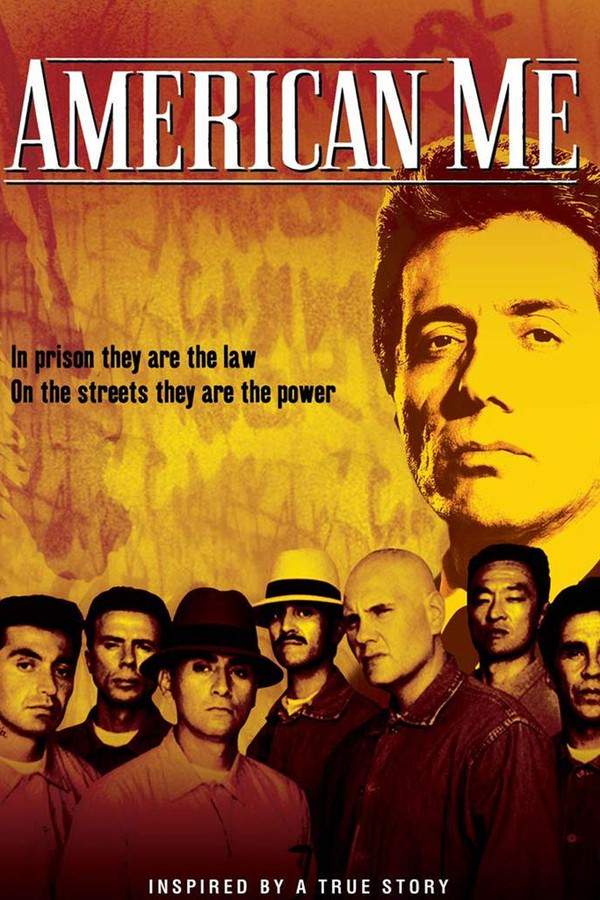
American Me (1992) movie poster

Timeline

American Me (1992) Timeline Explained – Every Event in Order

Release, runtime and language
1992 · 125 min · English
Loading streaming availability…

A young man from East Los Angeles becomes entangled with the Mexican Mafia, ultimately rising to a position of power within Folsom Prison. The film follows his journey through a world of prejudice and despair, exploring themes of identity, loyalty, and the devastating cycle of violence that defines his life and the lives of those around him. It’s a powerful and unflinching look at the realities of prison life and the choices that lead to a life of crime.

On this page (6)
  1. 1 Where to watch
  2. 2 Events in order (15)
  3. 3 Timeline questions answered
  4. 4 Movie threads
  5. 5 Movies like American Me
  6. 6 Every angle
Loading streaming availability…

15 events in order · contains spoilers

American Me Timeline: Events in Chronological Order

Every key event of American Me (1992) in order, scene by scene, with when and where it takes place. Use it to untangle flashbacks, time jumps and parallel storylines, to refresh your memory before the sequel or to find the exact scene you are thinking of.

  1. Zoot Suit Riots Begin

    The film opens during the Zoot Suit Riots of 1943, spotlighting the plight of young lovers Esperanza and Pedro Santana. They face violent hostility from sailors, showcasing the racial tensions of the era.

    When
    1943
    Where
    Los Angeles
  2. Brutal Attack

    In the chaos of the riots, Pedro is brutally attacked, highlighting the violent atmosphere surrounding Chicano communities. Esperanza, caught in the turmoil, suffers a tragic gang-rape, a traumatic event that alters their lives forever.

    When
    1943
    Where
    Los Angeles
  3. Montoya Joins a Gang

    Fast-forward to 1959, where Esperanza and Pedro's son, Montoya, becomes involved with friends J.D. and Mundo. They form a gang, leading to their engagement in illegal activities that ultimately lead them into juvenile hall.

    When
    1959
    Where
    Los Angeles
  4. Montoya’s Rage in Juvenile Hall

    While in juvenile hall, Montoya's suppressed anger reaches a boiling point when he retaliates against a fellow inmate. This act of violence results in a murder charge that significantly extends his sentence.

    Where
    Juvenile Hall
  5. Life in Folsom State Prison

    On his 18th birthday, Montoya is transferred to Folsom State Prison, where he rises through the ranks to become the leader of the notorious prison gang, La Eme. This transformation marks a pivotal point in his life as he embraces a legacy of crime and power.

    Where
    Folsom State Prison
  6. Release and Struggles

    In 1977, Santana is released from prison but struggles to adjust to a society that has changed in his absence. He seeks solace in a turbulent romance with Julie, whose growing disillusionment is evident as she observes the effects of his criminal lifestyle.

    When
    1977
    Where
    Los Angeles
  7. Territorial Wars and Consequences

    A rival drug lord challenges La Eme's territory, sparking violence as the gang retaliates by killing the drug lord's son while incarcerated. This brutal act sets off a chain reaction of deadly consequences for Santana's community.

    Where
    Prison
  8. Community Drug Epidemic

    In retaliation for the murder, the rival drug lord floods Santana's neighborhood with pure heroin, leading to an epidemic of overdoses. The situation escalates further when Julie's brother becomes one of the tragic casualties of this crisis.

    Where
    Los Angeles
  9. Moment of Reflection

    Santana visits his mother's grave and learns shocking truths about his parentage, which alters his perspective on his life choices. This pivotal moment of reflection leads him to reconsider his path and the violence that has enveloped his life.

  10. Return to Prison

    Before Santana can change his ways, he is apprehended on drug charges and sent back to Folsom Prison. As he grapples with his fate, he receives a visit from J.D., who reveals he has left La Eme, a decision that ripples through their lives.

    Where
    Folsom State Prison
  11. J.D.'s Death

    J.D.'s decision to leave La Eme leads to fatal consequences as he is targeted by the gang. This tragic incident reinforces the cycle of violence that perpetuates within their community, highlighting the harsh realities of their choices.

  12. Santana's Heartbreaking End

    The cycle of violence culminates in Santana's tragic demise when he is brutally stabbed and thrown from a balcony. This heartbreaking event underscores the heavy toll that gang life has taken on him and those around him.

  13. Julie’s Discovery

    After Santana's death, Julie finds a heartfelt letter from him expressing gratitude for her influence on his journey towards redemption. Accompanied by a sacred necklace of St. Dismas, the letter becomes a symbol of hope amidst despair.

  14. Paulito's Initiation

    Santana's younger brother, Paulito, takes the sacred necklace and uses it as a tool to initiate a young boy into La Eme. This act of initiation signifies the troubling continuation of the gang's legacy of violence and despair.

  15. Drive-By Shooting

    The initiation culminates in a horrifying drive-by shooting that leaves a trail of destruction. This tragic event highlights the ongoing cycle of violence that plagues the community and the deep-rooted issues within the gang culture.

Last updated: November 22, 2024 at 18:14

Was this helpful?

Timeline questions answered

American Me Timeline Explained: Your Questions Answered

When does it happen, and why in that order? The questions people ask about the chronology of American Me (1992): time jumps, flashbacks, cause and effect between scenes and the correct order of events, each answered with spoilers.

Q1

Why does Montoya kill the inmate in juvenile hall?

Montoya's pent-up fury from years of oppression and witnessing the brutal attack on his mother Esperanza during the Zoot Suit Riots finally erupts when he retaliates against a fellow inmate who wronged him. This act of violence, born from accumulated rage and trauma, results in a murder charge that dramatically extends his sentence, setting him on the path to becoming a hardened criminal.

Foreshadowing: The violent attack on Esperanza and Pedro in 1943 plants the seeds of Montoya's explosive anger that later manifests in juvenile hall.

  • Montoya Santana
  • juvenile hall
  • murder
  • rage
  • prison
Q2

How does Montoya rise to become leader of La Eme in Folsom Prison?

Upon turning 18, Montoya is transferred to Folsom State Prison where his reputation as a violent and calculating individual, combined with his extended sentence, allows him to navigate the prison's power structure. He eventually establishes himself as the leader of La Eme, the Mexican Mafia, transforming from a young gang member into a formidable prison gang leader.

Foreshadowing: His murder conviction and lengthy sentence position him to climb the prison hierarchy.

  • Montoya Santana
  • La Eme
  • Folsom Prison
  • prison gang leader
Q3

Why does the rival drug lord flood Santana's community with heroin?

After La Eme retaliates by executing the rival drug lord's son while in prison, the drug lord seeks devastating revenge. He floods Santana's neighborhood with pure heroin, deliberately causing an epidemic of overdoses. This act of retaliation specifically targets the community, demonstrating how gang conflicts destroy innocent lives beyond the direct participants.

Foreshadowing: The execution of the drug lord's son in prison directlyprovocesthis retaliatory attack on the community.

  • La Eme
  • drug lord
  • heroin epidemic
  • retaliation
  • overdose
Q4

What truth does Santana learn at his mother's grave?

At his mother's grave, Santana's father reveals a shocking family secret: there is a possibility that Santana could be the son of the man who assaulted his mother during the Zoot Suit Riots. This revelation about his potential parentage stems from his father's bitterness and fundamentally shifts Santana's perspective on his identity and life choices.

Foreshadowing: The film hints at the trauma of the 1943 assault and its lasting impact on the family.

  • Santana
  • mother
  • grave
  • revelation
  • parentage
  • Zoot Suit Riots
Q5

Why is J.D. killed after deciding to leave La Eme?

J.D. visits Santana in prison and reveals he has relinquished his position in La Eme, choosing to exit the gang life. However, this decision proves fatal as Mundo and other gang members kill him. His death illustrates the impossible catch-22 of gang membership: leaving is not permitted, and the attempt to escape results in execution as a warning to others.

Foreshadowing: The film's bleak tone from the beginning establishes that there is no escape from gang life.

  • J.D.
  • La Eme
  • killed
  • leaving gang
  • betrayal
Q6

How does Santana die at the end of the film?

Santana meets a heartbreaking end when he is brutally stabbed and thrown from a balcony, killed by members of his own gang world. His death represents the ultimate price of the lifestyle he chose, and the cyclic nature of violence claims yet another victim. Before his death, he writes a heartfelt letter to Julie thanking her for guiding him toward self-enlightenment.

Foreshadowing: The constant violence and cycle of retaliation throughout the film build to this inevitable tragic conclusion.

  • Santana
  • death
  • stabbed
  • balcony
  • cycle of violence
Q7

What is the significance of the St. Dismas necklace?

The sacred necklace of St. Dismas (the patron saint of prisoners) carries deep symbolic meaning throughout the film. After Santana's death, Julie discovers his letter to her accompanied by this necklace, representing his quest for redemption and spiritual salvation. The necklace serves as a poignant reminder of his brief hope for change.

Foreshadowing: Santana's imprisonment and reflections on his life path foreshadow his desire for spiritual redemption.

  • St. Dismas necklace
  • redemption
  • Julie
  • prison
  • spiritual
Q8

Why does Paulito use the necklace to initiate a boy into La Eme?

Santana's younger brother Paulito seizes the sacred necklace and uses it as a tool to initiate a young boy into La Eme. This tragic reuse of a symbol meant for redemption instead becomes a tool for perpetuating the gang's legacy of violence. The initiation ceremony, now warped from its original spiritual meaning, marks the continuation of the destructive cycle.

Foreshadowing: The necklace's religious symbolism contrasts with the violence of gang life, making its misuse particularly poignant.

  • Paulito
  • necklace
  • initiation
  • La Eme
  • young boy
  • cycle of violence
Q9

Why does Julie's brother die from a heroin overdose?

Julie becomes one of the tragic casualties when the rival drug lord floods the neighborhood with pure heroin in retaliation for La Eme killing his son. Her brother's death represents the devastating collateral damage of gang warfare, showing how criminal conflicts destroy the lives of innocent family members who are merely caught in the crossfire.

Foreshadowing: The drug lord's threat to retaliate against the community foreshadows this tragic outcome.

  • Julie
  • brother
  • overdose
  • heroin
  • retaliation
Q10

Why is Santana sent back to Folsom Prison?

Before Santana can fully change his ways after the revelation about his parentage and the death of Julie's brother, fate intervenes and he is caught on drug charges. This arrest sends him back to Folsom State Prison, where the cycle continues and ultimately leads to his death.

Foreshadowing: His involvement in the drug trade and gang activities make this re-arrest inevitable.

  • Santana
  • Folsom Prison
  • drug charges
  • arrested
  • return
Q11

Why does La Eme kill the rival drug lord's son in prison?

When a rival drug lord challenges La Eme's territorial claims, the gang retaliates violently by executing the drug lord's son while he is incarcerated. This act of killing the rival's family member within the prison system demonstrates the reach and ruthlessness of La Eme, but also triggers the catastrophic chain of events that destroys Santana's community.

Foreshadowing: The territorial conflict between gangs sets up this retaliatory murder.

  • La Eme
  • drug lord's son
  • killed
  • prison
  • retaliation
  • territorial war

Movie threads

More Movies Like American Me, by Mood & Story

Curated lists built around what makes American Me tick: the same mood, the same kind of story or the same emotional payoff. Each list explains why these movies belong together.

Bleak Prison Chronicles and Inescapable Cycles like in American Me

Unflinching stories of life behind bars defined by violence and despair. Discover movies like American Me that delve into the harsh, unvarnished truth of the prison system. If you appreciated the raw depiction of gang culture, power struggles, and the overwhelming sense of despair in American Me, these similar films offer equally powerful and heavy viewing experiences focused on crime and punishment.

  • grim
  • brutal
  • despairing
  • violent
  • tragic
  • oppressive
  • Tone: bleak, brutal, unflinching
  • Pacing: steady, deliberate
Why these movies?

The story pattern: These narratives often follow a linear, chronological path through a character's life or a significant period within the penal system. The journey is typically one of moral decay or a futile struggle for power and identity within an unforgiving environment, leading to a tragic or bleak conclusion that reinforces the inescapable nature of the system.

Why they belong together: These films are grouped by their shared commitment to a brutal, realistic tone, a steady pacing that builds an air of inevitability, and a high-intensity focus on the psychological and physical violence inherent to prison life. They create a cohesive experience of despair and institutional entrapment.

Tragic Ascents and Falls in Organized Crime like in American Me

Epic tales of rise and fall within ruthless criminal organizations. Explore movies similar to American Me that follow a powerful rise and fall narrative within crime families or gangs. If you were captivated by the decades-spanning journey from youth to leadership and the inevitable tragic consequences in American Me, these films offer comparable epic crime stories with heavy emotional weight and bleak endings.

  • tragic
  • gritty
  • epic
  • violent
  • despairing
  • fated
  • Tone: bleak, tragic, heavy
  • Pacing: steady, epic
Why these movies?

The story pattern: The narrative pattern is a rise-and-fall arc spanning many years, often from youth to adulthood. The protagonist gains power and influence within a criminal world, but the themes of betrayal, the cyclical nature of violence, and the weight of their choices ultimately lead to their moral and physical destruction.

Why they belong together: These films share a moderate narrative complexity covering long time spans, a steady pacing that allows the tragedy to unfold deliberately, and a profoundly heavy emotional weight. The core similarity is the specific arc of a charismatic or determined individual achieving power within a crime syndicate, only to face a devastating downfall.

If you liked this

Movies Like American Me

Similar movies to American Me: the same genre, themes or kind of story. Each one comes with its own plot summary, timeline and ending explained.

Browse all movie summaries

Every angle

American Me (1992) Explained: Plot, Timeline & Characters

Everything about American Me in one place: what happens in the plot summary, the timeline in chronological order, the characters and meaning and a spoiler-free summary. What's After the Movie adds the cast, box office and post-credit scenes.

Coming soon on iOS and Android

The Plot Explained Movie Summary App

Plot summaries, endings explained and timelines on your phone. Catch up on any movie in minutes, save your favorites and never miss a twist again.

Be the first to know when we launch. Your email stays private, always.

Learn more about the app