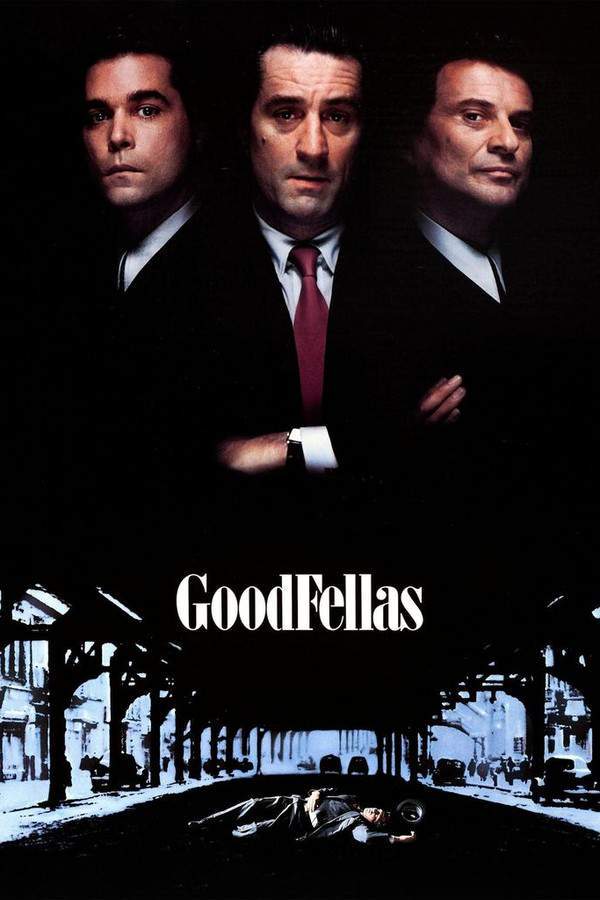
In 1955, a teenage boy named Henry Hill is drawn into the tantalizing world of organized crime in East New York, a hard‑working Italian‑American neighborhood of Brooklyn. He is quickly immersed into the inner circle led by the caporegime Paulie Cicero, where he befriends Jimmy Conway, a quick‑witted Irish‑American hijacker and gangster, and Tommy DeVito, a fellow juvenile delinquent with a fearless streak. Henry starts out as a local fence for Jimmy, quietly learning the rhythms of the rackets and gradually climbing the ladder to more dangerous, lucrative schemes. The allure of power, money, and enrollments into a clubby, nocturnal lifestyle begins to eclipse his former life, and the line between legality and crime grows blurrier with every unlawful decision.
As the 1960s unfold, the trio becomes exceptionally skilled at high‑stakes thefts—from carjackings and hijacking cargo trucks to orchestrating the Air France robbery. Their days often end in the glow of the Copacabana, where they celebrate their latest conquests, surround themselves with glamour, and drift through a sea of women. Henry finds himself drawn to Karen Friedman, a Jewish woman who is initially perplexed by his dangerous world but is soon swept up by the dazzling, daring life he leads. Her affection deepens into marriage, despite stern objections from her parents, who worry about the shadows that haunt Henry's days.
The fragile balance begins to tilt in 1970 when Billy Batts, a made man in the Gambino family who has just been released from prison, offends Tommy at a nightclub. In a ruthless escalation, Tommy and Jimmy retaliate with brutal violence, beating, stabbing, and fatally shooting Batts. Realizing that killing a made man without sanction could unleash a terrible reckoning, the trio opts to bury Batts’ body in Upstate New York. The crime sets in motion a cycle of fear and nerves, and months later, when the burial site is slated for development, they are forced to disturb the corpse and relocate it, a chilling reminder of how their choices echo beyond the moment.
By 1974, domestic tensions strain the household. Karen berates Henry’s mistress Janice, and she even menaces Henry at gunpoint. Henry vacillates between two worlds—returning to Karen and continuing the life with Janice—but Paulie insists on a return to the fold after a debt collection in Tampa requires Jimmy and Henry’s presence. The law begins to close in: Jimmy and Henry are arrested after being tipped off by the sister of a gambler, and both men receive ten‑year prison sentences. To support his family from the outside, Henry becomes entangled in smuggling drugs for Karen into the prison, feeding the trade that will finance their fragile life on the street.
Paroled in 1978, Henry reenters the narcotics business with Jimmy and Tommy, defying Paulie’s explicit orders. The Lufthansa vault heist at JFK—six million dollars in cash and jewelry—becomes the most audacious score. Some crew members buy expensive items against orders, and when the getaway truck is spotted by the police, a brutal purge follows. Henry and Tommy survive, while most of the crew is eliminated, as Henry’s Pittsburgh connections fund his continued ascent and Tommy nears a much‑anticipated, dangerous initiation into becoming a made man. Yet the celebration turns hollow when Tommy arrives at the supposed initiation and is killed as retribution for Batts’ murder, a stark reminder that the underworld enforces its own brutal code.
By 1980, the weight of cocaine use and constant danger leave Henry a jittery shell of his former self. A new deal with Pittsburgh associates goes awry, and narcotics agents arrest him. A bailout from Karen accompanies a grim revelation: she has flushed approximately $60,000 worth of cocaine down the toilet to keep the evidence from the FBI, leaving the Hills penniless and further deepening the distrust that now pervades their relationship.
Paulie’s decision to cut ties with Henry marks a turning point. With a dwindling sense of belonging and a growing sense of inevitability about his own exposure, Henry agrees to a hit assignment with Jimmy, but the plan fills him with dread. Realizing that Jimmy intends to have him killed, Henry makes a decisive shift: he becomes an informant, cooperates with authorities, and enrolls his family in the witness protection program. Through careful testimony and a careful accumulation of evidence, Henry helps convict Paulie and Jimmy, closing a chapter on the life he once lived. Hidden away in an undisclosed neighborhood, he reflects on his transformation, admitting that leaving the high‑octane, perilous world behind has saddled him with a sense of loss and a brutal self‑exile. In a final, quiet confession, he describes his unhappiness as a life condemned to be a mundane “schnook,” a stark contrast to the thrilling danger that once defined him.