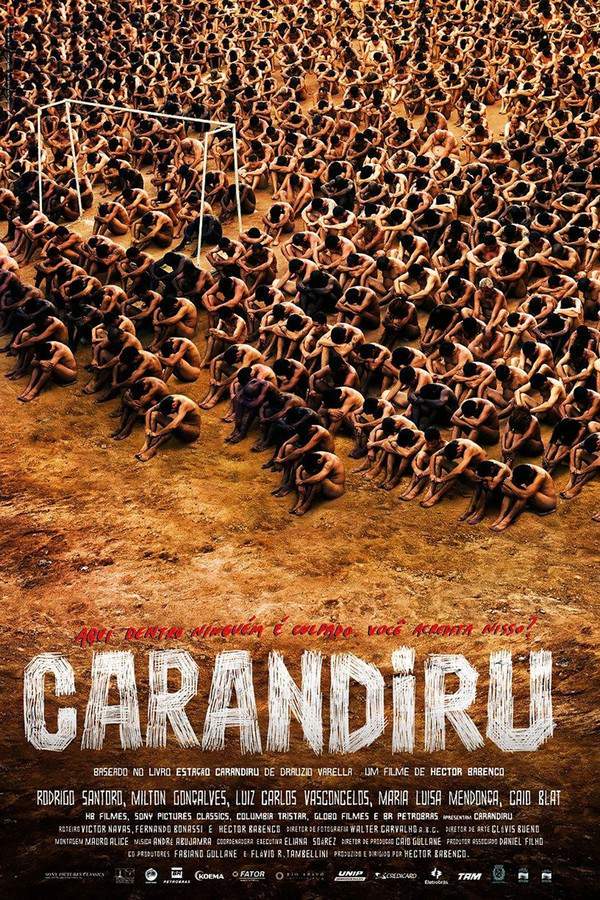
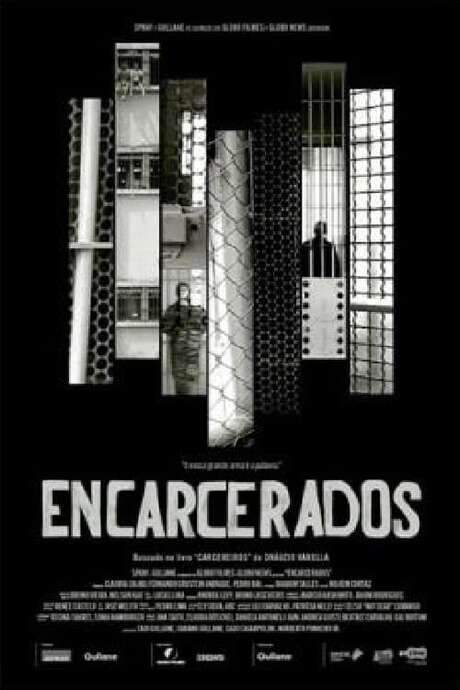
Set inside São Paulo's Carandiru Penitentiary, one of Latin America's largest and most brutal prisons, this sprawling drama follows a chorus of inmates whose lives collide under harsh conditions. Dr. Drauzio Varella (portrayed by Wagner Moura) arrives to test inmates for HIV, but his presence serves as a window through which many voices speak, guiding the viewer through a web of stories rather than presenting a single protagonist.
Rather than centering on one arc, the film uses Varella as a narrative filter, letting the inmates tell their own experiences in their own terms. The environment is stark: each 100-square-foot cell can hold up to sixteen prisoners, and the guards’ oversight is minimal. Order in the prison is largely maintained by the inmates themselves, a dynamic that fuels violence, drug use, and the spread of disease, all unfolding under the constant pressure of overcrowding and neglect.
Across the film, several stories emerge, giving intimate glimpses into lives rarely seen from the outside: Lady Di, a trans woman navigating the prison’s social world; the fragile threads of No Way's marriage; Deusdete and Zico shaping a fragile family dynamic; Ezequiel and Zico grappling with crack addictions; and Majestade juggling romantic entanglements. These interwoven narratives humanize the inmates, inviting the audience to see them as people with loyalties, regrets, and dreams.
The cast’s humanity shines even as violence and hardship loom large, and the film does not shy away from the brutal realities of life behind bars. Murders, drug use, and disease punctuate daily life, underscoring how fragile order can be when control rests with those who inhabit the prison, rather than the guards who are meant to oversee them. In this portrait of confinement, the inmates’ stories illuminate the broader social forces that shaped—and still shape—Carandiru.
Tensions eventually erupt into a riot, leading to the Carandiru Massacre, a devastating culmination that foregrounds the cost of systemic neglect and the volatility of life inside the walls. Babenco’s approach—grounding the drama in real voices and realities—builds toward a cathartic finale, with the real footage of Carandiru Penitentiary’s demolition providing a stark, haunting sense of closure. This ending invites reflection on memory, accountability, and the lasting impact of the prison system on individuals and communities.
The cast also includes Caio Blat in a supporting role, adding another layer to the film’s diverse tapestry of characters. Caio Blat