Plot Explained Spoilers guaranteed!
Plot Explained

Browse by genre

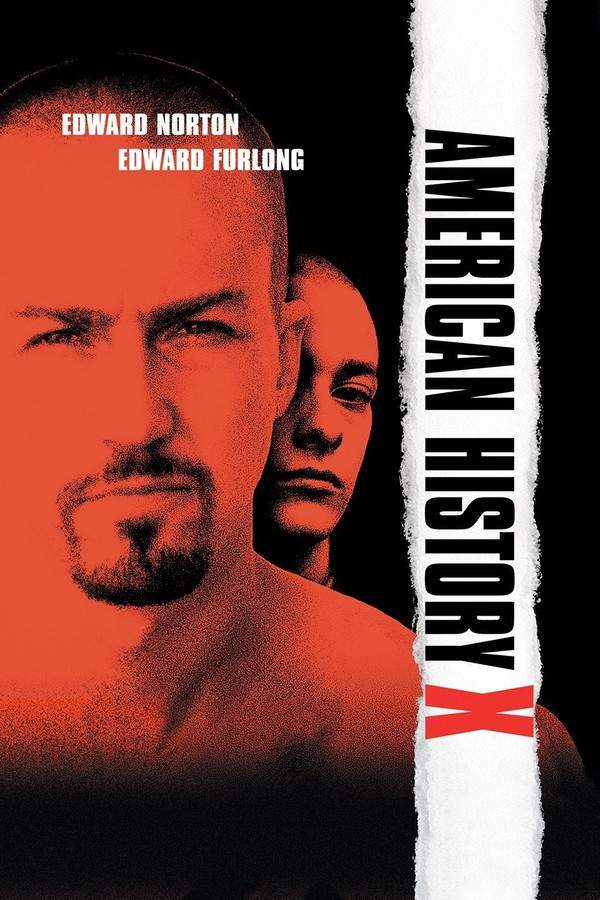
American History X (1998) movie poster

Plot Summary

American History X (1998) Plot Summary Explained

Release, runtime and language
1998 · 119 min · English
Directed by
Tony Kaye
Starring
Edward Norton, Edward Furlong
Budget
$20M

Following a violent act that leads to imprisonment, Derek Vinyard attempts to change his life and prevent his younger brother, Danny, from following in his footsteps. Derek's journey involves confronting the dangerous world of neo-Nazism and the destructive consequences of hate. He seeks redemption by trying to steer Danny away from the same path of violence and prejudice that consumed him.

On this page (6)
  1. 1 Where to watch
  2. 2 What happens: full plot
  3. 3 Plot questions answered
  4. 4 Movie threads
  5. 5 Movies like American History X
  6. 6 Every angle

Where to watch

Where to Watch American History X (1998)

Where can you watch American History X? Stream, rent or buy it in the US, including on Amazon Video, Apple TV Store and Fandango At Home: current JustWatch availability with up-to-date prices.

Streaming availability powered by JustWatch

Full plot summary · contains spoilers

What Happens in American History X: Full Plot Summary

The whole story of American History X (1998) explained, from the opening scene to the final frame: every key event, every twist and what it all adds up to. Read it as a quick recap before the sequel, to check a scene you missed, or to finally understand what really happened.

Flashbacks unfold in reverse chronology, uniquely depicted in black-and-white to contrast with the color of present-day events, revealing Derek's journey of becoming a vengeful white supremacist in Venice Beach, followed by his eventual rejection of those bigoted views during his time in prison. To clarify the narrative for the audience, the outline of events will be presented in chronological order.

Initially, Derek is heavily influenced by the latent racism stemming from his bigoted father, a firefighter portrayed by William Russ. This influence escalates when Derek's father is tragically shot and killed while battling a fire at a suspected Compton drug den. Heartbroken and enraged, Derek rises through the ranks to become a second-in-command within a Neo-Nazi street gang known as The D.O.C. (Disciples of Christ), where he lures young, impressionable whites into joining. The gang boldly engages in acts of intimidation, such as vandalizing a store run by a Korean immigrant that employs illegal Mexican workers and challenging African American players to basketball in a bid to claim the court as their turf.

These troubling incidents go unnoticed until one evening when Derek has a heated argument regarding Rodney King with his mother's new boyfriend, Murray, played by Elliott Gould, who is Jewish. Later that night, while Derek is involved with his white supremacist girlfriend, Stacey—portrayed by Fairuza Balk—his younger brother, Danny (who ultimately shares his name with the film's title), alerts him to the fact that three Crips members are attempting to steal their father's truck. Fueled by rage, Derek rushes outside with a pistol, resulting in a tragedy where he kills one man instantly and grievously wounds another, forcing him to place his mouth on the curb before brutally stomping on his head. The horror of this moment is etched in Danny's mind as he witnesses the violent transformation of his brother, culminating in Derek's arrest as he smiles at the shocked Danny.

Following a conviction for voluntary manslaughter, Derek finds himself sentenced to three years within the confines of the California Institution for Men in Chino. While serving time, he aligns himself with the Aryan Brotherhood, embracing the very ideologies he will later come to challenge. However, after a year, his disillusionment grows as he becomes increasingly frustrated with the gang, particularly their amicable relations with a member of a Mexican prison gang and their involvement in drug trafficking. When he voices his concerns, he faces backlash from his fellow supremacists.

Within this difficult environment, Derek forges an unexpected bond with an African American inmate named Lamont, portrayed by Guy Torry, who works alongside him in the prison laundry. Unfortunately, this friendship results in a brutal attack by his gang members, who have noticed their interactions. After enduring this traumatic experience, Derek is visited by his former English teacher, Dr. Bob Sweeney, played by Avery Brooks. In a pivotal conversation, Sweeney confronts Derek with the realities of the hatred he has perpetuated and the consequences of his actions, questioning if anything he has done has improved his life. This moment serves as a catalyst for change, pushing Derek to reevaluate his life choices and motivations, distancing himself from the Aryan Brotherhood.

As the day of Derek's release from prison nears, Danny's involvement in similar hate ideologies becomes evident. When his teacher, Murray, discovers Danny's Neo-Nazi sympathies, he informs Dr. Sweeney, who takes it upon himself to teach Danny, imparting lessons they label "American History X." As the newly transitioned Derek returns home, the realization hits that Danny has embraced the same destructive ideologies that Derek fought to escape, leading to a critical confrontation.

During a Neo-Nazi party that both brothers attend, a heated argument ensues between Derek and the gang leader, Cameron Alexander, portrayed by Stacy Keach. Derek asserts his independence from the gang, declaring he no longer wants to associate with them, which incites a violent response leading to a harrowing chase.

The next morning, the culmination of escalating tensions reveals a tragic fate for Danny. After an altercation in the school bathroom, a confrontation with an African American student ends tragically with Danny being shot. Derek arrives to find his brother lifeless, and cradles him in his arms in a heart-wrenching moment of grief and regret.

The film concludes with Danny narrating a poignant excerpt from his paper, reminiscent of the themes of unity and understanding, echoing President Lincoln's words:

> "We are not enemies, but friends. We must not be enemies..."

This climax underscores the tragic repercussions of hatred and prejudice, leaving a lasting impact on the viewer about the cycles of violence and the desperate need for change.

Last updated: November 03, 2024 at 14:32

Was this helpful?

Plot questions answered

American History X Plot Explained: Your Questions Answered

The questions people ask most about American History X (1998): what happens in the confusing scenes, why the characters do what they do, the twists, hidden details and what the ending means. Each answer contains spoilers.

Q1

Why did Derek Vinyard become a white supremacist?

Derek was profoundly shaped by his father's latent racism and then his traumatic death. His father, a firefighter, was killed while battling a fire at a suspected Compton drug den. This loss left Derek heartbroken and vulnerable, making him susceptible to the Neo-Nazi ideology promoted by The D.O.C. gang in Venice Beach, where he rose to become second-in-command.

Foreshadowing: Earlier scenes show Derek's father making bigoted comments, planting the seeds of racial resentment in Derek.

  • Derek Vinyard
  • white supremacist
  • father death
  • neo-nazi
  • Venice Beach
Q2

Why did Derek kill the two men outside his home?

Danny alerted Derek that three Crip members were attempting to steal their father's truck. Fueled by rage over his father's death and emboldened by his Neo-Nazi ideology, Derek rushed outside with a pistol. He killed one man instantly and grievously wounded another by stomping on his head while the victim was forced to bite the curb. This act led to his arrest and three-year sentence for voluntary manslaughter.

Foreshadowing: Earlier tensions with Murray about Rodney King and the gang's confrontations with minorities foreshadow this violent outburst.

  • Derek killing
  • Crip members
  • curb stomping
  • voluntary manslaughter
  • truck theft
Q3

Why did Derek join the Aryan Brotherhood in prison?

Upon arriving at the California Institution for Men in Chino, Derek aligned himself with the Aryan Brotherhood for survival in the hostile prison environment. He believed joining would protect him and provide structure. However, he later became disillusioned when he observed the gang's amicable relations with a Mexican prison gang and their involvement in drug trafficking.

Foreshadowing: Derek's pre-existing Neo-Nazi ideology made prison gang affiliation a natural extension of his beliefs.

  • Aryan Brotherhood
  • prison
  • Chino
  • survival
  • Mexican gang
Q4

What caused Derek Vinyard to change his views on racism?

Derek's transformation occurred through two key experiences. First, he formed an unexpected friendship with Lamont, an African American inmate, while working in prison laundry. This connection was shattered when Aryan Brotherhood members brutally attacked Derek for associating with a Black man. Second, his former teacher Dr. Bob Sweeney visited and confronted him about the hatred he perpetuated, questioning whether any of it improved his life. These experiences combined to spark Derek's rejection of his former ideology.

Foreshadowing: The attack by his own gang members directly challenges the loyalty and logic Derek had clung to.

  • Derek transformation
  • Lamont
  • Dr. Sweeney
  • prison attack
  • redemption
Q5

Why was Derek attacked by the Aryan Brotherhood in prison?

Derek was attacked because his fellow Aryan Brotherhood members noticed his friendship with Lamont, an African American inmate. This association was seen as a betrayal of the gang's core racist ideology. The attack was brutal, leaving Derek traumatized and further distancing him from the group.

Foreshadowing: Earlier scenes show tension when Derek questions the gang's drug dealings and alliances with other groups.

  • prison attack
  • Aryan Brotherhood
  • Lamont
  • betrayal
  • beating
Q6

Why did Danny Vinyard become a Neo-Nazi?

Danny followed the same path as his brother because he was shaped by the same environment and influences. After Derek's imprisonment, Danny had no positive role model to counteract the hatred surrounding him. When his teacher Murray discovered Danny's Neo-Nazi sympathies, he informed Dr. Sweeney, who took it upon himself to teach Danny, naming the lessons "American History X" - the same title that Danny would later write about.

Foreshadowing: Danny witnessed Derek's transformation into a violent supremacist and his arrest, which became the template for his own path.

  • Danny Vinyard
  • Neo-Nazi
  • follower
  • Sweeney
  • American History X
Q7

How and why was Danny killed at school?

Danny was shot and killed in the school bathroom following an altercation with an African American student. After Derek returned home and tried to distance himself from the Neo-Nazi gang, Danny attended a Neo-Nazi party where tensions escalated. The next morning, Danny's confrontation at school turned tragic when he was shot by the student he confronted. Derek arrived to find his brother dead in his arms.

Foreshadowing: The film foreshadows this tragedy through the cycle of violence and hatred that consumes both brothers.

  • Danny death
  • school shooting
  • bathroom
  • African American student
  • tragedy
Q8

Why did Derek confront Cameron Alexander at the Neo-Nazi party?

Derek confronted Cameron Alexander to declare his independence from the gang. Having changed his views after prison, Derek wanted to disassociate himself from the Neo-Nazi ideology and start a new life. When he publicly announced he no longer wanted to associate with them, Cameron and the other members reacted violently, triggering the chase that would ultimately lead to Danny's fate.

Foreshadowing: Earlier tension between Derek and the gang leader sets up this inevitable confrontation.

  • Cameron Alexander
  • Neo-Nazi party
  • confrontation
  • gang leader
  • independence
Q9

Why does the film use black and white for the flashbacks?

The black and white cinematography in American History X is used to depict the reverse-chronology flashbacks, specifically showing Derek's past as a violent white supremacist. This visual technique creates a stark contrast with the color of present-day events, visually separating Derek's current attempts at redemption from his dark history. It signals to the audience that they are viewing earlier events in the character's journey.

Foreshadowing: The black and white sequences show the foundation of Derek's hateful ideology before his transformation.

  • black and white
  • flashbacks
  • reverse chronology
  • cinematography
  • visual contrast
Q10

What does the title American History X mean?

The title refers to Danny's school assignment, which Dr. Sweeney calls "American History X." In the film's emotional conclusion, Danny narrates his paper about unity and understanding, quoting President Lincoln: "We are not enemies, but friends." The title represents the tragic cycle of hatred and violence in American history that consumes both brothers, while also suggesting the educational and transformative potential that comes too late.

Foreshadowing: Dr. Sweeney teaches Danny lessons labeled "American History X" as a way to counteract the hateful ideology.

  • American History X title
  • Danny's paper
  • Lincoln quote
  • unity
  • cycle of hatred
Q11

Why did Derek argue with Murray about Rodney King?

Derek had a heated argument with his mother's new boyfriend Murray, who is Jewish, about Rodney King. This confrontation represented the racial tensions already brewing in Derek's life and foreshadowed the escalating conflicts that would define his violent path. Murray's presence as a Jewish stepfather figure contrasted with Derek's growing hatred, making this argument a pivotal moment in demonstrating Derek's ideological rigidity.

Foreshadowing: This argument directly precedes the violent incident that leads to Derek's imprisonment.

  • Murray
  • Rodney King argument
  • Jewish
  • stepfather
  • racial tension
Q12

Why did Dr. Bob Sweeney visit Derek in prison?

Dr. Bob Sweeney, Derek's former English teacher, visited him in prison to confront him about the hatred and violence Derek had perpetuated. Sweeney challenged Derek to reflect on whether his actions had improved anyone's life. This pivotal conversation served as a catalyst for Derek's transformation, pushing him to reconsider everything he believed.

Foreshadowing: Sweeney's concern for Derek is established earlier when he takes on the responsibility of teaching Danny.

  • Dr. Sweeney
  • prison visit
  • teacher
  • confrontation
  • catalyst for change
Q13

Why did Derek smile at Danny when he was arrested?

When Derek was arrested following the curb stomping incident, he smiled at his younger brother Danny. This smile symbolized Derek's complete transformation into a vengeful, ideology-driven figure. It was a disturbing moment that traumatized Danny, who witnessed his brother's violent transformation. The smile represented Derek's embrace of violence as righteous rather than shameful.

Foreshadowing: This moment haunts Danny throughout the film and contributes to his own descent into Neo-Nazi ideology.

  • Derek arrest
  • smile
  • Danny witnessing
  • traumatic
  • transformation
Q14

Why did Derek and the gang vandalize the Korean store?

Derek and The D.O.C. vandalized a store owned by a Korean immigrant that employed illegal Mexican workers. This act was part of their broader campaign of intimidation against minorities, demonstrating their white supremacist ideology in action. The gang targeted businesses they perceived as exploiting white workers or representing foreign influence in their neighborhood.

Foreshadowing: This earlier act of racial violence establishes the gang's pattern of hate-filled behavior.

  • Korean store
  • vandalism
  • intimidation
  • The D.O.C.
  • Neo-Nazi activity

Movie threads

More Movies Like American History X, by Mood & Story

Curated lists built around what makes American History X tick: the same mood, the same kind of story or the same emotional payoff. Each list explains why these movies belong together.

Movies about redemption from hate like American History X

Powerful stories of characters breaking free from extremist ideologies. If you were moved by Derek's transformation in American History X, explore other powerful films about characters escaping extremist ideologies. This collection features gritty dramas with heavy emotional weight that depict the difficult, often tragic, journey from indoctrination to redemption.

  • redemptive
  • gritty
  • harrowing
  • angry
  • tragic
  • unsettling
  • Tone: dark, redemptive, tragic
  • Pacing: variable, character-driven
Why these movies?

The story pattern: The narrative pattern involves a character who is a fervent believer in a toxic ideology, often leading a group or influencing others. A catalytic event, frequently involving violence or imprisonment, forces a reckoning. The story unfolds as they gradually deconstruct their beliefs, face the harm they've caused, and struggle to build a new life, often while trying to protect others from their former path.

Why they belong together: These films are grouped by their focus on a specific, intense character arc: the fall and redemption of an ideologue. They share a dark tone, high emotional intensity, and a core theme of challenging indoctrination through personal experience and human connection.

Gritty movies about cycles of violence like American History X

Gritty explorations of how hatred and violence perpetuate across generations. For viewers seeking films similar to American History X's exploration of inherited hatred. Discover other dark, intense dramas that depict the devastating cycle of gang violence, racial prejudice, and revenge, often with bittersweet or tragic conclusions about breaking the chain.

  • gritty
  • tragic
  • unsettling
  • raw
  • somber
  • harrowing
  • Tone: bleak, tragic, unsettling
  • Pacing: variable, tense
Why these movies?

The story pattern: These narratives often follow multiple characters, sometimes across generations, who are caught in a relentless cycle of retaliation and ideological indoctrination. The plot structure frequently shows the cause and effect of violence, illustrating how past actions dictate future tragedies. The central conflict is the nearly insurmountable struggle to escape a predetermined path of destruction, with success often coming at a immense personal cost.

Why they belong together: They are united by their bleak examination of how violence begets violence. The shared experience is one of high tension, tragic outcomes, and a heavy, somber mood. The pacing is often variable, juxtaposing intense bursts of action with steady, grim consequences.

If you liked this

Movies Like American History X

Similar movies to American History X: the same genre, themes or kind of story. Each one comes with its own plot summary, timeline and ending explained.

Browse all movie summaries

Every angle

American History X (1998) Explained: Plot, Timeline & Characters

Everything about American History X in one place: what happens in the plot summary, the timeline in chronological order, the characters and meaning and a spoiler-free summary. What's After the Movie adds the cast, box office and post-credit scenes.

Coming soon on iOS and Android

The Plot Explained Movie Summary App

Plot summaries, endings explained and timelines on your phone. Catch up on any movie in minutes, save your favorites and never miss a twist again.

Be the first to know when we launch. Your email stays private, always.

Learn more about the app