Plot Explained Spoilers guaranteed!
Plot Explained

Browse by genre

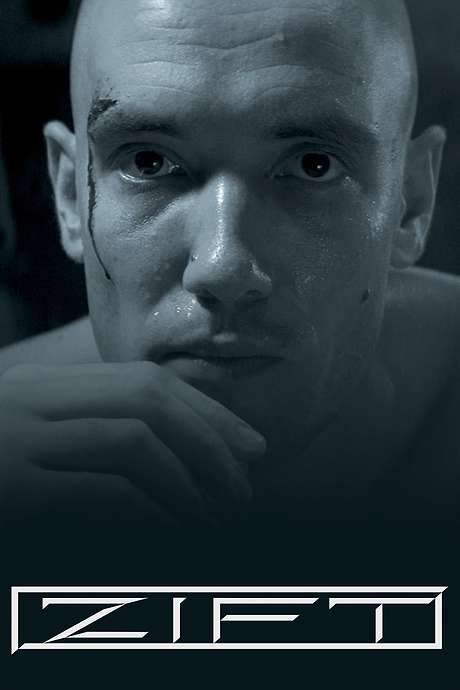
Zift (2008) movie poster

Plot Summary

Zift (2008) Plot Summary Explained

Release, runtime and language
2008 · 92 mins · Bulgarian
JustWatch #21,577 9
Directed by
Javor Gardev
Starring
Ivan Barnev, Dimo Alexiev, Hristo Petkov, Yavor Vesselinov, Velislav Pavlov, Ivaylo Dragiev

After decades behind bars for a murder he didn’t commit, Moth is released on parole just as Bulgaria shifts into communist rule. He steps into a foreign, oppressive Sofia of the 1960s, where his first night of freedom becomes a tour through crumbling districts, shadowed alleys and a surreal cast of inhabitants, mapping the city’s dark underbelly.

On this page (6)
  1. 1 Where to watch
  2. 2 What happens: full plot
  3. 3 Plot questions answered
  4. 4 Movie threads
  5. 5 Movies like Zift
  6. 6 Every angle

Where to watch

Where to Watch Zift (2008)

Where can you watch Zift? Stream, rent or buy it in the US, including on AMC+, Philo and Sundance Now: current JustWatch availability with up-to-date prices.

Streaming availability powered by JustWatch

Full plot summary · contains spoilers

What Happens in Zift: Full Plot Summary

The whole story of Zift (2008) explained, from the opening scene to the final frame: every key event, every twist and what it all adds up to. Read it as a quick recap before the sequel, to check a scene you missed, or to finally understand what really happened.

Zift unfolds in a non-linear, atmospheric tapestry: after Moth’s release from prison, the central timeline unfolds in a straightforward, chronological thread, yet the layers leading to that moment are peeled back through a string of long,lier-than-typical flashbacks. The structure invites you to piece together a city’s past from the vantage point of a man trying to make sense of who he was and who he has become. The story is presented chronologically here.

Moth [Zahari Baharov] is an ordinary man from Sofia, the capital of Bulgaria, who carries a quiet longing for something more than daily drift. In his youth, he falls for the radiant Ada [Tanya Ilieva], a woman whose beauty becomes a bright thread in his life, and who later earns the nickname “Mantis” as their bond deepens. Caught between yearning and risk, Moth is drawn into a doomed plan with a shady neighbor known as Slug [Vladimir Penev], a man who embodies the shady underbelly of a changing city. They scheme to steal a black diamond from Vlad the Bijou’s house, a jewel the crime world has whispered about for years. The caper already tastes like trouble from the start: the theft goes wrong, Vlad catches them, and Moth sustains injuries while Slug escapes. The diamond vanishes into thin air, and Vlad is killed during the upheaval of the break-in, leaving investigators with nothing but silence and a haunting sense that something valuable vanished into the shadows.

Inside the Sofia prison, Moth befriends a roomate with a dangerous past and an sharp mind, Van Wurst the Eye [Mihail Mutafov], a seasoned boxer and arm wrestler who has paid a heavy price for his years and his choices. Van Wurst is a man of theory as much as of fist and grit, offering crystalline yet unsettling insights into life and love—his world-weary philosophy is a counterpoint to Moth’s stubborn hope. The two men share more than space; they share a fragile, unspoken pact. Van Wurst’s voice carries a warning about the power of women and the fragility of a man’s dreams, a warning that foreshadows the choices Moth will have to confront after release. Moments before the end of his time behind bars, Van Wurst’s sorrowful confession lands with a jolt: he hangs himself, claiming that “there is no hope outside.”

Ada reveals a painful truth during Moth’s sentence: his son, Leonid, was born and died of lockjaw while still very young. The weight of that absence lingers as Moth walks out of prison into a city that looks different yet feels the same. He sheds his prison clothes, retrieves his year-old ball of chewing bitumen from the cloakroom, and confronts a gaunt reality with a familiar bitterness. In the damp basement of the Baths, a familiar interrogation awaits: Slug has risen to local influence within the communist nomenklatura, and he believes Moth knows where the black diamond is hidden. Moth refuses to reveal anything and even doubts the diamond’s existence; when he finally escapes, he drinks iridium-poisoned wine from Slug’s hand, a poisoned welcome back to a world that has changed on the surface but not at heart.

Drunk and searching for Ada, Moth wanders through a Sofia that bears new imprints—the Largo, the Georgi Dimitrov Mausoleum, a skyline that has shifted but human behavior that remains stubbornly familiar. Along the way, he encounters a gallery of oddball characters: drug-using medics, peculiar patients, and hard-bitten drunks who populate the city’s margins. His path finally leads him to Saint Nicholas Church, where the priest [Djoko Rosic]—the man who baptized him long ago—offers a clue about Ada’s whereabouts, hinting that she now performs under the stage name Gilda in a nightclub.

Ada’s life has shifted as well. She is no longer the girl from his past but a performer entangled with Slug, living in a new light that glitters with danger and desire. The two reconnect, and Moth reveals to her that he knows where the diamond lies: within Vlad the Bijou’s coffin. The quest for the diamond becomes a ritual of memory and reckoning. The lovers return to the graveyard, a place where truth and illusion mingle, and where Moth first checks the wrong graves before realizing the real story—his own past has come to a head. He discovers Slug behind Ada as she lingers close, and the future seems poised on the edge of a blade.

In a final, brutal turn, Moth and Slug dig for the diamond at the Bijou’s grave, and a fight erupts beneath the earth’s surface. Moth defeats Slug in a struggle that ends with Slug’s death at his own hand, but Ada strikes next, and Moth is left mortally wounded. He awakens in the gravediggers’ shed, the air thick with earth and memory, and the breath of the end pressing in. To escape a final act of decay, he begs for his bitumen to avoid dying with a foul breath, tearing the bitumen open to reveal the black diamond hidden inside all these years. In a last, almost ceremonial gesture, he swallows the diamond and dies, the weight of the city and its secrets finally closing around him.

Throughout this tragic odyssey, the city itself becomes a character—its mood, its shadows, and its shifting face reflecting the tension between old loyalties and a future built on new power structures. The non-linear flashbacks layer the narrative with echoes of a life that tried to be more than it could be, while the present-day scenes in Sofia’s reimagined, almost mythic landscape underline the film’s bleak humor and its stubborn sense of fate. The dialogue crackles with raw, noir-inflected texture, the score hums with Soviet-era cadences, and the city breathes in every frame as a living archive of desire, betrayal, and the expensive price of truth.

> there is no hope outside

Moth’s journey is a stark reminder that some truths travel across time in the ashes of the past, waiting for someone to lift the lid. The cast threads through this tale like a chorus of the city’s own ghosts, with each performer bringing a sharper edge to the story’s dark humor and its unflinching look at longing, loyalty, and loss.
Last updated: October 09, 2025 at 11:02

Was this helpful?

Plot questions answered

Zift Plot Explained: Your Questions Answered

The questions people ask most about Zift (2008): what happens in the confusing scenes, why the characters do what they do, the twists, hidden details and what the ending means. Each answer contains spoilers.

Q1

Why was Moth imprisoned for killing Vlad the Bijou when he didn't do it?

Moth was framed for the murder because he was caught at the scene of the robbery. During the heist, Slug actually killed Vlad the Bijou while escaping, but Moth was wounded and captured by police while Slug fled. With no other suspects and Moth's injuries at the scene, he took the blame for the murder he didn't commit.

  • murder conviction
  • wrongful imprisonment
  • Vlad the Bijou
  • Slug
  • robbery
Q2

Where was the black diamond hidden all along?

The black diamond was hidden inside the ball of chewing bitumen that Moth had kept in the prison cloakroom for years. During the robbery, he secretly swallowed the diamond and stored it in the bitumen, which he carried with him throughout his incarceration without anyone realizing what was inside.

  • black diamond
  • bitumen
  • hidden diamond
  • Vlad the Bijou
  • coffin
Q3

Why did Van Wurst hang himself before Moth's release?

Van Wurst, Moth's wise cellmate, was broken by years of imprisonment and the brutal life he endured. His suicide note, 'there is no hope outside', reflects his belief that freedom in the communist-controlled Sofia would be worse than remaining in prison. He saw the outside world as another kind of cage, filled with betrayal and despair.

Foreshadowing: Van Wurst earlier warned Moth about the destructive power of women and the fragility of a man's dreams.

  • Van Wurst
  • suicide
  • prison
  • 'there is no hope outside'
  • philosophy
Q4

Why did Ada betray Moth at the graveyard?

Ada had been living with Slug since Moth's imprisonment and had become his partner in the communist nomenklatura. Her betrayal at the graveyard was orchestrated with Slug, they wanted Moth to lead them to the diamond, then kill him and take it. Ada's affection for Moth was genuine, but she chose power and survival in the new Bulgaria over their old love.

  • Ada
  • Mantis
  • Gilda
  • Slug
  • betrayal
  • graveyard
Q5

How did Moth get poisoned at the Baths?

After being interrogated by Slug in the basement of the Baths, Moth escaped but was offered a 'welcome back' drink by Slug. The wine was laced with iridium poison, a slow-acting toxin that weakened Moth and contributed to his eventual death, making it difficult for him to fight back during the climax.

  • poison
  • iridium
  • Slug
  • The Baths
  • wine
  • escape
Q6

What was the significance of the bitumen Moth kept in prison?

The bitumen served as both a hiding place and a psychological anchor for Moth. He had chewed and rolled it throughout his sentence, keeping it as a personal memento. Unbeknownst to anyone, including himself initially, the diamond had been hidden inside the bitumen during the original robbery, making it his most prized possession without him knowing its true value.

  • bitumen
  • chewing
  • prison
  • black diamond
  • storage
Q7

Why did Slug want the black diamond so badly?

Slug had risen to power within Bulgaria's communist nomenklatura after Moth's imprisonment, but he remained obsessed with the legendary black diamond that Vlad the Bijou had possessed. The diamond represented immense wealth and a ticket to a completely different life, making it worth killing for, even though he had already killed Vlad years earlier to obtain it.

  • Slug
  • black diamond
  • Vlad the Bijou
  • nomenklatura
  • wealth
Q8

How did Moth die at the end of Zift?

After being mortally wounded by Ada at Vlad's grave and left in the gravediggers' shed, Moth realized he was dying. Knowing the diamond was hidden inside his bitumen, he tore it open, revealed the gem, and swallowed it, taking the treasure with him to the grave rather than letting Slug and Ada claim it. He died with the diamond inside him.

  • death
  • diamond
  • swallow
  • gravediggers shed
  • Ada
  • final scene
Q9

What happened to Moth's son Leonid?

During Moth's imprisonment, Ada revealed that she had given birth to their son Leonid while Moth was incarcerated. The baby died of lockjaw (tetanus) at a very young age, a tragic loss that Moth never got to experience as a father. This devastating news added to the emotional weight Moth carried upon his release.

  • Leonid
  • Ada
  • lockjaw
  • son
  • death
  • prison
Q10

Why was Ada nicknamed Mantis in Zift?

Ada earned the nickname 'Mantis' from Moth during their school days, likely referencing the praying mantis, a creature known for its fierce, predatory nature. The nickname proved prophetic, as Ada would eventually become a dangerous, duplicitous figure who betrayed Moth and aligned with his enemy Slug, demonstrating the predatory instinct the name implied.

Foreshadowing: The nickname foreshadows Ada's later betrayal and dangerous nature.

  • Ada
  • Mantis
  • nickname
  • school days
  • meaning

Movie threads

More Movies Like Zift, by Mood & Story

Curated lists built around what makes Zift tick: the same mood, the same kind of story or the same emotional payoff. Each list explains why these movies belong together.

Fatalistic Crime Noir Movies Like Zift

Where cynical protagonists are crushed by an indifferent and corrupt system. If you enjoyed the grim, fate-driven atmosphere of Zift, discover more movies that capture the essence of fatalistic noir. These films feature cynical anti-heroes, oppressive settings, and narratives where hope is extinguished by a corrupt system, perfect for fans of bleak crime dramas.

  • fatalistic
  • gritty
  • cynical
  • melancholic
  • oppressive
  • noir
  • Tone: bleak, cynical, melancholic
  • Pacing: steady, deliberate
Why these movies?

The story pattern: The narrative follows a disillusioned individual, often an ex-con or outsider, who is drawn back into a corrupt world they tried to escape. Their quest for truth or redemption is systematically thwarted by a web of betrayal and societal oppression, leading to an inescapably tragic ending that underscores the genre's core fatalism.

Why they belong together: These movies are grouped by their shared bleak tone, oppressive atmosphere, and focus on characters whose destinies are sealed by forces beyond their control. They share a gritty, melancholic mood and a plot structure that emphasizes the futility of struggle against a corrupt world.

Movies About Wrongful Imprisonment Like Zift

An innocent convict is freed into a world more alien and dangerous than prison. For viewers captivated by Zift's story of an ex-con's tragic return, this collection features powerful dramas and thrillers about wrongful imprisonment. Explore stories of individuals grappling with a lost past and a hostile present, searching for truth in a world that offers no easy homecoming.

  • somber
  • gritty
  • disorienting
  • unjust
  • hostile
  • search for truth
  • Tone: somber, gritty, tragic
  • Pacing: steady, character-driven
Why these movies?

The story pattern: The plot centers on a protagonist's release from prison after serving time for a crime they didn't commit. Their journey is a disorienting and often violent tour through a now-unfamiliar home, where they must confront old betrayals, navigate new threats, and seek a truth that remains elusive, all while being haunted by their stolen years.

Why they belong together: These films are connected by the specific narrative arc of an ex-con's difficult reintegration, the heavy themes of injustice and betrayal, and the intense emotional weight of a life derailed. They share a gritty, somber mood and a focus on the psychological and societal fallout of a profound miscarriage of justice.

If you liked this

Movies Like Zift

Similar movies to Zift: the same genre, themes or kind of story. Each one comes with its own plot summary, timeline and ending explained.

Browse all movie summaries

Every angle

Zift (2008) Explained: Plot, Timeline & Characters

Everything about Zift in one place: what happens in the plot summary, the timeline in chronological order, the characters and meaning and a spoiler-free summary. What's After the Movie adds the cast, box office and post-credit scenes.

Coming soon on iOS and Android

The Plot Explained Movie Summary App

Plot summaries, endings explained and timelines on your phone. Catch up on any movie in minutes, save your favorites and never miss a twist again.

Be the first to know when we launch. Your email stays private, always.

Learn more about the app