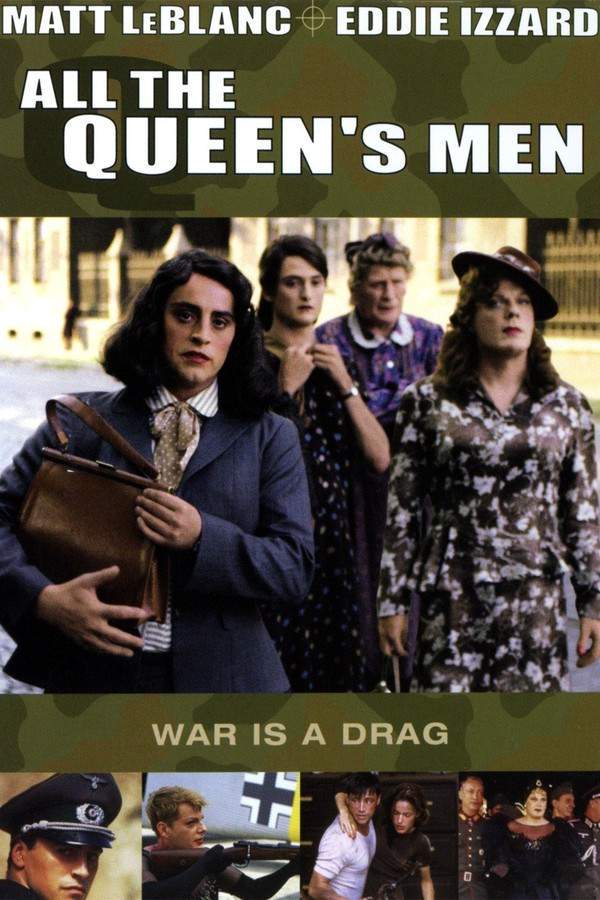
In the waning days of World War II, Berlin looms as a city of iron and intrigue, its streets humming with the secret pulse of a war fought not only with guns but with whispered codes. Beneath the austere factories and war‑torn avenues lies a hidden world where the ordinary becomes extraordinary—a sprawling plant staffed entirely by women, whose daily labor masks a crucial piece of the Allied puzzle. The film wraps this shadowy landscape in a tone that balances razor‑sharp tension with a sly, almost theatrical humor, inviting the audience to feel both the weight of history and the sparkle of daring subterfuge.
Enter a motley crew assembled for a mission that borders on the absurd. Matt LeBlanc, the charming American operative whose quick smile hides a steely resolve, leads the group with a mix of charisma and calculated risk. Beside him, the flamboyant British transvestite Tony Parker brings a razor‑edge wit and an uncanny ability to navigate disguise, while the brilliant but socially awkward genius Johnno offers the technical brilliance needed to outwit enemy ciphers. The hesitant yet steadfast Archie provides a grounded counterpoint, his quiet strength anchoring the team when the stakes rise. Adding a surprising layer of support, a local named Romy extends a compassionate hand, hinting at alliances forged in the most unexpected corners of occupied Berlin.
Tasked with infiltrating the women’s workforce to acquire the coveted Enigma machine, the agents must adopt female identities, a premise that generates both tension and comic relief as they juggle seduction, deception, and the ever‑present danger of discovery. Their plan is buoyed by the flamboyant flair of a drag queen ally, whose presence turns the operation into a daring performance as much as a covert raid. The film’s mood oscillates between the claustrophobic pressure of wartime espionage and the liberating, almost cathartic joy of characters who defy conventions to rewrite their roles in a world at war.
As the team prepares to step into the factory’s humming corridors, the audience is left teetering on the edge of anticipation, drawn into a narrative where bravery, absurdity, and the flicker of hope intertwine. The stage is set for a high‑stakes game of wits, where every glance, every whispered code, and every carefully crafted disguise could tip the balance of the conflict—leaving viewers eager to see how this unlikely ensemble will navigate the fine line between success and disaster.