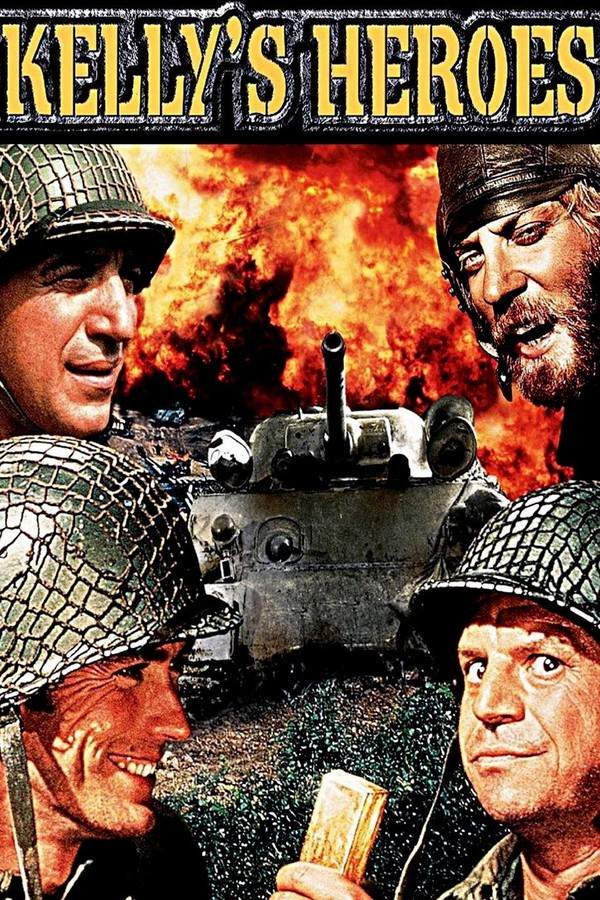
In 1944, Allied prisoners in a POW camp on an unnamed Greek island are pressed into excavating ancient artifacts. The camp Commandant, Major Otto Hecht William Holden, a former Austrian antiques dealer, begins sending some of the valuable pieces to his sister living in Switzerland. Yet the prisoners have learned that once the finds run out, they’ll be shipped to other camps, so they scheme to keep “discovering” the same pieces and extend the ruse.
While Hecht is content to sit out the war, the SS Commandant of the nearby town, Major Volkmann Anthony Valentine, brutally enforces discipline, including reprisal executions of civilians. Resistance to the Germans is led by Zeno Telly Savalas, a former monk, who operates from a hidden base inside the town’s brothel, run by his girlfriend Elena Elena Secota as undercover headquarters. Zeno, connected to Allied Headquarters, is ordered to free the prisoners and use them to help liberate the town and seize a nearby U-boat refueling depot.
Two captured USO performers, Charlie Elliott Gould and Dottie Stefanie Powers, stage a concert as cover for the resistance while the camp is taken over. With a stark choice between death at Zeno’s hands or cooperation, Hecht sides with the Allies, aiding in driving out Volkmann’s troops and securing the fuel depot.
After the mission, Charlie asks Zeno to guide him and two other prisoners, Judson Richard Roundtree and Rotelli Sonny Bono, up to the monastery on Mount Athena to steal Byzantine treasures kept there by the monks. Yet Zeno warns that the treasure belongs to the Greek people, not to them, setting up a tense test of motives and loyalty.
As they ascend to the monastery, they encounter a heavily armed German garrison. Zeno weapons the situation with gas to neutralize most of the troops, but the commander orders a V-2 rocket launch aimed at destroying the invasion fleet. Judson disables the control room with grenades, though one German survives long enough to activate the base’s self-destruct mechanism. Unaware of the full danger, Charlie and Rotelli press on, while Judson frees the monks.
Zeno locates the self-destruct clock but cannot deactivate it. The group, along with the monks and the Americans, escapes the monastery moments before the explosion. In the remaining minutes of treasure-hunting, Charlie leaves with the most valuable find—the tin plates adorned with Hitler’s face that the Germans have left behind.
Back in the village, the victory celebration is tempered by a grimangel: Hecht, Charlie, and Dottie contemplate capitalizing on the loot by producing copies to sell to Americans, showing a sharp edge to war profiteering even after triumph. Professor Blake David Niven learns from one of the freed monks that the gold Byzantine plates are safe—the hoard had been hidden in the brothel all along, a secret kept close to the Greek people.
The story closes with a jump to the present day: Zeno’s former headquarters have been transformed into a state museum dedicated to the treasures of Mount Athena, a lasting echo of a war-torn past and a reminder of the cultural riches the conflict sought to seize and salvage. The film weaves themes of resistance, loyalty, and the moral ambiguity of relics—what is taken, what is kept, and who ultimately decides their rightful home.