Plot Explained Spoilers guaranteed!
Plot Explained

Browse by genre

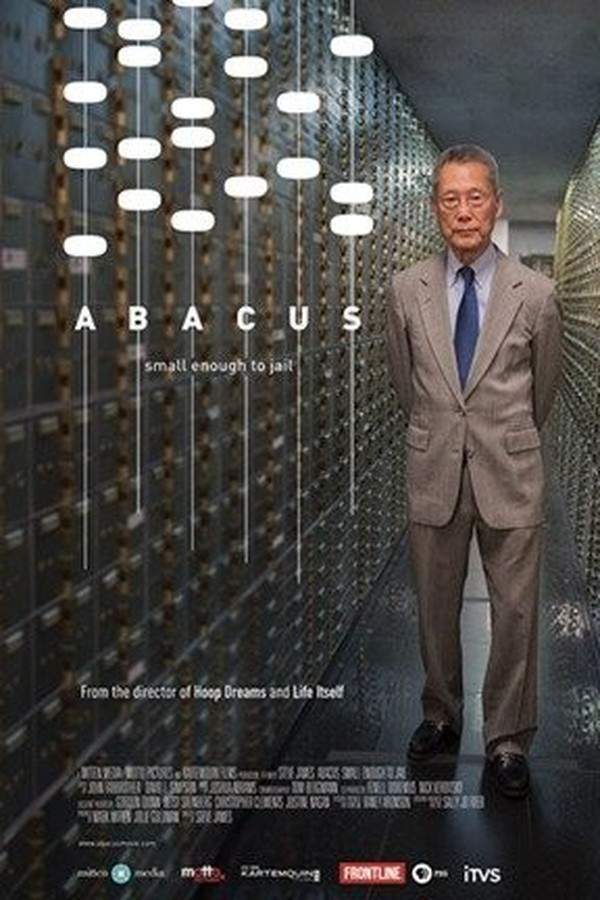
Abacus: Small Enough to Jail (2017) movie poster

Characters & Themes

Abacus: Small Enough to Jail (2017) Characters, Setting & Themes Explained

Release, runtime and language
2017 · 88 min · English
Echo score 75
Loading streaming availability…
Directed by
Steve James
Starring
David Lindorff, Don Lee, Jiayang Fan, Justin Deas, Linda Hall, Margaret Colin

This documentary follows Abacus Federal Savings, a community bank in Chinatown, as it faces accusations of mortgage fraud following the 2008 financial crisis. The Sung family, who run the bank, find themselves in a lengthy and challenging five-year legal battle against the Manhattan District Attorney's office. The film explores their struggle to defend their bank's reputation and the community legacy they've built, highlighting the immense pressure and obstacles they encounter in a fight against powerful institutions.

On this page (8)
  1. 1 Where to watch
  2. 2 Characters explained (3)
  3. 3 Where & when it takes place
  4. 4 Themes & meaning (2)
  5. 5 Character & meaning questions
  6. 6 Movie threads
  7. 7 Movies like Abacus: Small Enough to Jail
  8. 8 Every angle
Loading streaming availability…

3 main characters · contains spoilers

Abacus: Small Enough to Jail Characters Explained: Who Is Who

The main characters of Abacus: Small Enough to Jail (2017), heroes and villains: what drives them, how they change over the course of the story and what each of them reveals about the film's bigger ideas.

  • Thomas Sung

    Thomas Sung, the founder and chairman of Abacus Bank, is portrayed as a resilient leader who navigated the bank through tumultuous financial waters. His commitment to his community and innovative spirit helped foster trust and support among his clients, even amid legal peril.

    • 👨‍💼 Entrepreneur
    • 💪 Resilience
  • Cyrus Vance Jr.

    Cyrus Vance Jr. serves as the New York County District Attorney and is depicted as a key figure in the legal challenges faced by Abacus Bank. His actions reflect the aggressive stance of the legal system towards small institutions and his commitment to uphold the law, albeit through controversial means.

    • ⚖️ Law
    • 🔍 Scrutiny
  • Neil Barofsky

    Neil Barofsky, former Special United States Treasury Department Inspector General, provides critical insights into the broader financial landscape. His commentary serves to frame Abacus Bank's struggles within the context of systemic issues in the American financial system.

    • 📊 Finance
    • 📈 Oversight

Last updated: October 18, 2026 at 16:58

Was this helpful?

Setting

Where and When Does Abacus: Small Enough to Jail Take Place?

The setting of Abacus: Small Enough to Jail (2017): the year and time period, the places and locations, and how they shape the characters, the mood and the tension of the story.

Time period

2003

The events of the movie primarily take place around 2003 when Abacus Bank faced a bank run. This period was marked by a rising financial scrutiny in the United States, especially surrounding small financial institutions and the implications of lending practices amid greater economic challenges.

Location

Abacus Bank, New York

Abacus Bank, located in New York City, is a pivotal financial institution within the Chinese American community. Known for its unique approach to lending, particularly in cash-only transactions, it stands out as a beacon of support for small businesses despite facing significant scrutiny and challenges.

  • 🏦 Bank
  • 🌆 City

Last updated: October 18, 2026 at 16:58

Was this helpful?

2 major themes

Abacus: Small Enough to Jail Meaning: Themes & Message Explained

What is Abacus: Small Enough to Jail (2017) really about? The emotional, social and philosophical themes the film keeps returning to, its symbolism and the message beneath the surface.

  • Economics

    The theme of economics is central to 'Abacus: Small Enough to Jail,' exploring the complexities of small banking systems amid larger financial crises. It highlights the struggles of the Chinese American community with legal and ethical challenges in their business dealings, emphasizing the fine line between legitimate financial practices and unlawful misrepresentation.

  • Justice

    Justice is a critical theme, as the documentary sheds light on the unfair prosecution of Abacus Bank compared to larger financial entities that faced lesser consequences for their actions. This theme punctuates the uneven application of law and exposes the biases that permeate the financial system.

Last updated: October 18, 2026 at 16:58

Was this helpful?

Character & theme questions

Abacus: Small Enough to Jail Characters & Meaning: Your Questions Answered

The questions people ask about Abacus: Small Enough to Jail (2017): who the characters really are, their relationships, what the symbols mean, where it takes place and what the movie is really about. Each answer contains spoilers.

Q1

What is Abacus Bank and why is it significant to the Chinese American community?

Abacus Federal Savings was a small community bank in New York's Chinatown that primarily served Chinese American immigrants and small business owners. In "Abacus: Small Enough to Jail," the bank represents immigrant entrepreneurship and a community-rooted alternative to mainstream Wall Street institutions. Its significance comes from offering financial services, including cash-based lending, to clients who were often excluded from the traditional banking system.

  • abacus bank
  • chinatown
  • chinese american
  • community bank
  • immigrant banking
Q2

Where is the documentary primarily set?

The film is centered in New York City, particularly in Manhattan's Chinatown, where Abacus Federal Savings was headquartered. Courtroom and legal scenes take place in Manhattan as well, since the case was brought by the Manhattan District Attorney's office. New York serves as both the cultural home of the Sung family's community and the legal arena where the five-year fight unfolds.

  • new york
  • manhattan
  • chinatown
  • location
  • setting
Q3

When does the story take place?

The documentary's events begin around 2003, when Abacus Bank experienced an early bank run that foreshadowed later scrutiny. The central conflict erupts in the aftermath of the 2008 financial crisis, and the five-year legal battle spans roughly 2009 to 2014. The 2008 collapse provides the broader economic context against which Abacus's prosecution is examined.

  • 2003
  • 2008 financial crisis
  • timeline
  • time period
Q4

What is the main theme of the documentary?

"Abacus: Small Enough to Jail" centers on the tension between small-scale community finance and the broader American financial system. It explores how a family-run immigrant bank navigated legal and ethical challenges while serving a population often excluded from mainstream banking. The film argues that Abacus's practices, while unconventional, were fundamentally different from the systemic fraud that caused the 2008 collapse.

  • theme
  • economics
  • community finance
  • immigrant business
Q5

Why does the film focus on unequal prosecution?

The documentary frames Abacus Bank's prosecution as a case study in selective law enforcement against small institutions. While major banks responsible for the broader financial crisis received bailouts and faced minimal accountability, Abacus was charged with mortgage fraud despite operating at a tiny fraction of that scale. The film argues that this contrast reveals institutional bias rather than proportional justice.

  • justice
  • prosecution
  • prosecutorial bias
  • selective enforcement
  • mortgage fraud
Q6

Who is Thomas Sung in the documentary?

Thomas Sung is the founder and chairman of Abacus Federal Savings Bank, portrayed as the principled leader who built the bank to serve Chinese American immigrants in New York. Throughout "Abacus: Small Enough to Jail," he is depicted as a resilient figure defending both his institution and the community legacy his family created. His commitment to his clients defines his personal motivation and anchors the film's central human story.

  • thomas sung
  • founder
  • chairman
  • sung family
  • leader
Q7

Who is Cyrus Vance Jr. and what is his role in the case?

Cyrus Vance Jr. was the Manhattan District Attorney whose office brought the mortgage fraud charges against Abacus Bank. In "Abacus: Small Enough to Jail," he is framed as a key decision-maker whose aggressive prosecution of a small community bank stood in stark contrast to the treatment of far larger institutions after 2008. His role embodies the institutional power that the Sung family had to fight against for five years.

  • cyrus vance
  • manhattan da
  • district attorney
  • prosecution
Q8

What role does Neil Barofsky play in the documentary?

Neil Barofsky, the former Special Inspector General for the Troubled Asset Relief Program, appears as an expert commentator throughout "Abacus: Small Enough to Jail." He provides context about systemic failures in the financial system and the uneven enforcement of accountability after 2008. His perspective situates Abacus's legal troubles within the much larger collapse of major American financial institutions.

  • neil barofsky
  • inspector general
  • sigtarp
  • financial regulation
  • expert
Q9

What made Abacus Bank's lending practices distinctive?

Abacus Bank was known for accepting cash-only loan payments and handling transactions in ways that aligned with the cultural and economic norms of its Chinatown clientele. Many of its customers operated small cash-based businesses or sent remittances abroad, practices that fell outside standard banking documentation. The documentary presents these methods as evidence of Abacus's community-first approach rather than as indicators of criminal behavior.

  • cash transactions
  • lending
  • mortgage
  • cultural banking practices
Q10

How does the film connect Abacus's case to the 2008 financial crisis?

The documentary uses the 2008 financial collapse as the backdrop for understanding why Abacus Bank was prosecuted at all. While major banks received bailouts and faced limited legal consequences for their role in subprime lending, Abacus was singled out despite operating at a much smaller scale and never selling its loans into the toxic mortgage market. "Abacus: Small Enough to Jail" uses this contrast to argue that prosecutorial priorities reflected institutional bias rather than proportional justice.

  • 2008 crisis
  • subprime
  • bailouts
  • systemic failure
  • double standard
Q11

What kind of institution was Abacus Federal Savings?

Abacus Federal Savings was a mutual savings bank, meaning it was owned by its depositors rather than by outside shareholders. It primarily served working-class Chinese American immigrants and small business owners in New York's Chinatown, many of whom were unbanked or underbanked by mainstream institutions. This community-rooted ownership structure is central to the documentary's portrayal of Abacus as a neighborhood institution rather than a corporate financial entity.

  • mutual savings bank
  • depositors
  • ownership
  • community institution
Q12

What cultural significance does the Sung family's defense carry?

The Sung family's decision to fight the charges rather than settle is portrayed in the documentary as an act of community defense, not just personal vindication. Their full acquittal preserved both their own reputation and the broader legacy of immigrant-run financial institutions serving ethnic communities in America. The film frames their perseverance as resistance against the institutional targeting of minority communities during a period of widespread financial scapegoating.

  • sung family
  • cultural legacy
  • immigrant community
  • perseverance
  • minority

Movie threads

More Movies Like Abacus: Small Enough to Jail, by Mood & Story

Curated lists built around what makes Abacus: Small Enough to Jail tick: the same mood, the same kind of story or the same emotional payoff. Each list explains why these movies belong together.

David vs Goliath institutional battles like in Abacus: Small Enough to Jail

Ordinary people and small institutions refusing to buckle under crushing institutional pressure. Movies like Abacus: Small Enough to Jail that follow ordinary people or small institutions taking on prosecutors, governments, and corporate giants. If you liked the methodical courtroom pressure, sustained investigative tension, and ultimate underdog vindication of the Sung family story, these films deliver the same gripping fight against the system.

  • tense
  • courtroom drama
  • david vs goliath
  • methodical
  • procedural
  • investigative
  • Tone: tense, methodical, heavy
  • Pacing: steady, procedural
Why these movies?

The story pattern: These stories typically begin with an accusation, an indictment, or a sudden collision between a small player and a powerful adversary. The narrative unfolds in measured, procedural beats—filings, hearings, depositions, expert testimonies—building tension through accumulation rather than spectacle. Characters are forced to exhaust personal and financial resources while maintaining composure and conviction. Climaxes tend to be vindication, acquittal, or settlement, often bittersweet, exposing the asymmetry of institutional power even in victory.

Why they belong together: They share a TENSE, methodical tone driven by sustained procedural stakes and an investigative rhythm. They center morally clear protagonists whose persistence against institutional overreach creates empathy and suspense. The pacing is deliberate, the complexity is high, and the emotional weight is heavy, with endings that are often bittersweet rather than triumphant.
Immigrant family stories under pressure like in Abacus: Small Enough to Jail

Communities whose hard won place in a new country is tested by forces they cannot control. Movies like Abacus: Small Enough to Jail that explore immigrant communities facing systemic pressure, financial upheaval, and accusations from mainstream institutions. If you were moved by the Sung family's fight to protect their Chinatown bank and community legacy, these films share that bittersweet, heavy focus on immigrant families caught between their hard won American lives and forces that refuse to see them as American.

  • immigrant experience
  • community legacy
  • racial profiling
  • family business
  • systemic injustice
  • resilient
  • Tone: bittersweet, serious, heavy
  • Pacing: steady, reflective
Why these movies?

The story pattern: Stories in this thread trace a family or cultural institution through a crisis that exposes the precariousness of their belonging. Generations, cultural practices, and community ties are tested as characters confront external hostility, economic devastation, or legal jeopardy. The narrative often balances intimate family dynamics with broader social critique, and endings lean bittersweet—survival achieved, but the wounds of suspicion and exclusion linger.

Why they belong together: They share a HEAVY emotional register centered on immigrant families and community institutions facing structural pressures. Tones tend to be bittersweet with serious, resilient undercurrents. Pacing is steady and reflective, complexity is layered, and the films privilege cultural specificity alongside universal themes of belonging and injustice.

If you liked this

Movies Like Abacus: Small Enough to Jail

Similar movies to Abacus: Small Enough to Jail: the same genre, themes or kind of story. Each one comes with its own plot summary, timeline and ending explained.

Browse all movie summaries

Every angle

Abacus: Small Enough to Jail (2017) Explained: Plot, Timeline & Characters

Everything about Abacus: Small Enough to Jail in one place: what happens in the plot summary, the timeline in chronological order, the characters and meaning and a spoiler-free summary. What's After the Movie adds the cast, box office and post-credit scenes.

Coming soon on iOS and Android

The Plot Explained Movie Summary App

Plot summaries, endings explained and timelines on your phone. Catch up on any movie in minutes, save your favorites and never miss a twist again.

Be the first to know when we launch. Your email stays private, always.

Learn more about the app