Plot Explained Spoilers guaranteed!
Plot Explained

Browse by genre

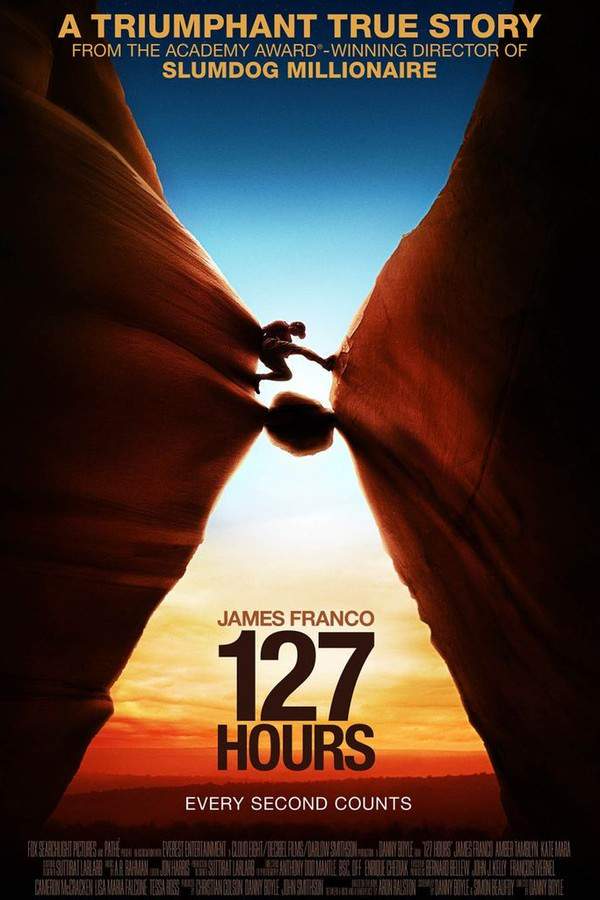
127 Hours (2010) movie poster

Plot Summary

127 Hours (2010) Plot Summary Explained

Release, runtime and language
2010 · 94 min · English
Loading streaming availability…
Directed by
Danny Boyle
Starring
James Franco, Amber Tamblyn, Kate Mara
Budget
$18M

While canyoneering in Utah’s remote wilderness, adventurous outdoorsman Aron Ralston becomes trapped when a boulder dislodges and pins his arm. With dwindling supplies and no hope of rescue, Ralston is forced to confront an impossible decision: amputate his own arm to survive or perish in the desolate canyon. The film depicts his harrowing ordeal and incredible will to live.

On this page (6)
  1. 1 Where to watch
  2. 2 What happens: full plot
  3. 3 Plot questions answered
  4. 4 Movie threads
  5. 5 Movies like 127 Hours
  6. 6 Every angle
Loading streaming availability…

Full plot summary · contains spoilers

What Happens in 127 Hours: Full Plot Summary

The whole story of 127 Hours (2010) explained, from the opening scene to the final frame: every key event, every twist and what it all adds up to. Read it as a quick recap before the sequel, to check a scene you missed, or to finally understand what really happened.

In April 2003, avid mountaineer Aron Ralston ventures out for a solo hike in the breathtaking Canyonlands National Park in Utah, failing to notify anyone of his whereabouts. During his journey, he encounters two lost hikers, Kristi and Megan, whom he helps by providing directions. As they explore an underground pool together, they create fun memories, and the girls invite Aron to a party the following night, which he respectfully declines, opting to continue his adventure alone.

As Aron navigates the narrow confines of Bluejohn Canyon, a frightening incident occurs when an 800-pound boulder he is precariously hanging from suddenly shifts, brutally trapping his right arm against the canyon wall. Struggling with desperation, he attempts to free himself but quickly realizes he is utterly alone. To bolster his morale, he begins recording a video diary on his camcorder while he chips away at the boulder with a pocket knife. Sadly, the very knife that serves as his only tool slips from his grasp, forcing him to resort to using only his bare feet and a small branch to retrieve it.

Over the agonizing span of five days, Aron meticulously rations the scant food he has left and his remaining 300ml of water. He finds himself battling the cold at night, and when water becomes a distant memory, he reluctantly resorts to drinking his own urine. Ingeniously, he attempts to fashion a pulley using his climbing rope, hoping to lift the boulder, but his efforts yield no success.

As hours turn into days, the weight of isolation takes a toll on Aron, leading him into a dark realm of despair and hallucinations that revolve around escape and memories of his past – including glimpses of his family and his former girlfriend, Rana. One haunting vision presents the joy of the party he was invited to, overshadowed by the stark realization of his isolation – the folly of not informing anyone about his plans. However, on the sixth day, a vision of his future son ignites a fierce will to survive and push through the torment.

Drawing upon his resourcefulness, Aron improvises a tourniquet using CamelBak tube insulation, tightens it with a carabiner, and in a gruesome but necessary act, breaks his arm bones using torque principles. With steely determination, he meticulously employs a multi-tool to slowly amputate his trapped arm. After securing the stump to prevent exsanguination, he captures a poignant snapshot of the boulder that subdued him, before utilizing his climbing skills to rappel down a 65 ft (20 m) rock face.

As fate would have it, he discovers stagnant rainwater during his descent, which he consumes out of dire thirst. Soon after, he spots a hiking family in the distance and desperately calls for their assistance. They provide him with water and promptly notify the authorities, leading to his rescue by a Utah Highway Patrol helicopter, which whisks him away to a hospital for treatment.

In a poignant textual epilogue, it is revealed that years later, Aron has married and welcomed a son into the world. He continues to pursue climbing adventures, always leaving detailed notes for his family outlining where he has gone, ensuring that he never again faces such a perilous ordeal alone.

Last updated: November 16, 2024 at 16:20

Was this helpful?

Plot questions answered

127 Hours Plot Explained: Your Questions Answered

The questions people ask most about 127 Hours (2010): what happens in the confusing scenes, why the characters do what they do, the twists, hidden details and what the ending means. Each answer contains spoilers.

Q1

Why didn't Aron tell anyone where he was going before his hike?

Aron chose not to inform anyone about his hiking plans because he was eager for a solo adventure and wanted to explore the canyonlands independently. This decision becomes critical because it means no one knows his location when he becomes trapped, eliminating any possibility of rescue. The epilogue reveals he learned from this mistake, as he later always leaves detailed notes for his family about his whereabouts.

Foreshadowing: Earlier, the girls invite Aron to a party, highlighting his preference for solitude over social connections.

  • aron ralston
  • solo hike
  • canyonlands
  • no rescue
  • isolation
Q2

Why did Aron decline the party invitation from Kristi and Megan?

Aron declined the party invitation because he was deeply committed to his solo adventure and wanted to continue exploring the canyon alone. This decision reflects his character as an adventurous outdoorsman who prioritizes challenging himself in remote wilderness over social gatherings. Had he accepted, he would never have entered Bluejohn Canyon at that time and wouldn't have been trapped.

Foreshadowing: The party invitation scene establishes Aron's preference for solitude and his independent nature.

  • kristi
  • megan
  • party invitation
  • solo adventure
  • bluejohn canyon
Q3

How was Aron able to amputate his own arm?

Aron amputated his arm by first creating a tourniquet using CamelBak tube insulation and a carabiner to minimize blood loss. He then used torque principles to break his arm bones, making the amputation possible with his multi-tool. Despite having lost his pocket knife earlier, he still had the multi-tool which provided the necessary cutting ability. The act took tremendous resolve and took place over an extended period of careful cutting.

Foreshadowing: Earlier, Aron's knife slips and he must retrieve it with his feet, showing his resourcefulness with limited tools.

  • amputation
  • tourniquet
  • multi-tool
  • self-surgery
  • survival
Q4

What gave Aron the will to survive on the sixth day?

On the sixth day, Aron experienced a vision of his future son, which ignited a fierce will to live within him. This powerful mental image of having a family of his own gave him the determination to take action and perform the drastic amputation required for his escape. Prior to this vision, he had been陷入 despair and hallucinations.

Foreshadowing: Throughout his ordeal, Aron sees visions of his past including his former girlfriend Rana and memories of family, showing his mind grappling with his isolated state.

  • future son
  • vision
  • will to survive
  • day six
  • motivation
Q5

Why did Aron start hallucinating during his confinement?

Aron began hallucinating due to the extreme combination of isolation, dehydration, sleep deprivation, and stress. After five days trapped with virtually no food and eventually no water, his body and mind deteriorated significantly. The hallucinations featured memories of his past, including his family and former girlfriend Rana, as well as the party he was invited to, representing his longing for connection and regret over his isolation.

Foreshadowing: The film shows Aron's mental state deteriorating progressively, with each day showing increased desperation.

  • hallucinations
  • dehydration
  • isolation
  • mental breakdown
  • survival
Q6

How did Aron manage to survive the five days before his escape?

Aron survived by meticulously rationing his limited supplies, he had scant food and approximately 300ml of water remaining. He battled cold nights and eventually resorted to drinking his own urine when water ran out. He also attempted to fashion a pulley system with his climbing rope to lift the boulder, though this failed. His survival depended on a combination of careful rationing, his mountaineering knowledge, and sheer will to live.

Foreshadowing: Aron is established as an experienced mountaineer at the start, explaining his survival skills.

  • rationing
  • urine
  • survival
  • five days
  • supplies
Q7

Why was losing the knife such a critical moment?

Losing his pocket knife was devastating because it was his only tool for chipping away at the boulder. With the knife, he had some hope of freeing himself. After it slipped from his grasp, he was forced to use only his bare feet and a small branch to retrieve it, a desperate, nearly impossible task that added to his physical and mental strain. Without the knife, his options for escape seemed nonexistent.

Foreshadowing: The scene establishes the escalating desperation of his situation after the bouldertrap.

  • pocket knife
  • lost tool
  • boulder
  • desperation
  • bluejohn canyon
Q8

How was Aron able to rappel down the rock face after amputating his arm?

Despite having just amputated his arm and being severely weakened, Aron used his mountaineering expertise to rappel down the 65-foot rock face. He had extensive climbing experience and training, which allowed him to perform this technical feat even in his traumatized state. This skill proved essential to his escape, as rappelling was the only way down from his trapped position.

Foreshadowing: Aron is introduced as an avid mountaineer at the beginning, establishing his climbing abilities.

  • rappelling
  • climbing
  • rock face
  • mountaineering
  • escape
Q9

Why did Aron start recording a video diary while trapped?

Aron began recording a video diary on his camcorder to boost his morale and document his struggle for survival. The recordings served as both a psychological coping mechanism, to combat the crushing isolation, and a way to leave a record in case he didn't survive. Speaking to the camera gave him a sense of connection to the outside world and helped maintain his sanity.

Foreshadowing: The video diary appears early in his ordeal, showing his initial response to being trapped alone.

  • video diary
  • camcorder
  • morale
  • documentation
  • isolation
Q10

Why did Aron resort to drinking his own urine?

Aron drank his own urine as a desperate survival measure when his water supply ran out after five days. Despite knowing it was harmful due to waste products, his extreme dehydration left him with no other options for obtaining fluids. This grim choice highlights the dire circumstances and his determination to survive at any cost.

Foreshadowing: His water rationing earlier in the ordeal shows he was already critically low on fluids.

  • urine
  • dehydration
  • survival
  • desperation
  • fluids
Q11

How did the hiking family help Aron get rescued?

After escaping the canyon and descending, Aron spotted a hiking family in the distance and called out for help. They provided him with water to address his severe dehydration and immediately contacted the authorities. This alert led to a Utah Highway Patrol helicopter rescuing him and transporting him to a hospital for treatment.

Foreshadowing: The chance encounter represents the turning point from certain death to rescue.

  • hiking family
  • rescue
  • helicopter
  • water
  • help
Q12

What changed in Aron after his rescue?

The epilogue reveals that Aron married and had a son after his rescue. More importantly, he changed his safety habits: he now always leaves detailed notes for his family about where he has gone, ensuring he never again faces a life-threatening situation alone without anyone knowing his location.

Foreshadowing: This directly connects to his initial mistake of not telling anyone about his solo hike.

  • marriage
  • son
  • notes
  • family
  • change
  • safety

Movie threads

More Movies Like 127 Hours, by Mood & Story

Curated lists built around what makes 127 Hours tick: the same mood, the same kind of story or the same emotional payoff. Each list explains why these movies belong together.

Gritty Survival Movies Like 127 Hours

Stories of ordinary people pushed to their absolute physical and psychological limits. If you were captivated by the raw fight for survival in 127 Hours, explore more movies like it. This section features intense, true-to-life stories of characters trapped in extreme situations, showcasing incredible resilience and the unyielding human will to live against impossible odds.

  • desperate
  • gritty
  • cathartic
  • harrowing
  • isolated
  • determined
  • Tone: tense, desperate, cathartic
  • Pacing: steady, relentless
Why these movies?

The story pattern: These narratives follow a linear, often physically confined structure, where the primary conflict is between the character and their environment. The journey is one of escalating desperation, forcing the protagonist to make unthinkable sacrifices and tap into a deep well of resourcefulness to overcome a seemingly hopeless situation.

Why they belong together: Movies in this thread are grouped by their shared high-intensity mood, heavy emotional weight, and focus on a visceral, life-or-death struggle. They create a similar experience of tension, claustrophobia, and ultimately, catharsis through a story of human endurance.

Claustrophobic Thrillers Similar to 127 Hours

Films that trap you with a character, building unbearable tension in a single location. For viewers who appreciated the suffocating tension and single-location focus of 127 Hours, this list highlights similar claustrophobic thrillers. Discover movies that trap a character in a confined space, creating a powerful, psychologically intense experience centered on a desperate struggle for freedom.

  • claustrophobic
  • psychological
  • tense
  • isolated
  • desperate
  • unraveling
  • Tone: tense, claustrophobic, psychological
  • Pacing: steady, focused
Why these movies?

The story pattern: The narrative pattern involves a character becoming trapped, either physically or situationally, with the story unfolding almost entirely from their perspective. The plot is driven by their deteriorating mental state, hallucinations, memories, and the grim calculus of their limited options, leading to a drastic, life-altering decision.

Why they belong together: These films are connected by a shared mood of claustrophobia and a TENSE tone, often with a STEADY pacing that meticulously builds pressure. They focus on the psychological unraveling and ultimate resolve of a character facing a confined, inescapable nightmare.

If you liked this

Movies Like 127 Hours

Similar movies to 127 Hours: the same genre, themes or kind of story. Each one comes with its own plot summary, timeline and ending explained.

Browse all movie summaries

Every angle

127 Hours (2010) Explained: Plot, Timeline & Characters

Everything about 127 Hours in one place: what happens in the plot summary, the timeline in chronological order, the characters and meaning and a spoiler-free summary. What's After the Movie adds the cast, box office and post-credit scenes.

Coming soon on iOS and Android

The Plot Explained Movie Summary App

Plot summaries, endings explained and timelines on your phone. Catch up on any movie in minutes, save your favorites and never miss a twist again.

Be the first to know when we launch. Your email stays private, always.

Learn more about the app